
 Search


Gentlemonster.com
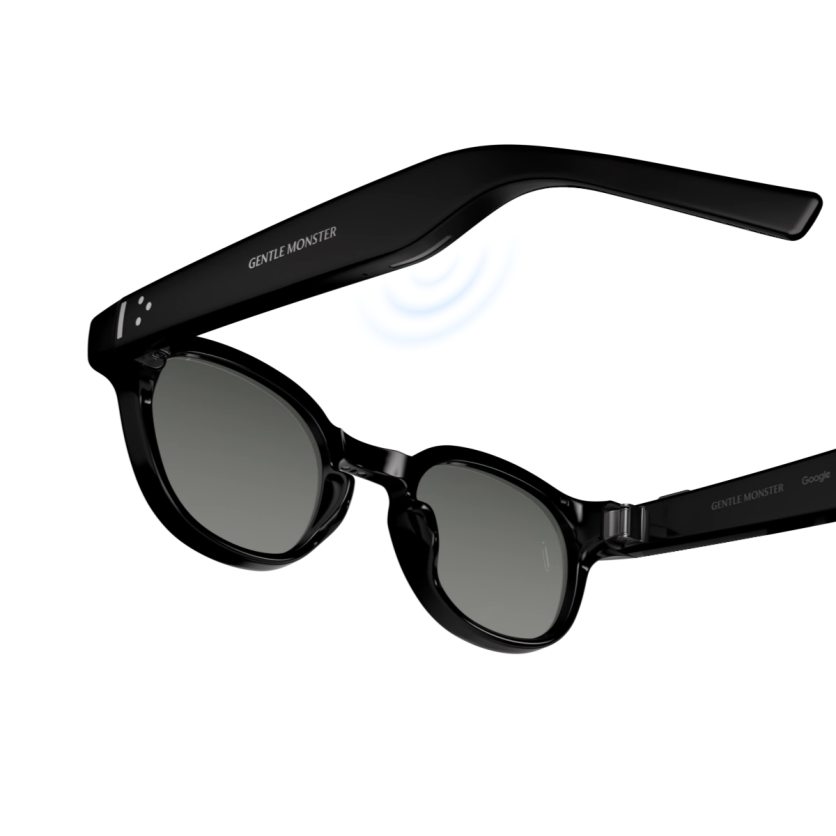
Google said today that a Pixel Watch can control its new Android XR Intelligent Eyewear with three wrist gestures: a double pinch to play or pause audio, a wrist turn to close an experience, and a palm-up double pinch to summon Gemini. The practical gain is that owners of a Pixel Watch skip the separate control band that rivals sell, such as Meta's Neural Band, which costs $199. The trade-off is input range: three commands on a watch versus the richer muscle-signal reading of Meta's band.
Warby Parker models start at $395 and Gentle Monster models start at $449, with retail availability beginning December 10. Pre-orders opened today, November 12, at both brands.
Pixel Watch Gestures Map to Three Touchpad Commands
Google's mapping turns each watch gesture into a touchpad action on the glasses. A double pinch equals a tap, which plays or pauses audio. A wrist turn equals a swipe back, which closes an experience. A palm-up double pinch equals a tap and hold, which invokes Gemini, and only a Pixel Watch supports that one.
Galaxy Watch owners are covered as well, but the palm-up Gemini gesture is limited to Pixel Watch. Google's Android XR demo showed a pinch pausing and playing music. Launch coverage lists no gestures beyond these three, and the touchpad and the "Hey Gemini" voice hotword remain available.
Pixel Watch Works at Launch, Fitbit Air Waits Until Early 2027
Google told 9to5Google that the Pixel Watch is supported at launch and that Fitbit Air follows sometime in 2027. Google says the Fitbit Air rollout lands in early 2027, according to Gizmodo. Because the glasses and the Fitbit Air both work with iOS, iPhone owners can control the glasses hands-free once Fitbit Air support arrives.
The Fitbit Air costs $99. Google has not named which Pixel Watch generations qualify at launch; 9to5Google refers to both Pixel Watch models without naming them. One-handed gestures already run on Pixel Watch 3 and newer models. Owners of older models should check before buying.
How Do Pixel Watch Gestures Control Android XR Glasses?
The launch coverage does not explain how the gestures are sensed. 9to5Google says Pixel Watch gestures rely on sensors to detect movements such as finger pinching or wrist adjustments, without naming the sensors. Apple's comparable AssistiveTouch relies on gyroscope and accelerometer readings plus data from its heart-rate sensor to estimate wrist and hand position. Whether Google's design does the same is unconfirmed.
Each sensor brings a known limit. An inertial measurement unit combines accelerometers and gyroscopes, and its errors accumulate through integration over time. Photoplethysmography, the optical heart-rate method, measures blood-volume changes with an LED and photodiode, and motion artifacts often limit accuracy during exercise.
The shipping design is also modest by comparison with Google's earlier ideas. A Google patent reported in 2023 described a headset that watched the wearer's watch with a camera and read touch gestures, including letters drawn on the screen. The shipping version instead maps three watch gestures to touchpad taps and swipes.
The glasses offload heavy processing to your phone, including HDR pipelines and video stabilization. Google has not described how a watch's gesture event reaches the glasses.
Meta's Neural Band Reads Muscle Signals While Pixel Watch Sends Three Commands
Meta's Neural Band uses surface electromyography, which records muscle activity from skin electrodes. That signal lets Meta Ray-Ban Display users write letters on a flat surface such as a table or leg. An sEMG band recognizes gestures without a camera seeing them, one Android Central writer noted, and the writer said they had assumed Google and Samsung would struggle to match that.
That is the largest unstated implication of Google's announcement. Three discrete commands cannot match a muscle-signal band that supports text entry. EMG has its own limits: surface electrodes struggle to separate adjacent muscles, and more body fat weakens the signal. The current Pixel Watch route trades range for zero extra hardware.
TechTimes reported in June that Meta's Malibu 2 smartwatch was expected to absorb the Neural Band's sEMG gesture function, which would put the richer band signal on the wrist as well.
Read more: Meta Smartwatch Due September 23: Malibu 2 Doubles as Gesture Hub for Ray-Ban AI Glasses
Glasses Weigh 40 to 44 Grams and Run Snapdragon AR1 Gen 1
The frames weigh 40 to 44 grams (1.4 to 1.6 oz) and are meant for all-day wear. The Android XR platform runs on Qualcomm's Snapdragon AR1 Gen 1 with 2GB of RAM and 64GB of storage, plus Bluetooth 5.4, Wi-Fi 6E and IPX4 water resistance. The 12MP camera records up to 90 seconds of video.
The glasses include an indicator LED, and algorithms detect stickers or markers covering the light. Gemini activity is retained for 18 months by default under Google's Gemini Apps privacy terms.
Pixel Watch Owners Skip a $199 Band but Accept Three Commands
Pixel Watch owners get voice, touchpad and wrist control with hardware they already own, and Fitbit Air owners gain the same next year. The cost is a three-command vocabulary. Anyone who wants text entry on the wrist should compare Meta's sEMG band before buying, and anyone who mainly wants pause, dismiss and Gemini will find the watch route sufficient.
Frequently Asked Questions
Which gestures work with Android XR glasses?
A double pinch plays or pauses audio, a wrist turn closes an experience, and a palm-up double pinch starts Gemini on a Pixel Watch only, according to 9to5Google's launch report.
Do iPhone owners get wrist control?
Yes, once the Fitbit Air gains support in early 2027. Gizmodo reports that the glasses and the Fitbit Air both work with iOS, so iPhone owners can control the glasses hands-free.
Why does a watch support fewer inputs than Meta's Neural Band?
Google's launch maps three watch gestures to touchpad taps and swipes, while Meta's band records muscle electrical activity directly, which supports finer input such as handwriting.
When does the Fitbit Air get gesture control?
Google says the rollout comes in early 2027, according to Gizmodo.

-
 C114 Communication Network
-
 Communication Home
