
 Search

Lenovo.com
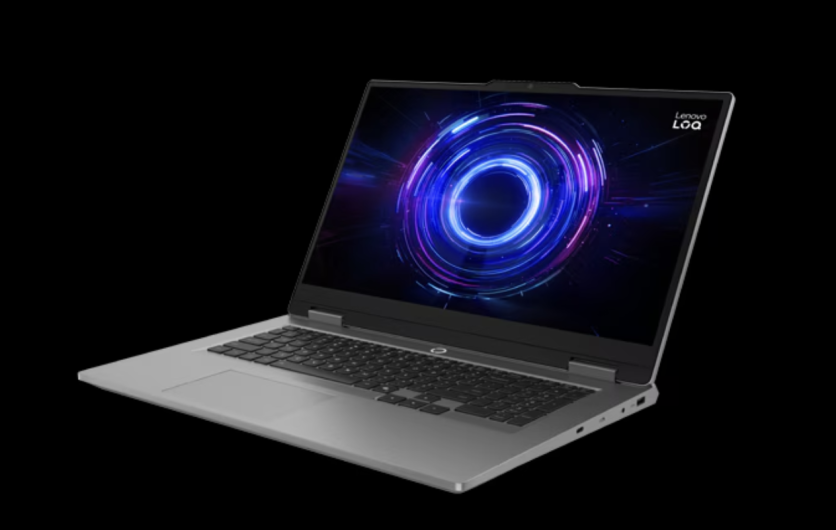
The decision between an 8GB and a 12GB GPU in a gaming laptop is not a decision you can revisit. VRAM cannot be upgraded after purchase, and if you run out of it in a demanding game, the laptop does not slow down gracefully — it stutters, drops frames, and in some cases crashes as the GPU is forced to swap texture data across the much slower PCIe bus to system RAM. That permanent constraint is the context in which Lenovo's latest quiet move matters: the company has added Nvidia's GeForce RTX 5070 with 12GB of GDDR7 VRAM to the LOQ 17IRX10, its 17.3-inch budget gaming laptop, bringing a VRAM tier that multiple independent hardware analysts now call the practical floor for AAA gaming in 2026 to a price bracket where it has not previously been available.
The new configuration appeared in Lenovo's official PSREF product specification database on July 21, 2026, without a formal press event. As of this writing, the RTX 5070 12GB variant of the LOQ 17IRX10 has not been listed for sale in any regional storefront, and no price has been announced. The existing RTX 5070 8GB configuration remains available at approximately $1,500.
RTX 5070 With 12GB Lands in Lenovo's Budget Tier — With No Compute Upgrade
The LOQ 17IRX10 debuted at CES in January 2025, making it Lenovo's first 17-inch LOQ-series laptop. The lineup has offered configurations ranging from the GeForce RTX 5050 up through the RTX 5070 with 8GB of GDDR7. The new 12GB variant does not replace the 8GB tier — both will continue to be offered, according to Lenovo's PSREF documentation.
Per the PSREF listing, the RTX 5070 12GB configuration pairs the GPU with an Intel Core i7-14700HX processor, 16GB of RAM, a 1TB SSD, and a 60Wh battery with 245W fast-charging support. The display is a 17.3-inch (43.9 cm) 1080p IPS panel at 165Hz with 300 nits of peak brightness — the same screen that appears across the entire LOQ 17IRX10 lineup. The GPU runs at a 115W Total Graphics Power (TGP) ceiling with a 2,347 MHz boost clock, identical to the 8GB sibling.
For buyers expecting a speed bump: the compute specifications are unchanged. This is a memory upgrade only, and understanding why requires knowing how Nvidia built both variants.
What the 12GB Actually Changes — Inside the GB206 Chip
Nvidia's RTX 5070 Laptop GPU, whether in 8GB or 12GB form, uses the same Blackwell-architecture GB206 chip: 4,608 CUDA cores, 36 RT cores, 144 Tensor cores, and a 128-bit memory interface. The boost clock range runs from 1,425 MHz to 2,347 MHz depending on the laptop manufacturer's configuration. Memory bandwidth is approximately 384 GB/s in both variants, because the 128-bit bus is unchanged.
The difference is in the memory chips themselves. The 8GB RTX 5070 uses four 16Gb (2GB) GDDR7 modules — four chips times 2GB each equals 8GB total. The 12GB version swaps those for four 24Gb (3GB) modules, yielding 12GB across the same four-chip, 128-bit arrangement. Samsung and Micron both manufacture the 24Gb GDDR7 dies, on a separate supply-chain track from the 16Gb chips used by most current RTX 50-series products.
Nvidia made the rationale explicit in the patch notes for GeForce Game Ready Driver 596.36, released April 28, 2026: "Demand for GeForce RTX GPUs remains strong, and memory supply is constrained. In order to maximize memory availability, we are releasing the GeForce RTX 5070 Laptop GPU 12GB configuration with 24Gb G7 memory. This gives our partners access to an additional pool of memory to complement the 16Gb G7 supply that currently ships with most GeForce GPUs." The 8GB variant was not discontinued; both configurations will coexist.
Because bandwidth is governed by bus width rather than total capacity, the 12GB part delivers no bandwidth improvement over the 8GB version. Pre-release leak benchmarks reported by Igor's Lab in early May 2026 — drawn from Chinese tech community sources — showed minimal differences between the two variants in traditional graphics workloads, as expected. Official head-to-head results comparing both LOQ 17 configurations have not been published.
Is 12GB Actually Worth It for Gaming in 2026?
Here is what the extra memory changes in practice: nothing in compute-bound scenarios, and potentially a great deal in VRAM-limited ones.
Modern AAA games with large texture packs, ray tracing enabled, or AI-assisted upscaling (via DLSS 4) have been testing the limits of 8GB VRAM with increasing frequency. Titles including Cyberpunk 2077, Alan Wake 2, Monster Hunter Wilds, and Starfield can push 8GB usage ceilings at higher settings, even at 1080p. When VRAM is exhausted, textures must stream through PCIe to system RAM — a bandwidth bottleneck that produces the characteristic stuttering and frame-time spikes that gaming forums have documented extensively.
Read more: NVIDIA RTX 50 GPU Shortage: Supply Cut 20%, Prices Climbing, No Desktop Refresh Confirmed
Multiple independent hardware analysis sites in 2026 have converged on a consistent position: 8GB sits at or below the floor for demanding AAA gaming, while 12GB represents the practical midpoint for 1080p and the minimum for 1440p. Since the LOQ 17IRX10 ships with a 1080p display, buyers staying at native resolution may not hit VRAM ceilings frequently in today's games — but as more titles ship in 2026 and beyond with heavier memory footprints, the gap between 8GB and 12GB will widen over the laptop's ownership lifespan. That lifespan, unlike the VRAM itself, cannot be extended.
The VRAM floor distinction also matters for local AI inference workloads. Running large language models or local image generation on a laptop GPU requires keeping model weights in VRAM. A 12GB buffer accommodates substantially larger models than 8GB — a meaningful difference for users who plan to run AI tools locally alongside games.
Lenovo's Busy July, and Where the LOQ Fits
The LOQ 17IRX10 update is one of several Lenovo gaming laptop refreshes in July 2026. The company has also added RTX 5070 12GB configurations to the Legion Pro 7 16IAX10H and Legion 7 16AGP11, and introduced an updated Legion 9 18IAX10 flagship, as HotHardware confirmed. A budget-tier Lecoo model with OCuLink external GPU support was also announced.
The LOQ and Legion lines occupy distinct positions in Lenovo's portfolio. The Legion 7 and Legion Pro series target buyers willing to pay for premium build quality, QHD or OLED displays, extensive I/O, and higher power-limit GPU configurations. The LOQ 17IRX10 is explicitly positioned as a value entry point — plastic chassis, 1080p IPS panel, shallower port selection — at a meaningfully lower price. Buyers who want RTX 5070 12GB performance in a 17-inch footprint without Legion pricing will, once the 12GB LOQ 17IRX10 reaches retail, have that option. The 8GB RTX 5070 LOQ 17 was retailing at approximately $1,500; the 12GB variant's price has not been announced.
What Buyers in This Market Should Know About Lenovo's Supply Chain
Lenovo is headquartered in Beijing, China, and is subject to Chinese law, including the National Intelligence Law (2017), which requires that all organizations and citizens support and cooperate with national intelligence work on demand. This obligation applies regardless of a company's stated privacy policy or the physical location of its servers.
For a Windows 11 gaming laptop where the operating system comes from Microsoft, the processor from Intel, and the GPU from Nvidia — all US-origin software and silicon — the immediate data-handling risk profile differs from that of a smartphone or networking device with more tightly integrated Chinese-origin software. Nonetheless, Lenovo's own management software (Lenovo Vantage) collects device telemetry, and buyers in enterprise or sensitive environments should review its permissions. Lenovo drew attention in 2015 for pre-installing Superfish Visual Discovery, adware that intercepted HTTPS connections; the company issued removal tools and the software is not present in current configurations. No documented hardware backdoor or security vulnerability specific to the LOQ 17IRX10 has been identified in public security research.
What to Expect When the LOQ 17IRX10 12GB Reaches Retail
Lenovo has not announced a launch date or price for the RTX 5070 12GB configuration of the LOQ 17IRX10. The model's PSREF listing indicates a retail announcement is forthcoming. Buyers seeking an RTX 5070 laptop today can find the existing 8GB configuration of the LOQ 17IRX10 at approximately $1,500, or entry-level RTX 5050 configurations starting around $1,309 on Amazon.
For context on the broader RTX 5070 laptop market: Prime Day 2026 (June 2026) saw competing 16-inch RTX 5070 laptops briefly dip to $1,249, establishing a new price-floor reference for the GPU tier. The ongoing AI-driven GDDR7 supply constraint that drove the 12GB SKU's creation is the same factor that has been pushing RTX 50-series laptop prices higher through the first half of 2026.
Read more: RTX 5060 Laptop Beats Prime Day: MSI Katana 15 HX at $1,134 All-Time Low
Frequently Asked Questions
What is the difference between the RTX 5070 8GB and 12GB laptop GPU?
The two variants use the same Blackwell GB206 chip with 4,608 CUDA cores, the same 128-bit memory bus, the same approximately 384 GB/s bandwidth, and the same clock speeds. The only difference is memory capacity: the 8GB version uses four 16Gb (2GB) GDDR7 modules; the 12GB version uses four 24Gb (3GB) modules. The extra VRAM adds headroom in memory-limited workloads — games with large texture packs, ray tracing enabled, or local AI inference — but does not increase raw compute performance.
Is 12GB VRAM worth it on a gaming laptop in 2026?
For most AAA gaming in 2026, yes — and that answer is permanent, not temporary. VRAM cannot be added or upgraded after purchase. At 1080p (the LOQ 17IRX10's native resolution), 8GB is still functional for many titles, but several high-profile 2025 and 2026 releases regularly strain 8GB at high settings with ray tracing. Multiple independent hardware analysts categorize 12GB as the practical minimum for 1440p gaming and the safer baseline for 1080p buyers who want their laptop to stay capable through 2028 and beyond. Buyers who want the lowest possible entry price today and primarily play esports or older titles can live comfortably with 8GB; anyone running demanding open-world games at Ultra settings or planning to use local AI inference tools should consider the 12GB option.
When will the Lenovo LOQ 17 RTX 5070 12GB be available to buy, and what will it cost?
As of July 23, 2026, Lenovo has not announced a retail launch date or price for the RTX 5070 12GB configuration of the LOQ 17IRX10. The configuration has appeared in Lenovo's official PSREF specification database, which typically precedes a retail listing by days to weeks. The existing 8GB RTX 5070 LOQ 17IRX10 retails at approximately $1,500; the 12GB variant's price has not been disclosed.
Does using a Lenovo laptop raise privacy or data concerns?
Lenovo is headquartered in Beijing and subject to China's National Intelligence Law, which mandates cooperation with government intelligence requests on demand. For a Windows 11 laptop with Intel and Nvidia hardware, the most relevant risk is through Lenovo's own management software (Lenovo Vantage), which collects device telemetry. Users who are concerned about this can review or uninstall Lenovo Vantage, and enterprise environments may wish to apply standard data minimization practices. No hardware-level vulnerability specific to the LOQ 17IRX10 has been publicly documented.

-
 C114 Communication Network
 -
 Communication Home
