
 Search

Mi.com
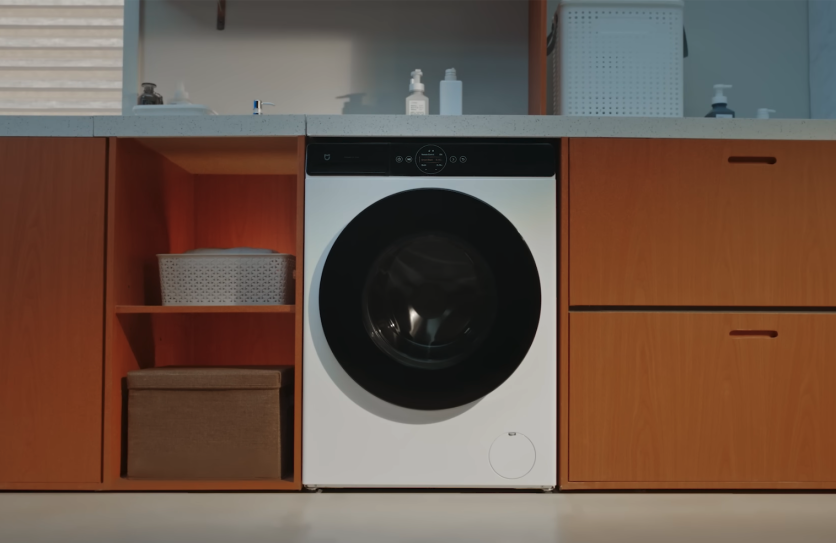
Xiaomi brought its Mijia washing machines to Germany last week — two smart front-loaders priced well below what Bosch, Miele, and Siemens charge for comparable models. At €449 (approximately $513 USD at current exchange rates — exchange rate as of July 23, 2026; conversions are approximate) for the standalone washing machine and €479 (approximately $547 USD) for the washer-dryer combo, the pricing is hard to dismiss. So is the fine print: both appliances connect to the Xiaomi Home app, which means they connect to an IoT cloud operated by a company legally subject to China's National Intelligence Law. That law requires all Chinese organizations to support and cooperate with state intelligence work on demand — and no GDPR privacy policy changes that.
Mijia Washers Land in Germany at Prices That Challenge Established Brands
The Xiaomi Mijia Washing Machine (8 kg, approximately 17.6 lbs) and the Mijia Washer-Dryer (8 kg washing, approximately 17.6 lbs / 6 kg drying, approximately 13.2 lbs) went on sale through the official Xiaomi Store in Germany, with the launch prices representing meaningful discounts from their list prices. The washer's MSRP is €499 (approximately $570 USD); the washer-dryer's MSRP is €559 (approximately $638 USD). Both are available immediately.
For context: comparable smart front-loaders from Bosch, Miele, and Siemens in the German market start at €600 and run well past €1,000 for models with equivalent connectivity and steam features. The Germany smart washing machine market was valued at approximately $276 million USD in 2024 and is projected to reach $694 million USD by 2030. Xiaomi is entering this market directly below the established players on price.
Both models are front-loading units sharing the same core hardware platform. Each features a 525 mm (20.7 in) drum diameter and a maximum spin speed of 1,400 RPM. A color display on the front panel allows users to navigate wash programs without diving through complicated menus. Both include a 15-minute quick wash cycle for lightly worn loads, plus an automatic high-temperature drum self-cleaning feature that reduces maintenance over time.
The washer offers over 27 programs; the washer-dryer offers over 30, though some must first be unlocked through the Xiaomi Home companion app. The depth of approximately 535 mm (21.1 in) is designed to fit standard European built-in cabinet niches. The design earned an iF Design Award in February 2024.
How the Inverter Motor and Steam Cycle Actually Work
The reason Xiaomi can offer a 12-year warranty on the motor while pricing the machine below Bosch starts with a Brushless DC (BLDC) inverter motor — in this case, using technology from established motor suppliers including Nidec.
A traditional AC induction motor uses mechanical brushes that wear against a commutator ring, generating friction, heat, and eventual failure. A BLDC motor eliminates the brushes entirely: electronic controllers handle commutation, varying the electrical signal to the motor windings to precisely control drum speed. This means the motor can rotate slowly and gently for a delicate wool cycle, shift to medium agitation for cotton, and ramp up to 1,400 RPM for a spin cycle — all without the friction losses that wear out a brushed motor. No brushes means no wear parts, which is why the warranty extends to 12 years on the motor even as the overall appliance warranty is a standard two years.
The hot-steam cycle is the other technical standout. Xiaomi claims the high-temperature steam system reduces bacteria by up to 99.99%, a figure tested under laboratory conditions by TÜV Süd, the German industrial certification body. Steam-based sanitation works by raising the internal drum temperature high enough to denature bacterial proteins and disrupt cell membranes — the same principle used in hospital-grade linen cleaning. It is distinct from a regular hot-water wash cycle in that steam penetrates fabric fibers more uniformly, without requiring the drum to be filled with water at the same temperature.
Read more: Xiaomi Smart Storage NAS: Same Processor as Synology, Crowdfunding Opens Tuesday
Why is Xiaomi able to offer these features at €449 (approximately $513 USD) when Bosch prices comparable steam-capable machines above €600? The answer lies in vertical integration and platform economics. Xiaomi's Mijia smart home ecosystem already powers hundreds of products — cameras, air purifiers, robot vacuums, refrigerators. The Xiaomi Home app and the cloud infrastructure behind it are not built for washing machines alone. Xiaomi spreads that development cost across an entire product portfolio, which means smart connectivity in a washing machine does not cost what it would cost a dedicated appliance company to develop from scratch.
What the Xiaomi Home App Connects You To — and What That Means
App connectivity is central to the Mijia pitch. Both appliances link to the Xiaomi Home app, enabling users to start or monitor cycles remotely, adjust settings, schedule washes, and receive over-the-air (OTA) firmware updates throughout the appliance's lifespan. The OTA capability is genuinely meaningful: it means Xiaomi can push program improvements, efficiency updates, and bug fixes to machines already in homes, rather than shipping a static feature set that cannot evolve.
It also means the machine maintains an active connection to Xiaomi's cloud infrastructure, transmitting cycle status, usage patterns, diagnostic data, error codes, and device identifiers back to Xiaomi's servers. For European users, Xiaomi has established Xiaomi Technology Netherlands B.V. as the European data controller under GDPR, and states it uses EU Standard Contractual Clauses for cross-border data transfers.
That European data governance structure does not fully resolve the legal framework that applies to Xiaomi as a Chinese-headquartered company. The EU Cyber Resilience Act (Regulation EU 2024/2847) will require Xiaomi to report actively exploited vulnerabilities in connected devices within 24 hours starting September 11, 2026 — less than two months from this writing — adding a new layer of mandatory disclosure that applies regardless of where the manufacturer is based.
Before You Buy: What China's Data Laws Mean for Your Laundry Data
This section exists because buyers deciding between a Xiaomi Mijia washer and a Bosch WAU28R75 are making a decision about more than spin speed and drum diameter. They are choosing a data relationship. Here is what that relationship involves when the manufacturer is a Chinese company.
China's National Intelligence Law (2017), Article 7 requires that all organizations and citizens shall support, assist, and cooperate with the state intelligence work. This is a mandatory legal obligation for Xiaomi as a Chinese company. It applies regardless of where Xiaomi's European servers are physically located and regardless of Xiaomi's stated GDPR commitments. A Dutch data controller subsidiary cannot void a legal obligation that attaches to the Chinese parent company under Chinese law.
China's Data Security Law (2021), Article 35 authorizes Chinese authorities to access data held by Chinese companies for the purpose of safeguarding national security and investigating crimes. Article 29 of the same law requires Chinese companies to notify PRC authorities of data security incidents — creating a parallel reporting obligation to the Chinese government that exists alongside GDPR breach notification requirements.
The amended Cybersecurity Law (revised 2025, effective January 1, 2026) extends these obligations and now includes AI governance provisions, reinforcing the overall data security compliance framework that applies to Xiaomi.
What data from a connected washing machine is potentially subject to these obligations? Xiaomi's own privacy policy confirms it collects usage frequency, app usage patterns, crash logs, device serial numbers, and IP addresses across Xiaomi products and services. A washing machine specifically generates cycle selection patterns, scheduling data, usage frequency, and network presence information. The Jamestown Foundation's analysis of Chinese IoT manufacturers noted that Xiaomi established an internal CCP committee in 2015 and that Party members constitute approximately 25% of Xiaomi's workforce.
No independent security audit of these specific Mijia 8 kg Germany models has been published. That is a gap worth noting when evaluating a connected appliance from any manufacturer entering a new market.
Buyers who proceed can take practical steps to reduce their data exposure. Placing the washing machine on a dedicated IoT network segment (VLAN) separate from devices containing sensitive personal data is the most effective technical measure, as it limits the ability of the appliance to communicate with other devices on the home network. Router-level firewall rules can restrict the appliance's outbound traffic to only what is needed for app connectivity. Reviewing and minimizing permissions granted to the Xiaomi Home app reduces the data the app collects about other device usage. None of these mitigations fully addresses the structural legal obligation under China's National Intelligence Law — they reduce the data surface but do not eliminate the condition that attaches to Xiaomi as a company under Chinese law.
One Energy Efficiency Number That Deserves a Closer Look
Both appliances wash well on the energy metrics, but the washer-dryer's drying performance carries a significant caveat. Xiaomi advertises that its appliances are "30 percent more efficient than Class A" when washing — but this figure comes from the company's own test report and is not an official EU energy label. It is a marketing claim, not a regulatory classification.
For the washer-dryer's drying function, there is an official EU energy rating: Class D, with a consumption of 306 kWh per 100 standard drying cycles. Class D places the drying performance in the fourth tier from the top under the EU's current A–G scale. This reflects a genuine engineering constraint: in a front-loading combination machine, the drum geometry optimized for washing tumble action limits drying airflow efficiency. Heat must be generated and circulated in a space not designed primarily for that purpose. Standalone tumble dryers outperform combination units on energy efficiency for this structural reason — and European electricity prices, which averaged approximately 41 euro cents per kilowatt-hour (approximately $0.47 per kWh at current exchange rates) in Germany in 2024, make the Class D drying rating a real cost factor for households that dry laundry frequently.
Buyers who primarily air-dry and only occasionally use the drying function will find the Class D rating less consequential. Buyers who rely on machine drying as a primary method should factor 306 kWh per 100 cycles into their energy cost projections.
Read more: IFA Berlin 2026 Kick-Off Tomorrow: Health Tech, AI Voice, and Humanoid Robots Lead Agenda
Specs at a Glance
| Mijia Washing Machine (8 kg) | Mijia Washer-Dryer (8 kg) | |
|---|---|---|
Launch Price | €449 (~$513 USD) | €479 (~$547 USD) |
MSRP | €499 (~$570 USD) | €559 (~$638 USD) |
Washing Capacity | 8 kg (17.6 lbs) | 8 kg (17.6 lbs) |
Drying Capacity | — | 6 kg (13.2 lbs) |
Max Spin Speed | 1,400 RPM | 1,400 RPM |
Drum Diameter | 525 mm (20.7 in) | 525 mm (20.7 in) |
Programs | 27+ | 30+ |
Steam Cycle | Yes | Yes |
Quick Wash | 15 min | 15 min |
App Control | Xiaomi Home | Xiaomi Home |
Drying Energy Rating | — | Class D (306 kWh/100 cycles) |
Warranty | 2 yr / 12 yr motor | 2 yr / 12 yr motor |
Bosch and Miele Can Ignore This. European Buyers Probably Cannot.
Xiaomi's Mijia laundry line has the specifications and price points to compete in the German market without apology. The BLDC inverter motor with its 12-year coverage, the TÜV Süd-certified steam sanitation, the OTA update infrastructure, the €30 (approximately $34 USD) premium for the washer-dryer combo over the standalone machine — these are not budget-appliance compromises. They are competitive product decisions.
The decision framework for a European buyer comes down to three things the price tag does not show: the drying energy efficiency gap (Class D versus Class A for dedicated dryers), the absence of an independent security audit for these specific models, and the structural legal condition that makes Xiaomi different from a European appliance manufacturer. Bosch, Miele, and Siemens are subject to European law and European regulators. Xiaomi Technology Netherlands B.V. is a GDPR-compliant European entity — but Xiaomi Inc. in Beijing is simultaneously subject to China's National Intelligence Law, a condition that no amount of Standard Contractual Clauses resolves in a scenario where Chinese intelligence authorities make a lawful request under Chinese law. A buyer who reads only this paragraph and sees only the price advantage has not finished the analysis.
Frequently Asked Questions
Are Xiaomi washing machines available in the US?
As of July 2026, the Mijia Washing Machine (8 kg) and Mijia Washer-Dryer (8 kg) described in this article are available only through the Xiaomi Store Germany. No US availability has been announced for these models. Xiaomi has previously launched a different washer-dryer model (the Mijia Front Load Washer Dryer Pro 9 kg) in European markets including the UK, Netherlands, France, and Slovakia, but US large-appliance availability remains undisclosed.
Does the Xiaomi Home app collect data from the washing machine, and where does that data go?
Yes. The Xiaomi Home app collects usage patterns, cycle selection history, scheduling data, device identifiers, and error codes from connected appliances. For European users, Xiaomi Technology Netherlands B.V. acts as the GDPR data controller, and Xiaomi states it uses EU Standard Contractual Clauses for cross-border data transfers. However, Xiaomi Inc. as a Chinese-headquartered company is also subject to China's National Intelligence Law (2017), Article 7, which legally compels all Chinese organizations to cooperate with state intelligence work on demand. These two legal frameworks coexist, and the Chinese obligation cannot be voided by Xiaomi's European corporate structure.
How does Xiaomi's "30 percent more efficient than Class A" washing claim compare to the EU energy label?
They are different things. Xiaomi's "30 percent more efficient than Class A" claim is based on the company's own internal test report — it is not an EU energy label. The EU energy label is independently assessed and assigned on an A–G scale. No official EU washing energy class is published for these specific models in the sources reviewed. The washer-dryer's drying function does carry an official EU energy rating: Class D, consuming 306 kWh per 100 standard drying cycles, which buyers who use the dryer frequently should factor into total cost of ownership.
What practical steps can a buyer take to limit data exposure from a Xiaomi smart appliance?
Network segmentation is the most effective technical measure: place the washing machine on a dedicated IoT VLAN or a separate Wi-Fi network isolated from devices containing personal data. Router-level firewall rules can restrict the appliance's outbound traffic to only what is needed for app connectivity. Minimizing permissions granted to the Xiaomi Home app on your smartphone reduces the data the app collects about other device usage. Note that these steps reduce the data surface but do not eliminate the structural legal condition under China's National Intelligence Law, which attaches to Xiaomi as a company regardless of device-level settings.

-
 C114 Communication Network
 -
 Communication Home
