
 Search

Iai.co.il
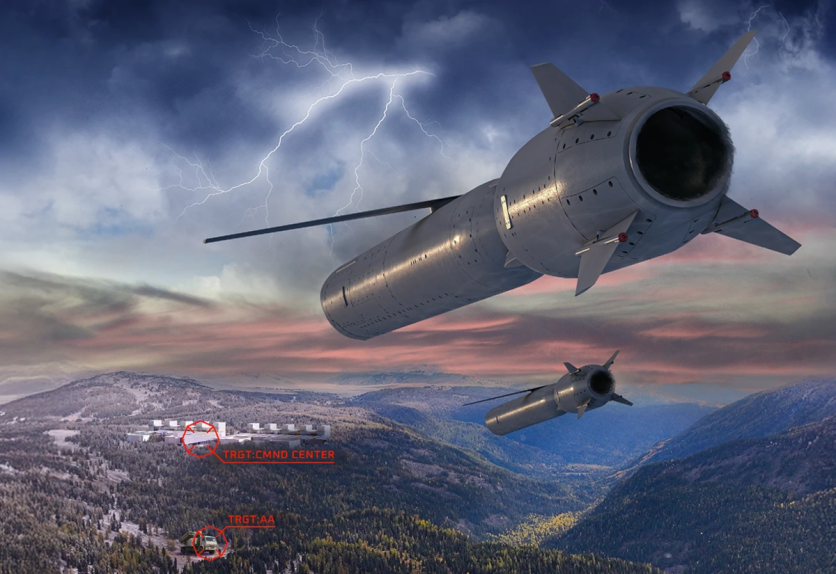
Israel Aerospace Industries introduced HYPNOSIS on Thursday, a navigation warfare platform that defeats large numbers of satellite-guided attack drones not by intercepting them but by corrupting the GPS signals they depend on to find their targets — and with zero interceptors expended per drone defeated. The announcement, timed two days before the Farnborough International Airshow opens on July 20, arrives against a backdrop of documented GNSS interference already endangering civil aviation worldwide, which means the system's proliferation raises questions that extend well beyond the military installations it is designed to protect.
The system's central promise is economic. Defending against a Shahed-class one-way attack drone — the mass-produced loitering munitions that have become the defining weapons of modern drone-saturation campaigns — currently costs defenders an interceptor missile worth between $1 million and $3 million per shot. The incoming drone costs around $35,000. HYPNOSIS, if it works as IAI claims, collapses that exchange ratio to near-zero on the defender's side.
Israel's Air Defense Labs Spend Years Building the Defense. HYPNOSIS Flips It Around.
IAI spent more than two decades developing and combat-proving its ADA GNSS Anti-Jamming System — a defensive tool that protects friendly aircraft, drones, and vehicles from having their own navigation signals disrupted by an adversary. The ADA system uses a multichannel Controlled Reception Pattern Antenna (CRPA) that filters out interference arriving from unwanted directions, and it saw operational use during Operation Guardian of the Walls in May 2021 protecting Israeli Air Force F-16s and UAVs.
HYPNOSIS applies the same underlying expertise in the opposite direction. Rather than shielding a friendly receiver from hostile jamming, it transmits hostile jamming against enemy receivers. The architecture is a network of mobile stations, each one a high-power effector designed to disrupt GNSS signals across multiple frequency bands and satellite constellations simultaneously — targeting not just GPS but GLONASS, BeiDou, and Galileo bands — all feeding into a single central Command and Control (C2) center that coordinates responses in real time.
The C2 center can run the network autonomously, without requiring a human operator to direct each station during an attack. In a saturation scenario — where dozens or hundreds of drones approach simultaneously from multiple directions — that autonomy is the difference between responding at machine speed and responding at the speed a human can process incoming threat data.
Two distinct mechanisms work in concert. Jamming overwhelms the legitimate satellite signal by broadcasting a stronger transmission on the same radio frequency, drowning out the real navigation data a drone needs to receive — crude but immediate. Spoofing is more insidious: it broadcasts counterfeit navigation signals structured to match authentic satellite output, tricking a drone's receiver into computing an incorrect position or heading without the drone detecting any disruption at all. The drone simply flies the wrong way, silently and confidently, toward a target that isn't there.
Guy Barlev, Executive Vice President and General Manager of IAI's Space, Missiles and Systems division, described the system as an addition to existing defenses, not a substitute for them.
"HYPNOSIS provides a critical and highly effective soft-kill defense layer, enabling nations to address the growing spectrum of GNSS-based aerial threats. When integrated with hard-kill defense systems, it further strengthens the multi-layered defense concept by adding an additional protection layer that is operationally effective and cost-efficient," Barlev said.
IAI is marketing HYPNOSIS for fixed, high-value installations: strategic government sites, energy infrastructure, military bases, and existing air defense arrays. It is not positioned as a system that accompanies troops in the field.
What GNSS-Guided Drones Actually Cost — and Why the Numbers Matter
The cost asymmetry HYPNOSIS is designed to break has been documented with unusual precision by the Center for Strategic and International Studies. Russia's Shahed-type one-way attack drones — manufactured domestically as the Geran-2 — cost an estimated $35,000 per unit, a conservative midpoint between the lowest credible estimates and figures cited by Ukrainian media. A PAC-3 Patriot interceptor costs more than $3 million. A NASAMS AIM-9X round costs more than $1 million. CSIS researchers found the Shahed is the most cost-effective munition in Russia's firepower arsenal — not because it hits its target reliably, but because it costs so little that mass salvos impose unsustainable attrition costs on defenders even when interceptors work.
The math runs roughly: shooting a NASAMS round at a Shahed drone loses the defender more than $600,000 in value per engagement, assuming only the interceptor's cost. Russia has exploited this imbalance by launching salvos at scale, using Shaheds simultaneously as strike weapons and as instruments for exhausting air defense stockpiles that Western allies struggle to replenish fast enough.
Boaz Levy, IAI's Chairman of the Board, framed HYPNOSIS as a response to exactly this dynamic at the system's unveiling.
How Does GNSS Jamming Affect Civilian Aircraft?
The technology HYPNOSIS deploys has a documented record of harming civilian navigation systems — not through malice but through physics. GNSS satellite signals arrive at Earth's surface at extraordinarily low power, roughly –130 dBm, after traveling 20,000 kilometers from orbit. A ground-based transmitter broadcasting on the same frequencies at even modest power will overwhelm real satellite signals across a significant radius. That radius does not stop at a military installation's perimeter fence.
The International Air Transport Association reported in early 2025 that GPS spoofing incidents affecting civil aviation spiked by 500 percent in 2024 compared to 2023, while broader GNSS interference rates rose 175 percent year-over-year — figures IATA Director General Willie Walsh described as "deliberate and unacceptable risks to civil aviation." Aviation safety organization OpsGroup documented the surge in granular operational terms: an average of 300 flights per day were experiencing spoofing in early 2024; by August 2024, the figure had reached 1,500 flights per day. In a survey of nearly 2,000 flight crew members, 70 percent rated their concern about GPS spoofing's impact on flight safety as very high or extreme. The European Aviation Safety Agency issued a formal safety bulletin in July 2024 warning of the frequency and scope of GPS interference impacts.
The consequences are not confined to disrupted autopilots. On December 25, 2024, Azerbaijan Airlines Flight 8243 lost GPS navigational aids due to jamming as it entered Russian airspace near Grozny. The aircraft was subsequently struck by fragments of a Russian Pantsir-S1 surface-to-air missile and crashed near Aktau, Kazakhstan, killing 38 of the 67 people on board. The GPS loss contributed to the chain of events that diverted the aircraft into the engagement zone.
These incidents are not the product of systems designed to harm civilian navigation — they are byproducts of military GNSS disruption deployed in or near airspace that civilian aircraft also use. HYPNOSIS, deployed around fixed sites, creates exactly that condition in a controlled peacetime context. How much of its GNSS disruption will reach surrounding civilian airspace depends on system design details IAI has not publicly disclosed — specifically whether the jamming and spoofing transmissions are directional or omnidirectional, and what the effective coverage radius is for each mobile station. The IAI product sheet describes stations as covering "a broad spectrum" of threats "approaching simultaneously from multiple directions," which does not suggest narrow directional beaming.
HYPNOSIS's Limit: When Drones Don't Need GPS
The most significant omission in IAI's product launch framing — and in most of the coverage it received — is that the cheapest and most widely deployed attack drones are not HYPNOSIS's hardest targets. They are its easiest ones.
The Shahed-136 drones that have driven the Patriot interceptor cost crisis carry both GNSS and an inertial navigation system (INS) as backup. An INS uses onboard gyroscopes and accelerometers for dead-reckoning — continuously estimating position from known starting point and measured movement, without any external signal. A Shahed whose GNSS is successfully jammed can, in principle, continue navigating via INS, with accuracy degrading over distance depending on the quality of the inertial sensors. The degree to which HYPNOSIS defeats INS-equipped drones, rather than merely degrading their GNSS-component accuracy, is not addressed in IAI's public materials.
More directly, a July 12, 2026 strike against US military installations in the Gulf by Iran's Islamic Revolutionary Guard Corps demonstrated that the adversaries most likely to deploy drone swarms against high-value targets are already fielding GNSS-independent or GNSS-hardened guidance. Iran's Zolfaghar ballistic missiles, guided by China's BeiDou-3 satellite navigation, maintained 98 percent accuracy against US targets despite active US jamming — a capability gap that exposed the structural limit of NAVWAR-based defense against adversaries with multi-constellation or non-GPS guidance.
The NAVWAR arms race is not a future problem. The defense industry has documented active development of GNSS-denied navigation for drones — inertial systems, optical navigation using terrain reference or visual odometry, and LIDAR-based environmental scanning — that would render a HYPNOSIS-class system ineffective against a next-generation hardened drone. IAI's own product sheet acknowledges this implicitly, describing HYPNOSIS as "proven effective against resilient and hardened PNT systems" — a claim that refers to current-generation hardening, not the INS-optical fusion systems now entering adversary procurement.
None of this negates the near-term value of HYPNOSIS against the mass-produced, low-cost GNSS-primary drones that constitute the current swarm threat. Against a salvo of Shahed-class drones relying primarily on GPS guidance, a NAVWAR soft-kill layer that directs them away from their targets without expending a single interceptor represents a genuine advance in cost-effective defense. The constraint is that adversaries have both the financial incentive and the demonstrated technical capability to close that window.
What Comes Next at Farnborough and Beyond
IAI has not named any military customers for HYPNOSIS, nor confirmed whether the Israel Defense Forces are evaluating it — a notable silence given Israel's active operational experience with drone saturation from Hezbollah, Houthi, and Iranian forces. The Farnborough International Airshow, which opens July 20 and runs through July 24, is expected to generate procurement discussions with NATO members and Gulf state delegations, many of whom have watched Shahed-class drone proliferation extend toward their own territory over the past 18 months.
What HYPNOSIS offers the air defense market is a third cost category — neither the $3 million interceptor nor the free-falling laser pulse, but an electronic countermeasure that can defeat multiple GNSS-guided threats simultaneously at near-zero marginal cost per engagement. Whether that advantage holds as drone guidance technology matures is the question the arms race will answer. For the current battlefield — saturated with cheap, GNSS-primary one-way attack drones — the cost math is compelling. For the battlefield two generations ahead, where optical and inertial navigation are standard on even cheap platforms, the calculation will need to be revisited.
Frequently Asked Questions
What is navigation warfare (NAVWAR) and how is it different from shooting down a drone?
Navigation warfare — NAVWAR in military shorthand — is the deliberate disruption or manipulation of satellite-based positioning signals, rather than physical destruction of the target itself. It is classified as electronic warfare and specifically as "soft-kill" defense, meaning it disables or misdirects a threat without intercepting it kinetically. A NAVWAR system like HYPNOSIS interferes with the GNSS signals a drone relies on to calculate its position and heading — either by overpowering them with noise (jamming) or by broadcasting counterfeit signals that trick the receiver into computing a false location (spoofing). The drone, misled about where it is, never reaches its target. The practical advantage over kinetic interception is cost: no interceptor missile is consumed per drone defeated. The practical risk is that GNSS disruption does not stop at the boundary of the defended installation — it affects any receiver operating in range.
Can drones navigate without GPS, and does that defeat HYPNOSIS?
Yes. Modern attack drones increasingly carry inertial navigation systems (INS) as backup — gyroscopes and accelerometers that estimate position through dead-reckoning without any external signal. The Shahed-136, the most widely deployed one-way attack drone in current conflicts, carries both GNSS and INS guidance. How much accuracy an INS-equipped drone retains when GNSS is jammed depends on the quality of its inertial sensors and the flight distance remaining. Beyond INS, more advanced drones are being developed with optical navigation using terrain reference imagery and LIDAR — systems that are fully independent of any satellite signal. A July 12, 2026 strike on US Gulf installations demonstrated that Iran's Zolfaghar ballistic missiles, using China's BeiDou-3 GNSS, maintained 98 percent accuracy even under active US jamming. HYPNOSIS addresses the current-generation GNSS-primary threat effectively; it does not resolve the problem of adversaries with hardened or multi-constellation navigation.
What does GPS jamming near a military base mean for civilian aircraft and ships?
GNSS satellite signals reach Earth at very low power — roughly –130 dBm — making them easy to overwhelm with a stronger ground-based transmitter. When a military site deploys high-power GNSS jamming, that interference does not stop at the installation boundary; it propagates outward and affects receivers in surrounding airspace and maritime lanes. The International Air Transport Association recorded a 500 percent surge in GPS spoofing incidents affecting civil aviation in 2024, with military jamming operations in conflict zones the primary driver. On December 25, 2024, GPS jamming near Grozny contributed to the diversion of Azerbaijan Airlines Flight 8243 into a zone where Russian air defenses were active; 38 people died. For HYPNOSIS deployments around energy infrastructure or government sites in or near civil aviation corridors, the civilian spillover risk is a legitimate safety concern that IAI's public materials do not address.
What is HYPNOSIS designed to protect, and how is it deployed?
HYPNOSIS is designed for fixed, high-value installations: military bases, energy infrastructure such as oil refineries and power plants, strategic government facilities, and existing air defense arrays. It is not a mobile battlefield system designed to accompany troops in the field. Physically, the system consists of an array of mobile jamming and spoofing stations — each a high-power effector capable of disrupting multiple GNSS frequency bands and constellations — all connected to a central Command and Control (C2) center that coordinates responses in real time. The C2 center can run the network autonomously without operator intervention, enabling machine-speed responses to saturation attacks. IAI markets it as a complement to kinetic missile defense, not a replacement — designed to reduce the volume of threats that must be physically intercepted, conserving expensive interceptor stockpiles for the threats that get through or are not GNSS-dependent.

-
 C114 Communication Network
 -
 Communication Home
