
 Search

Claudio Schwarz/Unsplash
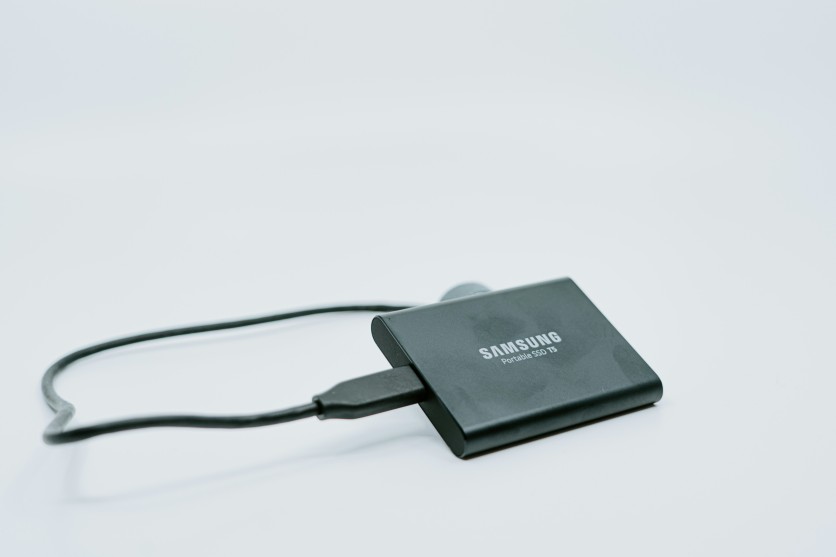
External SSDs have transformed storage for professionals and gamers, delivering unmatched speeds and reliability in compact, portable formats. Modern drives now achieve 4,000–5,500MB/s sequential reads, making them suitable for 8K video editing, PS5 expansion, and demanding workflows. Portable SSD comparison highlights rugged options for field use alongside sleek, lightweight drives for everyday backups, proving there's an external SSD for every need.
Thunderbolt 5 and USB4 interfaces close platform gaps between Windows and Mac, while AES-256 encryption secures multi-terabyte datasets without slowing performance. With five-year warranties and MTBF ratings exceeding 2.5 million hours, these external SSDs combine speed, durability, and peace of mind. Real-world sustained performance tests now matter more than marketing peak numbers, giving professionals clear benchmarks for fast storage devices.
External SSDs Speed Benchmarks and Controllers
Fast storage devices now rely on high-performance controllers, efficient NAND architectures, and optimized enclosures to maximize throughput and maintain consistent performance under heavy workloads. With modern USB4 and Thunderbolt 5 interfaces, external SSDs are capable of handling 8K video editing, large asset transfers, and game libraries with minimal bottlenecks. Benchmarking real-world sustained speeds, not just peak reads, is critical when choosing a drive for professional workflows or console expansion.
- Corsair EX400U: USB4 interface delivers 4,000MB/s reads and 1,700MB/s sustained Iometer writes. The Phison E26 controller ensures compatibility across Windows 11 and macOS Sonoma while keeping thermal throttling low during long transfers. Its aluminum unibody also doubles as a heat sink to maintain consistent speeds.
- LaCie Rugged SSD Pro5: Thunderbolt 5 enclosure achieves 4,864MB/s peak on M4 Max Mac Minis, sustaining 3,700MB/s over 15-minute stress tests. Ruggedized design allows IP67 dust/water resistance, while integrated thermal management keeps the drive cool during intensive tasks.
- Crucial X9 Pro: USB 3.2 Gen2x2, 1,050MB/s, Realtek RTL9210B bridge ensures universal compatibility, including macOS Time Machine. Its compact design and passive cooling make it ideal for cross-platform portability.
- SanDisk Extreme Pro G2: 2,000MB/s bidirectional speeds, IP65 weatherproofing, 3-meter crush resistance, and optimized firmware for media editing ensure reliability even in field environments.
- Adata SE920: USB4, capable of 3,300MB/s writes, though sustained speeds plateau at 2,500MB/s under prolonged transfers due to thermal limits. Lightweight and portable, it balances speed with convenient form factor.
Fast Storage Devices Reliability and Endurance
Reliable external SSDs are designed to withstand demanding workloads, extreme environments, and frequent transport. High-quality NAND, robust enclosures, thermal management, and advanced firmware combine to ensure drives maintain peak performance and data integrity over time. Professional workflows, 4K/8K video editing, and console game expansions rely on endurance metrics like TBW (terabytes written), IP ratings, and MIL-STD certifications to avoid interruptions or drive failure.
- Crucial X9 Pro: 4TB model rated for 600TBW endurance, backed by a five-year warranty. Micron 232-layer TLC NAND ensures reliable performance even under repeated heavy transfers.
- LaCie Rugged SSD4: Includes Seagate Rescue data recovery services, rated for 10-foot drops, MIL-STD-810H certified. Its robust enclosure protects against shocks and rough handling during fieldwork.
- Samsung T9 Shield: Dynamic thermal guards prevent throttling during extended 4K ProRes or RAW video exports. IP65 dust and water resistance makes it ideal for on-location editing.
- WD Black P50 Game Drive: PS5 Game Mode matches internal M.2 speeds with up to 1,200TBW endurance. Rugged design and firmware optimizations maintain load times under extended gaming sessions.
- OWC Envoy Pro Elektron: Survives 400G vibration events; SMART monitoring provides real-time health metrics, alerting users before potential failures.
Read more: Most Anticipated PS5 Games That Will Make a Grand Entrance in 2026
Portable SSD Comparison for Cross-Platform Use
Portable SSD comparison is key when evaluating compatibility, convenience, and performance across Mac, Windows, and gaming consoles.
- Crucial X6: 540MB/s USB 3.2 Gen2, 42g pocketable chassis, three-year warranty.
- Samsung T9: AES 256-bit hardware encryption, 2m drop rating, Magician software supports Windows and Mac.
- SK hynix Beetle X31: 1,050MB/s USB-A/USB-C, passive aluminum dissipates 7W heat.
- Lexar SL660: 1,800MB/s, PS5-ready, removable sleeve protects ports.
- Synology BeeDrive: Auto-backup hub, RAID mirroring, real-time sync across devices.
Tips for cross-platform use:Ensure drives have universal interfaces, AES hardware encryption, and tested compatibility.
- What portable SSDs work best with Mac and Windows? Crucial X9 Pro for USB-C universal compatibility; Samsung T9 for cross-platform software; LaCie Rugged dual-mode Thunderbolt/USB-C.
- Which external SSDs survive drops and harsh environments? LaCie Rugged Pro IP68 10ft drop; SanDisk Extreme Pro G2 IP65 3m crushproof; WD P50 Game Drive 20G shock.
Thermal Management, Power Delivery, and Capacity Scaling
Managing heat and power is essential for modern external SSDs to sustain peak performance during heavy workloads. Aluminum heatsinks and passive cooling dominate 70% of portable drives, preventing SLC cache throttling and maintaining around 80% of peak speeds even during 200GB+ transfers. USB4 40Gbps fully saturates PCIe Gen3x4 NVMe controllers, while 100W Power Delivery enables laptop charging during extended 8K video editing or gaming sessions. Dynamic thermal throttling protects NAND lifespan, and SMART monitoring logs alert users to potential failures before they occur, ensuring consistent reliability for professional and consumer use.
Capacity scaling and price performance now make high-speed external SSDs accessible for creators and gamers alike. 8TB drives drop below $0.10/GB in 2026, while 4TB models remain the sweet spot at ~$250 with over 1,000MB/s sustained speeds and 600TBW endurance. Mainstream 2TB drives perfectly fit PS5 game libraries, delivering 5,500MB/s expansion speeds, and 1TB entry-level options suit mobile workflows with USB 3.2 Gen2x2 speeds without premium Thunderbolt costs. Bulk purchasing offers roughly 15% savings, while enterprise recovery services add ~$100 for mission-critical datasets.
External SSDs That Set the Standard in 2026
Fast storage devices in 2026 combine speed, reliability, and portability without compromise. High-end Thunderbolt and USB4 drives, rugged IP-rated enclosures, and cross-platform compatibility make external SSDs ideal for professional creatives and gamers alike.
Real-world performance, thermal management, and sustained write endurance determine which SSDs are truly future-proof, while price/performance scaling ensures budget-conscious users can find suitable options. By prioritizing these factors, portable SSDs now match or exceed internal M.2 drives for many workflows.
Frequently Asked Questions
1. Which external SSDs are fastest in 2026?
Corsair EX400U, LaCie Rugged SSD Pro5, and Crucial X9 Pro deliver top speeds up to 5,500MB/s. Thunderbolt 5 drives outperform USB3 and USB4 in sustained workloads, ideal for 8K editing and PS5 expansions.
2. Are portable SSDs safe for travel?
Yes. IP65+ ratings, shockproof enclosures, and AES-256 encryption make drives durable against drops and moisture. Rugged SSDs like LaCie Pro and SanDisk Extreme Pro withstand field use.
3. Do external SSDs work on both Mac and Windows?
Many drives, including Crucial X9 Pro and Samsung T9, are universally compatible. Drivers and bridge chips ensure Time Machine and FileVault support on macOS.
4. What capacity is ideal for gaming and video editing?
4TB is the sweet spot for 8K projects and gaming libraries, balancing cost, speed, and endurance. 8TB is preferred for archival storage, while 1–2TB suits casual users.
Read more: CES 2026: Dreame Cyber X Concept Shows Off a Robot Vacuum That Can Climb Full-Size Stairs

-
 C114 Communication Network
 -
 Communication Home
