
 Search

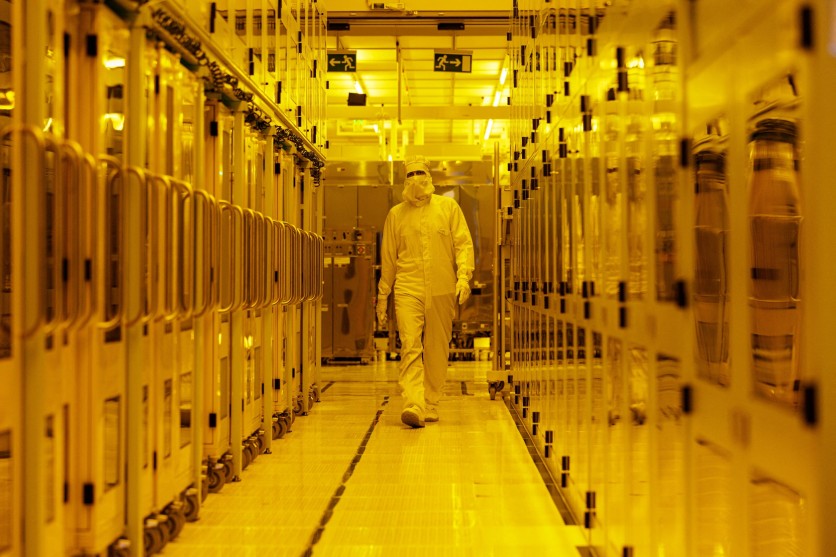
An employee walks at the clean room for 300mm wafer manufacturing at the plant of German semiconductor manufacturer Infineon Technologies AG in Dresden, eastern Germany, on June 10, 2026. On July 2, 2026, Infineon will officially open its Smart Power Fab that manufactures power semiconductors as well as analog/mixed-signal-components in Dresden. With an investment of five billion euros, the new facility represents the largest single investment in Infineon's history. ens SCHLÜTER/AFP via Getty Images
The foundry sector is growing strongly on AI infrastructure demand — and Chinese chipmakers are among the clear winners, buoyed by domestic demand and bottlenecks at the leading edge, according to Counterpoint Research.
The mechanism is worth noticing: the same AI boom that cements TSMC's dominance at the top of the market is, indirectly, strengthening its competitors a tier below. As the industry leader pours capacity into the cutting-edge chips that AI accelerators require, the older work it used to absorb is spilling outward — and a wide field of second-tier foundries is catching it.
A Sector Lifted by AI
Global "Foundry 2.0" revenue — which includes foundries, integrated device manufacturers, packaging firms, and photomask makers — reached $86 billion in the first quarter, up 23% year over year, Counterpoint said on June 26. The growth is driven by robust demand for AI chips: as global big tech orders more leading-edge wafers and advanced packaging, foundries and major chip-assembly-and-test firms benefit. Industry leader TSMC posted 41% revenue growth in the quarter, by Counterpoint's count, and is on track for about 36% for the full year.
What "Foundry 2.0" Means
The label is Counterpoint's broader way of counting the chipmaking business: not only the pure-play foundries that etch wafers, but the integrated device makers, the advanced-packaging firms, and the photomask makers as well. The reason for the wider lens is that in the AI era, packaging many chips together — stitching multiple dies and high-bandwidth memory into one system — has become nearly as decisive as printing the transistors. AI accelerators need both the most advanced nodes and that advanced packaging, which is why the sector is expanding and why TSMC, strong at both, captures the most.
How the Overflow Works
A foundry has finite capacity, so when TSMC shifts its fabs toward the scarce, high-value leading-edge work AI customers are clamoring for, it has less room for the older, "mature" nodes — the larger, cheaper processes that make everything from power-management chips to display drivers. Those orders don't vanish; they flow to whoever else can fill them. That trickle-down has lifted the second tier: SMIC grew 12% and Nexchip 19%, while Taiwan's UMC and Vanguard rose 10% and 14%, the latter two also helped by a recovery in consumer-electronics demand and steady power-management-chip orders.
Read more: TSMC Arizona Fab Posts $514M Year-One Profit: Q1 2026 Earnings Surpass Full 2025 Figure
Why Chinese Foundries Catch an Extra Tailwind
China's foundries are riding the overflow like their Taiwanese peers, but with two added boosts that Counterpoint highlights. Domestic customers are increasingly sourcing chips locally — a semiconductor-localization push that steers more orders to homegrown fabs — and wafer prices have been rising structurally across both 8-inch and 12-inch processes, lifting revenue even at steady volume. None of this is leading-edge competition with TSMC; it is mature-node business plus home-market demand, which is why SMIC's and Nexchip's revenue can climb in the same quarter TSMC's does. Counterpoint expects those favorable conditions to persist through the year, supporting continued growth across Chinese foundries.
Samsung's Room to Grow
Samsung Electronics — the second-largest foundry, excluding its System LSI business — is also seen by Counterpoint as having room to grow as AI chip demand expands and TSMC's capacity stays tight. It has reportedly secured a large 2-nanometer order from Tesla and has raised utilization at key nodes including 4nm and 8nm, though smartphone seasonality weighed on its first-quarter revenue. That outlook is a forward thesis more than a current trend: Samsung's foundry has been losing ground to TSMC in recent quarters and fending off a fast-rising SMIC for second place, so the case for a rebound rests largely on its 2nm ramp — anchored by Tesla — translating into higher-value designs.
Read more: Samsung Taylor Fab Production Confirmed for 2027: SF2P+ 2nm Process Goes In
Frequently Asked Questions
What is Foundry 2.0?
Foundry 2.0 is a broader definition of the chip-manufacturing market used by Counterpoint Research. Rather than counting only pure-play foundries — the companies that fabricate chips designed by others — it also includes integrated device manufacturers, advanced-packaging firms, and photomask makers. The wider lens reflects how, in the AI era, packaging multiple chips and memory together into a single system has become almost as important as manufacturing the transistors themselves. By this measure, the global market reached $86 billion in the first quarter of 2026, up 23% year over year.
Why are Chinese foundries growing?
According to Counterpoint, Chinese foundries such as SMIC and Nexchip are benefiting from three main factors. First, as TSMC concentrates its capacity on leading-edge nodes for AI chips, mature-node orders are overflowing to other foundries, including Chinese ones. Second, domestic customers in China are increasingly sourcing chips locally, a semiconductor-localization trend that directs more business to homegrown fabs. Third, wafer prices have risen structurally across both 8-inch and 12-inch processes, lifting revenue even without higher volume. These are mature-node and domestic-demand dynamics rather than leading-edge competition with TSMC.
How much did the foundry market grow in Q1 2026?
Counterpoint Research reported that global Foundry 2.0 revenue reached $86 billion in the first quarter of 2026, a 23% increase year over year. The growth was driven mainly by strong demand for AI GPUs and AI ASICs, which boosted both leading-edge wafer manufacturing and advanced packaging. TSMC was the primary beneficiary, with Counterpoint crediting it with 41% revenue growth in the quarter, while leading chip-assembly-and-test firms also gained as packaging became a critical constraint in the AI supply chain.
What is mature-node overflow?
Mature-node overflow refers to manufacturing orders for older, larger semiconductor processes shifting from a capacity-constrained leading foundry to other manufacturers. Because a foundry has limited capacity, when TSMC prioritizes the advanced nodes that AI chips require, it has less room for mature-node production — the established, lower-cost processes used for chips like power-management ICs and display drivers. Those orders move to second-tier foundries such as Taiwan's UMC and Vanguard and China's SMIC and Nexchip, helping explain why those companies' revenues have risen alongside the broader AI-driven boom.

-
 C114 Communication Network
 -
 Communication Home
