
 Search

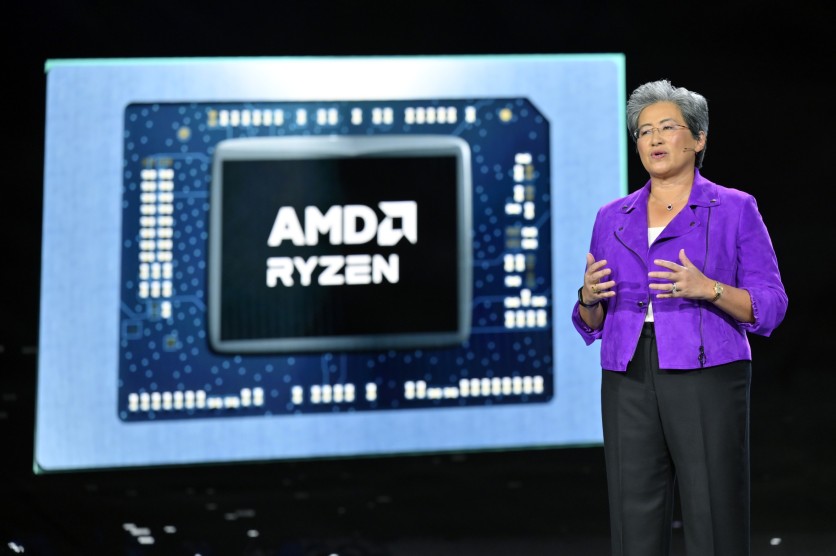
AMD Chair and CEO Dr. Lisa Su delivers a keynote address at CES 2023 at The Venetian Las Vegas on January 04, 2023 in Las Vegas, Nevada. CES, the world's largest annual consumer technology trade show, runs from January 5-8 and features about 3,100 exhibitors showing off their latest products and services to more than 100,000 attendees. David Becker/Getty Images
Anyone planning to buy an AMD Radeon GPU in the next few months may want to move sooner rather than later. A post on Board Channels — the Chinese supply-chain trade forum that correctly called at least two earlier rounds of Radeon price adjustments — reported Friday that AMD may direct its add-in board partners to raise Radeon GPU and VRAM bundle prices by 10 to 15 percent as early as July, according to coverage by VideoCardz. AMD has not confirmed the move. But the underlying cost pressure — GDDR6 memory spot prices have roughly tripled since late 2025 — is real, structural, and shows no near-term signs of easing.
Why GDDR6 Memory Costs Have Tripled Since Late 2025
GDDR6 is the memory standard used in most consumer discrete graphics cards, including AMD's Radeon RX 9000 series. Its spot price — the market rate for immediate delivery, as opposed to long-term contract pricing — has surged approximately three times over since late 2025, according to the supply-chain report cited by VideoCardz. That figure has not been independently confirmed by a named memory market analyst such as TrendForce, and readers should treat it as a supply-chain estimate rather than a verified market data point.
The mechanism driving that increase is worth understanding, because it determines whether this price pressure is temporary or persistent. The common explanation — that AI accelerators are pulling VRAM supply away from consumer GPUs — is true in effect but imprecise in mechanism. Flagship AI data-center processors like Nvidia's H100 and AMD's own MI300X use HBM (High Bandwidth Memory), not GDDR6, and therefore do not directly compete with consumer graphics cards for the same chips. The real supply dynamic is one level upstream: memory manufacturers including Samsung and SK Hynix have shifted substantial wafer-fabrication capacity toward HBM production, which carries higher profit margins in the current AI infrastructure boom. That reallocation reduces overall DRAM wafer starts, including for GDDR6 — creating a supply squeeze on consumer GPU memory even though flagship AI accelerators are not consuming GDDR6 directly.
The implication is that this squeeze is structural, not cyclical. As long as enterprise AI deployments keep scaling and HBM margins remain elevated, memory fabs have limited incentive to restore GDDR6 wafer capacity to prior levels. A one-time demand spike can be corrected by capacity expansion; a sustained margin differential cannot be corrected until either AI HBM demand plateaus or GDDR6 prices rise enough to attract capacity back.
Which Radeon RX 9000 Series Cards Could Cost More
If AMD proceeds with the reported increase, the Radeon RX 9000 lineup would be the primary target. The Board Channels report specifically references GPU and VRAM bundle pricing, suggesting the increase would apply to add-in board partner cards rather than AMD's own reference designs exclusively. Cards likely to be affected include the RX 9060 XT, RX 9070, RX 9070 XT, and the anticipated RX 9080. A 10 to 15 percent increase on cards currently retailing in the $400 to $700 range would translate to $40 to $105 in additional cost per unit.
It is worth understanding why the Board Channels post is an early warning rather than a price announcement. The GPU pricing chain works as follows: AMD communicates pricing guidance to its AIB partners — companies such as ASUS, MSI, Gigabyte, Sapphire, and PowerColor — who then design and manufacture the retail cards consumers buy. Board Channels intercepts signals in that AMD-to-AIB communication layer. By the time a price change reaches retail shelves, the supply-chain discussion has typically already occurred weeks or months earlier. This is why the forum carries predictive weight: it is reading signal at the source rather than waiting for a retail price tag to change.
AMD vs Nvidia GPU Pricing: Why the Competitive Gap Matters Now
The most consequential detail in the Board Channels report may be what Nvidia has not done. As of the report's publication on Friday, Nvidia had issued no corresponding price-increase notice to its AIB partners. If that asymmetry holds when any AMD hike takes effect, AMD's Radeon lineup would enter the back-to-school and early-fall GPU purchasing window at a meaningful competitive disadvantage — the precise moment when consumer GPU sales traditionally accelerate.
Whether Nvidia is absorbing higher memory costs internally, operating under different supply arrangements, or simply waiting to observe how AMD's move lands in the market is not clear from public information. The answer matters: if Nvidia is absorbing costs now to gain market share and plans a catch-up price increase later, the competitive gap would be temporary. If Nvidia has locked in supply agreements that insulate it from spot-market GDDR6 pressure for longer, the gap could persist through Q3 and into Q4.
Is It a Good Time to Buy a Graphics Card Before Fall?
The Board Channels report is not an AMD announcement, and AMD has not confirmed any pricing change. That distinction is important but should not be read as a reason to dismiss the signal. Board Channels' track record of predicting AMD pricing moves — cited by VideoCardz as presaging at least two prior Radeon price adjustments — gives this post substantially more credibility than a typical rumor.
The practical guidance is straightforward: if you are a consumer considering a Radeon RX 9000 series card, price in the potential for a 10 to 15 percent increase when evaluating whether to buy now or wait. On a $500 card, that is $50 to $75 in real terms. Retailers and system integrators sourcing cards for Q3 builds should treat that range as a planning assumption until AMD provides official guidance. Builds that lock in current pricing before July would avoid the reported hike if it materializes.
The broader market context does not favor a quick reversal. Ongoing GDDR6 cost pressure, the absence of a near-term correction in HBM margins, and the specific competitive dynamics of the AMD-versus-Nvidia GPU market all suggest this is not a situation that resolves in one quarter. A memory market returning to late-2024 pricing would require either a significant reduction in AI infrastructure investment — which no current public signal supports — or a substantial expansion of GDDR6 wafer capacity that would take 12 to 18 months to come online at scale.
TechTimes will update this story if AMD or its board partners issue official guidance on Q3 pricing.
Frequently Asked Questions
Will AMD Radeon GPU prices actually go up in July 2026?
No announcement has been confirmed. The 10 to 15 percent figure originates from a post on Board Channels, a Chinese supply-chain trade forum, as reported by VideoCardz, and AMD has not confirmed any pricing action. However, Board Channels has a documented track record of anticipating AMD pricing moves ahead of official announcements, and the underlying driver — a roughly threefold rise in GDDR6 memory spot prices since late 2025 — is consistent with upstream cost pressure that would logically flow through to retail. Treat the report as a credible early warning, not a confirmed price change.
Why are GDDR6 memory costs so high right now?
The immediate cause is a supply squeeze in GDDR6 memory, the chip type used in consumer graphics cards including AMD's Radeon RX 9000 series. The mechanism is structural: memory manufacturers like Samsung and SK Hynix have shifted significant wafer-fabrication capacity toward producing HBM (High Bandwidth Memory) for AI data-center processors, which carry higher profit margins. This reduces GDDR6 wafer starts even though flagship AI accelerators do not themselves use GDDR6 directly. As long as HBM margins remain elevated, the GDDR6 supply constraint is unlikely to ease on a short timeline.
Is now a good time to buy an AMD Radeon GPU?
If you have been considering a Radeon RX 9000 series card, the supply-chain report suggests that current pricing may be closer to a floor than a ceiling in the near term. A 10 to 15 percent increase on a $500 card is $50 to $75 in real terms. Waiting carries the risk that the reported hike materializes; buying now locks in current pricing. Nvidia has not issued a corresponding price-increase notice to its partners, so comparing current street prices across both GPU makers before purchasing is advisable.
Could GPU prices fall instead of rising further?
A meaningful, sustained GDDR6 price correction would require either a significant slowdown in AI infrastructure investment — reducing HBM demand and freeing up wafer capacity for GDDR6 — or substantial new DRAM fabrication capacity coming online at scale, a process that typically takes 12 to 18 months. Neither scenario is supported by current public signals. Short-term spot-price volatility is always possible, but the structural factors driving the current squeeze are unlikely to reverse on a quarterly timeline based on available information.

-
 C114 Communication Network
 -
 Communication Home
