
 Search

Originqc.com.cn
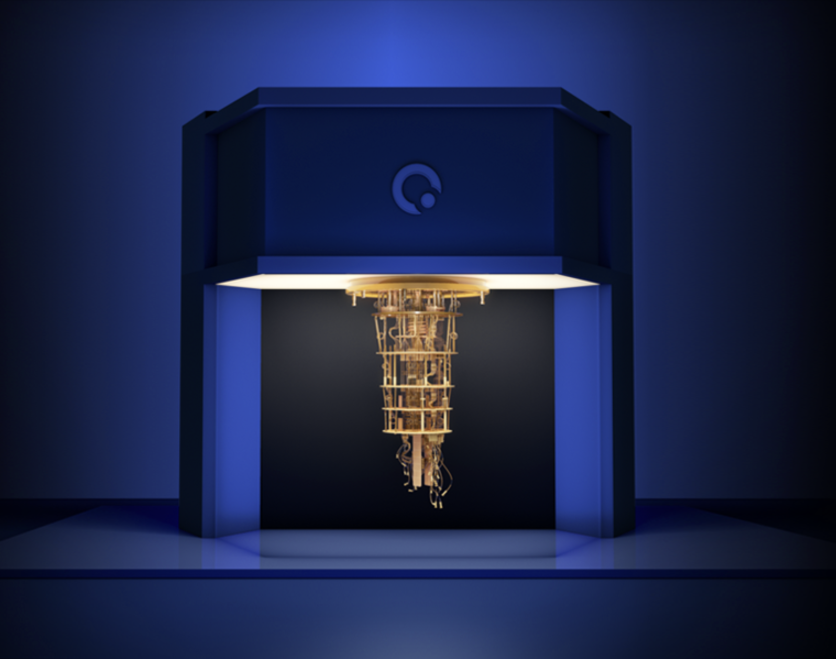
China's Origin Wukong quantum computer crossed a milestone on June 17 that no other publicly accessible quantum system has reached: after completing more than one million computing tasks under an integrated post-quantum cryptography (PQC) framework, the Hefei-based platform now operates simultaneously as a quantum processor and a system with active cryptographic self-defense built into its architecture. For organizations and security professionals tracking both quantum computing and the race to quantum-safe encryption, the milestone carries implications beyond the headline number — including one the announcement does not mention.
China's "Spear-and-Shield" Architecture Explained
The milestone was confirmed in a joint statement from the Anhui Provincial Key Laboratory of Quantum Computing Chips and the Anhui Quantum Computing Engineering Research Center on June 17. According to Origin Quantum, the 72-qubit superconducting system has operated stably for more than two years and, per the company's own reported figures, has received more than 49 million remote visits from users across 192 countries and regions.
At the heart of the architecture is Origin Rock, a software cryptographic module integrated natively into the Wukong platform since April 2024. Origin Quantum describes the resulting configuration as a "spear-and-shield" computing service topology: the 72-qubit quantum processor handles computationally intensive tasks in finance, chemistry, and materials science; Origin Rock acts as the defensive layer, designed to protect data transmission from both classical-network decryption attempts and, in the future, from quantum-enabled adversaries.
The specific cryptographic threat Origin Rock addresses is known in the security community as "harvest now, decrypt later" (HNDL). The attack strategy works as follows: an adversary intercepts and stores encrypted data today, when it cannot be cracked, and holds it until a sufficiently powerful quantum computer becomes available to break the underlying encryption retroactively. NIST's migration guidance warns organizations explicitly that "encrypted data remains at risk because of the 'harvest now, decrypt later' threat." For data that must remain confidential for a decade or more — government archives, health records, financial instruments — that storage phase may already be underway.
The Technical Architecture Behind Origin Wukong
Wukong is built on superconducting transmon qubits — the same fundamental approach used by IBM Quantum and Google Quantum AI. The 72-qubit chip uses a planar architecture with 198 total physical elements: 72 working qubits plus 126 tunable coupler qubits that mediate interactions between neighboring qubit pairs.
That tunable-coupler design is significant. By dynamically adjusting the coupling strength between qubit pairs — effectively turning interactions on and off — the architecture reduces always-on crosstalk, one of the primary sources of gate error in superconducting systems. The approach is similar to the design Google employed on its Sycamore and Willow processors, and it improves two-qubit gate fidelity without requiring the full overhead of error correction.
Where Origin Quantum departs most sharply from its Western competitors is in vertical integration. According to PostQuantum.com's detailed analysis, the company is the only organization globally building every layer of the quantum stack in-house: the transmon qubit chips, the dilution refrigerators (SL400 and SL1000 models), the Tianji measurement-control system, the Origin Pilot operating system, the QPanda programming framework, and the cloud platform through which Wukong is accessed. IBM, Google, and others have deep in-house hardware and software capabilities but rely on external components across portions of their supply chains.
In February 2026, Origin Quantum released Origin Pilot as a publicly downloadable quantum operating system — distinguishing it from Western frameworks such as IBM's Qiskit and Google's Cirq, which are primarily accessed via cloud rather than local deployment. The Enterprise Edition includes PQC tools for industrial applications. However, Origin Pilot is not open-source: its source code is not open to external contributions, which limits independent verification of its behavior.
Read more: China's Jiuzhang 4.0 Photonic Processor Outpaces El Capitan by Tredecillion Years — Without Cryogenic Cooling
What Wukong Cannot Do: The Error-Correction Gap
Before assessing what Origin Rock's integration means, it is important to be precise about what a 72-qubit superconducting quantum computer can do in 2026. Origin Quantum's system poses no threat to modern cryptographic standards. Breaking RSA-2048 is estimated to require approximately 1,400 logical qubits operating for about a week — which translates to roughly one million physical qubits under current error-correction overhead estimates, according to PostQuantum.com's analysis of the CRQC threshold.
The gap between Wukong's 72 physical qubits and that threshold is not incremental — it is a difference of roughly four orders of magnitude. Moreover, Origin Quantum has not published significant work on quantum error correction (QEC), the engineering step that converts noisy physical qubits into reliable logical qubits. By comparison, Google's Willow processor demonstrated below-threshold quantum error correction in December 2024, and IBM has published multi-year logical-qubit roadmaps. Origin Quantum's development philosophy has focused squarely on NISQ-era scaling — increasing qubit count, improving manufacturing, and achieving commercial deployment — rather than on the error-correction research that will ultimately determine when a cryptanalytically relevant quantum computer becomes possible.
The company's own 2021 roadmap targeted 1,024 qubits by 2025. That target was not met.
The PQC integration is therefore not about defending against Wukong itself. It is about establishing norms, habits, and standards for quantum security before machines that could pose a genuine cryptographic threat arrive. By building Origin Rock into an operational, globally used quantum system now, China is doing something strategically significant regardless of Wukong's current computational limits: it is writing a playbook for how quantum infrastructure handles security.
China's PQC Standard Diverges From NIST — and That Matters
NIST finalized its first three post-quantum cryptographic standards in August 2024: FIPS 203 (ML-KEM, a lattice-based key encapsulation mechanism), FIPS 204 (ML-DSA, a lattice-based digital signature algorithm), and FIPS 205 (SLH-DSA, a hash-based digital signature). These standards concluded an eight-year evaluation process and are now available for immediate deployment.
China is developing a separate, parallel national PQC standard through the Institute of Commercial Cryptography Standards (ICCS), which operates under the Chinese Cryptography Standardization Technical Committee. The specific algorithms Origin Rock implements have not been publicly disclosed in English-language technical documentation. They are most likely candidates from China's own national competition, which selected lattice-based algorithms from the same broad mathematical families as NIST — problems based on Learning With Errors — but in different specific implementations.
This divergence has real consequences. A quantum system that protects data using Chinese national PQC algorithms creates an encryption boundary that is not directly interoperable with systems using NIST standards without additional translation layers. PostQuantum.com's analysis notes that China's standardization process is less publicly transparent than NIST's eight-year open competition. Western experts expect the algorithms to converge on similar mathematical foundations, but the specific parameters, key sizes, and implementation choices are distinct — and have not received the same breadth of international cryptographic scrutiny as the NIST finalists.
What Origin Rock Cannot Protect Against
This is the piece of the milestone announcement that the announcement does not address.
Origin Rock is designed to protect data flowing through the Wukong platform from interception and future quantum decryption by third-party adversaries. That is what a PQC module does: it encrypts data in transit using algorithms resistant to quantum attack, so that any adversary who intercepts the transmission cannot break it — now or later.
What Origin Rock does not and cannot do is protect data from Origin Quantum itself — or from the Chinese government acting through Origin Quantum.
China's National Intelligence Law (2017), in Article 7, requires that "all organizations and citizens shall support, assist, and cooperate with national intelligence efforts in accordance with law." Article 14 of the same law grants intelligence agencies authority to demand that assistance. The US Department of Homeland Security has warned, in published guidance, that under this legal framework Chinese companies "are required to secretly share data with the PRC government or other entities upon request, even if that request is illegal under the jurisdiction in which these firms operate."
Origin Quantum's funding structure reinforces this structural legal condition. According to PostQuantum.com's investor analysis, the company has raised approximately $150–165 million entirely from domestic Chinese investors, including the China Internet Investment Fund — which operates under the Cyberspace Administration of China — and Guoxin Fund, administered by the State Council.
In May 2024, the US Department of Commerce added Origin Quantum to its Entity List, citing the company's support for Chinese military quantum computing applications — specifically including "the ability to break encryption or develop unbreakable encryption." The designation remains in effect.
None of this means Origin Rock is a backdoor or that any specific data has been accessed. No independent security audit of Origin Rock's implementation has been published, and Origin Quantum has not been found to have provided user data to any government. The structural legal obligation, however, is not a matter of corporate policy — it is a condition of operating under Chinese law.
The practical implication for international users of Wukong — including the American researchers who, per South China Morning Post reporting, have consistently ranked among the platform's most active users even after the Entity List designation — is this: Origin Rock protects computation from adversaries outside the platform. It does not protect it from the platform operator or from the legal obligations to which that operator is subject.
Read more: Post-Quantum Cryptography Startup EigenQ Eyes $3B Nasdaq Listing via SPAC
Aligning With China's National PQC Standards Push
The timing of the June 17 disclosure is not coincidental. A Reuters report from March 19, 2026, cited Wang Xiaoyun, a professor at Tsinghua University's Institute for Advanced Study, saying that "the next three-to-five-year period is potentially one of explosive growth for post-quantum cryptography industry migration" in China. The country is expected to develop national PQC standards within approximately three years, according to that reporting.
The Wukong platform, by integrating PQC into an operational system that serves real-world users across enterprise and government domains, functions as a live testbed for those emerging national standards. What works at scale on Wukong will likely inform what China codifies. What does not will be refined before the standards are set.
The NSA's Commercial National Security Algorithm Suite 2.0 requires all new national security system acquisitions to meet PQC standards by January 1, 2027. The international PQC race is not just a technical exercise — it is a competition over whose cryptographic standards will govern the next generation of secure systems.
What This Milestone Actually Means
The world now has, for the first time, a publicly accessible quantum computing platform that treats its own security as a first-class engineering problem. One million tasks completed under active PQC protection, at a scale accessible to users in 192 countries, is a proof of concept worth taking seriously — regardless of where the platform is hosted.
What it is not is a fully secured international computing resource. The distinction matters. Organizations transmitting sensitive data through Wukong should understand precisely what the PQC shield covers and what it does not. Third-party interception of data in transit: protected. Future quantum decryption of intercepted traffic: protected. Compelled disclosure to Chinese intelligence agencies under the National Intelligence Law: outside the scope of what any cryptographic module can address.
China's PQC standardization timeline projects a three-year window — roughly 2027 to 2029 — that aligns with the maturation window many quantum roadmaps project for early fault-tolerant systems. Whether international organizations treat Origin Rock as a benchmark, a competitor standard, or a security concern of its own will shape the geopolitics of quantum cryptography for years to come.
Frequently Asked Questions
What is post-quantum cryptography, and why does Origin Wukong have it?
Post-quantum cryptography refers to encryption algorithms designed to remain secure even against quantum computers running Shor's algorithm, which can break the RSA and elliptic-curve encryption that currently protects most internet traffic. Origin Wukong integrated Origin Rock, a software-based PQC module, in April 2024 to protect data flowing through the platform from "harvest now, decrypt later" attacks — a strategy in which adversaries collect encrypted data today and store it for decryption once a powerful enough quantum computer becomes available. Wukong itself, at 72 physical qubits without demonstrated error correction, poses no cryptographic threat; the integration is about establishing security practices for quantum infrastructure before the machines that do pose such a threat arrive.
Does Origin Rock protect international users from Chinese government data access?
No. Origin Rock protects data in transit from third-party interception. It does not and cannot protect against legal demands made to Origin Quantum by Chinese authorities. China's National Intelligence Law (2017), Article 7, requires all organizations operating under Chinese law to support and cooperate with national intelligence requests. Origin Quantum is headquartered in Hefei, China, is backed by state-aligned investors including the China Internet Investment Fund, and is subject to those legal obligations. No independent security audit of Origin Rock has been published confirming whether any government access has occurred. The structural legal obligation applies regardless of the company's stated policies.
What is the difference between China's PQC standard and NIST's?
NIST finalized three post-quantum cryptographic standards in August 2024 — ML-KEM, ML-DSA, and SLH-DSA — following an eight-year public evaluation process. China is developing a separate national standard through its Institute of Commercial Cryptography Standards (ICCS), using algorithms from the same broad mathematical families (lattice-based problems) but in different specific implementations. The specific algorithms Origin Rock uses have not been publicly disclosed. Systems using Chinese national PQC standards are not directly interoperable with systems using NIST standards without translation layers, and China's process has received less international cryptographic scrutiny than NIST's open competition.
Can China's quantum computers break modern encryption today?
No. Wukong's 72 physical qubits — with no demonstrated quantum error correction — are orders of magnitude below the estimated threshold for breaking RSA-2048, which would require approximately one million physical qubits under current error-correction overhead assumptions. Google's Willow chip demonstrated below-threshold quantum error correction in December 2024, a key step on the path toward a cryptanalytically relevant quantum computer. Origin Quantum has not published significant error-correction research. A quantum computer capable of threatening today's encryption is estimated to be at least a decade away, though recent research has compressed some timeline projections.

-
 C114 Communication Network
 -
 Communication Home
