
 Search


I-HWA CHENG/AFP via Getty Images
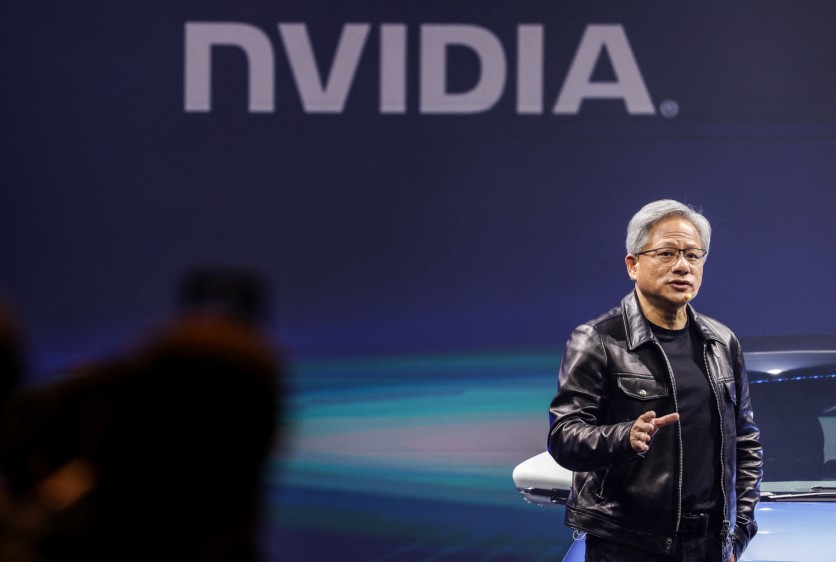
NVIDIA CEO Jensen Huang delivered a keynote at Berlin's Tempodrom on Wednesday morning that reframed the economics of building an AI factory. The headline product, the Data Sovereignty eXchange POD (DSX POD), compresses the time to connect an AI factory at a prepared site from roughly six months to as little as 14 days by moving virtually all integration work — rack-to-rack cabling, power distribution, liquid cooling piping, and functional validation — from the customer's facility to a partner manufacturing floor before shipment to customer sites.
That 14-day figure deserves immediate context. It is a site-connection window, not a total time-to-production estimate. The facility preparation required to receive a DSX POD — adequate power, cooling infrastructure, and network connectivity — remains the customer's responsibility and often takes longer than the integration it replaces. NVIDIA is explicit about this distinction; the deployment compression applies only once a building is ready. For enterprises, that upstream work is still the longest part of any AI infrastructure project.
What NVIDIA unveiled alongside DSX POD — a 2.5-times expansion of global substrate manufacturing capacity, a hardware-level agent security architecture called OpenShell, and the world's first commercial AI-RAN call by T-Mobile — makes clear that this announcement is less a single product launch and more a structured bid to own the full stack of AI factory production, security, and supply chain.
DSX POD: What Factory Integration Actually Means
The mechanism behind the 14-day claim is a shift in where integration expertise lives. Partner facilities complete all rack-to-rack cabling, wiring, piping, and functional validation before shipment. Built atop NVIDIA's Vera Rubin architecture — the NVL72 configuration pairs 36 Vera CPUs with 72 Rubin GPUs and is currently in full production across 350-plus factories in 30 countries — the pod arrives at a prepared site requiring only the final connections to power, cooling, and network.
The thermal strategy underpinning the design is technically notable. Vera Rubin infrastructure supports 100% liquid cooling at coolant temperatures up to 45°C (113°F), and DSX reference designs route heat through closed-loop dry-cooler rejection systems. NVIDIA says those designs reduce facility cooling water consumption to near zero under most climate conditions, projecting that a 2-gigawatt deployment using DSX cooling could save roughly 54 million liters (approximately 14.3 million gallons) of water per day compared with conventional cooling-tower approaches — a vendor-stated figure not independently verified.
The partner ecosystem targeting early-2027 delivery spans the data center supply chain: Anduril, Armada, Bull, Crusoe, DayOne, Dell Technologies, Delta, Eaton, Foxconn (Ingrasys), GIGABYTE, HPE, Lenovo, Pegatron, Quanta Cloud Technology, Schneider Electric, Vertiv, and Wistron among delivery partners. Dell announced its own variant — the Dell Modular Data Center with NVIDIA DSX POD — on the same morning, with the same early-2027 delivery target. NVIDIA has not disclosed per-POD rack counts, compute capacity, or pricing.
DSX Software Stack: Power, Grid, and Operational Control
The DSX POD is the physical expression of a broader software-defined infrastructure layer. NVIDIA DSX encompasses compute, networking, storage, software, power, and cooling under a unified management architecture. Its five software components are: DSX MaxLPS for dynamic power allocation within a provisioned budget; DSX Flex for coordinating workload demand with utility grid conditions; DSX Sim for digital-twin simulation of the facility; DSX OS for infrastructure management; and DSX Exchange for connecting compute systems with facility infrastructure.
The performance claims for DSX MaxLPS come from two vendor-reported evaluations. Lambda ran a proof of concept on HGX B200 systems and reported a 24% throughput gain in GPU clusters and 19% more GPU capacity within a fixed power budget. Nscale evaluated four GB300 NVL72 racks in Iceland and reported 49% higher inference throughput and 37% more managed GPU capacity within the same 264-kilowatt budget. These are vendor-reported figures; independent verification has not been conducted.
Grid flexibility is handled by DSX Flex, which coordinates AI workload demand with utility conditions, demand-response events, energy prices, and on-site generation. In an early trial involving Emerald AI, EPRI, Nebius, the U.K. National Grid, and NVIDIA, a Blackwell Ultra cluster reduced power draw by 40% during simulated grid events while keeping critical workloads running — also vendor-reported. The capability positions AI factories as potential participants in demand-response markets that utilities are increasingly requiring large power consumers to join.
Three new DSX OS components are entering developer preview: NVIDIA Config Manager for network configuration, NVIDIA Rack Management Service for rack-level power and firmware management, and NVIDIA Cluster Readiness Engine for distributed validation and node-level fault isolation.
Substrate Supply: A Multibillion-Dollar Upstream Bet
The substrate announcements carry the most strategic weight of any component in Wednesday's keynote, because they telegraph where NVIDIA expects supply to constrain Vera Rubin production over the next three years.
"We are in the midst of the largest infrastructure buildout ever," Huang told the Berlin audience. To support it, NVIDIA announced supply-chain commitments targeting a 2.5-times increase in substrate capacity collectively.
A multibillion-dollar capacity reservation advance to IBIDEN will support expansion of its Ono Plant in Japan to three times its current capacity, with new capacity expected to ramp in Q1 2028. Samsung Electro-Mechanics enters NVIDIA's substrate supply chain through its existing South Korean operations alongside planned new facilities in Sejong and Busan. Unimicron's KF substrate expansion in Taiwan is backed by a separate reservation agreement, with capacity expected from Q2 2027 and full capacity by mid-2028.
On semiconductor testing, NVIDIA expects its total testing capacity to double between 2026 and 2027. A $1.1 billion capacity reservation advance to King Yuan Electronics (KYEC) funds new U.S. testing facilities targeting high-volume production in April 2027, while expanded Singapore testing operations target high-volume production by February 2027.
For co-packaged optical interconnects, the expansion target is substantially more aggressive: a 15-times increase in Taiwanese optical-engine manufacturing capacity, planned with Siliconware Precision Industries (SPIL), by mid-2027, then a further doubling by end-2028. Co-packaged optics integrates optical transceivers directly onto or adjacent to the switch ASIC package, reducing electrical signal path length and enabling higher aggregate bandwidth at lower power per bit — a prerequisite for scaling Vera Rubin cluster networking beyond what pluggable optical modules can deliver.
The IBIDEN ramp timing has practical implications for any operator expecting early-2027 DSX POD delivery: the expanded substrate supply does not come online until Q1 2028. Whether existing substrate capacity can absorb near-term Vera Rubin demand without constraining production volumes will be a quiet limiting factor on how many units actually ship in the first delivery window.
OpenShell: AI Agent Containment in Silicon
As enterprises deploy increasing numbers of autonomous AI agents — software systems that can call APIs, execute code, and access external data without human approval for each step — the attack surface shifts from discrete applications to continuous, open-ended processes. NVIDIA released the OpenShell Reference Architecture as a hardware-layer response to that problem, announcing it at GTC Berlin alongside DSX POD.
The architecture pairs Vera Rubin infrastructure for model workloads with Vera CPUs running agent harnesses and the OpenShell runtime. BlueField-4 DPUs run NVIDIA Sentry for out-of-band monitoring and enforcement — meaning the enforcement runs on a separate processor that the host GPU cannot directly observe or override, borrowing a security model from the trusted computing module tradition.
The containment claim is specific: NVIDIA says Sentry can quarantine misbehaving agents in milliseconds when one attempts to move outside its defined software boundary — a vendor-stated performance figure. The company also reports up to 20% higher agent capacity with Sentry enabled and 30x higher throughput per megawatt for agentic workloads on Vera Rubin NVL72, without specifying comparison configurations or workload conditions.
"AI capability and safety must advance together," Huang said from the stage.
OpenShell runs on Linux from Canonical, SUSE, and Red Hat; on Windows through Microsoft Execution Containers; and on AWS, Google Cloud, and Microsoft Azure, with edge deployments across NVIDIA platforms including RTX Spark, DGX Spark, and DGX Station. SAP is integrating OpenShell with its Joule Studio runtime.
ServiceNow announced the general availability of ServiceNow Arc with runtime governance through its Super Intelligence Control Tower on the same day, with an AI Passport authority layer that extends policies to OpenShell and Sentry and can reportedly revoke agent access within seconds. Infrastructure builders — Dell, Cisco, HPE, Lenovo, and Supermicro — are building on the architecture, and cloud providers including CoreWeave, Crusoe, Lambda, Nebius, Nscale, Oracle Cloud Infrastructure, and Vultr are pursuing OpenShell-based deployments. Security vendor integrations are in progress from 1Password, Check Point, CrowdStrike, Cisco, F5, Fortinet, Microsoft, Okta, Palo Alto Networks, TrendAI, and Zscaler among security partners.
Whether enterprise security teams and regulators treat in-silicon policy enforcement as a credible control — or approach it with the skepticism typically reserved for vendor-supplied security claims — will determine whether OpenShell becomes a genuine industry standard or a capability that remains largely on NVIDIA's product sheet.
AI-RAN: T-Mobile Places First Commercial Network Call on Shared GPU Infrastructure
T-Mobile completed what NVIDIA describes as the world's first AI-RAN call on a commercial network, placed in Bellevue, Washington, using commercial Aerial RAN Computer (ARC) servers, Nokia's CUDA-accelerated RAN software, massive MIMO radios, an existing 5G Standalone core, and a standard commercial smartphone.
AI-RAN — running radio access network software and AI inference services on the same shared GPU-based accelerated infrastructure, rather than on purpose-built ASICs — has been an industry discussion topic for several years. The T-Mobile call demonstrates it works under commercial network conditions. Finnish operator Elisa demonstrated simultaneous voice, mobile data, and video analytics on ARC in a live over-the-air 5G field environment, which NVIDIA says clears a path toward commercial AI-RAN services in 2027.
BT plans live AI-RAN trials in Birmingham during 2027. Deutsche Telekom is planning field trials after completing platform validation in Bonn and Oulu. Orange is testing Nokia 5G software on ARC for spectral efficiency and edge services improvements.
NVIDIA announced two new ARC hardware configurations — the MGX 2U and MGX 4U — using RTX PRO 6000 Blackwell Server Edition GPUs with x86 or NVIDIA Vera CPU options. Dell, QCT, and Supermicro will offer ARC-ready server platforms; no ship date was provided.
European AI Sovereignty: Jensen Huang Meets Friedrich Merz
GTC Berlin is not running in a policy vacuum. The conference, held October 20–22 at the Tempodrom and STATION-Berlin venues with an expected 6,000 to 10,000 attendees, is explicitly shaped around European political priorities: industrial competitiveness, robotics, and data sovereignty.
NVIDIA has been cultivating the European sovereign AI narrative systematically. During the same European tour, Huang met with German Chancellor Friedrich Merz to discuss AI factory partnerships — a meeting that aligned NVIDIA's agenda with Germany's industrial AI ambitions. "In the era of AI, every manufacturer needs two factories: one for making things, and one for creating the intelligence that powers them," Huang said at that meeting.
Deutsche Telekom's industrial AI cloud in Munich represents the largest single European commitment announced in connection with GTC Berlin. The company is building out a €1 billion (approximately $1.12 billion USD; exchange rate as of October 21, 2026; conversions are approximate) industrial AI cloud with up to 10,000 Blackwell GPUs, live as of Q1 2026, and extending it with robotics workloads distributed across on-board, edge, and central infrastructure in Munich.
The broader European context is a push to ensure that sensitive data remains under local jurisdiction and that critical AI infrastructure is not exclusively controlled by U.S. hyperscale providers. The EU AI Act, phasing in enforcement through 2027, is creating compliance-driven demand for infrastructure that can be audited and controlled domestically. The DSX POD's containerized, factory-built design maps onto that requirement: a government ministry, a national lab, or an industrial manufacturer can take delivery of a pre-integrated AI factory and have it operational on domestic soil within days of site connection — without the extended on-site presence of foreign vendor technicians.
What Happens Next
Partner-built DSX POD systems are targeting worldwide delivery in early 2027. Between now and then, three dynamics will shape whether the deployment compression claim translates into production AI capacity.
Site readiness remains the real bottleneck. The 14-day window is a site-connection figure, not a total time-to-production estimate. Constructing or retrofitting a building to the power and cooling specifications required to host a DSX POD is a separate — and frequently longer — project. Enterprises that move quickly to reserve factory production slots will still face that upstream facility constraint. The deployment compression NVIDIA announced shifts where the bottleneck sits; it does not eliminate it.
Substrate ramp timing. IBIDEN's expanded Ono Plant capacity is not expected to ramp until Q1 2028, and Unimicron's full capacity arrives by mid-2028. Whether existing substrate supply can absorb near-term Vera Rubin demand without creating a production ceiling will be the quiet limiting factor on how many DSX PODs ship in the early-2027 window.
OpenShell's enterprise credibility test. Hardware-enforced agent containment is a new security primitive in the AI infrastructure stack. The vendor-reported performance figures — millisecond quarantine, 20% higher agent capacity, 30x throughput per megawatt — need independent verification before enterprise security buyers treat them as decision inputs rather than marketing claims.
For now, NVIDIA has drawn the clearest possible map of where AI infrastructure is headed: integrated at the factory, containerized for sovereign deployment, and secured not just in software but in the silicon that runs the software.
Frequently Asked Questions
What is NVIDIA DSX POD and how does the 14-day deployment work?
DSX POD is a containerized AI factory unit built around NVIDIA's Vera Rubin architecture (NVL72 configuration: 36 Vera CPUs + 72 Rubin GPUs). NVIDIA and its manufacturing partners complete all rack-to-rack cabling, power distribution, liquid cooling piping, and functional validation before the unit ships. When a pod arrives at a customer facility, only the final connections to prepared power, cooling, and networking infrastructure remain. That final connection step takes as little as 14 days. The critical qualification: the facility itself — power capacity, cooling systems, network connectivity — must already be built to spec. That upstream construction is not compressed by DSX POD; it remains the customer's time and budget commitment. For details on the announcement, see NVIDIA's GTC Berlin keynote coverage.
What does OpenShell actually do, and is hardware-level agent security meaningfully different from software containment?
OpenShell uses BlueField-4 data processing units (DPUs) to enforce agent behavior policies out-of-band — on a processor separate from the host GPU, running NVIDIA's Sentry software. Because the DPU operates independently of the main compute path, a compromised or misbehaving agent running on the GPU cannot directly observe or circumvent the enforcement layer. This is meaningfully different from software-only sandboxing, which runs in the same trust domain as the agent it is supposed to contain. The practical difference hinges on how precisely policies can be specified for open-ended agentic behavior, and on whether NVIDIA's vendor-reported millisecond quarantine times hold under production load — neither of which has been independently verified. StorageReview's technical breakdown of OpenShell and Sentry architecture offers additional detail.
Why does the T-Mobile AI-RAN call matter, and when will AI-RAN reach commercial scale?
The T-Mobile call in Bellevue, Washington, demonstrated that radio access network signal processing — traditionally run on purpose-built ASICs — can be handled on the same GPU-based accelerated infrastructure that also runs AI inference workloads. That matters because it means telecom operators could use a single, programmable hardware platform for both network functions and AI services, rather than running two parallel infrastructure stacks. Commercial AI-RAN services from the broader ecosystem are currently targeted for 2027; BT's UK trials and Deutsche Telekom's German field deployments are next visible milestones. The full GTC Berlin announcement is covered on the NVIDIA GTC Berlin news blog.
What is the substrate shortage risk for early DSX POD customers?
NVIDIA's 2.5-times substrate capacity expansion is a commitment to supply-chain investment, not a statement of current capacity. IBIDEN's expanded Ono Plant — the single largest piece of that expansion, at three times current capacity — does not ramp until Q1 2028. Unimicron reaches full capacity by mid-2028. Enterprises ordering DSX POD units in the early-2027 delivery window are betting that existing substrate supply can absorb Vera Rubin demand in the near term. If demand outpaces existing substrate output before the new capacity comes online, that gap becomes the quiet constraint on how many units actually ship on schedule.

-
 C114 Communication Network
-
 Communication Home
