
 Search

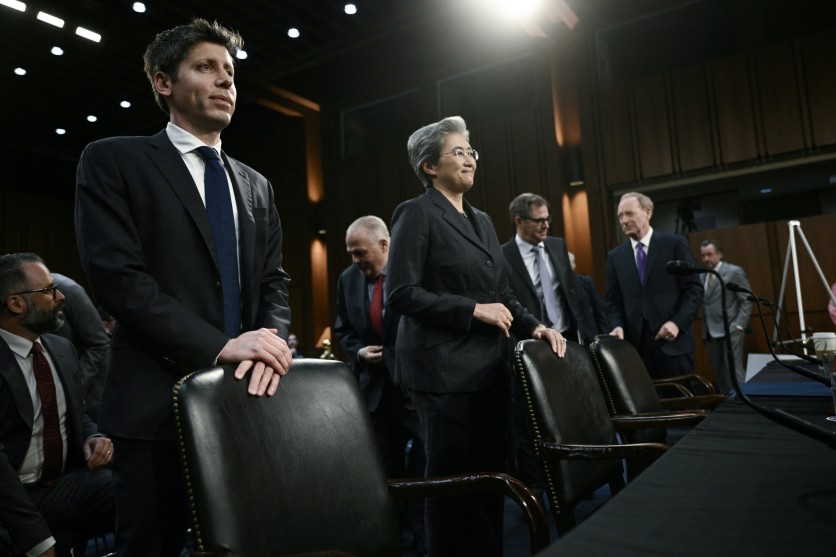
(L-R) Open AI CEO Sam Altman, Chairwoman and CEO of Advanced Micro Devices (AMD) Lisa Su, CoreWeave Co-Founder and Chief Executive Officer Michael Intrator and Microsoft Vice-Chair and President Brad Smith prepare to testify for a US Senate Commerce Committee hearing on artificial intelligence (AI) on Capitol Hill in Washington, DC, on May 8, 2025. BRENDAN SMIALOWSKI/AFP via Getty Images
The strategies of OpenAI and Anthropic for releasing their latest AI models are splitting, and a column by The Information's founder argues the contrast reveals something about how the most successful tech CEOs operate. What follows is that columnist's interpretation laid over real events — an argument worth understanding, and worth weighing rather than simply accepting.
The Argument: Pragmatism as the Common Trait
Writing in a column titled "Altman, Amodei and Why the Pragmatic Survive," Jessica Lessin argued that pragmatism is a common trait among major tech CEOs — that after 20 years covering the industry, she has found the most successful leaders adjust to shifts in markets, politics, and customers rather than clinging to conviction. She cited Mark Zuckerberg, who remade Facebook from a social network into a metaverse company and then an AI company (and, critics say, shifted content-moderation policies with the political winds), and Elon Musk, whose SpaceX once centered on Mars colonization but has repeatedly changed its messaging as practical constraints grew. Such shifts can look like weakness, Lessin wrote, but may be inevitable in building the world's most valuable companies.
Altman, as the Column Reads Him
At the center is OpenAI's Sam Altman, who The Information reported had agreed to release OpenAI's latest models on a phased basis at the U.S. federal government's request — which Lessin read as Altman wielding pragmatism as a strength. Altman has long faced criticism that his words and actions don't align, including over converting OpenAI from a nonprofit into a for-profit structure and brokering a large computing contract with Microsoft. Lessin wrote that he persuaded investor Vinod Khosla to back the for-profit conversion after concluding a nonprofit couldn't fund AI development, and suggested most investors would likely accept such moves as realistic judgments to sustain large-scale AI work. That reading is itself a choice: the same moves that the column casts as pragmatism are ones critics have described as a gap between what Altman says and what he does — a tension the column acknowledges.
Amodei, and the Episode Behind the Framing
By contrast, Lessin framed Anthropic CEO Dario Amodei — widely regarded as a safety-focused technologist — as holding to principle. The backdrop is a real and independently reported episode. In mid-June, the U.S. Commerce Department issued an export-control order citing national security, and Anthropic disabled worldwide access to its newest models, Claude Fable 5 and Claude Mythos 5, complying within hours. Press accounts reported that the episode was triggered after Amazon researchers demonstrated a technique for bypassing one of the model's safety classifiers, and that the administration pressed Anthropic to fix the issue or pull the models. According to an account posted by White House adviser David Sacks, the government offered Anthropic a choice to fix the bypass or voluntarily withdraw the model, and Amodei declined; Anthropic, for its part, has said publicly that it viewed the flaw as narrow and not serious enough to justify recalling a model used by millions, arguing similar behavior could be elicited from other available models. It withdrew access under the order regardless.
Read more: US Government Pulls Anthropic's Fable 5 Offline: Now Come the Refunds for a Vanished AI
Where the Argument Cuts
Lessin's argument runs in a direction uncomfortable for Anthropic: that adhering to principle could leave a company at a disadvantage if more pragmatic rivals reach compromises with the government and get to market first — and that Amodei, too, may find pragmatic choices hard to avoid if he wants to win. That is a prediction, not a result. It is also a framing that can be read more than one way: a safety-focused lab declining to ship under pressure can be described as rigid, or as doing precisely what such a lab says it exists to do. Which description fits is a judgment, and the column is offering one judgment, not settling the question.
It is worth being explicit about what is established versus interpreted here. The export-control suspension happened; The Information's report that Altman agreed to a phased release is reporting attributed to that outlet; the claim that one posture reliably beats the other is the columnist's thesis. A reader is best served by holding those apart. (Disclosure: Anthropic is the maker of the Claude models, including the one used to draft this article. The export-control episode described above was reported earlier this month by multiple outlets; this piece relies on that public reporting rather than any non-public information.)
Read more: Fable 5 Ban Update: Trump Softens, Directive Stands, Refund Deadline Closes Today
Frequently Asked Questions
What did Jessica Lessin argue about Altman and Amodei?
In a column for The Information, founder Jessica Lessin argued that the most successful tech CEOs tend to be pragmatic — willing to adjust to markets, politics, and customers rather than holding rigidly to conviction. She presented OpenAI's Sam Altman, reported to have agreed to a phased release of OpenAI's latest models at the U.S. government's request, as an example of pragmatism as a strength, and contrasted him with Anthropic's Dario Amodei, whom she framed as holding to principle during a recent export-control dispute. The piece is an opinion column, and its central claim — that pragmatism tends to win — is the author's interpretation rather than an established fact.
Why did the US restrict Anthropic's models?
In mid-June 2026, the U.S. Commerce Department issued an export-control order, citing national security, that barred foreign nationals from accessing Anthropic's newest models, Claude Fable 5 and Mythos 5. Because the company could not reliably verify user nationality in real time, it disabled both models for all users worldwide to comply. Press accounts reported the action followed a demonstration by Amazon researchers of a technique to bypass one of the model's safety classifiers. Anthropic publicly disputed the severity, describing the issue as narrow and replicable with other available models, but complied with the order.
How do OpenAI and Anthropic differ on AI strategy?
The two companies are often contrasted on how they balance rapid deployment against safety and government relations, though both publicly support some form of AI oversight. The Lessin column frames the difference through recent events: OpenAI reportedly agreeing to a phased model release at the government's request, and Anthropic withdrawing models under an export-control order while disputing the government's safety concern. It is worth treating that contrast as one columnist's framing of a fast-moving situation rather than a fixed characterization of either company, since both have shifted positions over time.
Who is Jessica Lessin?
Jessica Lessin is the founder and CEO of The Information, a subscription publication focused on in-depth technology and business journalism that she launched in 2013. She previously covered Silicon Valley as a reporter and editor at The Wall Street Journal and has reported on the technology industry for roughly two decades. The column discussed here reflects her analysis and opinion, drawing on that long experience covering tech leadership.

-
 C114 Communication Network
 -
 Communication Home
