
 Search

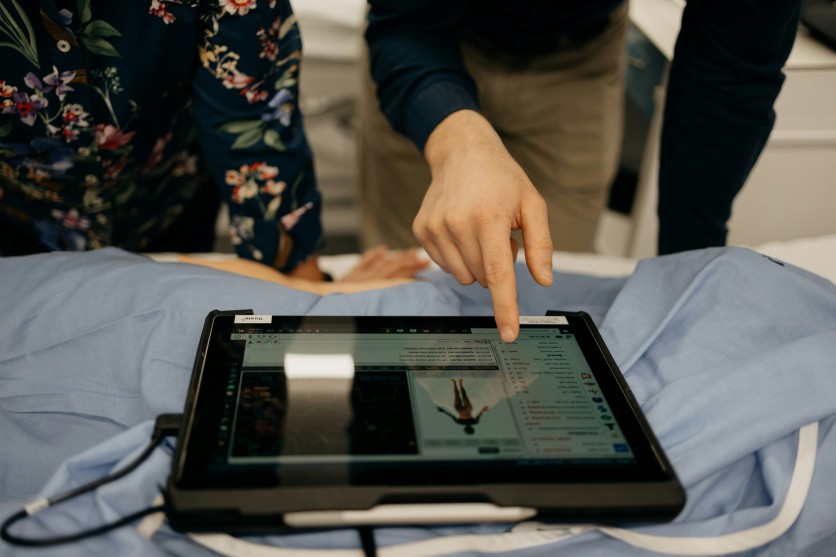
Trnava University/Unsplash
AI healthcare diagnosis is transforming modern medicine by leveraging machine learning to analyze patient data, medical images, and complex biomarkers. In some studies, AI achieves up to 90% sensitivity in detecting conditions like breast cancer, surpassing traditional radiologist accuracy rates. By rapidly processing large datasets, medical AI tools reduce human error, streamline workflow, and provide actionable insights that were previously unattainable in routine care.
Health tech 2025 emphasizes integrating AI into clinical practice to deliver predictive analytics, personalized treatment plans, and early anomaly detection. As healthcare systems adopt these innovations, clinicians gain a powerful partner that enhances accuracy, speeds decisions, and improves patient outcomes without replacing the essential role of human expertise. Understanding AI healthcare diagnosis trends is crucial for navigating the future of medicine.
Key Medical AI Tools Driving AI Healthcare Diagnosis Advances
AI healthcare diagnosis now relies on cutting-edge tools that process medical data faster and more accurately than ever before:
- Google Health: Excels in deep learning for mammograms, retinal scans, and other imaging modalities, consistently outperforming experts in early breast cancer detection and diabetic retinopathy screening. Its AI models can highlight subtle anomalies that might be missed during routine reviews.
- Microsoft MAI-DxO: Achieves 85% accuracy on complex diagnostic cases using chain-of-debate models that simulate expert reasoning. It assists in multi-step decision-making, improving diagnostic confidence for rare or ambiguous conditions.
- Aidoc: Provides real-time analysis of CT and MRI scans, flagging strokes, intracranial hemorrhages, and pulmonary embolisms. Deployed in over 900 hospitals globally, Aidoc speeds triage and reduces time-to-treatment for critical patients.
- IBM Watson & MedGemma: Integrate seamlessly with electronic health records (EHRs) to predict complications, suggest treatment pathways, and minimize human bias in diagnostic workflows. They support clinical decision-making in oncology, cardiology, and internal medicine.
- Butterfly iQ: A portable ultrasound device guided by AI, allowing clinicians to perform point-of-care imaging and get instant interpretations. It is especially valuable in emergency medicine and remote healthcare settings.
- Spectral AI: Uses advanced imaging to analyze wounds, burns, and dermatological conditions, enabling precise monitoring and treatment recommendations based on visual and thermal data.
- Johns Hopkins Predictive Models: Forecast sepsis, cardiac events, and other high-risk conditions using patient-specific data, vitals, and lab results. These predictive analytics help hospitals reduce readmissions and improve early intervention.
- Caption Health: Offers AI-assisted echocardiography guidance and interpretation, helping technicians capture clinically accurate heart images even with minimal training.
- PathAI: Focuses on pathology slides, using deep learning to identify cancerous cells and grading tissue samples with high accuracy, enhancing both speed and diagnostic consistency.
- Qure.ai: Automates analysis of chest X-rays and CT scans for conditions like tuberculosis, pneumonia, and COVID-19-related complications, providing fast triage in high-volume settings.
These medical AI tools collectively demonstrate how AI healthcare diagnosis is improving sensitivity, reducing human error, and assisting clinicians in complex decision-making. By integrating imaging, predictive analytics, and EHR data, they enable faster, more reliable, and personalized patient care while supporting the growing demands of health tech 2025.
Read more: How Digital Health Tools and Wearables Are Shaping the Future of Wellness
How Accurate Is AI in Medical Diagnosis?
AI demonstrates diagnostic accuracy between 76% and 90% for imaging and clinical vignettes, often surpassing physician performance of 73-78% on mammograms and skin lesion detection. Deep learning algorithms detect subtle patterns in X-rays, MRIs, and CT scans that human eyes may overlook, especially under fatigue. Health tech 2025 benchmarks report that AI supports roughly 66% of physicians in decision-making, though expert oversight remains essential to verify results.
Can AI Replace Doctors in Diagnosing Diseases?
AI is designed to augment rather than replace clinicians, providing second opinions and speeding diagnosis. Tools like ChatGPT Plus achieve 76.3% accuracy versus 73.7% for conventional methods, shortening workflow time. Regulatory oversight and bias risks ensure AI remains a clinician partner, with AI healthcare diagnosis enhancing rather than supplanting human expertise.
Examples of AI in Healthcare Diagnosis:
- Radiology: Google Health, Aidoc
- Dermatology: AI-powered lesion detection
- Cardiology: Predictive heart condition monitoring
- Genomics: Hugging Face suites for rare disease analysis
- Point-of-care imaging: Butterfly iQ and Spectral AI
Health Tech Trends in Medical AI Tools for Precision
Health tech 2025 integrates AI into EHRs for real-time alerts, enabling personalized medicine by leveraging genetic, lifestyle, and biometric data. Predictive analytics anticipate disease progression, reduce hospital readmissions, and improve preventive care. Wearable devices paired with AI allow continuous remote monitoring, extending the reach of diagnostics outside clinical settings.
Despite benefits, challenges like data privacy, algorithmic bias, and regulatory compliance remain. Ethical guidelines are emerging, balancing patient safety with efficiency gains. The evolution of urban and cloud-based AI healthcare diagnosis systems ensures scalable, reliable, and cost-effective implementation. These trends demonstrate the growing role of AI in proactive, patient-centered medicine.
Conclusion
AI healthcare diagnosis is elevating accuracy and efficiency across medical specialties through advanced medical AI tools. From imaging and predictive modeling to EHR integration, these systems reduce errors, support clinicians, and deliver personalized care.
Ongoing improvements in algorithmic transparency, bias mitigation, and predictive analytics position AI as a critical partner for proactive, patient-centered medicine. Health tech 2025 continues to push the boundaries of what AI can achieve, enhancing diagnostic workflows, lowering costs, and improving outcomes without replacing the essential judgment of healthcare professionals.
Frequently Asked Questions
1. How does AI improve medical diagnosis accuracy?
AI analyzes complex patterns in imaging and patient data, often detecting diseases earlier than human observation alone.
2. What are the limitations of AI in healthcare diagnosis?
Generative AI shows lower accuracy on broad or ambiguous cases and can inherit biases from incomplete datasets.
3. Which medical AI tools are leading in 2025?
Google Health, Aidoc, and Microsoft MAI-DxO are top performers for imaging and complex clinical reasoning.
4. Will health tech 2025 make AI diagnosis standard?
Yes, physician adoption and regulatory approvals are rapidly integrating AI into standard workflows.
Read more: Revolutionizing AI Healthcare: How Medical AI Tools Power Faster Early Diagnosis Tech

-
 C114 Communication Network
 -
 Communication Home
