
 Search

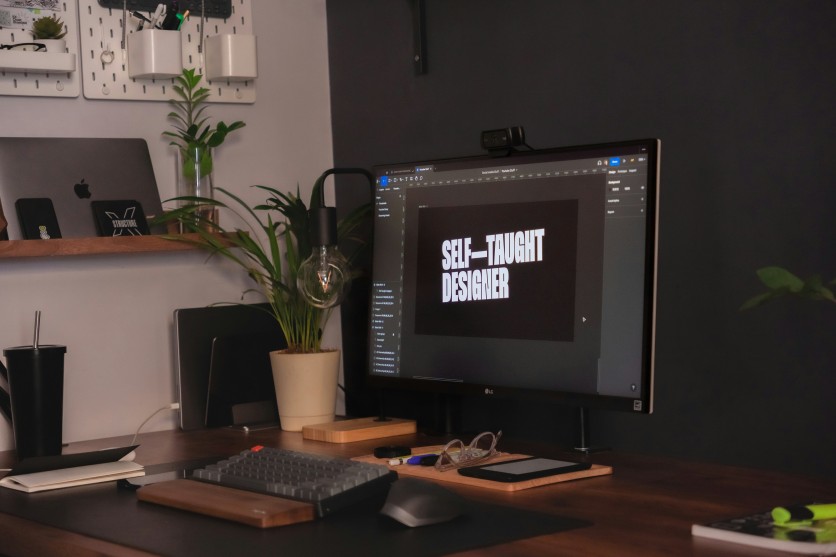
Rahul Singh Bhadoriya/Unsplash
AI design tools are reshaping how designers approach creative projects by automating repetitive and time-consuming tasks. From generating images to suggesting layouts, these tools speed up workflows, allowing designers to focus on high-level creative decisions. Graphic design AI offers rapid prototyping capabilities and enables teams to experiment with multiple design variations in minutes, a process that previously took hours.
Despite the efficiency gains, AI cannot replicate the nuanced understanding of clients, brand identity, or the artistic intuition that experienced designers bring to a project. Human oversight remains critical to ensure designs are meaningful, contextually appropriate, and emotionally engaging. AI design tools complement rather than replace designers, enhancing creative automation while preserving the unique value of human creativity.
Top AI Design Tools Powering Creative Automation
AI design tools are transforming the graphic design industry by reducing manual effort and accelerating production times. By leveraging creative automation, these tools help both professional designers and beginners generate high-quality visuals efficiently. With AI design tools, repetitive tasks like layout adjustments, color matching, and image enhancement can be automated, freeing designers to focus on conceptual and strategic aspects of their projects.
- Designs.ai: A comprehensive suite that generates logos, videos, and layouts from text prompts, simplifying creative automation for all skill levels. It also offers color palette suggestions, automated branding kits, and social media-ready formats.
- Adobe Sensei: Integrates machine learning into Photoshop and Illustrator for smart object selection, font matching, image enhancement, and content-aware editing, providing advanced creative automation capabilities.
- Canva Magic Design: Uses AI to provide layout suggestions, auto-resizing, and style recommendations, ideal for social media graphics, marketing materials, and presentations.
- Looka: AI-powered logo maker and branding tool, creating multiple design variations in minutes while maintaining consistency in fonts, colors, and visual identity.
- DeepArt.io: Transforms photos into artwork using AI-driven style transfer, automating creative effects that would normally require advanced Photoshop skills.
- Snappa: Simplifies social media graphics creation through AI-assisted templates, automatic sizing, and drag-and-drop customization for quick design output.
These AI design tools allow designers to focus on creativity rather than repetitive tasks. Creative automation speeds up iterations, improves consistency across projects, and lowers the entry barrier for individuals without formal design training.
Read more: 6 Game-Changing Nanotechnology Uses and Innovative Nano Tech Applications Today
Specialized Graphic Design AI for Prototyping and Innovation
Specialized graphic design AI tools enhance rapid prototyping, interface design, and ideation, blending human creativity with AI efficiency. These platforms focus on transforming rough sketches or concepts into polished digital products quickly. By using graphic design AI for prototyping and innovation, teams can reduce development time, experiment with multiple iterations, and deliver professional-quality outputs faster.
- Uizard: Converts hand-drawn sketches into digital prototypes, accelerating UI/UX workflows through text-to-design and design-to-code automation.
- Autodraw: Google's free tool refines rough doodles into polished vector graphics, enabling instant creative automation for brainstorming and ideation.
- Figma Make & Framer: Generate responsive websites and interactive prototypes from prompts, merging graphic design AI with developer handoff capabilities for seamless collaboration.
- Runway ML: AI video editing and content generation platform that automates tasks like background removal, object tracking, and motion effects.
- Khroma: AI-powered color palette generator that learns your preferences and suggests hundreds of color combinations to enhance visual creativity.
- Remove.bg: Automates background removal for images, saving time and improving workflow efficiency in both graphic and web design projects.
These tools allow designers to quickly iterate, test ideas, and translate concepts into functional products. Graphic design AI in these specialized platforms amplifies experimentation and enables innovation that would otherwise require multiple team members and extended timelines.
The Future of AI Design Tools and Human Collaboration
While AI design tools and graphic design AI continue to advance, they are unlikely to replace human designers entirely. The future of design relies on collaboration between humans and AI, where creative automation handles repetitive and technical tasks while designers apply strategic thinking, emotional intelligence, and artistic intuition. By integrating AI into workflows, design teams can achieve faster prototyping, more innovative solutions, and higher-quality outputs without sacrificing the originality and context-sensitive judgment that only humans can provide.
Conclusion
AI design tools are revolutionizing the design landscape by automating repetitive tasks, enabling rapid prototyping, and expanding creative possibilities. By leveraging creative automation, designers can experiment faster, refine ideas more efficiently, and deliver high-quality visuals that maintain both aesthetics and context.
Human-AI collaboration ensures that graphic design AI produces results that are not only technically precise but also emotionally resonant and aligned with client needs. Designers who adopt these tools gain a competitive edge, achieving faster turnaround times, increased innovation, and more impactful projects, making AI an indispensable ally rather than a replacement in modern graphic design workflows.
Frequently Asked Questions
1. Can AI design tools fully replace graphic designers?
No, while AI excels at automating repetitive tasks and generating initial concepts, it cannot replicate human creativity, client insight, or brand strategy expertise.
2. What are the best free graphic design AI options?
Autodraw and Canva Magic Design are popular free tools that provide accessible creative automation without heavy costs.
3. How does creative automation impact design jobs?
Creative automation improves efficiency and productivity, allowing designers to focus on higher-level conceptual work rather than repetitive tasks.
4. Which AI design tools integrate with Adobe Creative Cloud?
Adobe Sensei directly integrates into Photoshop, Illustrator, and other Adobe applications, streamlining AI-assisted workflows.
Read more: 7 Mind-Blowing AI Science Breakthroughs Revolutionizing Discoveries in Science Today

-
 C114 Communication Network
 -
 Communication Home
