
 Search

Asus.com
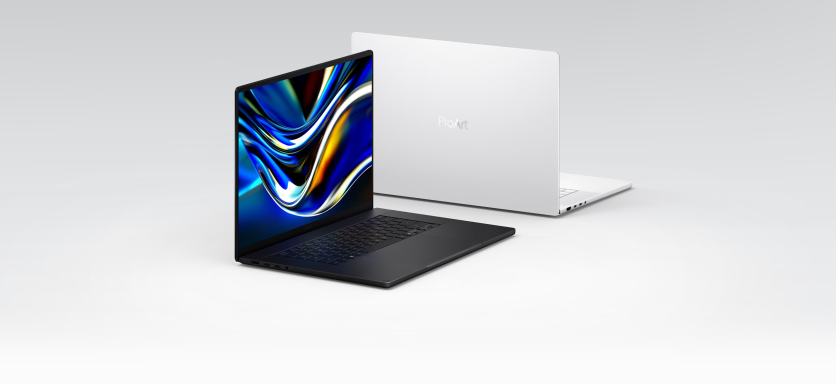
ASUS landed in Berlin this week as the confirmed first-wave leader for NVIDIA's RTX Spark platform, unveiling the ProArt P16 and P14 laptops alongside the compact ProArt GR1X mini PC at its dedicated IFA 2026 Media Showroom on September 2. The three machines are the slimmest ProArt laptops and first ProArt desktop to run on RTX Spark — NVIDIA's ARM-based superchip that pairs a Blackwell GPU and Grace CPU on a single package — and ASUS is marketing them around one central claim: a 128GB unified memory pool large enough to run local AI tools like MuseTree and StoryCube without cloud subscriptions or token limits.
That claim rests entirely on a CUDA software pipeline that, as of this writing, has not been independently validated on any shipping RTX Spark hardware. In July 2026, a pre-production Surface Laptop Ultra engineering sample running RTX Spark — the same underlying silicon as ASUS's new ProArt machines — failed to complete CUDA-based AI workloads on either of the two pre-release driver versions tested. The tester was forced to fall back to slower CPU and Vulkan Compute paths. Tom's Hardware, TechSpot, VideoCardz, and Notebookcheck independently confirmed those findings. ASUS has not provided a public timeline for CUDA validation on its ProArt-specific software.
What ASUS displayed at its Berlin showroom — organized across seven interactive zones at ABION Spreebogen Waterside Hotel through September 5, the day before IFA opens to the public — was hardware that is genuinely impressive on every dimension that does not require CUDA to work: display quality, thermal engineering, form factor, and connectivity. The proviso buyers need to carry into any purchase decision is that the MuseTree local image generation tool ASUS demonstrated was running on a CUDA stack that has not been confirmed as functional outside NVIDIA's own controlled demonstrations.
Read more: Surface Laptop Ultra Prototype Leak Reveals RTX Spark CUDA Failures Before Fall Launch
ASUS Leads the First Wave — What That Means for Buyers
NVIDIA confirmed at SIGGRAPH 2026 that ASUS and MSI lead the RTX Spark first wave, per Acer's own IFA comparison article, with Acer and GIGABYTE following in a second wave. That positioning matters: ASUS's ProArt P16, P14, and GR1X will reach retail before every other RTX Spark desktop competitor except MSI's devices, giving buyers who need a machine in Q3 or early Q4 2026 more options from ASUS than from any other creator-focused OEM. On its Q2 2026 earnings call, ASUS told investors that initial quantities were fully pre-ordered by its channel partners — meaning distributors have committed to buying the first production run, though consumer retail availability will depend on when production quantities ship to stores.
Morgan Stanley analysts, drawing on Computex 2026 channel checks, estimated N1X-class flagship configurations at approximately $2,899. ASUS has not confirmed pricing or specific availability dates for the ProArt P16, P14, or GR1X. Additional pricing and configuration details are expected as the IFA exhibition runs through September 5 and in the weeks following.
What "128GB Unified Memory" Actually Means for Creators — and Where the Gap Is
To understand why the ProArt P16 and GR1X represent a genuine architectural departure from previous-generation ProArt hardware, the memory structure deserves a plain-language explanation.
The previous-generation ProArt P16 ran on AMD's Ryzen AI 9 HX 370 CPU with discrete NVIDIA GPU options topping out at the RTX 5090 Laptop GPU and up to 24GB of GDDR7 VRAM. That 24GB is a hard ceiling for local AI work: a quantized 70-billion-parameter language model requires roughly 41GB of memory to load, which means it simply cannot run on any conventional laptop, regardless of how fast the GPU is.
RTX Spark eliminates that ceiling at the architecture level. The chip pairs a MediaTek-designed 20-core ARM CPU die with an NVIDIA Blackwell GPU die — 6,144 CUDA cores, fifth-generation Tensor Cores with FP4 precision — in a single TSMC 3nm package, connected via NVIDIA's NVLink-C2C chip-to-chip interconnect. Both dies share a single pool of up to 128GB of LPDDR5X memory, which means a 70B-parameter model that cannot fit on any consumer GPU's VRAM can reside entirely in the ProArt P16's unified pool. NVIDIA rates the platform at 1 petaflop of FP4 AI performance, which is the headline figure.
Two bandwidth figures require a precise distinction that ASUS's marketing materials do not make clearly. The 600 GB/s figure is the NVLink-C2C chip-to-chip bandwidth — how fast data moves between the CPU and GPU dies inside the package. The 300 GB/s LPDDR5X memory bandwidth is how fast the entire chip can read data from the physical memory chips, which governs how quickly the GPU can process model weights during inference. For large language model token generation, the 300 GB/s figure is the binding constraint, not the 600 GB/s interconnect. Apple's M4 Max, the most direct unified-memory competitor, delivers approximately 540 GB/s of memory bandwidth — nearly double RTX Spark's figure — from a monolithic die design. RTX Spark answers with a far larger maximum memory capacity and the full CUDA ecosystem, where Apple Silicon has no equivalent.
The CUDA ecosystem is exactly where the unresolved question sits. MuseTree, ASUS's exclusive app for local image generation using the FLUX and WAN models, depends on the CUDA path to leverage RTX Spark's Tensor Cores for accelerated inference. StoryCube's AI scene recognition similarly depends on GPU-accelerated inference. If CUDA is not functioning on retail hardware when the ProArt machines ship, those tools will either fall back to slower CPU inference or fail to run at full capability. A pre-production Surface Laptop Ultra running the same N1X silicon found CUDA workloads failing on two successive driver versions, with the newer CUDA 13.4 developer preview also unable to complete AI workloads in practice. Driver development for a new platform is iterative, and retail units will run newer software than the July prototype. Independent reviews from buyers with retail units will provide the first verifiable answer.
ProArt P16 and P14: How Thin Is "Thinnest ProArt Ever"?
The ProArt P16 measures 12.9mm (0.51 inches) thick and weighs 1.77kg (3.9 lbs), making it 14% thinner and 9% lighter than the previous-generation ProArt P16, and the thinnest 16-inch ProArt laptop in the line's history. The ProArt P14 is even more compact at 13.9mm (0.55 inches) and 1.48kg (3.3 lbs), making it the lightest ProArt laptop ASUS has ever built. Both machines carry high-capacity batteries — 99Wh for the P16 and 90Wh for the P14. Both are designed to support extended sessions away from a power outlet. Battery-parity testing on the pre-production Surface Laptop Ultra running the same RTX Spark silicon showed no measurable performance difference between AC power and battery operation, which, if it holds for retail ASUS hardware, would mean creators get full performance regardless of whether they are plugged in.
Both laptops feature ASUS's Lumina Pro OLED displays with Delta E < 1 color accuracy, peak brightness reaching 1,600 nits, and anti-reflection coating. The P16 goes up to 4K (3840 × 2400) at 120Hz with variable refresh rate and NVIDIA G-SYNC support; the P14 tops out at 3K resolution. For photographers and video editors who rely on color-accurate displays, these specifications are OLED panel standards that ASUS has consistently delivered on previous ProArt generations.
Industrial design extends to two colorways — Nano Black and Neo White — with CNC-machined chassis construction. Both laptops include a precision haptic touchpad and a broad I/O selection intended to eliminate dongle dependence. The previous-generation ProArt P16 was available only in Nano Black, so Neo White represents the first colorway expansion in the ProArt laptop line.
ProArt GR1X: Does the Creator Market Need an Always-On AI Mini PC?
The ProArt GR1X is the most distinctive product in the IFA lineup. At 150 × 150 × 51mm (approximately 5.9 × 5.9 × 2.0 inches) — roughly the footprint of a thick hardback book — it fits the full RTX Spark superchip into a form factor ASUS explicitly designed for 24/7 agentic AI operation. The pitch is to creators who do not need portability but want to run AI agents continuously: a persistent local compute node that generates images, manages assets via StoryCube's scene recognition, and runs ComfyUI workflows without burning cloud credits, left on a desk or mounted behind a monitor.
ASUS engineered a dual-fan cooling system with 218 fan blades and seven-level fan control rated for sustained continuous operation, claiming up to 1.6 times greater thermal coverage compared to conventional mini PC cooling designs. The GR1X supports 10GbE wired networking, Wi-Fi 7, Bluetooth 5.4, and simultaneous output to up to four 4K displays — a configuration that suggests ASUS sees it as the hub of a multi-monitor creator workstation rather than a standalone AI appliance.
The market context is real. The previous generation of compact creator desktops — AMD Ryzen AI Max+ mini PCs — topped out at roughly 215 GB/s of measured memory bandwidth against a similar 128GB memory ceiling. RTX Spark's 300 GB/s is meaningfully faster for weight-streaming-intensive workloads, and its CUDA ecosystem, once validated, would give the GR1X access to the full PyTorch, TensorRT, and llama.cpp-for-CUDA software stack that AMD-based mini PCs cannot run natively. That distinction is the architectural reason the GR1X exists. Whether the CUDA path is working when the machine ships is the same question facing the laptops.
MuseTree, StoryCube, and Agentic Creation: What ASUS Is Actually Promising
ASUS is positioning the ProArt lineup as a platform for what it calls "agentic creation" — AI workflows where multiple models and tools collaborate across tasks like generation, editing, and asset management without manual handoffs. Two exclusive applications anchor this claim:
MuseTree integrates the FLUX and WAN local image generation models, enabling offline generative image creation without token costs. FLUX and WAN are publicly available open-source models that other platforms can run, but ASUS's integration targets creators who want a polished interface rather than a command-line setup.
StoryCube focuses on media organization: AI-powered scene recognition, automated cataloging, and intelligent asset management for Windows. This is the back-end of the agentic creation workflow — a way for a creator's AI agent to know what footage, images, and assets exist and where they are without manual tagging.
ASUS is also demonstrating workflows integrating ComfyUI — a widely used open-source platform for building generative AI pipelines — with its own Zenni Claw AI agent interface. The goal is for Zenni Claw to coordinate actions across MuseTree and ComfyUI, moving generated assets through an edit-and-manage pipeline without the creator manually passing files between applications. ProArt laptops also ship with an Adobe Creative Cloud bundle and, on eligible ASUS machines, an exclusive Google AI Pro offer for hybrid local-cloud workflows.
The underlying logic of this ecosystem is sound for a local AI workstation designed for agentic workflows: eliminating cloud token costs matters most for agents that run many inferences in sequence, because cost accumulates at scale in ways it does not for single queries. The engineering question — whether the CUDA path that accelerates all of these workflows is working on retail hardware at launch — remains open.
Read more: Nvidia RTX Spark Superchip: Windows PC Chip With Full CUDA Stack Targets Dell, Microsoft This Fall
How Does RTX Spark CPU Performance Actually Stack Up?
CPU performance on RTX Spark is one of the few dimensions where pre-production data is available and broadly predictive of retail performance, since CPU benchmarks mature earlier in the driver development cycle than GPU stacks.
Leaked Geekbench 7 results for an N1X configuration — the same chip tier in the ProArt P16 — showed single-core scores of approximately 2,570 and multi-core scores of approximately 23,126. For comparison, the AMD Ryzen AI Max+ 395 — the competing chip in the category of large-memory creator laptops — averaged lower in both single-core and multi-core in the same benchmark suite. Apple's M5 Max, however, averaged approximately 3,766 single-core and 35,527 multi-core across 19 public submissions — meaningfully ahead of RTX Spark in both dimensions.
The Surface Laptop Ultra pre-production prototype gave a more complete picture. Under the Hidden High Performance profile (80W PL1, 95W PL2 power limits), Cinebench scores trailed Apple M4 Max in both 2024 and 2026 benchmark runs. However, early Clang compiler benchmarks from Computex hands-on sessions showed RTX Spark outperforming the standard M5 by approximately 54% in code compilation — a result that suggests the chip performs better in highly threaded developer workloads than in the mixed workloads that synthetic benchmarks measure.
The practical summary for creative professionals: CPU performance will be competitive with AMD Ryzen AI Max+ 395 and likely fall somewhere between Apple's M5 Pro and M5 Max depending on workload type. For creators who primarily bottleneck on GPU and AI inference — which is the target ProArt buyer — the CPU comparison matters less than the memory architecture and the CUDA ecosystem question.
What Should a Creator Actually Do With This Information?
If you are a creator evaluating the ProArt P16, P14, or GR1X for local AI workflows — the use case ASUS is marketing most aggressively — the honest decision framework is:
What is confirmed as of September 3, 2026: The hardware specifications are real. The form factor, display quality, battery capacity, and connectivity are independently verifiable and not subject to driver maturation. ASUS's first-wave timing is confirmed by NVIDIA. The 128GB unified memory architecture is an established engineering fact that enables a class of local AI work that no previous ProArt laptop could do.
What requires independent verification at retail: Whether CUDA-based AI workloads function on production driver versions. This is the pivot point for MuseTree's local FLUX inference, StoryCube's GPU-accelerated scene recognition, and any CUDA-dependent workflow in ComfyUI. The pre-production data established that CUDA was non-functional on the July prototype. NVIDIA and ASUS have until the retail launch to resolve that gap, and driver development for new platforms does produce rapid iteration. But a premium purchase decision for AI-specific workloads should wait for independent reviews of retail units.
The architectural case for waiting: For any creator who has hit the VRAM ceiling on current discrete-GPU hardware — running quantized 70B models that slow down or cannot load at all — RTX Spark's 128GB unified pool, once validated, represents a genuine capability upgrade that no x86 laptop can match without a second GPU.
Frequently Asked Questions
Can the ASUS ProArt P16 run MuseTree's local FLUX image generation right now?
Architecturally, yes — the 128GB unified memory pool and Blackwell Tensor Cores are designed for exactly this workload. In practice, MuseTree's GPU-accelerated inference depends on CUDA, and CUDA-based AI workloads failed to complete on pre-production RTX Spark hardware tested independently in July 2026 under two driver versions. Production units will run newer software, and NVIDIA has been iterating on the CUDA stack for Windows ARM64. Independent reviews of retail units, expected in fall 2026, will provide the first verifiable answer.
What is the difference between RTX Spark's 600 GB/s and 300 GB/s bandwidth figures?
These are two different parts of the memory system. The 600 GB/s is the NVLink-C2C interconnect rate — how fast data moves between the CPU and GPU dies inside the chip package. The 300 GB/s is the LPDDR5X memory bandwidth — how fast the chip reads data from the physical memory chips. For AI inference, where the bottleneck is streaming model weights from DRAM rather than moving data between dies, the 300 GB/s figure governs token generation speed. Apple's M4 Max delivers approximately 540 GB/s of memory bandwidth, nearly double RTX Spark's figure, which means Apple Silicon generates tokens faster per second for equivalent model sizes — even when both have access to the same total memory.
When will ASUS ProArt RTX Spark laptops be available, and how much will they cost?
ASUS has not announced a specific retail date or pricing for the ProArt P16, P14, or GR1X as of September 3, 2026. NVIDIA confirmed fall 2026 availability from ASUS as part of the first launch wave; additional details are expected closer to the retail window. Morgan Stanley analysts estimated N1X-class flagship configurations at approximately $2,899 based on Computex 2026 channel checks — these are analyst estimates, not official ASUS prices.
How does the ProArt GR1X compare to AMD Ryzen AI Max mini PCs for local AI work?
The GR1X's RTX Spark chip offers 300 GB/s of memory bandwidth and the full CUDA ecosystem — including PyTorch's default GPU backend, TensorRT, and llama.cpp-for-CUDA — which AMD Ryzen AI Max mini PCs cannot run natively. AMD Ryzen AI Max+ 395-based mini PCs deliver approximately 215 GB/s of measured bandwidth, lower than RTX Spark's figure, and rely on ROCm rather than CUDA for GPU-accelerated inference. The CUDA ecosystem gives RTX Spark a structural advantage for AI developers whose workflows are already CUDA-dependent. The caveat is identical to the laptop case: that advantage applies only when CUDA is confirmed as functional on retail hardware.

-
 C114 Communication Network
 -
 Communication Home
