
 Search

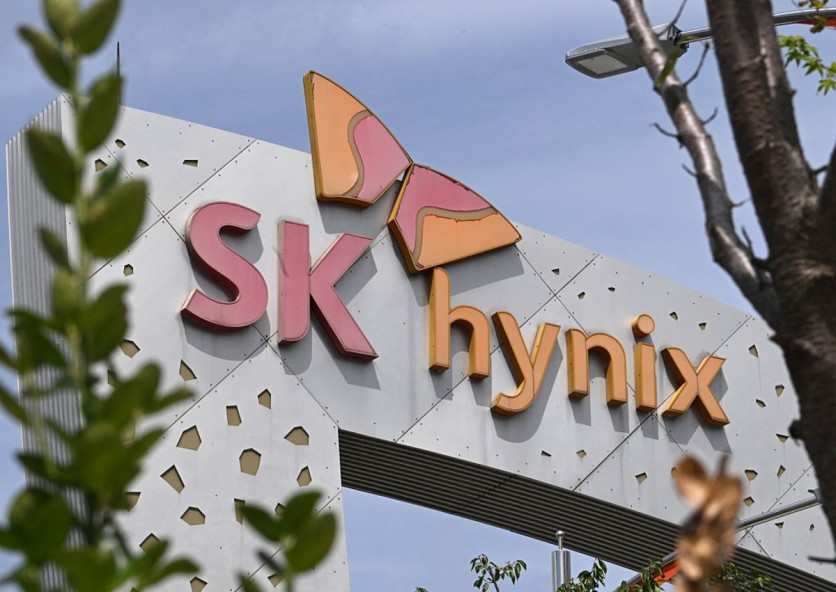
The logo of SK hynix is seen on the main gate of the company's headquarters in Icheon on July 29, 2026. South Korea's SK hynix said on July 29 second-quarter net profit soared a whopping 1,242 percent year-on-year, driven by the artificial intelligence industry's explosive demand for its advanced memory chips. Jung Yeon-je/AFP via Getty Images
Korean financial outlet Bloter reported Thursday that a US asset manager has pre-registered an exchange-traded fund structured around Solidigm with the Securities and Exchange Commission — the single most concrete signal yet from Wall Street that the Nasdaq IPO of SK Hynix's American NAND subsidiary has crossed from speculation into execution. The pre-registration arrived less than 24 hours before SK Hynix's own board-imposed disclosure deadline: under the terms of its August 6 Form 6-K, the company is scheduled to update investors on Solidigm's strategic review either when specific plans are confirmed or by September 4 — whichever comes first.
Fund providers do not file ETF pre-registrations on a speculative timeline. The step is treated in investment banking practice as a near-term runway marker, executed in direct anticipation of a single-stock or IPO-linked product launch. That Solidigm's market valuation has been discussed in negotiations at approximately ₩50 trillion (approximately $36.2 billion) makes a pre-registration filing — at this specific moment — a meaningful institutional statement, according to ₩50 trillion Solidigm valuation reports published across South Korean financial media.
From Intel's NAND Division to Nasdaq Candidate
Solidigm's origin is one of the decade's larger industrial acquisitions. SK Hynix agreed in October 2020 to buy Intel's NAND flash memory and solid-state drive business for approximately $9 billion, with the Intel NAND acquisition final close occurring on March 27, 2025. The acquired operations were consolidated into a US entity under the Solidigm brand, now headquartered in Rancho Cordova, California, with major manufacturing operations at its Dalian, China campus.
Since the acquisition closed, the company has positioned itself as the world's leading producer of high-capacity QLC enterprise SSDs. Its flagship product, the D5-P5336, launched as the 122TB D5-P5336 world capacity record enterprise solid-state drive — built on 192-layer QLC NAND technology. A 245TB-class successor is currently in development, with commercial volumes expected in 2027.
Why QLC NAND Is the Right Technology for AI Data Centers
The technology case underpinning Solidigm's IPO timing is specific, not generic. QLC — quad-level cell — NAND stores 4 bits of data per cell by encoding 16 distinct voltage states, compared to 8 states (3 bits) in TLC (triple-level cell) flash. That extra bit per cell reduces cost-per-gigabyte by roughly 33% compared to TLC, but introduces tradeoffs: QLC versus TLC write endurance falls to approximately 1,000 program/erase cycles before degrading, versus TLC's roughly 3,000.
For most storage workloads, this endurance tradeoff is disqualifying. For AI data center workloads, it is largely irrelevant. Training datasets for large language models and vision models are written once and read repeatedly — sometimes millions of times across training runs. Inference pipelines access the same model weights and context data constantly but rewrite them rarely. The read-to-write ratio in a hyperscaler's AI storage tier can run as high as 20:1 or higher, exactly matching QLC's strength profile.
Solidigm's D5-P5336 makes this architecture concrete: at 122TB per drive in the standard U.2 form factor, it achieves up to a 9:1 reduction in storage rack space compared to hybrid HDD and TLC configurations in network-attached storage deployments, using approximately 90% less storage power in the process, according to D5-P5336 rack density power specs. An independent review by StorageReview confirmed the drive is "optimized for mid-sized I/O patterns commonly found in object storage and AI data pipelines," based on the StorageReview D5-P5336 2025 assessment, and runs on 192-layer QLC NAND. At peak, the drive runs at approximately 25 watts — delivering 122TB of enterprise-grade storage in the power envelope of a conventional light bulb.
No other company operates a pure-play enterprise QLC NAND platform at comparable scale. Solidigm describes itself as the "proven QLC density leader" with more than 100 exabytes QLC shipped milestone, and has been producing Solidigm QLC drives since 2018. That accumulated manufacturing experience is the structural moat a prospectus would need to describe.
Investor Appetite Exceeds Initial Expectations
Reports from South Korea's financial press — originating with the Korea Economic Daily on August 5 and subsequently confirmed across multiple outlets — indicate Solidigm has been seeking pre-IPO fundraising reports August 2026 of between ₩5 trillion and ₩10 trillion (approximately $3.6 billion to $7.2 billion). Morgan Stanley and Goldman Sachs have reportedly been selected as lead underwriters, and Solidigm has been sounding out global alternative asset managers and sovereign wealth funds, according to Korea Times August 14 backlash report.
Interest has reportedly exceeded initial plans. The UAE sovereign wealth fund Mubadala has expressed strong interest in participating through Goldman Sachs. Former SK Hynix president Roh Jong-won — the executive who architected the original Intel acquisition — has separately established TechBridge, a US private equity firm, specifically to pursue a joint investment of up to ₩2 trillion (approximately $1.45 billion) in Solidigm alongside Korean investment partner Stonebridge.
The fact that a former SK Hynix president is backing the deal with freshly raised institutional capital is widely read in Seoul's investment community as insider conviction rather than opportunism.
How Solidigm's NAND Market Position Reads in Q1 2026 Data
The commercial logic behind the IPO timing is supported by current market data. According to TrendForce Q1 2026 NAND data, in the first quarter of 2026, NAND revenue for the SK Hynix Group — including both SK Hynix and Solidigm — reached approximately $7.53 billion, up 44.6% quarter-over-quarter, with the combined entity capturing 17.6% global NAND market share, second only to Samsung's 31.6%. Solidigm specifically controls roughly a quarter of the data center-grade SSD market.
SK Hynix's own prospectus filings for its July 2026 Nasdaq ADR offering indicated NAND flash average selling prices were expected to rise more than 250% year-over-year in each of the third and fourth quarters of 2026, per the SK Hynix F-1 NAND price forecast. That trajectory — and the Dalian fab's planned Dalian V8 238-layer NAND expansion to next-generation production lines, expected in the second half of 2026 — gives Solidigm a technology roadmap story that institutional investors can model through 2029.
What SK Hynix Shareholders Are Worried About
The optimism surrounding the IPO is not universally shared among SK Hynix's existing investor base, and the company's stock on the Korea Exchange fell 10.37% on August 6 after the pre-IPO funding reports became public.
Rhee Nam-uh, chairman of the Korean Corporate Governance Forum, has described a Solidigm listing as creating "an unprecedented five-tier multiple-listing structure" — running from SK Group Chairman Chey Tae-won through SK Inc., SK Square, SK Hynix, and SK Hynix NAND Product Solutions Corp. down to Solidigm, according to the Rhee Nam-uh governance forum statement. South Korea's ruling Democratic Party dual listing legislation has separately been in preparation to tighten restrictions on listed parents spinning off subsidiaries for independent listings, although the proposed rules would not apply to overseas subsidiaries in the same way they apply to domestic ones.
Lee Young-gon, market strategist at Toss Securities, offered a different critique: that SK Hynix does not actually need the capital, given the company holds ₩88 trillion in cash and cash equivalents and raised approximately $26.5 billion in its own Nasdaq ADR listing in July 2026. The real motivation, in Lee's analysis, is structural — unlocking flexibility in how cash flows upward through the SK Group's conglomerate ownership chain without triggering shareholder approval requirements.
Proponents push back with numbers. Mirae Asset Securities analyst Kim Young-gun estimated that selling a partial stake in Solidigm could unlock approximately $15 billion in additional US investment capacity for the broader SK Group, and argued that, because Solidigm represents less than 10% of SK Hynix's revenue, operating profit, and assets, the listing would not require a shareholder vote under current Korean rules, according to the Korea Times August 14 backlash report.
Is the IPO a Question of If or When?
Solidigm's balance sheet carries real freight. The Solidigm debt-to-equity ratio report indicates a debt-to-equity ratio exceeding 4,484%, a legacy of the highly leveraged Intel acquisition. Any prospectus will need to address this candidly, alongside the exposure to US export control restrictions that have complicated planned capacity upgrades at the Dalian No. 2 fab. Solidigm is reportedly pursuing Verified End User status from the Commerce Department to ease equipment import constraints, but resolution is not guaranteed.
Despite these headwinds, the trajectory of the deal is difficult to read as anything other than imminent. The pre-IPO capital raise has attracted sovereign wealth funds and a former SK Hynix president. An ETF product provider has pre-registered with the SEC. Solidigm has been recruiting an executive specifically responsible for SEC filing director recruitment confirmed — including Form 10-K and Form 10-Q — positions that only a public reporting company requires.
What SK Hynix Parent's Own Nasdaq Debut Means for Context
Any Solidigm IPO would be the second major US capital markets event for the SK Hynix group in roughly two months. On July 10, 2026, SK Hynix completed its SK Hynix Nasdaq ADR listing under the ticker SKHY, raising $26.5 billion — the largest-ever US share sale by a non-American company, surpassing Alibaba's 2014 record. The offering was priced at $149 per ADR, with each ADR representing one-tenth of a Korean common share. The SKHY ADR first day close was $168.01, representing a 13% first-day gain.
That listing was explicitly framed by SK Hynix management as a strategy to eliminate the so-called Korea discount — the chronic valuation gap between Seoul-listed Korean chipmakers and their US-listed peers like Micron. A Solidigm listing would extend that strategy into a distinct, US-domiciled legal entity already structured to operate natively within American capital markets.
Does September 4 Mean an Announcement?
Not necessarily — but SK Hynix's formal commitment to disclose is itself the mechanism the market has been waiting for. The company may announce a formal pre-IPO structure with named investors and a valuation anchor. It may confirm the underwriter selection. Or it may issue a further procedural statement extending the review timeline, which would itself carry information about the deal's pace.
What has changed since August 6 is the ETF pre-registration: a product that can only generate investor returns from a publicly traded Solidigm, filed at the precise moment when that outcome has moved from "rumored" to "scheduled."
For investors already holding SKHY — and for the AI infrastructure ecosystem more broadly — a publicly traded Solidigm would be the first pure-play enterprise NAND and high-capacity SSD company on a major US exchange. It would give investors direct exposure to the storage layer of the AI stack at a moment when that layer is rapidly becoming a bottleneck. A $36 billion enterprise value for a company that controls roughly a quarter of the data center-grade SSD market, with a technology architecture specifically matched to AI workload economics, is either a bargain or a risk-laden bet on a volatile memory cycle. The September 4 disclosure will begin clarifying which.
Currency conversions in this article are approximate, based on exchange rates as of September 3, 2026.
Frequently Asked Questions
What is Solidigm and why does its IPO matter for AI infrastructure?
Solidigm is a US subsidiary of South Korean chipmaker SK Hynix, created through SK Hynix's 2020–2025 acquisition of Intel's NAND flash memory and SSD business. The company specializes in high-capacity enterprise SSDs using QLC (quad-level cell) NAND — a technology that stores 4 bits per cell and is specifically well-suited to the read-heavy data pipelines of AI training and inference workloads. A Solidigm IPO would create the only pure-play, publicly traded enterprise QLC NAND company on a major US exchange, giving investors direct access to what is rapidly becoming one of the binding constraints in AI infrastructure build-out.
Why does QLC NAND matter specifically for AI, and what are its limitations?
QLC stores 4 bits per cell versus TLC's 3 bits, enabling roughly 33% more data per unit of silicon — translating directly to lower cost-per-gigabyte at scale. AI training datasets are written once and read repeatedly across training runs, which matches QLC's strength profile (high read performance, high density) and largely sidesteps its primary limitation (lower write endurance of approximately 1,000 program/erase cycles, versus TLC's roughly 3,000). For workloads with high sustained random write rates — databases, transactional systems — QLC is not the right choice. For AI storage tiers that read far more than they write, the cost and density advantages are substantial and the endurance tradeoff is manageable.
What risks would a Solidigm IPO investor face?
Three material risks stand out. First, Solidigm carries a reported debt-to-equity ratio exceeding 4,484%, a legacy of the highly leveraged Intel acquisition that will require careful prospectus disclosure and post-IPO capital management. Second, Solidigm's Dalian, China manufacturing campus is subject to US export control regulations on semiconductor equipment, which have already delayed planned fab upgrades and remain an unresolved variable. Third, NAND flash is a cyclical commodity market — while current conditions favor sellers, the memory industry has historically seen sharp price corrections. Investors would need to assess whether the current favorable pricing environment is durable or cyclical.
What does the September 4 SK Hynix disclosure actually require?
Under the terms of SK Hynix's August 6, 2026 Form 6-K filing with the SEC, the company committed to update investors on Solidigm's strategic review either when specific plans are confirmed or within one month — whichever comes first. September 4 is that one-month deadline. The disclosure could range from a formal announcement of a pre-IPO fundraising structure with named investors and a valuation, to a confirmation of the underwriter selection, to a procedural statement that the review is ongoing. Any outcome will carry market-moving information about the deal's timeline and structure.

-
 C114 Communication Network
 -
 Communication Home
