
 Search

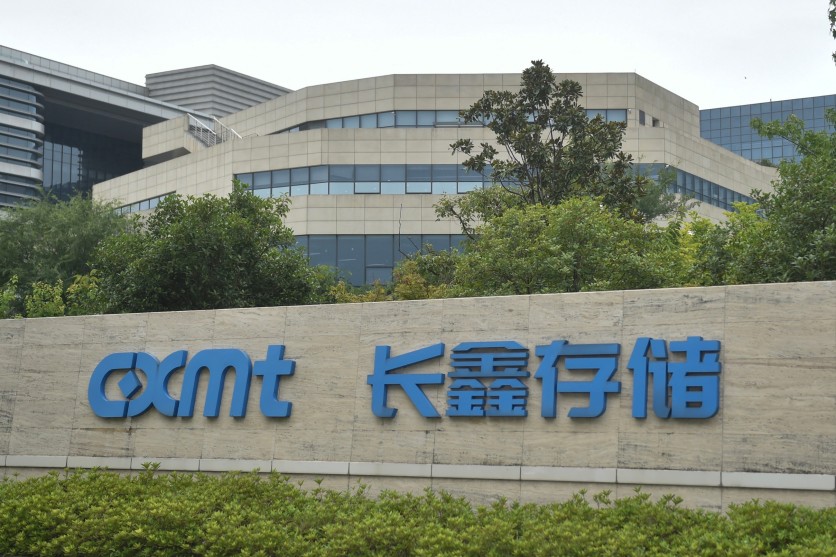
A view of the ChangXin Memory Technologies (CXMT) headquarters at Konggang Industrial Park in Hefei, eastern China's Anhui province on July 27, 2026. CN-STR/gettyimages.com
For the first time in more than a decade, the three companies that have controlled global DRAM pricing no longer hold 90% of the market. ChangXin Memory Technologies — CXMT — claimed exactly 10% of global DRAM revenue in the second quarter of 2026, according to Counterpoint Research market data published September 1, a market-share milestone reached roughly two years before both Counterpoint and investment bank UBS projected it would happen.
The numbers behind that headline tell the rest of the story. Samsung Electronics led with 38% of global DRAM revenue, followed by SK Hynix at 25% and Micron Technology at 24%. Added together, the legacy Big Three now command 87% of global DRAM revenue — a figure that, for any quarter in the past decade, would have read closer to 94% or above. The remaining 3% belongs mostly to Nanya Technology of Taiwan. CXMT, which held below 1% of global revenue in 2023, climbed to 4% in Q2 2025 and 8% by the end of 2025, arriving at double digits in Q2 2026 — a rate of roughly two percentage points of share per quarter sustained across three consecutive periods.
The Seoul Economic Daily, reporting the Counterpoint data on September 3, confirmed that Counterpoint Research and UBS had projected CXMT would not reach 10% in shipment share until 2028 — meaning the company broke through in quarterly revenue well ahead of expectations.
Read more: CXMT Ships LPDDR6 First: Xiaomi 18 Fold Arrives With Chinese Memory Inside
How DRAM Got Its Oligopoly — and Why It Persisted So Long
The DRAM market did not become a three-company cartel by accident. It consolidated over two decades of brutal attrition. Japanese manufacturers held dominant global share through the 1980s; in 1985, Japanese companies were found to have engaged in export dumping that drove American chip makers to the brink of extinction, triggering Commerce Department antidumping action and congressional hearings. Japanese DRAM production peaked and then collapsed as Korean producers — Samsung and Hynix — used state capital, aggressive capacity investment, and domestic demand to establish the supply position they now hold. By the 2000s, the three-firm structure that persists today was essentially locked in: Samsung, SK Hynix, Micron. Nanya has held its 1–2% residual share since that era. No one else has materially broken in, until now.
What made the oligopoly durable was not just scale, but technology lock-in. DRAM manufacturing requires capital expenditures that run into the tens of billions of dollars per generation, process knowledge accumulated over years of yield learning, and lithography equipment that is only available from a handful of suppliers — most critically ASML, whose extreme-ultraviolet (EUV) machines define the frontier of cost-per-bit efficiency and are sold exclusively to Western and South Korean manufacturers. For any entrant without EUV access, the starting cost disadvantage is structural and compounding.
CXMT is running the same state-backed-entrant playbook the Korean makers ran against Japan in the 1980s and 1990s — captive domestic demand, subsidized capacity, and a focus on the commodity segment the incumbents are vacating. The Western response this time is not antidumping law but export controls and procurement bans: a structurally different mechanism, and one whose long-term effectiveness remains, as the 10% milestone now demonstrates, genuinely contested.
Legacy Nodes as Launchpad: Why CXMT Got Here
CXMT's gain is a direct consequence of a strategic decision made by Samsung, SK Hynix, and Micron: all three redirected their most advanced manufacturing lines toward high-bandwidth memory (HBM) for AI accelerators, effectively vacating the commodity DRAM market — DDR5 and LPDDR5X for PCs, smartphones, and mid-range servers. Each wafer used for HBM produces roughly one-third the raw memory capacity of the same wafer devoted to standard DDR5. The AI-driven shortage that followed — what analysts have taken to calling the "RAMpocalypse" — sent mainstream DRAM prices up more than 200% from early 2025 levels. CXMT, manufacturing DDR5 and LPDDR5X on deep-ultraviolet (DUV) lithography equipment at its Hefei fabrication facilities, stepped into the vacuum.
CXMT's process technology runs entirely on DUV — the 193nm-wavelength exposure systems that preceded EUV — using a multi-exposure technique called self-aligned double patterning (SADP) and self-aligned quadruple patterning (SAQP) to achieve feature sizes that would otherwise require EUV's 13.5nm wavelength. Each additional exposure pass accumulates small circuit-alignment errors and adds manufacturing steps, producing a cost-per-bit disadvantage estimated at roughly 30% above Samsung, SK Hynix, and Micron. In a normal pricing environment, that disadvantage would make commodity DRAM sales margin-negative. In the current AI-driven supercycle, where spot and contract DRAM prices are elevated enough to absorb that gap, CXMT is profitable. Its first-half 2026 revenue reached ¥150.3 billion (approximately $22.37 billion), up 874% year-over-year.
China's structural position as the world's largest DRAM consumer gave CXMT a captive customer base that rivals cannot easily contest: Huawei, Xiaomi, Oppo, Alibaba Cloud, and Tencent Cloud all have long-term supply agreements with the company, a base of contracted domestic demand that insulates CXMT from the pricing volatility that would otherwise expose its cost disadvantage in open-market competition. The 2023 Chinese cybersecurity ruling that barred critical infrastructure operators from purchasing Micron products added a structural tailwind for CXMT in exactly the segment where Micron had previously competed.
Two Years Ahead of Schedule — and What That Does to the Forecasts
Counterpoint Research and UBS had both previously projected CXMT would not reach double-digit DRAM revenue share until 2028. That the company cleared the threshold in Q2 2026 — fully two years earlier — is not merely a market-share footnote; it raises an urgent question about every current projection that uses CXMT's pace as a planning input.
The most watched of those forward projections is an investment banker's target of 30% global DRAM revenue share for Chinese producers by 2030 — a figure that would have seemed fantastical two years ago and now no longer reads as categorically implausible. Counterpoint's Hwang Min-sung has stated that 15% is the next target CXMT has built into its investor commitments, with "all of its current investments a race to reach that goal first." At the current pace of roughly two percentage points per quarter, 15% is plausibly in reach by mid-2027, absent major capacity disruptions or technology setbacks.
That trajectory is relevant not only to DRAM market structure but to the broader context of US-China technology competition. For policymakers in Washington and Seoul who have structured export controls on the assumption that restricting ASML's EUV machines would contain China's memory chip ambitions, CXMT's 10% milestone on DUV-only processes represents concrete evidence that the containment strategy has delayed but not stopped Chinese market entry at scale. The December 2024 HBM-specific export controls were designed to hold the line at advanced AI memory; the most they can claim today is that CXMT's HBM3E production remains at low-yield risk-production quantities rather than commercial scale.
What CXMT Is Building With Its War Chest
CXMT's ability to accelerate this trajectory is materially stronger today than it was a year ago, thanks to the largest IPO in Asia in 2026. The company raised ¥57.9 billion (approximately $8.62 billion) in its July 27, 2026 STAR Market debut, with first-day shares surging 466% from an offering price of ¥8.66 (approximately $1.29) to close at ¥49 (approximately $7.29). IPO proceeds are earmarked for development of the next-generation G5 process node, 12-layer HBM3 production infrastructure, and new fabrication facilities in Shanghai and Beijing, with a targeted monthly wafer capacity of 420,000 by 2027 — up from roughly 320,000 currently.
The R&D investment underlying this acceleration is substantial. In the first half of 2026 alone, CXMT spent ¥6.86 billion (approximately $1.02 billion) on research and development — up 87% year-over-year — and employed 7,491 R&D staff representing 33% of its total workforce. Industry observers have noted that CXMT has been recruiting engineers with DRAM process experience from Samsung, SK Hynix, and Micron, a talent acquisition pattern that closely mirrors how Korean makers built their process expertise in the 1990s.
On August 29, CXMT announced it had commenced mass production of LPDDR6 — the next generation of mobile DRAM, ratified by JEDEC in July 2025 — naming Xiaomi's upcoming 18 Fold foldable smartphone as its first commercial device, scheduled to launch in September 2026. CXMT's LPDDR6 runs at 12,800 Mbps — compared with SK Hynix's EUV-built equivalent at 14,400 Mbps — an 11% speed gap that traces directly to the lithography constraint rather than a design choice and will persist regardless of how much CXMT spends on R&D.
As of September 1, CXMT had also delivered small-batch HBM3E chips to Alibaba Group's T-Head semiconductor division and to Cambricon Technologies for qualification testing — a milestone that arrived roughly 12 months ahead of the 2027 schedule every major industry forecast had assigned to China's first HBM3E production. The chips have cleared CXMT's internal quality thresholds, but commercial qualification — a process that typically takes six to 18 months for a new memory vendor integrating with an existing AI chip platform — has not been confirmed. SK Hynix entered HBM3E mass production in 2024, roughly two years before CXMT's risk-production delivery; Samsung has already shipped HBM4E samples at speeds up to 16 Gbps per pin.
Read more: CXMT Ships HBM3E AI Memory to Alibaba and Cambricon: US Export Controls Failed to Stop It
Both Chinese Memory Champions Are Here at the Same Time
CXMT's 10% DRAM milestone did not arrive in isolation. Yangtze Memory Technologies (YMTC) — China's dominant NAND flash manufacturer — hit 13% of global NAND revenue in Q1 2026 (up from 8% a year earlier), making it the fastest-growing major player in the global NAND market. By Q2 2026, YMTC had climbed to 14% of global NAND bit shipments, edging past Japan's Kioxia to claim the number-three position by volume — the first time a Chinese company has held that rank in either major memory segment. YMTC is separately plotting a major IPO on Chinese equity markets to fund its next capacity expansion.
The simultaneous arrival of both Chinese memory champions at double-digit share in their respective segments — CXMT in DRAM, YMTC in NAND — is structurally unprecedented in the post-2008 memory oligopoly era. For the semiconductor supply chains that feed every PC maker, smartphone OEM, and data center operator, the practical implication is that a fourth credible DRAM supplier and a third credible NAND supplier now exist outside the incumbent controlled supply pool, and both are growing faster than any Western analyst consensus projected a year ago.
What the Equipment Ceiling Still Means
The 10% milestone should not be read as confirmation that CXMT has closed the gap with the incumbents. It has not. The DUV-only manufacturing process imposes a 30% cost-per-bit disadvantage that is currently masked by elevated market prices but would become a decisive margin problem in a normalized DRAM cycle. That cycle moderation could arrive as early as 2027 if Samsung, SK Hynix, and Micron's expanded HBM capacity comes online and they redirect production back to commodity DRAM; when that happens, CXMT's share gains will be tested against a genuinely competitive cost environment for the first time.
In high-bandwidth memory specifically, the technology distance is greater still. SemiAnalysis models CXMT's HBM3 eight-die stack yield at roughly 25% overall — meaning three of every four stacks fail quality testing — a baseline far below the commercial yield required for sustainable supply. And while CXMT has demonstrated risk-production HBM3E, Samsung and SK Hynix are already shipping HBM4 to major AI accelerator customers and have disclosed roadmaps for HBM5 and novel architectures that stack memory above rather than beside the processor.
Benchmark claims from CXMT should be treated as unverified until confirmed by independent testing under real-world conditions. The gap between CXMT's lab-measured specifications and independently validated performance under sustained commercial workloads has not yet been characterized for LPDDR6 or HBM3E; the Xiaomi 18 Fold will be the first real-world test platform for LPDDR6 specifically. Counterpoint Research's Neil Shah has noted that if CXMT can expand capacity and capability to meet both domestic and overseas demand — "starting with personal computers and potential Tier-1 international customers" — the company's market share trajectory will look substantially different within a year.
What Buyers and Enterprise Teams Need to Understand
The legal and compliance framework surrounding CXMT is fixed and independent of the company's commercial trajectory, and it bears directly on every procurement decision that involves CXMT-manufactured memory.
As a company headquartered in Hefei, China, CXMT operates under China's National Intelligence Law (2017), whose Article 7 requires all Chinese organizations to support, assist, and cooperate with national intelligence work, with no corporate opt-out provision under Article 14. China's Data Security Law (2021) and Cybersecurity Law (2016, amended 2026) impose additional data-handling obligations and government-access requirements. These are fixed legal conditions of operating under Chinese jurisdiction — not risks to be weighed against benchmark scores.
Under China's 2021 Regulations on the Management of Security Vulnerabilities in Network Products, any company that discovers a security vulnerability in hardware it manufactures must disclose it to China's MIIT within 48 hours — before notifying any foreign organization, including the device maker or the device owner. CXMT memory chips are already inside HP, Asus, and Acer laptop models sold outside the United States, as confirmed by Nikkei Asia reporting in mid-2026. For any enterprise or government buyer whose security patch cycle depends on timely notification from hardware vendors, this asymmetric disclosure obligation is a concrete operational consideration — not a theoretical concern.
The Department of Defense compliance timeline is more concrete still. The DoD's direct procurement ban on CXMT-listed entities has been in effect since June 30, 2026, under Section 805 of the FY2024 NDAA. An indirect ban — covering products with embedded CXMT components — will take effect June 30, 2027. An all-federal-agency ban covering any semiconductor product from CXMT takes effect December 23, 2027, under Section 5949 of the FY2023 NDAA. Organizations with DoD contracts, federal certifications, or supply-chain compliance requirements should audit their device and component sourcing against these dates before the next procurement cycle.
CXMT filed a lawsuit on August 28 in the US District Court for the District of Columbia challenging its Chinese Military Company designation, naming Defense Secretary Pete Hegseth as a co-defendant and alleging the designation is "arbitrary, lacked evidence, and violated due process." Xiaomi successfully achieved removal from a comparable list via litigation in 2021; Alibaba filed a similar challenge in June 2026. The outcome of CXMT's suit may eventually affect compliance timelines, but organizations cannot use pending litigation as a planning assumption in their procurement calendars.
What Comes Next
CXMT has publicly stated that 15% of global DRAM revenue is the next target, with investor commitments built around reaching that threshold. That figure, if reached at the current pace, would cement CXMT as a permanent structural force in the DRAM market — no longer a footnote in the oligopoly's margin story but a genuine constraint on the Big Three's pricing power.
The path there will test whether CXMT's gains are durable or cycle-dependent. The LPDDR6 ramp with Xiaomi, the HBM3E qualification program with Alibaba T-Head and Cambricon, and the progression toward the G5 process node will each probe whether CXMT can sustain its trajectory as it moves from volume competition on mature nodes — where it excels — toward margin and yield competition on advanced ones, where Samsung and SK Hynix retain formidable advantages.
For the global memory industry, the story of Q2 2026 is not simply that a Chinese company reached 10%. It is that a three-company cartel that has held DRAM pricing power for the better part of a decade formally fell below 90%, two years before the analysts who track it most closely said it would — and that the entrant doing it is funded, lawyered up, recruiting globally, and targeting 15% next.
Currency conversions in this article are approximate and based on an exchange rate of 1 USD = 6.72 CNY as of September 3, 2026.
Frequently Asked Questions
What does CXMT's 10% DRAM market share mean for memory prices?
CXMT's emergence as a fourth meaningful DRAM supplier is a necessary but not sufficient condition for lower prices. The company currently sells at market pricing — not below it — because its DUV-only manufacturing process carries a roughly 30% cost-per-bit disadvantage versus Samsung, SK Hynix, and Micron that prevents it from profitably discounting. Prices will moderate when the Big Three redirect capacity back to commodity DRAM from high-bandwidth memory — an event TrendForce projects no earlier than Q4 2027. CXMT reaching 10% share while not discounting means it is not yet a price-setting force; it is a supplier of last resort in a market where every alternative is sold out. That calculus could change if the supercycle moderates and CXMT faces a genuine cost-competition test for the first time.
Should enterprise buyers be concerned about CXMT memory in their hardware supply chains?
Enterprise and government buyers face specific, codified compliance obligations with concrete deadlines. The DoD's direct procurement ban on CXMT-designated entities has been in effect since June 30, 2026. The indirect ban covering products with embedded CXMT components takes effect June 30, 2027. The all-federal-agency ban takes effect December 23, 2027, under Section 5949 of the FY2023 NDAA. Organizations with defense contracts or federal certifications should complete a supply-chain audit before the June 2027 deadline. For private-sector buyers, no general prohibition exists, but China's National Intelligence Law (2017) Article 7 and the 48-hour security vulnerability disclosure rule — which routes knowledge of chip flaws through Beijing before Western device makers receive it — are structural conditions of the relationship that procurement teams should understand before specifying devices containing CXMT memory.
How far behind is CXMT on high-bandwidth memory compared to Samsung and SK Hynix?
SK Hynix entered HBM3E mass production in 2024 — roughly two years before CXMT's current risk-production delivery to Alibaba T-Head and Cambricon. Both SK Hynix and Samsung are already producing HBM4 at commercial scale and have shipped HBM4E samples to major customers at data-transfer speeds of up to 16 Gbps per pin. CXMT's HBM3E chips are in qualification testing with a timeline of six to 18 months before any commercial agreement could be confirmed. SemiAnalysis models CXMT's HBM3 eight-stack yield at roughly 25%, compared with the industry-standard commercial threshold that the leading producers cleared years ago. The gap is real, and the incumbents are not standing still while CXMT closes it.
Can CXMT's market share gains continue if AI-driven DRAM prices normalize?
This is the central open question for CXMT's long-term trajectory. The 10% share was reached during a market condition in which AI infrastructure demand has driven DRAM prices up over 200% from early 2025 levels, incumbents have redirected capacity to higher-margin HBM, and even high-cost suppliers can sell at market pricing. If Samsung, SK Hynix, and Micron redirect production back to commodity DRAM — as they have the capacity to do when HBM expansion investment tapers — CXMT's 30% cost disadvantage becomes a direct margin problem. The company's best hedge against this outcome is reaching the advanced nodes and HBM market before the supercycle ends — which is precisely what its $8.62 billion IPO proceeds and $1.02 billion H1 2026 R&D budget are trying to fund.

-
 C114 Communication Network
 -
 Communication Home
