
 Search

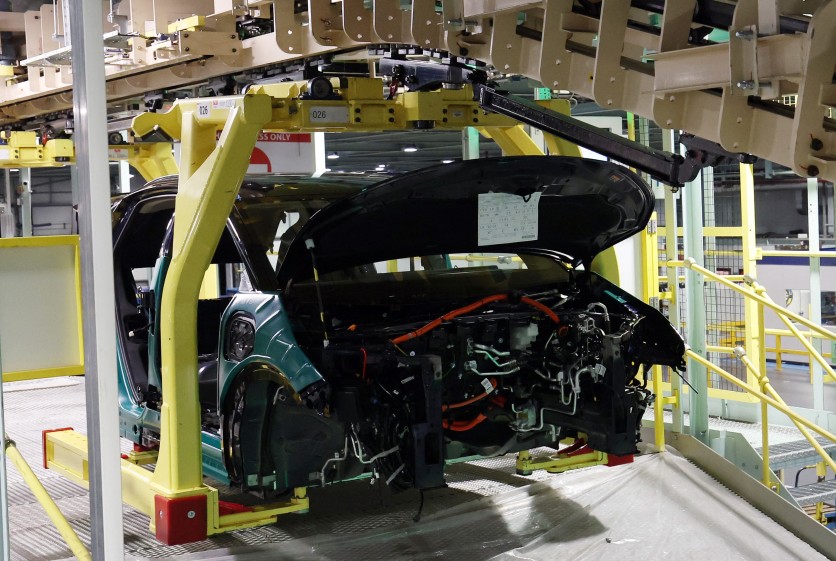
The Nissan Leaf electric car production line, at the Nissan factory in Sunderland, north-east England, on December 16, 2025. Scott Heppell/AFP via Getty Images
Families who installed infant car seats using the rear outboard seat belts in a new 2026 Nissan Leaf may have done so with a false sense of security. Nissan has issued a federal safety recall covering 3,788 of the redesigned EVs after Consumer Reports testing — not Nissan's own engineers, and not the National Highway Traffic Safety Administration — discovered that the rear outboard seat belt assemblies cannot reliably hold a locked position when a caregiver tries to tighten an infant car seat base. The recall carries NHTSA campaign number 26V425; Nissan's internal reference is R26A7. Owner notification letters are scheduled to be mailed on July 17, 2026.
If you own a 2026 Nissan Leaf, you can check your specific vehicle right now at NHTSA.gov using recall number 26V425, or call Nissan at 1-800-647-7261. The permanent fix is not yet available — dealers cannot repair affected vehicles until winter 2026 — but two interim workarounds are available starting today.
How the Seat Belt Retractor Fails
The defect sits in the automatic locking retractor, or ALR — the component that makes a rear seat belt useful for securing a child seat. Every rear seat belt in a modern car operates in two modes. In normal use, the belt runs on an emergency locking retractor (ELR) that moves freely with an occupant and only locks during a crash or sudden stop. When a caregiver needs to install an infant car seat using the seat belt rather than LATCH anchors, she pulls the belt all the way out to its full extension; this triggers the belt to switch into ALR mode, in which the retractor ratchets tighter as the belt retracts, holding the seat at fixed tension per federal child restraint standards.
In the affected 2026 Leaf units, that switching mechanism fails. The ALR deactivates prematurely — the belt loosens or releases tension while a caregiver is still trying to tighten it — leaving the infant car seat base inadequately anchored. Consumer Reports' auto testers discovered this during routine rear-seat safety evaluation at the organization's Auto Test Center in Colchester, Connecticut, as part of a battery of more than 50 tests it runs on every vehicle it purchases. The failure puts the 2026 Leaf out of compliance with FMVSS 208, Occupant Crash Protection, which governs how seat belt assemblies must perform when used to install child restraints. Nissan classified the action as a non-compliance recall rather than a field service campaign, which means it is subject to full federal recall procedure and free repair for all owners.
The defect affects only the rear outboard seat positions. The LATCH (Lower Anchors and Tethers for Children) system is not implicated, and neither is the belt's performance in its standard adult-passenger mode — ELR function remains intact, according to Consumer Reports.
Interim Safety Steps
Because the replacement parts will not reach dealerships until winter 2026, Emily Thomas, Consumer Reports, Associate Director of Auto Safety, advises 2026 Leaf owners with infant car seats to take either of the following steps immediately:
Use the LATCH system exclusively to install the infant seat base — the recall does not affect the structural anchors. If LATCH installation is not possible, move the infant seat to the center rear position and secure it using the center rear seat belt, which is not part of the recall.
Until the permanent remedy is installed, do not use the rear outboard seat belts to restrain a rear-facing or forward-facing child seat.
Supplier Autoliv Japan Has Been Here Before
The root cause is a manufacturing error at Autoliv Japan, the company that supplied the ALR retractor assemblies installed in affected 2026 Leaf units. Autoliv — a Swedish-American automotive safety parts manufacturer and the world's largest supplier of seat belts and airbags — traced the defect to the retractor components themselves, and Nissan confirms no other Nissan models carry the affected assemblies.
This recall is not Autoliv's first documented failure with the automatic locking retractor. In 2021, Autoliv filed NHTSA safety recall 21E052, which covered more than 135,000 seat belt assemblies across at least 16 brands — including vehicles from Audi, BMW, Ford, Nissan, Mitsubishi, and Volkswagen — because defective out-of-tolerance ALR levers, causing the ALR to deactivate before the seat belt webbing was fully retracted. That is the same functional failure described in recall 26V425 for the 2026 Leaf: an ALR that does not remain engaged. The 2026 occurrence involves Autoliv Japan specifically and a different production run, but the pattern of ALR deactivation defects in Autoliv-supplied retractors raises a legitimate question about whether Nissan's incoming-part validation protocols were adequate to detect a defect mode that had already surfaced in the same supplier family.
Nissan has not addressed publicly how the defective assemblies cleared its own quality checkpoints before the 2026 Leaf reached customers.
Consumer Reports notified Nissan of the defect on April 22, 2026. Nissan launched its own investigation, was able to reproduce the failure, confirmed the defect was caused by the manufacturing error at Autoliv Japan, and filed the non-compliance recall. VINs became searchable on NHTSA.gov as of July 7, 2026, and Consumer Reports published its findings on July 10.
Read more: Nissan Leaf Recall: 65,000 EVs Come with Driver Manual Error
Recall Details for Owners
The recall covers 2026 Nissan Leaf vehicles produced between June 10, 2025 and June 8, 2026 at Nissan's Tochigi plant in Japan — a shift from the previous-generation Leaf, which was assembled in the United States. Four seat belt assembly part numbers are involved, across both interior color options.
Dealers have already been instructed to replace the rear outboard seat belt assemblies free of charge. Interim notification letters go out July 17, 2026; a second letter will follow once repair appointments can be scheduled.
Owners can verify their VIN at NHTSA.gov using campaign number 26V425, contact Nissan at 1-800-647-7261 (reference R26A7), or reach NHTSA directly at 1-888-327-4236.
Nissan says it is not aware of any crashes or injuries related to this defect.
Second Recall in Months for Nissan's Comeback Car
The seat belt recall arrives at a sensitive moment. The 2026 Nissan Leaf — a ground-up redesign classified as a crossover-adjacent EV and priced starting at $29,990 — is the centerpiece of Nissan's Re:Nissan turnaround plan, which targets 500 billion yen in cost savings and a return to operating profitability by fiscal year 2026. The third-generation Leaf was a top-three finalist for the North American Utility Vehicle of the Year at the January 2026 Detroit Auto Show, receiving early critical recognition as a compelling EV at a sub-$30,000 price point — particularly relevant after the federal EV tax credit expired.
This is the second federal recall affecting the 2026 Leaf since its launch. In April 2026, Nissan issued recall R25F1 (NHTSA 26V188) covering 51 units over battery fire risk in which damaged cathode material created a fire risk even while the vehicle was parked and not charging. Two thermal incidents had been reported — one at a Japanese dealership on February 16, 2026 and one at a U.S. dealership on March 2, 2026 — before Nissan traced the defect to battery cell manufacturing damage at the battery supplier. Nissan provided rental vehicles to affected owners while the battery remedy was developed.
The seat belt issue is mechanically and electrically unrelated to the battery defect. But two separate federal recalls on a brand-new model within months of launch — one for fire risk, one for child restraint failure — compounds the quality signal at exactly the moment Nissan needs its flagship EV to perform without incident. Nissan has suspended dividends, explored asset sales, and faces sustained financial pressure detailed in the Re:Nissan recovery plan. The Re:Nissan plan's credibility depends in no small part on the 2026 Leaf demonstrating that Nissan's manufacturing partnerships, supplier validation, and quality assurance have caught up with the vehicle's revised design ambitions.
Who Catches These Defects — and Who Does Not
The accountability story here is not subtle. Nissan's own pre-sale validation process did not catch a federal safety standard non-compliance in the seat belt system. NHTSA's testing program, which purchases vehicles and runs compliance checks, did not catch it either. A consumer advocacy organization that purchased a 2026 Leaf on the open market, ran it through a routine rear-seat evaluation, and found the seat belt failed within its standard test protocol caught it instead, per Consumer Reports' published account.
Consumer Reports' process requires no special access, no advance notice, and no proprietary testing apparatus — the organization simply bought the car and ran the test. That a non-compliance with a federal child restraint standard was discovered this way, rather than through the manufacturer's own pre-delivery quality assurance, raises a systemic question that extends beyond this specific recall: if Autoliv Japan's ALR defect could evade Nissan's incoming-part inspection once, and if the same supplier family produced defective ALR components in 2021 and had those defects spread across 16 brands before detection, what does the pre-sale validation system actually catch?
The answer NHTSA and Nissan have not yet supplied is how the 2026 Leaf's seat belt assemblies cleared whatever validation protocols were in place. That question belongs on the table for any automaker whose quality control relies on supplier self-certification and spot-check sampling rather than full-population incoming inspection of safety-critical components.
Frequently Asked Questions
Is my 2026 Nissan Leaf affected by the seat belt recall?
If your 2026 Nissan Leaf was produced between June 10, 2025 and June 8, 2026, it may be among the 3,788 vehicles covered by NHTSA recall campaign 26V425. You can confirm your specific VIN at NHTSA.gov/recalls, or call Nissan at 1-800-647-7261 (Nissan recall number R26A7). VINs are searchable at NHTSA.gov as of July 7, 2026.
Can I still install an infant car seat in my recalled Leaf?
Yes, but not using the rear outboard seat belts. Consumer Reports Associate Director of Auto Safety Emily Thomas recommends using the LATCH lower-anchor system instead, which is not affected by the recall. If LATCH installation is not practical, move the infant seat to the center rear position and secure it with the center rear seat belt, which is also not part of the recall. Do not use the rear outboard seat belts to secure a child restraint until the dealer repairs your vehicle.
Is this the first time this type of seat belt retractor defect has come from Autoliv?
No. In 2021, Autoliv filed NHTSA recall 21E052 covering more than 135,000 seat belt assemblies across at least 16 brands for the same functional failure: an automatic locking retractor that deactivated before the webbing was fully retracted, preventing proper child seat installation. The 2026 Nissan Leaf defect involves Autoliv Japan's components and a separate production run, but the pattern of ALR deactivation defects in Autoliv-supplied retractors has now appeared in at least two separate incidents spanning more than five years.
When will the seat belt recall repair be available at dealerships?
Nissan says the replacement rear outboard seat belt assemblies will be available at authorized dealerships by winter 2026. The interim notification letter, alerting owners to the safety risk and advising use of LATCH or the center rear seat belt, will be mailed on July 17, 2026. A second letter will arrive once repair appointments can be scheduled. The repair is free of charge.

-
 C114 Communication Network
 -
 Communication Home
