
 Search

Toyota.com
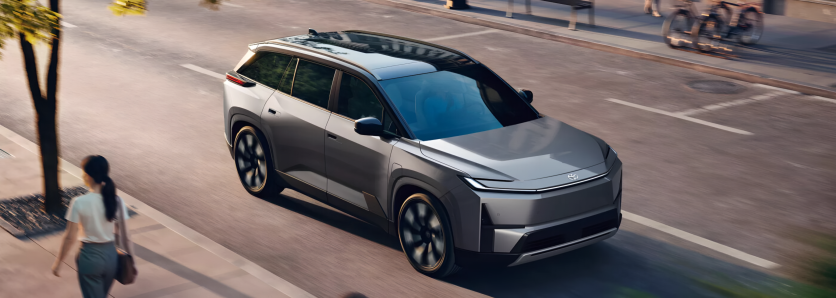
Toyota confirmed on July 8 that production of the all-electric 2027 Highlander — its first three-row battery-electric vehicle built on US soil — has been pushed back with no revised launch date, as the company continues selling gas and hybrid Highlanders at a rate more than five times its total EV volume. The announcement sets back a vehicle that was publicly promised for late 2026, and leaves three vehicles sharing the same platform without a production start date.
The financial context is difficult to argue with. Toyota sold more than 100,000 Highlanders and Grand Highlanders in the United States through the end of June, compared with just under 22,000 total electric vehicles across its entire lineup in the same period. Toyota's H1 sales disparity With hybrid Highlander demand described by Toyota's own dealer network as "very strong," the official explanation — "additional adjustments are being made to the vehicle prior to launch" — is hard to separate from the simpler one: the incumbent product is still generating revenue the replacement has not yet earned. Cars.com July 8 delay report
Read more: Porsche Macan Goes Electric-Only: Gas Model Ends as EV Trails in US Sales
What Toyota Actually Said — and What It Didn't
A Toyota spokesperson told both Cars.com and InsideEVs the same thing: "Additional adjustments are being made to the vehicle prior to launch. We will update on-sale timing when start of production is confirmed." InsideEVs spokesperson statement What the company did not say: what the adjustments involve, when production will begin, or whether the delay is measured in weeks or months. Toyota's official reveal in February described the vehicle as ready for late-2026 sales "continuing into early 2027" — that commitment is now suspended. Toyota February 2026 reveal
As of July 10, the automaker has not issued revised timelines for the Highlander EV or for either of the two vehicles that share its modified TNGA-K platform: the Lexus TZ, which was planned as a more premium sibling, and the Subaru Getaway, which was intended to reach dealerships by the end of 2026. InsideEVs spokesperson statement
Regulatory Tailwind: Why Toyota Faces No Penalty for Waiting
The delay did not happen in a regulatory vacuum. The One Big Beautiful Bill Act, signed into law on July 4, 2025, made two changes that directly reduced Toyota's urgency to launch electric vehicles. First, it eliminated the $7,500 federal purchase credit for new EVs and the $4,000 credit for used EVs — effectively raising the out-of-pocket cost of EV adoption for consumers from October 2025 onward, softening demand. IRS OBBBA EV credit provisions Second, its Section 40006 reset the maximum civil penalty under the Corporate Average Fuel Economy program to exactly $0.00 — making CAFE compliance a standard with no financial consequence for noncompliance. Sidley on CAFE penalty reset
Before those changes, automakers faced fines for building fleets that failed to meet fuel economy thresholds. Those fines were one of the regulatory mechanisms that made selling more EVs financially rational even when gas vehicles were more profitable. With the penalty at zero and no federal incentive to attract buyers, the cost-benefit math for rushing the Highlander EV's launch changed. Toyota is not the only automaker that has responded by slowing EV timelines; December 2025 academic analysis found that incumbent automakers routinely seize "temporary market slackening" and regulatory weakening to delay EV progress — a pattern documented across US, German, and Japanese cases.
The ICE Highlander's own sales trajectory reinforces the logic. Sales of the 2026 gas-only Highlander rose 6.7% year over year in the first half of 2026, with 32,000 units sold. The current model will remain in production through December 2026; dealer inventory from that extended run is expected to stay on lots well into calendar 2027. Highlander ICE 6.7% sales gain
What the Highlander EV Actually Brings — and Why That Makes the Delay Harder to Defend
The vehicle in limbo is more technically ambitious than Toyota's description of "adjustments" suggests. The 2027 Highlander EV is the first Toyota battery-electric vehicle to be manufactured in the United States, assembled at Toyota Motor Manufacturing Kentucky in Georgetown using battery packs assembled at Toyota's $13.9 billion battery facility in Liberty, North Carolina.
The Highlander EV rides on a specifically modified version of Toyota's TNGA-K platform — the architecture used by the gas-powered Camry, RAV4, and the current Highlander — rather than the dedicated e-TNGA battery-electric platform that underpins the bZ, C-HR, and Subaru Solterra. Toyota's engineers redesigned the TNGA-K to accommodate an underfloor battery pack, lowering the center of gravity in the process, and upgraded aerodynamics and noise management throughout. Jalopnik on TNGA-K platform architecture The result is available in two battery configurations: a 77.0-kWh pack for front-wheel-drive XLE models (221 horsepower, 198 lb-ft of torque, up to 287 miles of range) and a 95.8-kWh pack for all-wheel-drive configurations (338 horsepower, 323 lb-ft, up to 320 miles). Toyota February 2026 reveal
One technical capability stands out in the competitive context. The Highlander EV includes bidirectional charging — specifically vehicle-to-load capability, which allows the battery to power external appliances or tools, and vehicle-to-home functionality that can supply power during an outage. Among Tesla's current US lineup, only the Cybertruck supports vehicle-to-home. Most Model Y variants do not include it. InsideEVs on Tesla bidirectional support The Kia EV9 also offers vehicle-to-home, making this a feature increasingly expected in the three-row EV segment — one the Highlander EV had in hand before its delay.
Pricing has not been announced. Toyota stated at the February reveal that manufacturer's suggested retail pricing would be disclosed closer to the on-sale date. Analysts have estimated a starting price around $50,000 for the base XLE, based on its positioning above the bZ Woodland, but that figure has not been confirmed.
Ripple Effect: Three Vehicles, Zero Timelines
Toyota's delay is not contained to a single nameplate. The Lexus TZ — a more premium derivative of the same modified TNGA-K platform — was also planned for US sale before the end of 2026. When asked about the TZ's timeline following the Highlander announcement, a Toyota spokesperson told InsideEVs the company "currently did not have any information to share."
The Subaru Getaway, which shares the same platform through Toyota's manufacturing partnership with Subaru, faced a similar late-2026 target. Its schedule is equally unresolved. Neither Toyota nor Subaru has issued a revised production start date.
Read more: Tesla Model Y L Launches in US: Six Seats, $8K Over Market Expectations
Three-Row EV Rivals Are Not Waiting
The three-row electric SUV market moved considerably while Toyota's delay was developing. Hyundai's IONIQ 9 accumulated 4,858 sales in the first half of 2026 — a 380% year-over-year increase, reflecting its expanded availability after launching in the US in spring 2025. Kia's EV9 sold 7,035 units through the same period, a gain of approximately 42% over H1 2025 figures. Both vehicles arrive at prices above the Highlander EV's estimated range — the EV9 starts at $54,900 and the IONIQ 9 at $58,995 — meaning Toyota's eventual entry, if priced near $50,000, would still be competitive on cost. The question is whether it will arrive before those competitors have fully established themselves in family garages.
Tesla entered the three-row segment on July 2 with the Model Y L, a stretched six-seat variant of its best-selling SUV that opens at $61,990 for the Launch Series. Tesla Model Y L US launch The Model Y L covers Toyota's primary competitive flank from above, not below — but a buyer who commits to a Model Y L in July will not be weighing the Highlander EV for at least several months, possibly longer.
What Toyota's Hybrid Success Actually Tells Buyers
The Highlander EV delay underscores a structural tension Toyota has not resolved: its hybrid lineup is genuinely one of the strongest in the industry, and that success creates financial incentives to slow the transition its critics have long demanded. Toyota is also, in fairness, the only major automaker preparing to manufacture a large electric SUV in the United States using domestically assembled battery cells — a supply chain investment that represents real long-term commitment, even if its timing has slipped.
For the ICE Highlander buyer, this delay is straightforwardly good news: the 2026 gas and hybrid models will stay in production through December, inventory will remain available well into 2027, and the product is mature and proven. For the buyer who wanted to go electric inside the Highlander nameplate, the situation is less defined. No timeline, no pricing, no explanation of what is being adjusted — and a growing roster of alternatives already available.
The first automaker to manufacture a large, three-row EV on American soil using American batteries is still Toyota. Whether that distinction lands in late 2026 or sometime further out is now unknown.
Frequently Asked Questions
Why is Toyota delaying the 2027 Highlander EV?
Toyota has stated only that "additional adjustments are being made to the vehicle prior to launch," with no explanation of what those adjustments involve. Automotive analysts and reporters at Cars.com, InsideEVs, and Electrek have noted that Toyota's financial incentive to delay is real and significant: through the first half of 2026, the automaker sold more than 100,000 gas and hybrid Highlanders compared with just under 22,000 total EVs across its entire lineup. The delay also coincides with a regulatory environment that has reduced pressure on automakers to rush EV launches — the One Big Beautiful Bill Act eliminated both federal EV purchase credits and civil penalties for missing fuel economy standards. Neither factor forces a delay on its own, but both make waiting less costly for Toyota than it would have been a year ago.
When will the 2027 Toyota Highlander EV go on sale?
As of July 10, 2026, Toyota has not announced a revised production start date or on-sale date. The original target was late 2026. The most likely outcome, based on analyst commentary, is a slip into 2027. The 2026 Highlander gas and hybrid models will remain in production through December 2026, and dealer inventory is expected to stay available well into 2027. There is currently no announced timeline for the Lexus TZ or Subaru Getaway, which share the same platform.
What three-row electric SUVs can I buy right now instead?
Several options are currently on sale. The Kia EV9 starts at $54,900 and offers vehicle-to-home bidirectional charging, fast DC charging, and up to 304 miles of EPA-rated range. The Hyundai IONIQ 9 starts at $58,995 and offers up to 335 miles of range and also supports vehicle-to-home capability; it is assembled in Georgia. Tesla's Model Y L, launched July 2, starts at $61,990 for the Launch Series and offers 325 miles of EPA range with six seats and a longer wheelbase, though it uses an older V2L standard rather than full vehicle-to-home functionality on most configurations. The Rivian R1S starts at around $77,000. None of these carry a federal purchase tax credit in 2026.
Did recent policy changes make it easier for Toyota to delay its EVs?
Yes, in a material way. The One Big Beautiful Bill Act, signed July 4, 2025, made two direct changes to the US automotive regulatory environment. It eliminated the $7,500 federal purchase credit for new EVs and the $4,000 credit for used EVs, effective October 1, 2025 — removing a key demand driver that had been scheduled to run through 2032. It also reset the maximum civil penalty for failing to meet Corporate Average Fuel Economy (CAFE) standards to exactly $0.00, stripping away what had been the primary financial consequence for automakers who built fleets too reliant on gas engines. Before those changes, automakers faced meaningful fines for falling short of fuel economy targets — fines that made selling more EVs financially rational. With both the market incentive and the regulatory penalty gone, the financial cost of delaying an EV launch dropped substantially. Toyota is not the only automaker to have slowed EV timelines in 2026; the pattern fits a well-documented dynamic in which incumbents use periods of regulatory relief to protect existing profitable product lines.

-
 C114 Communication Network
 -
 Communication Home
