
 Search

www.bmwusa.com
European Buyers Can Order Today — Months Ahead of Schedule
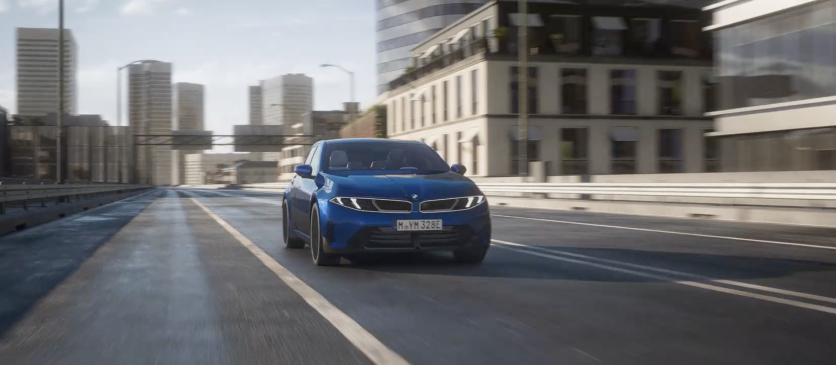
BMW opened European order books this morning for the i3 First Edition — its new all-electric Neue Klasse sedan — months before the originally planned autumn launch. The move, first reported by German trade publication Automobilwoche and confirmed by multiple corroborating sources, reflects demand that BMW sales chief Jochen Goller said has already surpassed even the strong reception to the iX3 SUV, which accumulated over 50,000 European orders before BMW launched a lower-priced single-motor variant. The i3, now available to configure at European dealers, goes into production at BMW's Munich plant in August and begins deliveries that autumn. US buyers will have to wait until 2027.
For a buyer considering an electric sedan today, the order window opening is consequential: BMW has not confirmed how many First Edition units will be made available, and the gap between today's order date and an August production start means autumn deliveries, not summer. Anyone who delays may find later allocation windows. The decision to order today is real. The decision whether to order requires understanding what the engineering inside the car actually delivers.
What BMW's Neue Klasse Architecture Actually Changes
The i3 is not a better version of an existing BMW EV. It is built on a completely new platform — Neue Klasse, or "New Class" in German — that required BMW to redesign its battery chemistry, electrical architecture, power electronics, and computing stack simultaneously. The performance numbers are a product of specific engineering decisions, not incremental refinement.
The most consequential change is the shift from prismatic battery cells to cylindrical cells in a cell-to-pack configuration. BMW's fifth-generation EV platforms — the ones that power the i4, i5, and i7 — used large rectangular prismatic cells enclosed in individual modules, which were then assembled into a pack. The new Gen6 batteries use cylindrical cells measuring 46 millimeters in diameter, in two heights: 95 mm and 120 mm (the 4695 and 46120 formats, using the same naming convention as Tesla's 4680 cells, where the numbers denote diameter and height in millimeters). BMW eliminated the module layer entirely, placing cells directly into the battery housing in a cell-to-pack arrangement. That housing is structurally integrated into the car's body — the battery pack is a load-bearing element of the chassis, not a component bolted into an existing structure.
The engineering payoff is significant. BMW claims a 20% increase in energy density compared to its Gen5 cells and — the number that matters most for the market — up to a 50% reduction in battery pack manufacturing cost. That cost gap is what BMW's leadership explicitly targets: the company's stated goal is to bring manufacturing costs for fully electric models down to parity with internal combustion vehicles. The i3 is the first production evidence that this target is within reach.
The second key change is the move from a 400-volt to an 800-volt electrical architecture. In a 400V system, delivering 350 kW of charging power requires currents approaching 900 amperes — currents so high they demand very thick, heavy cabling and generate substantial heat. An 800V system delivers the same power at roughly half the current (around 450 amps), which halves the thermal losses in the cables and allows thinner, lighter wiring throughout the vehicle. For the i3, this enables a DC fast-charging peak of 400 kW — enough to add approximately 250 miles of range in ten minutes under the WLTP test cycle.
Managing all of this is the Energy Master, a centralized control unit BMW developed and manufactures in-house. Unlike previous systems where power management components were distributed throughout the vehicle, the Energy Master acts as a single hub for high- and low-voltage energy distribution. It uses silicon carbide semiconductors — a material that handles high voltages at higher temperatures than conventional silicon — enabling the 800V system to operate without excessive cooling overhead. The Heart of Joy, BMW's vehicle dynamics computer, processes control commands for drive, braking, some steering functions, and recuperation at speeds ten times faster than the previous generation's systems.
What the i3 50 xDrive Actually Delivers
The only variant available at launch is the i3 50 xDrive: a dual-motor, all-wheel-drive configuration with 345 kW of combined system power (463 hp), 645 Nm of torque (approximately 476 lb-ft), and a battery pack BMW has not officially sized but which multiple technical sources estimate at approximately 108 kWh.
BMW's preliminary range claim is up to 900 kilometers under the WLTP test cycle. The company explicitly notes these are provisional figures and that no binding WLTP values are currently available. European buyers should treat the 900 km figure as an upper bound. For US buyers, the relevant benchmark is the EPA-equivalent preliminary estimate of approximately 440 miles — a figure BMW derives from its own testing against EPA standards. The Tesla Model 3 Long Range All-Wheel Drive, the most direct American competitor, carries an EPA rating of 363 miles. The gap is real and not a product of favorable testing methodology.
One caveat bears noting: real-world data from the BMW iX3, which uses the same Gen6 powertrain in a larger, heavier body, shows that the peak 400 kW charging rate is sustained only briefly before thermal management reduces the charge power. The i3's confirmed 10-to-80% charge time is approximately 22 minutes — a more practically relevant figure than the headline 10-minute partial-charge claim.
DC fast charging peaks at 400 kW, versus a maximum of 250 kW for the Tesla Model 3. Vehicle-to-load capability (V2L) is standard, allowing the i3 to export up to 3.7 kW from its battery pack to power appliances, tools, or electronics. US models will include a NACS port, giving i3 owners access to Tesla's Supercharger network alongside other DC fast-charger networks.
The interior is anchored by BMW's Panoramic iDrive system, which projects information across the full base of the windshield from A-pillar to A-pillar, alongside a 17.9-inch free-standing central display. Nvidia's DRIVE AGX Orin chip handles in-vehicle AI compute, supporting BMW's Level 2 driver assistance system, branded Symbiotic Drive. Over-the-air updates under BMW's OS 9 platform will begin rolling out in Germany and the US in the second half of 2026.
BMW i3 vs Tesla Model 3: Where the Gap Is Real
The i3 50 xDrive arrives with 463 hp and a 440-mile EPA-equivalent range. The Tesla Model 3 Long Range AWD delivers 498 hp and 363 miles. That is an 80-mile range advantage for BMW, with Tesla holding a modest power edge in this particular configuration. Charging speed is more lopsided: 400 kW peak for the i3 versus 250 kW for the Model 3. In practical terms, the i3 can add approximately 250 miles in 10 minutes of charging under optimal conditions; the Model 3 adds roughly 195 miles in the same window at its maximum rate.
Price remains unconfirmed. The iX3 50 xDrive currently starts at $61,500 in the US. Analysts broadly expect the i3 to open closer to $50,000–$55,000, based on the platform's lower manufacturing cost and the sedan's smaller footprint. No official US pricing has been announced.
The Model 3 has one structural advantage BMW cannot immediately close: it has been in continuous production since 2017, is available in the US now, and comes with a mature software ecosystem and Supercharger network that the i3's NACS port addresses but does not replicate. For American buyers, the i3 arrives in 2027. For European buyers, the window is open today.
Read more: BMW's iX3 Prototype Showcases Gen6 eDrive: 800 km Range & 400 kW Charging
BMW's Good Problem: Demand That Outran the Plan
BMW did not plan to open the i3 order books today. The original schedule called for an autumn launch — a logical pairing with production starting in August and early deliveries in September or October. Consumer demand accelerated the commercial decision without changing the manufacturing timeline.
The parallel most often drawn is to Tesla's Model 3 debut in 2016, when online ordering opened ahead of schedule and customers queued outside stores worldwide to leave deposits. BMW's situation is structurally similar: a company that has spent two years watching legacy manufacturers hedge or retreat on electrification is now managing a demand surplus. Earlier in 2026, BMW had to add a second production shift at its Debrecen, Hungary plant ahead of schedule to keep up with iX3 orders. The i3 is reportedly tracking even higher.
The timing lands against a difficult financial backdrop. BMW this week revised its 2026 profit outlook sharply downward, cutting its automotive EBIT margin forecast from a 4–6% corridor to 1–3% and warning of a significant pre-tax profit decline. China sales are running roughly 18% below pace through May 2026, and the Iran conflict has driven up energy costs. Capturing i3 deposits now serves a near-term cash flow function alongside its strategic one. The underlying product trajectory is the more durable story: BMW's European EV sales continue to grow while competitors scale back, and the Neue Klasse platform is now producing cars that generate demand rather than requiring it.
A Touring wagon variant is expected to follow in 2027, as is a lower-priced single-motor rear-wheel-drive i3. A long-wheelbase i3 has been confirmed for the Chinese market. Munich's plant completes its full transition to Neue Klasse EV production in 2027.
Should You Order the BMW i3 Today?
For European buyers with an interest in a premium electric sedan: the order window is live, production starts in August, and autumn deliveries are a realistic expectation for early configurers. The First Edition is limited to the i3 50 xDrive dual-motor AWD configuration — the top of what BMW will offer at launch. A single-motor variant and an M performance version will follow.
For US buyers: this is research time, not order time. The car arrives in 2027 and pricing has not been confirmed.
The engineering case is strong. The cell-to-pack cylindrical design, 800V architecture, and 22-minute 10-to-80% charge time represent a meaningful generational advance over BMW's own Gen5 platform. Whether the i3 fully closes the gap with Tesla on software, charging network density, and real-world ownership experience will only become clear when production cars are in owner hands this autumn.
Frequently Asked Questions
What is the BMW i3's range compared to the Tesla Model 3?
BMW claims an EPA-equivalent preliminary estimate of approximately 440 miles for the i3 50 xDrive, based on the company's own testing against EPA standards. The Tesla Model 3 Long Range AWD carries an official EPA rating of 363 miles. The roughly 80-mile gap in BMW's favor is based on BMW's preliminary data; final EPA certification has not been completed. The WLTP-rated figure BMW uses for European marketing is a provisional 900 km (559 miles), which should be treated as an upper bound rather than a guaranteed real-world result.
When will the BMW i3 be available in the United States?
The BMW i3 is not yet available to order in the US. BMW confirms US availability begins in 2027 as a 2027 model year vehicle. European deliveries begin in autumn 2026. No US pricing has been announced, though analysts broadly expect a starting point around $50,000–$55,000 based on platform economics and the iX3's current US pricing.
What is the BMW Neue Klasse platform and why does it matter?
Neue Klasse is BMW's ground-up electric vehicle architecture, built around sixth-generation cylindrical battery cells in a cell-to-pack configuration and an 800-volt electrical system. The cell-to-pack design eliminates the module layer between cells and the battery pack, yielding a 20% energy density gain and BMW's stated target of up to 50% lower pack cost versus the fifth-generation prismatic-cell architecture. The 800V system enables 400 kW peak charging by halving the current required to deliver a given amount of power, dramatically reducing heat generation and enabling thinner, lighter cabling. Together, these changes move BMW toward cost parity between electric and internal combustion manufacturing — a threshold no mass-market legacy automaker has publicly confirmed crossing.
How fast does the BMW i3 actually charge in real-world conditions?
BMW's headline 400 kW peak charging figure represents a brief peak, not a sustained rate. The confirmed 10-to-80% charge time is approximately 22 minutes. Real-world data from the BMW iX3 — which uses the same Gen6 powertrain — shows that the 400 kW peak is maintained for only a short window before thermal management reduces the charge power. The i3's 10-minute partial-charge figure, adding approximately 250 miles of WLTP-rated range, applies under optimal conditions with a warm battery and a compatible 400 kW charger. The 22-minute full-cycle figure is the more reliable planning benchmark for long trips.

-
 C114 Communication Network
 -
 Communication Home
