
 Search


Oppo.com
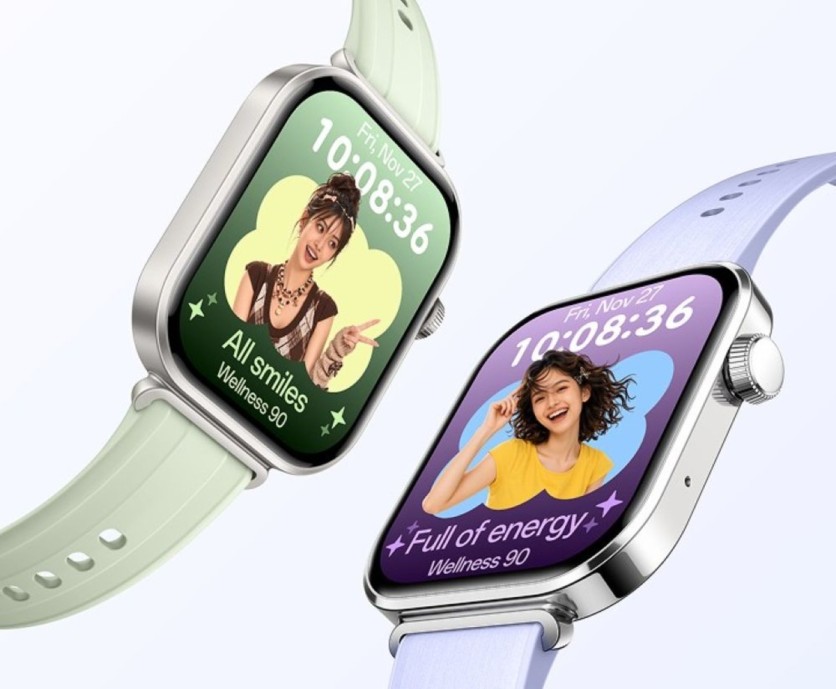
Oppo's new Watch 5 gets its thin, light body by dropping Wi-Fi and eSIM, so it works only as a Bluetooth companion to a phone, and the Chinese model ships without Wi-Fi or eSIM. Oppo unveiled the square smartwatch at a Nov. 16 event in China, and the company has not announced an international release date or price, with no India launch date either.
The watch comes from a company headquartered in Shenzhen, Guangdong, so this report also covers the Chinese data laws that apply to Oppo, the health data the watch collects and the limits of independent testing, all of which readers should weigh before importing one.
The Oppo Watch 5 starts at 899 yuan (approximately $135 USD) in five color options, and the Adventure Purple edition costs 999 yuan (approximately $150 USD). Notebookcheck cites 999 yuan as the watch's China price, so the starting figure differs by outlet. Sales start Friday, Nov. 20 in China. Buyers who use China's national trade-in subsidy can pay as little as 764.15 yuan after subsidy (approximately $115 USD) for the starting model, depending on local eligibility.
Oppo Watch 5 Drops eSIM and ECG That Watch 4 Pro Carried
The case is 9.2 mm (0.36 in) thick, weighs about 25 g (0.88 oz) without the strap and uses an aluminum alloy frame, a rotary crown and Gorilla Glass 5. Oppo's round Watch S was 8.9 mm thick (0.35 in) and weighed 35 g (1.2 oz), so the Watch 5 is 0.3 mm thicker and 10 g (0.35 oz) lighter.
The Watch 5 pairs over Bluetooth 5.2 and NFC. It has no Wi-Fi and no eSIM, so the watch depends on a paired phone for calls and data. It supports Android 10 or later and iOS 16 or later, and the software is ColorOS Watch 17.
The Oppo Watch 4 Pro that this model succeeds launched at 2,299 yuan (approximately $345 USD) and carried standalone eSIM support. The Watch S, a 330 mAh round watch with dual-band GPS, launched at 1,299 yuan (approximately $195 USD) in its base colors. The Watch 5 also leaves out an ECG sensor that the Watch 4 Pro offered, leaving heart rate, blood oxygen and skin temperature sensors.
The display is an AMOLED panel with 600 nits for typical brightness, up to 1,500 nits in bright light and 3,000 nits at peak in outdoor sports mode. The case carries 5 ATM, IP69 and IP69K ratings on the China model; 5 ATM is about 50 m (164 ft) of depth-equivalent pressure. The "K" in IP69K comes from ISO 20653, a vehicle-industry standard, rather than the main IEC 60529 code.
Oppo Claims 10 Days From 351 mAh Battery, Down From Watch 4 Pro's 570 mAh Cell
The Watch 4 Pro had a 570 mAh battery and Oppo rated it for 5 days in full smart mode and 14 days in light smart mode. The Watch 5 uses a 351 mAh battery, which is 38% smaller, and Oppo claims up to 7 days of typical use, up to 10 days in its longest battery mode and 3 days with the always-on display. A full charge takes about 90 minutes.
The Watch 4 Pro paired Snapdragon W5 with BES 2700, a Bestechnic chip. For the Watch 5, Paidfreedroid lists a BES2700BP chipset described as an RTOS low-power processor, while other launch coverage reviewed does not name the chip, and no Snapdragon part appears in it. The exact chip therefore rests on one outlet's spec table that Oppo has not confirmed.
If that spec table is right, it would explain the battery claim. A real-time operating system targets microcontroller-class hardware and favors predictable response over throughput, which suits a watch that does not need a full app platform. On an AMOLED display, power draw depends on content, since each pixel emits its own light. The always-on display shows the cost: Oppo's own figures show typical runtime falling from 7 days to 3 days, a 57% drop, when it is enabled.
The constraint is the trade itself. Removing Wi-Fi and eSIM cuts power draw and cost, and it also removes standalone use. Oppo has rebuilt a China watch for global sale before: its first Watch launched in China in 2020 and used an in-house operating system, while the global version ran Wear OS with LTE and Wi-Fi-only models. Oppo said at the time it had no plans for a US launch. An international Watch 5, if one appears, may not match this model.
Oppo's 10-Day Battery and 3,000-Nit Figures Come From Oppo, Not Independent Tests
Every headline number above is a manufacturer figure. The 10-day claim applies only to the longest battery mode, and the 3,000-nit peak is available only during outdoor workouts. The Watch S carried the same 10-day claim on a 330 mAh battery, so the Watch 5's 351 mAh cell, 6% larger, has not been shown to deliver more. No independent review or battery test of the Watch 5 had appeared as of Nov. 16.
Blood oxygen readings from wrist devices are a consumer-grade trend tool rather than a clinical measurement, and pulse oximeters can show higher error rates in darker skin.
FatMax Mode Estimates the Heart-Rate Zone That Lab Calorimetry Measures Directly
The Watch 5's headline fitness feature is FatMax mode. Oppo says an algorithm uses historical biometric data to find each user's fat-burning heart-rate zone and gives real-time guidance, and the launch coverage gives no further detail on how it works.
Exercise scientists, including Asker Jeukendrup, introduced the Fatmax concept around 2001 for the exercise intensity at which the body burns the most fat. Labs find it with a stepped exercise test and indirect calorimetry, which analyzes breath gases. The Watch 5's listed sensors measure heart rate, blood oxygen and skin temperature, not breath gases, so any FatMax zone on the watch is an estimate. Even lab measurements vary: a 2014 PLOS ONE study of recreationally trained men reported intra-individual variability above 15% in Fatmax and fat oxidation rates.
NFC Payment Reports Conflict and Oppo Has Announced No International Release
Outlets disagree on what the watch's NFC chip does. Notebookcheck reports it works for door locks and public transport but not contactless payments on the China model, while Paidfreedroid says the watch supports Alipay and WeChat Pay alongside transit and access cards. Alipay and WeChat Pay are Chinese payment services.
Oppo has announced no international launch date, price or retailers. The Watch 5 is a mid-range watch with a bright screen and a light case, and its starting price of 899 yuan is 61% below the Watch 4 Pro's launch price of 2,299 yuan.
National Intelligence Law Article 7 Requires Oppo to Cooperate With State Intelligence Work
Oppo is headquartered in Shenzhen, China, and operates under Chinese law. That law includes three statutes readers should know by name.
China's National Intelligence Law, enacted June 27, 2017, says in Article 7 that organizations and citizens must support, assist and cooperate with national intelligence work under the law, and the text covers private companies. Scholars dispute how far it compels data handover. Jeremy Daum writes it is unclear the provision was meant to require active participation in information gathering. Other experts argue the law could force Chinese telecom companies with overseas operations to hand over data regardless of origin, and legal opinions differ on whether it reaches overseas subsidiaries of Chinese companies.
The Data Security Law took effect Sept. 1, 2021. Its Article 36 requires approval from Chinese authorities before organizations provide data stored in mainland China to foreign justice or law enforcement bodies. The Cybersecurity Law took effect June 1, 2017, was amended Oct. 28, 2025 with changes effective Jan. 1, 2026, and its Article 28 requires network operators to give technical support and assistance to public security and national security organs. These duties come with Oppo's home jurisdiction, not with its privacy policy. No report documents Oppo handing Watch data to Chinese authorities, so the issue is a legal exposure rather than a documented practice.
What the watch collects makes that exposure concrete. The Watch 5 tracks heart rate continuously, plus blood oxygen and wrist temperature, flags breathing disruptions during sleep and supports menstrual cycle tracking and predictions. Paidfreedroid's spec table lists a sleep apnea risk assessment as well.
Independent verification is thin: no independent audit of the Watch 5's data transmissions has surfaced. The phone side has a flaw record. CVE-2025-27387 let nearby attackers access data from Oppo's Clone Phone transfer feature on ColorOS 15.0.2 and earlier, and CVE-2025-27389 affected app-source verification on ColorOS 11 through 15. Those flaws affect Oppo phones, not the watch, but the watch depends on a phone.
Readers can limit exposure but not remove the legal condition. Denying optional app permissions and skipping features such as cycle tracking reduce what the account holds. No setting changes which country's laws govern the company that holds it.
Decision Framework: Capability Gaps, Unverified Claims, Ecosystem Limits and Chinese Law Outweigh Low Price
The Oppo Watch 5 is a light, bright-screened, phone-dependent watch: it has no Wi-Fi, no eSIM and no ECG, and it launched in China. Its 10-day battery figure, 3,000-nit brightness, FatMax zones and sensor readings are Oppo's own claims with no independent tests yet, and its NFC payment support is reported inconsistently. Oppo has announced no international release date, and a global model may differ. Anyone who imports one also accepts that the company holding the health data operates under China's National Intelligence Law, Data Security Law and Cybersecurity Law, a legal condition that no app setting removes. The lower price does not offset any of those four limits.
Exchange rate as of Nov. 16, 2026; conversions are approximate.
Frequently Asked Questions
Does the Oppo Watch 5 have Wi-Fi or eSIM?
No. The China model has Bluetooth 5.2 and NFC but no Wi-Fi and no eSIM, so it relies on a paired phone.
When will the Oppo Watch 5 launch outside China?
Oppo has not said. The China sale starts Nov. 20, and the company has announced no international date, price or retailers.
What is FatMax mode on the Oppo Watch 5?
FatMax mode estimates a personal heart-rate range for fat burning from historical biometric data and gives real-time guidance. Lab researchers define Fatmax as the exercise intensity of maximal fat oxidation, which they measure with breath-gas analysis that a wrist sensor cannot perform.
Can Chinese law make Oppo share Oppo Watch 5 health data?
China's laws place cooperation duties on companies based there, including Article 7 of the National Intelligence Law, but experts dispute how far those duties compel data handover. No source documents Oppo sharing Watch data, and no independent audit of the watch's data flows has surfaced.

-
 C114 Communication Network
-
 Communication Home
