
 Search


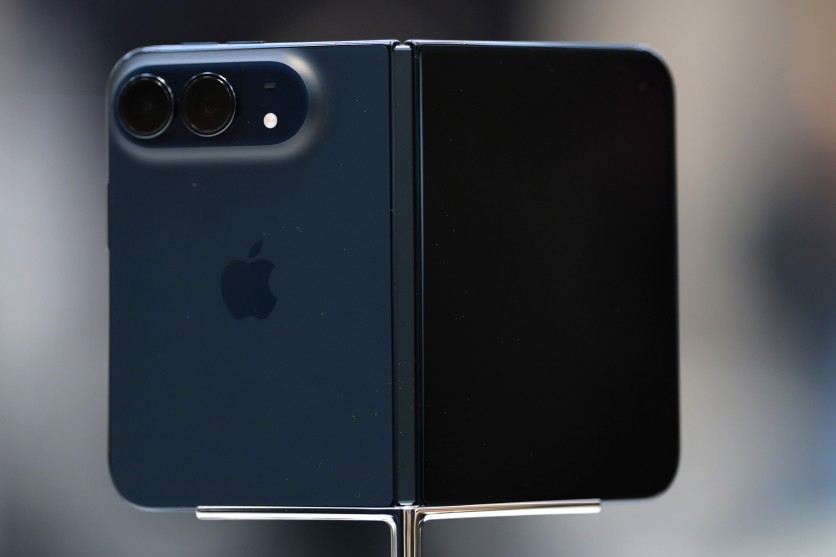
Michael M. Santiago/gettyimages.com
Apple's second iOS 27.3 developer beta, seeded on Monday, November 16, adds a setting that locks the iPhone Duo when folded instead of moving the inner-screen session to the outer display. The same beta adds Unlock with Front Camera, a face unlock that works only on a closed Duo, still leaves Apple Pay to Touch ID, and comes with an Apple warning it is less secure than Touch ID or Face ID.
Owners who dislike watching their current app follow them to the outer screen now get a built-in fix, and owners who miss Face ID get a quicker way into a closed phone, but each switch carries limits worth knowing before you flip it. The sections below cover where the settings live, what Apple's own published numbers say about the security gap, and when the release is expected.
Display & Brightness Toggle Locks Duo Instead of Moving Content to Outer Screen
The lock when closed setting sits under Settings > Display & Brightness, and once it is enabled the Duo locks on fold rather than moving to the outer display. Without it, folding the phone hands current content to outer screen. French outlet Consomac says the toggle is off by default and credits an account called Beta Profiles on X with the first screenshot of it. BigGo Finance also describes it as off by default. 9to5Mac does not state the default, and neither do iClarified or Digital Trends in the coverage reviewed, so that detail rests on Consomac and BigGo for now.
BigGo says the option is meant to prevent stray taps and battery drain on the cover screen, but its report gives no battery figures, and none of the coverage reviewed quotes Apple explaining why it added the toggle.
Until now, owners who wanted lock-on-close had to build it themselves. 9to5Mac's author says they used a Shortcut to mimic the behavior, and Consomac notes that some early users found the hand-off annoying.
Does iPhone Duo Hand Inner-Screen Content to Outer Display by Default?
Yes, and it follows from how Apple built the phone. Apple says both displays share the same aspect ratio, so content scales proportionally between them, and both panels support Always On. Consomac describes the resulting behavior as a Duo that does not sleep when closed but switches to an outer screen that stays on.
Samsung's foldables take the opposite default. Samsung's support page says the Galaxy Z Fold's front screen turns off by default when the phone closes, and that this can be customized for the Z Fold. Digital Trends frames the toggle as extra control for people who would rather lock the current session than see it appear on the external display.
Launch Reviews Criticized Duo Touch ID Speed Weeks Before Camera Unlock Appeared
The Duo went on sale October 23 in its first launch markets with Touch ID integrated into the side button, and it has no Face ID, a gap reviewers kept raising. According to MacRumors' roundup of reviewer complaints, Marques Brownlee said Apple built an intentional delay into every Touch ID unlock, Engadget said it takes longer than expected, and Joanna Stern said she misses Face ID. Apple told Engadget the pause gives a more consistent experience and time to show Lock Screen notifications. Appleosophy ties the new camera option to those complaints and presents it as Apple's response, while Apple has not said so in the coverage reviewed.
Unlock with Front Camera sits under Settings > Touch ID & Passcode and uses the outer display camera, not the TrueDepth hardware that Face ID requires. Setup asks owners to position their face in the frame and slowly turn their head left, right, up and down. BigGo reports Apple says facial data never leaves the device.
Camera Unlock Needs Recent Touch ID, Expires After About 45 Minutes and Skips Apple Pay
The feature does not work when unfolded, and Digital Trends adds that it only works on the Lock Screen. It requires a recent Touch ID or passcode unlock, and face recognition switches off after about 45 minutes until the owner authenticates again. Outlets word the limit differently: 9to5Mac describes inactivity, while Digital Trends says Touch ID must be used again after about 45 minutes. Apple Pay still requires Touch ID, as do saved passwords.
For scale, Apple's support pages put the chance that a random person unlocks Face ID at less than 1 in 1,000,000 with a single enrolled appearance, and the Touch ID false match probability at 1 in 50,000 with a single enrolled finger. Face ID builds a depth map by projecting thousands of invisible dots, which is hardware the Duo skips here. Digital Trends reports that Apple has not shared details about the camera feature's security or how it compares with Face ID, and none of the coverage reviewed cites a published false-match rate for it.
Printed Photos Fooled 133 of 208 Phones Which? Tested, and Apple Has Not Published Duo Match Data
Consumer group Which? has tested 208 phones since October 2022 and found that a printed 2D photo unlocked 133 of them, or 64 percent, according to Biometric Update's account of the testing. The same report says iPhones are generally immune to printed-photo spoofs because Face ID uses depth sensing, and that banking apps and digital wallets no longer accept 2D face biometrics from Android phones as a secure authentication factor.
Apple has not said whether the Duo's front-camera unlock reads depth data or flat images, and iPhone in Canada's coverage does not say either. No independent test of the feature appears in the coverage reviewed.
Google's Android biometric security classes show why such limits are common. The strongest class can wait up to 72 hours before requiring a PIN, while the two weaker classes fall back after 24 hours and require either a 4-hour idle timeout or a cap of three incorrect attempts. The middle class cannot integrate with Keystore for app-bound keys, and the weakest class cannot expose an API to apps at all. Apple's 45-minute window and its Apple Pay exclusion resemble that pattern, though Apple has not said how it grades the feature.
Read more: Health App Redesign Lands in iOS 27.3 Public Beta With Health Age and New Languages
Apple Says iOS 27.3 Ships in December, With No Day Named
Apple said on October 30 that iOS 27.3 will reach the public in December, without giving a specific date. French site iPhon.fr expects a December 14 release, and Consomac also expects a December release. Macworld guesses late November or early December, a window that starts ahead of the month Apple named.
Beta 2 carries build 24C5049d, per iClarified. The first beta arrived November 3 and brought a one-handed mode to the Duo. Earlier, iOS 27.2 added Apple Pencil (USB-C) support to the Duo, and Apple released it on October 26.
As with any beta, behavior could change or the setting could be altered before release. Duo owners on beta 2 can try both features now, and everyone else waits for December. Owners who turn on the lock option should expect their session to stop following them to the outer screen. iPhone in Canada reports Apple frames the camera option as designed for convenience, so owners who turn it on should keep Touch ID in charge of payments and passwords.
Frequently Asked Questions
How do I make my iPhone Duo lock when I close it?
On iOS 27.3 beta 2, open Settings > Display & Brightness and enable the lock when closed option. It exists only in the beta so far, and Consomac says it stays off until you turn it on; BigGo says the same.
Is the iPhone Duo's front-camera unlock as secure as Face ID?
Apple says no. Its setup screen warns the option is less secure than Touch ID or Face ID. Apple has not shared security details for the camera option, and no false-match rate appears in the coverage reviewed, while Apple publishes a Face ID false match rate of less than 1 in 1,000,000.
Does the iPhone Duo have Face ID?
No. The Duo uses Touch ID in its side button and can also be unlocked with an Apple Watch, and launch reviewers including Joanna Stern said they miss Face ID. Beta 2's camera option does not use TrueDepth hardware that Face ID requires.
Why do security testers rate camera-only face unlock below depth-sensing Face ID?
Flat camera images can be fooled by printed photos on many phones, and Which? found 133 of 208 phones it tested were. Depth sensing, as in Face ID, leaves iPhones generally immune to printed photos, but Apple has not said which method the Duo's feature uses, and iPhone in Canada does not say either.

-
 C114 Communication Network
-
 Communication Home
