
 Search


Nvidia.com
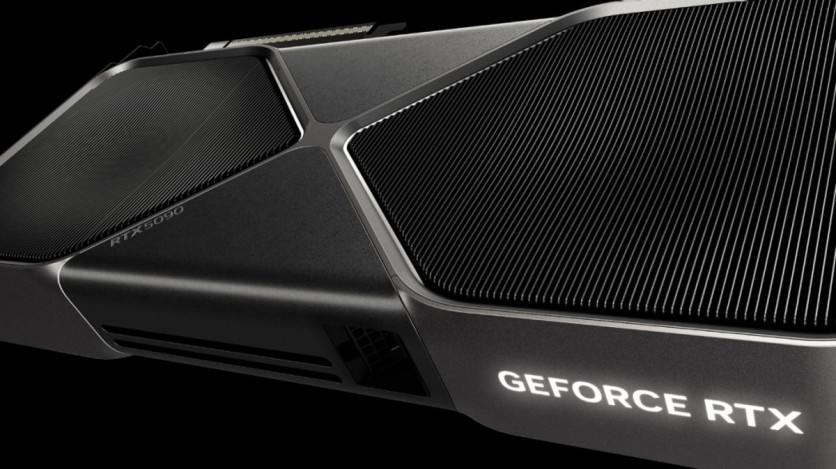
The supply chain interior has now confirmed what Nvidia's public statements have not: the GeForce RTX 5090 appears to be winding down production in all but name. An investigation published October 27 by German hardware journalist Roman Hartung — known as der8auer — found that at least one add-in-board (AIB) partner, the companies that actually manufacture graphics cards using Nvidia's chips, can no longer order the GB202 processor paired with its 32GB of GDDR7 memory, and cannot place backorders. That last detail carries weight that the earlier drumbeat of retailer signals did not. In every prior supply shortage for the RTX 5090, backorder access remained open, giving AIB partners a mechanism to plan future manufacturing pipelines even when immediate chip supply was tight. That mechanism no longer exists for the RTX 5090. A reader who has been waiting for prices to normalize should understand what this means: the supply-chain condition that would allow new RTX 5090 cards to be manufactured has been removed. Hartung published his findings on YouTube on October 27.
What der8auer's Investigation Found
Hartung reached AIB sources and a separate cooling-component supplier after earlier reports — originating from hardware leakers MEGAsizeGPU and hongxing2020 on October 10 — claimed all future GB202 supplies had been earmarked for Nvidia's RTX Pro professional lineup. The anonymous AIB partner Hartung spoke with had not received an official end-of-life (EOL) notice from Nvidia. Its testimony is, however, more specific than the EOL question: it can no longer purchase the GB202 chip bundled with 32GB of GDDR7 memory required to build new RTX 5090 cards, and it does not know whether this ordering will reopen.
The backorder detail is the new finding that distinguishes this report from the retailer-level signals that emerged in the prior two weeks. As the AIB partner noted, supply shortfalls for RTX 5090 components have occurred before — but previously, Nvidia always permitted backorders as a buffer. Board partners used that buffer to commit production capacity and schedule component procurement across their supply chains, even when immediate chip delivery was not available. The ability to place a backorder is not merely a waiting mechanism; it is the instrument through which an AIB can plan a manufacturing pipeline at all. Removing it means no new RTX 5090 manufacturing can be planned by that partner, regardless of what Nvidia says about the card's official status.
A second supply-chain data point arrived from a cooling component OEM — the manufacturer that supplies heatsinks and thermal assemblies to AIB partners for completed graphics cards. According to reporting on der8auer's investigation by Videocardz, two of that OEM's AIB customers had substantially reduced Q1 2027 heatsink orders for the RTX 5090 compared with volumes from Q3 2026. For Q2 2027, the cooler supplier had received no orders for RTX 5090 heatsink assemblies at the time of reporting.
Cooler orders are one of the most reliable leading indicators of actual production intent in the graphics card supply chain. AIB partners commit to heatsink procurement well in advance of card assembly; a collapse in heatsink demand for the first half of 2027 implies the manufacturers themselves do not expect to be building RTX 5090 cards in any meaningful volume during that window.
It remains unknown whether the backorder freeze and ordering block apply uniformly to all of Nvidia's board partners. At least one other partner indicated that allocation conditions may differ across the ecosystem, suggesting the situation is not identical at every AIB. The investigation does not establish a single universal condition — but it establishes that at least one major AIB is now planning its operations without any expectation of receiving new RTX 5090 chip kits.
Read more: Nvidia Denied RTX 5090 Discontinuation: Micro Center Still Says Not Carried
Why the Same Chip Feeds Both a $1,999 Card and a $13,250 Workstation
Understanding the structural reason Nvidia's supply is flowing away from gaming consumers requires knowing what the GB202 die is. It is Nvidia's largest Blackwell gaming die, manufactured by TSMC on its 4N process — a Nvidia-specific node approximately equivalent to 4nm. The die spans approximately 740 to 750 square millimeters (2.88 to 2.91 square inches), making it one of the largest monolithic semiconductor dies in consumer electronics; a standard TSMC wafer yields very few individual GB202 dies.
The same die powers two very different products. In the GeForce RTX 5090, GB202 runs in a 21,760-CUDA-core configuration paired with 32GB of GDDR7 memory across a 512-bit bus, drawing 575W, at an MSRP of $1,999. In the RTX Pro 6000 Blackwell, a professional workstation card, GB202 operates in a fully enabled 24,064-core configuration paired with 96GB of GDDR7, drawing 600W — and is currently listed on Nvidia's marketplace at $13,250, up 55 percent from its March 2025 launch price of $8,565 according to reporting by Tom's Hardware, with some channel listings reaching $16,000.
At those prices, the revenue math for reallocating GB202 production toward professional cards is decisive. A single RTX Pro 6000 at $13,250 generates approximately 6.6 times the revenue of an RTX 5090 at its $1,999 MSRP — before accounting for the secondary-market reality where the RTX 5090 has been trading at multiples of MSRP while the Pro 6000 commands its full channel price. The RTX Pro 5500, also built on GB202 and carrying 84GB of GDDR7, serves the professional visualization market at prices above the GeForce flagship as well. Demand from AI developers and workstation customers for these professional configurations has outpaced supply throughout 2026, making the allocation math straightforward from Nvidia's perspective.
The GDDR7 supply equation matters here too. The RTX 5090's 32GB configuration requires 16 individual 2GB GDDR7 chips. The RTX Pro 6000's 96GB configuration requires 24 individual 4GB chips — a different memory density, sourced from the same constrained pool of GDDR7 production capacity controlled by Samsung, SK Hynix, and Micron. Global GDDR7 supply has been squeezed throughout 2025 and 2026 by the same AI infrastructure buildout that is driving demand for the professional cards the GB202 die is being redirected toward. Earlier TechTimes reporting has covered the broader memory supply squeeze in detail.
This pattern is not new for Nvidia. The AD102 die that powered the RTX 4090 also powered the professional RTX 6000 Ada. The GA102 die that powered the RTX 3090 also powered the professional A6000. A shared die serving both consumer gaming and professional lines is standard Nvidia architecture practice. What is not standard is the market condition — sustained, intense AI-driven demand for professional configurations — that makes reallocating the shared die away from gaming economically dominant.
Chinese Modification Facilities Are Absorbing Existing Retail Stock
A further supply constraint operating below the factory level has compounded the retail shortage. Footage shared on October 23 by Hong Kong hardware outlet HKEPC showed large quantities of RTX 5090 cards from multiple vendors being processed at Chinese modification facilities, where automated equipment removes the GPU die and GDDR7 memory chips from their original circuit boards and transplants them onto custom server-ready PCBs with blower-style cooling for deployment as AI accelerators.
The RTX 5090 is subject to US export restrictions for China; the restricted China-market variant, the RTX 5090D, has its AI compute capability limited to comply with export rules. The unmodified RTX 5090 retains the full Blackwell AI compute capability that the 5090D does not, making it valuable for Chinese AI infrastructure buyers. Reports indicate substantial quantities of unrestricted RTX 5090 units continue to reach China through unofficial supply routes before being converted. This same process was documented earlier by Tom's Hardware in July 2025, where a similar operation outfitted converted cards with blower coolers for server deployment.
For the consumer market, this diversion operates as a second-stage compression on retail supply: even the existing units that have reached retail channels face ongoing purchases by buyers who are not PC gaming consumers. Secondary market pricing already reflected this pressure before the der8auer investigation appeared. The best available resale deal for an RTX 5090 stood at approximately $4,795 as of October 2026, according to GPU market tracker GPUPoet — 2.4 times the card's $1,999 MSRP. New retail listings on Amazon for the same card were reaching $5,258, a condition in which secondary-market resellers were undercutting new retail pricing, itself a signal that institutional or bulk buyers had been absorbing new retail supply at prices gaming consumers would not pay.
In the UK, RTX 5090 retail inventory had dropped sharply by October, pushing prices above £5,000 — more than triple the card's UK MSRP of £1,799. UK buyers seeking current RTX 5090 pricing are contending with the same structural supply squeeze as US consumers.
What Nvidia Has Said and What Remains Unanswered
Nvidia's public position has been consistent through October. SVP of Personal Computing Jeff Fisher said at the company's RTX Spark launch event in Taipei on October 16 that the RTX 5090 had "definitely not been discontinued" and that Nvidia would continue shipping it. Taiwan's Central News Agency independently confirmed Fisher's remarks from the same event.
Fisher's statement addresses EOL status. It does not address the specific operational question the der8auer investigation puts on record: whether Nvidia has ceased allocating the GB202 chip bundled with 32GB GDDR7 to AIB partners for new GeForce consumer card production. A product can be formally "not discontinued" and simultaneously not be entering manufacturing, if the components required to manufacture it are not available to the companies that would manufacture it. That is the precise condition the AIB partner described — and it is a condition Fisher's denial did not speak to.
The October 10 claim by hardware leaker MEGAsizeGPU that "all future GB202 supplies are RTX Pro exclusive" and the related hongxing2020 factory notice claim that Nvidia would "no longer manufacture any RTX 5090 models" have not been officially confirmed by Nvidia. Fisher's denial constitutes the only official Nvidia statement on the subject, and it addresses EOL status only. Der8auer's October 27 investigation is the first time a named supply-chain participant — an AIB partner speaking on background — has provided a specific first-person account of what it can and cannot order from Nvidia. That account is consistent with but does not definitively confirm the leaker claims; it documents conditions on the ground rather than an official Nvidia policy decision.
Several questions remain unresolved. Whether the ordering block and backorder freeze apply to all AIB partners, or only to the one that spoke to der8auer, is not established. Whether the Q2 2027 cooler order gap represents an informal expectation among multiple suppliers or a single OEM's singular situation is not confirmed. Whether the situation is temporary or permanent is unknown.
Read more: GPU Prices Jump Again as AMD Radeon Loses Its Last Affordability Buffer
RTX 5080 Supply and What a 24GB Replacement Would Actually Offer
The RTX 5090 is not the only Blackwell card under supply pressure. A leak attributed to Moore's Law Is Dead on the Broken Silicon podcast cited retailer internal records pointing to EOL dates for both the RTX 5090 and the RTX 5080 16GB in early January 2027, once holiday stock clears. Nvidia has not confirmed or denied any EOL timeline for the RTX 5080.
A rumored successor for the RTX 5090's flagship slot — a GeForce RTX 5080 with 24GB of GDDR7 — has surfaced in multiple reports, with at least one retailer reportedly carrying a placeholder SKU for the configuration. Understanding what that card would and would not offer requires knowing the technical difference between the two dies involved. The RTX 5090 uses the GB202 die with 21,760 CUDA cores. A 24GB RTX 5080 would use the GB203 die — the same silicon as the current RTX 5080 16GB — with approximately 10,752 CUDA cores versus the RTX 5090's 21,760. Doubling the memory on a GB203 card does not close the compute gap. A 24GB RTX 5080 would be a meaningful VRAM upgrade over the current RTX 5080 16GB for memory-intensive workloads, but it would offer roughly half the raw compute throughput of the RTX 5090 it would replace at the top of Nvidia's consumer lineup.
The RTX 5080 24GB faces its own supply question: the 3GB density GDDR7 chips it would require, rather than the 2GB chips used by the RTX 5090 and the current RTX 5080, are in separately constrained supply. The same 3GB GDDR7 module shortage has been cited as one reason the broader RTX 50 Super refresh slipped out of 2026, as prior TechTimes reporting has covered. Nvidia has not confirmed the RTX 5080 24GB exists.
For buyers who have been waiting for RTX 5090 prices to approach MSRP, the supply-chain picture now available from the AIB level forward — no chip kit orders, no backorder option, zero heatsink orders placed for the second quarter of next year — points in one direction. The path to new RTX 5090 production requires reopening GB202 chip kit availability to AIB partners, which requires Nvidia to reallocate supply away from the RTX Pro line, which requires AI and workstation demand to ease significantly. There is no indication any of those conditions are developing. A buyer expecting RTX 5090 prices to normalize should treat that expectation as unsupported by the current supply chain record.
RTX 5090 Power Connector: An Ongoing Concern for Current Owners
Separately from the supply situation, existing RTX 5090 owners have faced a documented pattern of 12V-2×6 power connector failures throughout 2025 and 2026. The connector design — rated to deliver 600W — consolidates power from all pins onto a single distribution path and removes the individual-pin detection that prior connector designs included, which means the GPU cannot detect a partially seated connector or redistribute load in response. When power distribution is uneven across the six pins, temperatures can exceed 150°C and melt the connector housing, as der8auer's 2025 thermal analysis documented.
Documented incidents include Club386's review unit — using a 1000W Be Quiet Dark Power 13 PSU with a single native 12V-2×6 cable — sustaining connector damage severe enough that the publication called the design "flawed." An MSI RTX 5090 Gaming Trio OC melted its connector while using Corsair's own first-party cable. A GIGABYTE AORUS Master ICE unit failed at a power limit deliberately reduced to 500W to prevent such incidents.
Nvidia's guidance for minimizing connector failures includes using an ATX 3.1/PCIe 5.1-compliant PSU, using only the native single-cable 12V-2×6 connection rather than adapter cables, and ensuring the connector is fully seated. The connector design itself remains unchanged; Nvidia has not issued a safety recall. The power connector situation is independent of the supply wind-down but relevant to any buyer considering the RTX 5090 in the secondary market: units already sold remain in service under existing warranties, but there is no imminent prospect of a successor card at comparable performance.
Currency conversions in this article use a mid-market rate of approximately $1.342 per British pound as of October 27, 2026. All conversions are approximate and subject to change.
Frequently Asked Questions
Is the RTX 5090 discontinued, or is Nvidia still making it?
Nvidia's official position, stated by SVP Jeff Fisher on October 16, 2026, is that the RTX 5090 "has definitely not been discontinued" and will continue shipping. That statement addresses formal end-of-life status. It does not address what der8auer's October 27 investigation documented: at least one AIB partner can no longer order chips — specifically the GB202 together with 32GB of GDDR7 as a complete kit, and cannot place backorders — which were available in every prior RTX 5090 supply shortage. A product can remain "not discontinued" on paper while no new units are entering manufacturing, if the chip kits required to manufacture it are unavailable to the companies that build it. The cooling-component supply chain data — zero RTX 5090 heatsink orders received by a thermal OEM for Q2 2027 — is consistent with no meaningful production being planned for that period.
Why does Nvidia have a financial incentive to stop making the RTX 5090?
The RTX 5090 uses the same GB202 die as the RTX Pro 6000, a professional workstation GPU currently listed at approximately $13,250 on Nvidia's marketplace — 6.6 times the RTX 5090's $1,999 MSRP. Every GB202 die allocated to a gaming card instead of a professional card represents a substantial revenue opportunity cost. AI and workstation demand for GB202-based professional products has outpaced supply throughout 2026, creating a sustained economic incentive for Nvidia to redirect the die toward higher-margin products. This dynamic is not unique to the RTX 5090: the same die has served both gaming and professional markets across multiple generations (AD102 for RTX 4090 and RTX 6000 Ada; GA102 for RTX 3090 and A6000). What is different in 2026 is the magnitude of AI demand making the trade-off economically decisive.
What would replace the RTX 5090, and would it offer the same performance?
The most widely reported candidate is a GeForce RTX 5080 with 24GB of GDDR7 memory, rumored to be targeted for Q1 2027. However, it would use the GB203 die — not the GB202 — with approximately 10,752 CUDA cores versus the RTX 5090's 21,760. Doubling the VRAM on a GB203 card to 24GB would address memory capacity limitations for workloads currently bottlenecked on the RTX 5080's 16GB, but it would not replicate the RTX 5090's compute throughput. For workloads that were GPU-compute limited rather than memory limited, the rumored replacement would offer roughly half the performance of the card it is replacing. Nvidia has not confirmed the product exists. The next Nvidia GPU architecture (Rubin-based RTX 60 series) is not expected before late 2027 at earliest, with some analyst forecasts extending to 2028.
What is the real cost to buy an RTX 5090 today, and is it worth paying?
As of October 2026, the best available secondary-market resale price for an RTX 5090 is approximately $4,795 — 2.4 times the $1,999 MSRP — with new retail listings on Amazon reaching approximately $5,258, according to GPU market tracker GPUPoet. Premium limited-edition variants have been listed between $7,800 and $15,000 at resale. These prices are not temporary premiums driven by short-term supply disruption; the supply-chain record as of October 27 — ordering blocked, backorders unavailable, zero heatsink orders for Q2 2027 — does not support any near-term basis for expecting MSRP availability to return. Whether the current secondary-market price is worth paying depends on the buyer's specific use case and the compute workloads involved, but anyone acting on the assumption that prices will normalize toward $1,999 before a successor product arrives is operating without supply-chain evidence to support that expectation.

-
 C114 Communication Network
-
 Communication Home
