
 Search


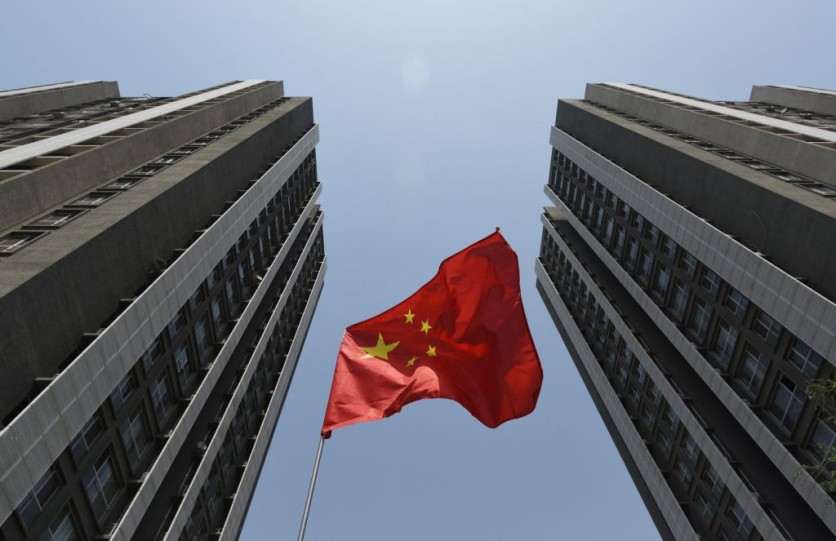
China launches nationwide data survey led by National Data Administration, aiming to assess data production, circulation, trade, and security measures across various entities. GREG BAKER/AFP via Getty Images
Washington's campaign to build China-free digital infrastructure across the Indo-Pacific has arrived in Southeast Asia. The MViSTA subsea cable — a $400 million project linking Malaysia, Vietnam, Singapore, and Thailand — was designed from the outset to exclude Chinese vendors, route around waters Beijing claims in the South China Sea, and anchor a US-backed data-center campus intended to draw hyperscale cloud and artificial intelligence operators into Vietnam.
A supplier decision between Japan's NEC and France's Alcatel Submarine Networks is expected before the end of October 2026, a project executive told Reuters in October. The outcome will add another cable to a growing tier of US-aligned digital infrastructure that is structurally incompatible — and intentionally so — with the Chinese-built networks spreading across the same region under Beijing's Digital Silk Road.
MViSTA Names Four Terminus Nations and Deploys Open-Cable Architecture
MViSTA takes its name from its four terminus nations: Malaysia, Vietnam, Singapore, and ThAiland. The cable will span about 2,500 kilometers (~1,553 miles) of seabed, cost an estimated $400 million, and is targeted for service in late 2028.
The system is designed as an open, carrier-neutral network using Reconfigurable Optical Add-Drop Multiplexer (ROADM) technology — a design choice with deliberate geopolitical significance. A ROADM-enabled open-cable design uses wavelength-selective switches to route individual wavelengths of light — each carrying separate traffic — without requiring physical access to the cable. Telecom carriers lease wavelengths independently, which means no single company controls the traffic that flows through the cable. The carrier-neutral model prevents the kind of chokehold that would exist if a Chinese carrier or state-owned enterprise were integrated into the cable's operations.
The cable will carry 16 fiber pairs — 32 individual fibers — and land at five identified points: Vung Tau in southern Vietnam, Rayong and Songkhla in Thailand, Singapore, and Pengerang in Johor, Malaysia, a rapidly emerging data-center hub directly across the border from Singapore.
The consortium developing MViSTA brings together three shareholders: Stavian High Tech Infrastructure, a unit of Vietnamese industrial conglomerate Stavian Group; Midas Capital, a Tokyo-based private investment firm; and LitUp Network, a subsidiary of Malaysia's OMS Group, which will physically lay the cable. These shareholder relationships were confirmed at APTelecom's appointment in February 2026.
USTDA and APTelecom Assembled the Deal — and Locked Out Chinese Vendors From Seabed to Shore
The US government's involvement in MViSTA is direct and documented. APTelecom, a Virginia-based consultancy that works with the US government on cable infrastructure and has previously partnered with the US Trade and Development Agency (USTDA) on feasibility studies across East Asia and the Pacific, was appointed in February 2026 to assemble the shareholder group, conduct the feasibility study, and help the developers secure customers for both the cable and a related data-center campus.
American cable manufacturer SubCom — the New Jersey-headquartered firm that has previously been drawn into US efforts to displace Chinese vendors from major cable projects — was invited to bid for the MViSTA supply contract but declined due to existing commitments, according to Mark Procter, deputy head of Stavian High Tech Infrastructure and chief operating officer of the special-purpose vehicle established to develop and operate the cable. SubCom's absence narrowed the shortlist to NEC and ASN, both established, non-Chinese suppliers that Washington considers trusted vendors.
The exclusion extends beyond the cable itself. Procter confirmed that no Chinese company will be involved in any key technology deployed at the Stavian Digital Park campus — the data-center facility MViSTA is designed to serve. "The project's backers excluded Chinese suppliers from bidding and designed the route to avoid the vast area claimed by Beijing in the South China Sea," Procter confirmed to Reuters in October.
The USTDA is now funding a feasibility study for the Stavian Digital Park campus, scheduled for completion in March 2027. That study will assess trusted-technology deployment and examine whether US restrictions on advanced semiconductor exports could affect the broader development plan. The USTDA-funded Stavian Digital Park study signals that Washington is treating MViSTA not merely as a commercial cable project but as an instrument of strategic digital infrastructure policy.
Washington Avoided South China Sea Not Just for Safety — but to Deprive Beijing of Leverage
One of MViSTA's most geopolitically deliberate design choices is where the cable does not go. Developers explicitly routed the system clear of the vast maritime territory that Beijing claims in the South China Sea — a contested zone that has become a focal point of US-China rivalry and a documented vulnerability for undersea telecommunications infrastructure.
China's nine-dash line claim encompasses approximately 90 percent of the South China Sea and has no recognized basis in international law: the 2016 Permanent Court of Arbitration tribunal, ruling under the United Nations Convention on the Law of the Sea (UNCLOS), found that China's historic-rights claims had no legal foundation — a ruling Beijing has rejected. Cables routed through the claimed zone could face jurisdictional uncertainty if they need repair — repair ships require flag-state and coastal-state permission to operate in disputed waters — or, at the extreme end of risk, could be physically at risk from Chinese military or coast guard activity.
By steering clear of the disputed waters and choosing between NEC and ASN as suppliers, MViSTA's developers are replicating a template Washington has applied repeatedly in the Pacific — most visibly on the SeaMeWe-6 cable, where Chinese vendor HMN Technologies (formerly Huawei Marine Networks) initially won the contract with a bid approximately one-third below its Western competitors, before a US diplomatic campaign reversed the decision in favor of SubCom. The full account of how US pressure displaced HMN from SeaMeWe-6 is documented in detail. HMN Technologies is on the US Entity List, restricting American companies from supplying components to the firm without a government license.
Vietnam's Six Cables Leave It Vulnerable — MViSTA Is Part of a Mandated Fix
For Vietnam in particular, MViSTA addresses a pressing national vulnerability that its government has treated with growing urgency. The country currently relies on just six international submarine cables and has suffered repeated, well-documented outages that have slowed internet speeds nationwide. In one documented incident, three of Vietnam's five offshore cables at the time suffered simultaneous full or partial outages — a disruption severe enough to reduce international internet speeds by 30–60 percent for Vietnamese users and trigger a formal government response.
Vietnam's Ministry of Information and Communications has approved an ambitious strategy to increase the country's submarine cable count to at least 15 by 2030, with a minimum aggregate capacity of 350 Terabits per second — roughly ten times its current capacity. Procter confirmed that the Vietnamese government has accelerated approval procedures for MViSTA, treating it as a priority project within that expansion drive.
MViSTA arrives, however, at a moment of pronounced strategic ambiguity for Hanoi. Despite US pressure to keep Chinese firms out of critical digital infrastructure, Vietnam awarded contracts to Huawei and ZTE for parts of its domestic 5G rollout in 2025 — a series of decisions that prompted concern among US and European officials and underscored the complex balancing act that Vietnamese policymakers must perform between their two most powerful partners. Washington has pressed Vietnam to shut Chinese suppliers out of submarine cables, telecommunications equipment, and AI infrastructure; Hanoi has not consistently complied. That Vietnam awarded Huawei and ZTE contracts in 2025, according to Reuters, despite sustained Western pressure, illustrates the limits of Washington's leverage.
Stavian Digital Park Extends the Exclusion Zone From the Seabed to the Data Center Floor
MViSTA is not only a cable project. Stavian Group plans to connect the system to a major new data-center campus in southern Vietnam, the Stavian Digital Park in Ho Chi Minh City, for which real estate consultancy Cushman & Wakefield was appointed in September 2026 to lead a feasibility study.
The proposed campus covers approximately 300 hectares (~741 acres) and targets 300 megawatts of power capacity in its first phase by 2030, with a longer-term roadmap aimed at 1 gigawatt of total capacity. The designers are planning for up to 200 Terabits per second of international subsea connectivity — an infrastructure specification designed to attract the world's largest hyperscale cloud and AI workload operators. Full details of the Stavian Digital Park development plan are outlined in project documentation.
The USTDA's feasibility study will assess trusted-technology deployment and examine whether US restrictions on advanced semiconductor exports — designed to limit China's access to cutting-edge chips — could affect the broader 1-gigawatt development plan. The study frames semiconductor export controls as a planning variable for a Vietnamese data-center campus, underscoring how thoroughly Washington's technology restrictions now shape infrastructure investment decisions in non-allied third countries.
The cable-and-campus combination is intended to address a constraint that has deterred major US technology companies from investing heavily in Vietnamese data-center capacity: inadequate infrastructure combined with regulatory restrictions on cross-border data flows. If successful, MViSTA and the Stavian Digital Park would make Vietnam a more compelling destination for hyperscale investment — directly at the expense of Chinese-affiliated data-center operators who would be excluded from the campus by design.
Washington Is Building a Parallel Internet — and Vietnam Must Choose Which Side Its Data Transits
The most consequential implication of MViSTA's construction does not appear in the project's press materials. It is this: by systematically building a tier of US-aligned cable infrastructure across the Pacific and now into Southeast Asia, Washington is partitioning the global submarine cable network into two structurally separate layers — one built by NEC, SubCom, and ASN under US diplomatic oversight, and one built by HMN Technologies and other Chinese state-linked firms under the Digital Silk Road. Data that crosses from one tier to the other is, at least theoretically, accessible to both great powers. Nations that use both — and Vietnam, which has both a US-backed subsea cable in development and Chinese 5G equipment deployed in its domestic networks, is the clearest current example — face structural dual exposure. This bifurcation dynamic is analyzed in ISEAS Working Paper 2025/21 on Southeast Asia's subsea cables.
China's Digital Silk Road has invested an estimated $70 billion across more than 80 countries in digital infrastructure including submarine cables, terrestrial fiber, data centers, and smart city systems. In Southeast Asia alone, Japanese manufacturers (primarily NEC and Fujitsu) account for approximately 41 percent of cables by recent count, while China accounts for roughly 19 percent and France (ASN) approximately 18 percent, according to ISEAS Working Paper 2025/21 by Cha Hae Won of the ISEAS–Yusof Ishak Institute in Singapore.
Washington's strategy — making US-aligned cables attractive through USTDA grants and APTelecom advisory support while making Chinese-built cables unacceptable through Entity List designations and diplomatic pressure — has proven effective at the project level. Whether it can prevent the underlying bifurcation from creating a world in which two parallel physical internets coexist, with all the data security and sovereignty implications that entails, is a question that MViSTA alone cannot answer.
NTT's Letter of Intent and the End-of-October Supplier Decision
Japan's NTT has already signed a Letter of Intent in connection with the MViSTA system, adding commercial credibility and institutional weight to the project from one of Asia's largest telecommunications companies. NTT's involvement is confirmed in Reuters' October 22 reporting.
All eyes are now on which of the two shortlisted suppliers — NEC or ASN — will win the cable-manufacturing contract, with a decision expected before the end of October 2026. Either outcome serves Washington's strategic objective: both NEC and ASN are established Western suppliers operating outside China's National Intelligence Law, which obligates Chinese organizations and citizens to support, assist, and cooperate with state intelligence operations on demand.
For Beijing, the outcome is the same regardless of which supplier wins: another regional cable built without Chinese technology, routed around Chinese-claimed waters, backed by US government financing, and connected to a data-center campus from which Chinese companies are explicitly excluded. The Washington playbook, road-tested across the Pacific, has arrived in Southeast Asia.
Frequently Asked Questions
Why was China excluded from the MViSTA project?
The exclusion was explicit and deliberate. MViSTA's backers — including US government-aligned consultancy APTelecom and USTDA-funded project partners — designed the project to use only non-Chinese vendors for the cable hardware and the related Stavian Digital Park data-center campus. The project COO, Mark Procter, confirmed Chinese suppliers were excluded to Reuters. This follows a pattern Washington has applied on other cable projects: HMN Technologies (formerly Huawei Marine Networks) was displaced from the SeaMeWe-6 cable contract despite submitting a lower bid, after a US diplomatic campaign, because the firm is on the US Entity List. The full account of how US pressure displaced HMN from the SeaMeWe-6 contract is documented in detail.
What does "open, carrier-neutral cable" mean, and why does it matter for this project?
A carrier-neutral cable using ROADM technology allows multiple telecom companies to lease individual wavelengths of light on the same physical cable — think of it as a highway where different companies can each drive in their own lane, managed remotely by software rather than by physically rewiring the cable. This matters for MViSTA because it means no single carrier — including a Chinese state-owned carrier — controls the flow of traffic. It also makes the cable commercially attractive to a broader range of customers, reducing financial dependence on any one client. The ROADM carrier-neutral design is currently the frontier approach for regional subsea cables.
What happens to countries like Vietnam that use both US-aligned and Chinese digital infrastructure?
Vietnam is the clearest current example of a nation in this position: MViSTA is a US-backed, Chinese-vendor-free cable project; Vietnam's domestic 5G network includes Huawei and ZTE equipment. Submarine cables carry roughly 99 percent of international internet traffic. When data transits both a US-aligned cable and Chinese-built domestic networks, it passes through infrastructure subject to the legal access obligations of both the United States and China. China's National Intelligence Law (2017) requires all Chinese organizations and citizens to support, assist, and cooperate with national intelligence work — an obligation that extends to Chinese-manufactured infrastructure regardless of where it is physically deployed. The structural implication of the bifurcating cable market is that countries which use both tiers of infrastructure may find that they have, in effect, surrendered data sovereignty to both great powers simultaneously.
When will MViSTA be completed, and what is the status of the supplier decision?
A decision between NEC (Japan) and Alcatel Submarine Networks (France) is expected before the end of October 2026, as Reuters reported October 22. The cable is targeted to enter service in late 2028. The USTDA-funded feasibility study for the connected Stavian Digital Park data-center campus in Ho Chi Minh City is scheduled for completion in March 2027. The Vietnamese government has approved accelerated permitting procedures for MViSTA as part of its plan to reach 15 cables by 2030.

-
 C114 Communication Network
-
 Communication Home
