
 Search

Apple.com
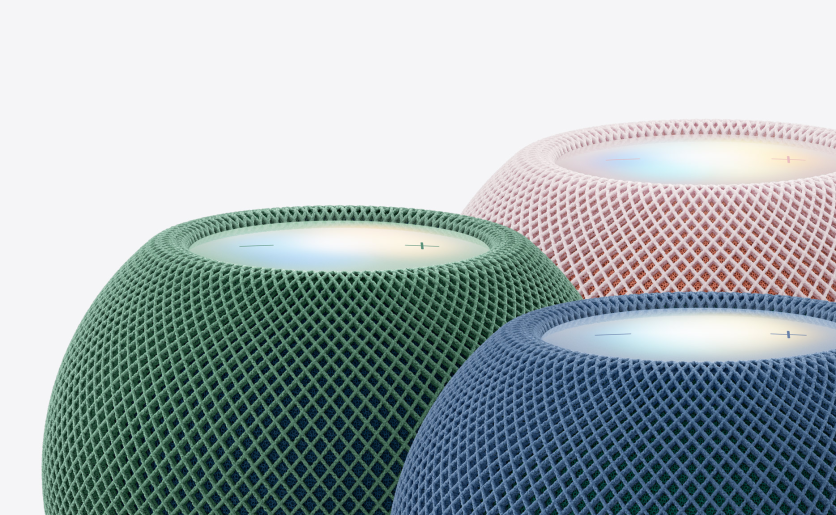
Apple on Tuesday shipped iOS 27.2 Developer Beta 4 to enrolled developers and stripped out its redesigned, AI-powered Health app in the same move, leaving hundreds of millions of iPhone users without a confirmed ship date for the platform Apple spent the fall positioning as a free rival to Oura and WHOOP. The build — numbered 24B5110a — landed alongside iPadOS 27.2 beta 4 (same build) and macOS 27.2 beta 4 (26B5112a), and it arrived on the same day Apple officially announced HomePod mini 2 at $149, with an October 30 in-store availability date that requires HomePod Software 27.2 to function. That launch date is now a hard external deadline: Apple must ship iOS 27.2 publicly before October 30 arrives, and the beta 4 scrub of the Health app signals the codebase is being trimmed for exactly that purpose.
Health App Is Gone: Your Beta Data Is Safe
Users who update to beta 4 will find the familiar Health app has returned to something close to the iOS 27.0 interface, with a pop-up message reading: "Coming Later This Year, the redesigned health app will be available later this year. Your data from the beta remains on your device and is viewable in settings." All health data collected during the beta period is preserved.
The removal is striking in its timing. Developers who enrolled specifically to test the new Insights and Longevity interfaces have been cut off from them just as the software cycle enters its final stretch before a public launch. It also means that when iOS 27.2 goes wide to the general public — almost certainly before October 30 — the redesigned Health app will not be part of it.
Apple confirmed the Health app removal in beta 4 release notes, noting that health data collected during earlier betas remains on device and accessible through the Settings app.
What Apple's AI Health Platform Was Supposed to Deliver
Apple first unveiled the Health app overhaul at its September 9 iPhone event alongside the Apple Watch Series 12 and Ultra 4, and introduced it into beta testing with iOS 27.2 Developer Beta 1 on September 16. The redesign is the most ambitious rethinking of the app in years — and its ambition is specifically artificial-intelligence-driven.
At the architecture level, the new Health app is not a UI refresh: it is an Apple Intelligence inference pipeline layered over personal health data. The Insights tab uses Apple's on-device processing and Private Cloud Compute to process metrics — VO2 max readings, sleep scores, heart-rate variability data from Apple Watch — and generate natural-language summaries that update throughout the day. For computationally heavier requests, those inference workloads route to Apple's Private Cloud Compute system, which processes them on Apple Silicon servers without retaining user data afterward. That architecture is why the app is restricted to Apple Intelligence-compatible devices (iPhone 15 Pro and later, or iPhone 16 series), and it is why the team needs model stability before a public ship.
The reorganization places the experience across three hubs. An Insights tab generates Apple Intelligence-powered summaries of timely health data — a recent sleep score, a new peak VO2 max, a change in heart-rate variability — rather than leaving users to navigate raw metric graphs. A Longevity tab focuses on long-term wellness across seven core areas including heart health, sleep quality, movement, hearing, nutrition, and metabolic health, tracking trends over months and years rather than single days. Nested inside the Longevity tab is Health Age, a feature that compares a user's selected health measurements against their chronological age to produce a composite picture of overall biological wellness.
It is worth noting a constraint the Apple Watch carries into that calculation. A May 2025 study published in PLOS ONE by Lambe and colleagues — testing Apple Watch VO2 max estimates against indirect calorimetry in 30 participants — found the watch underestimated VO2 max by an average of 6.07 mL/kg/min (95% CI 3.77–8.38), with a mean absolute percentage error of approximately 13%. The American Heart Association recognizes cardiorespiratory fitness as a clinical vital sign and strong independent predictor of cardiovascular mortality — but the AHA also treats cardiopulmonary exercise testing (CPET) as the clinical standard, not wrist-sensor estimation. Apple's Health Age feature synthesizes estimates, not clinical measurements, and technically literate users should understand that distinction.
Apple also added written and video content from health experts within the app, with the information designed to adapt dynamically to each user's data. Some features — personalized Insights summaries, individual recommendations, and lab-test ordering through Quest Diagnostics — were present in the framework of betas 1 through 3 but were not yet fully active.
Why the Delay Matters Beyond Apple's Own Product Roadmap
The Health app delay has a competitive dimension Apple's product announcements have carefully avoided naming directly. Oura and WHOOP — the two subscription-based platforms that have built businesses on exactly the kind of personalized, data-to-insight pipeline Apple is building — are now facing the prospect of a free alternative available to hundreds of millions of existing Apple Watch owners.
Oura's Ring 5, priced at $399 with subscription at $69.99 per year for AI-powered health insights, announced in May 2026, is currently Oura's flagship. WHOOP's latest tiers run $199 to $359 per year, subscription-first, for similar AI-driven recovery and readiness analytics. Oura's 2026 IPO at $11 billion valuation reflected investor confidence that AI-powered health insights as a recurring service is a proven, defensible business. Apple's redesigned Health app offers equivalent AI inference on health data as a feature bundled into iOS, free to Apple Watch owners who are already inside the ecosystem.
That competitive pressure does not disappear with a delay — it sharpens it. Every month the redesigned Health app stays unreleased is a month during which Oura and WHOOP can retain subscribers who might otherwise reconsider paying for a service Apple is about to provide free. The delay is, from a competitive standpoint, borrowed time for the subscription wearable market.
What Else Landed in Beta 4
Beyond the Health app removal, iOS 27.2 beta 4 is a contained update:
The Apple Music app icon has shifted from its signature red-and-pink branding to a black-and-white treatment — a cosmetic change that has drawn significant attention from developers and signals a broader Apple Music brand identity overhaul, moving toward bold monochrome visuals that don't compete with the colorful album art on screen. Apple confirmed the Apple Music icon change on October 13, 2026.
The battery icon in Settings and the status bar has been refreshed.
Type to Siri, the accessibility option that lets users type requests to Siri rather than speak them, was reportedly restored to Accessibility settings after going missing in earlier builds — though this was not confirmed in Apple's official beta 4 notes.
New splash screens have been added for the Health, Apple TV, Voice Memos, Notes, and Fitness apps at first launch.
A suggested actions toggle in code references a forthcoming Settings option to disable suggested actions for Calendar, Reminders, Notes, and Maps system apps.
Group FaceTime's Dual Capture feature — which lets users stream front and rear cameras simultaneously during a group call — continues to be present from earlier betas.
Apple TV profiles multi-user management via iPhone and iPad continues to be refined, and a reference to a new HomePod-related setting appeared in the build.
What iOS 27.2 Beta 4 Tells You About the Release Candidate Timeline
The health of a beta is often best read by what it removes rather than what it adds. Apple scrubbing the Health app from beta 4 — rather than simply flagging it as unavailable — is a codebase-preparation signal: the team is removing anything not intended for the public launch, which is precisely what a team does when preparing a release candidate.
The pace of betas confirms that reading. Beta 3 arrived October 5; beta 4 followed October 13, eight days later. With HomePod mini 2 required to ship by October 30 running HomePod Software 27.2, Apple must have its 27.2 software stack finalized well before that date to allow manufacturing, firmware loading, and distribution logistics. A Release Candidate is expected in the coming days; a public rollout to iPhones and iPads is expected to follow within days of that milestone.
The new HomeView smart display, announced October 13 and launching November 13, also requires iOS 27.2 — adding a second hardware product whose schedule is dependent on the software.
When Will the Redesigned Health App Actually Ship?
Apple has not named a specific update that will carry the Health app redesign to users. The company has confirmed the rollout remains on track for before the end of 2026, with the United States as the initial launch market. The app could arrive in a dedicated iOS 27.3 release, a later point update, or a server-side rollout — Apple has not specified which mechanism.
For the millions of users who were watching the new Insights, Longevity, and Health Age features take shape across betas 1 through 3, the architecture Apple is building is real, the data it will run on is already on their devices, and the competitive platform it threatens — Oura at $69.99 a year, WHOOP at up to $359 a year — has no free equivalent available anywhere else in the iPhone ecosystem. The wait continues, but the stakes of that wait are now clearly visible.
Frequently Asked Questions
What happened to the redesigned Health app in iOS 27.2?
Apple removed the redesigned Health app from iOS 27.2 Developer Beta 4, released October 13, 2026. Developers who had been testing the new Insights and Longevity interfaces across betas 1 through 3 will now see a message reading "Coming Later This Year" when they open Health. All health data collected during the beta period is preserved and accessible in Settings. Apple has not named which specific software update — iOS 27.3, a subsequent point release, or a later update — will carry the public launch.
When is iOS 27.2 expected to be released publicly?
With HomePod mini 2 launching in stores on October 30, 2026 and requiring HomePod Software 27.2, Apple must finalize and ship iOS 27.2 before that date. Apple is expected to issue a Release Candidate to developers within days, with a public rollout to iPhone and iPad following shortly after. An October release is broadly anticipated.
What is Health Age, and how does Apple calculate it?
Health Age is a feature in Apple's redesigned Health app that compares a user's selected health measurements — including VO2 max (an estimate of aerobic capacity), sleep duration, activity levels, and heart-rate variability — against their chronological age to produce a composite picture of biological wellness. The calculation is done by Apple Intelligence running on-device (or via Private Cloud Compute for complex requests). Importantly, Apple Watch's VO2 max estimates average 13% error compared to laboratory gold-standard testing, so Health Age is a trend indicator and wellness guide, not a clinical measurement.
Will Apple's free Health app redesign affect Oura or WHOOP subscriptions?
The competitive pressure is real. Both Oura (Ring 5 at $399 plus $69.99/year subscription) and WHOOP ($199–$359 per year) derive their primary value from AI-powered personalized health insights — the same thing Apple's redesigned Health app proposes to deliver free to Apple Watch owners. Apple's platform advantage is that it sits inside an ecosystem used by over a billion active devices globally, with no additional subscription required. When the redesigned app ships, subscribers to both platforms will be weighing whether a dedicated wearable's continuous biometric sensing, form factor, and battery life justify the ongoing cost against Apple's free alternative. Neither company has publicly commented on the delay.

-
 C114 Communication Network
 -
 Communication Home
