
 Search

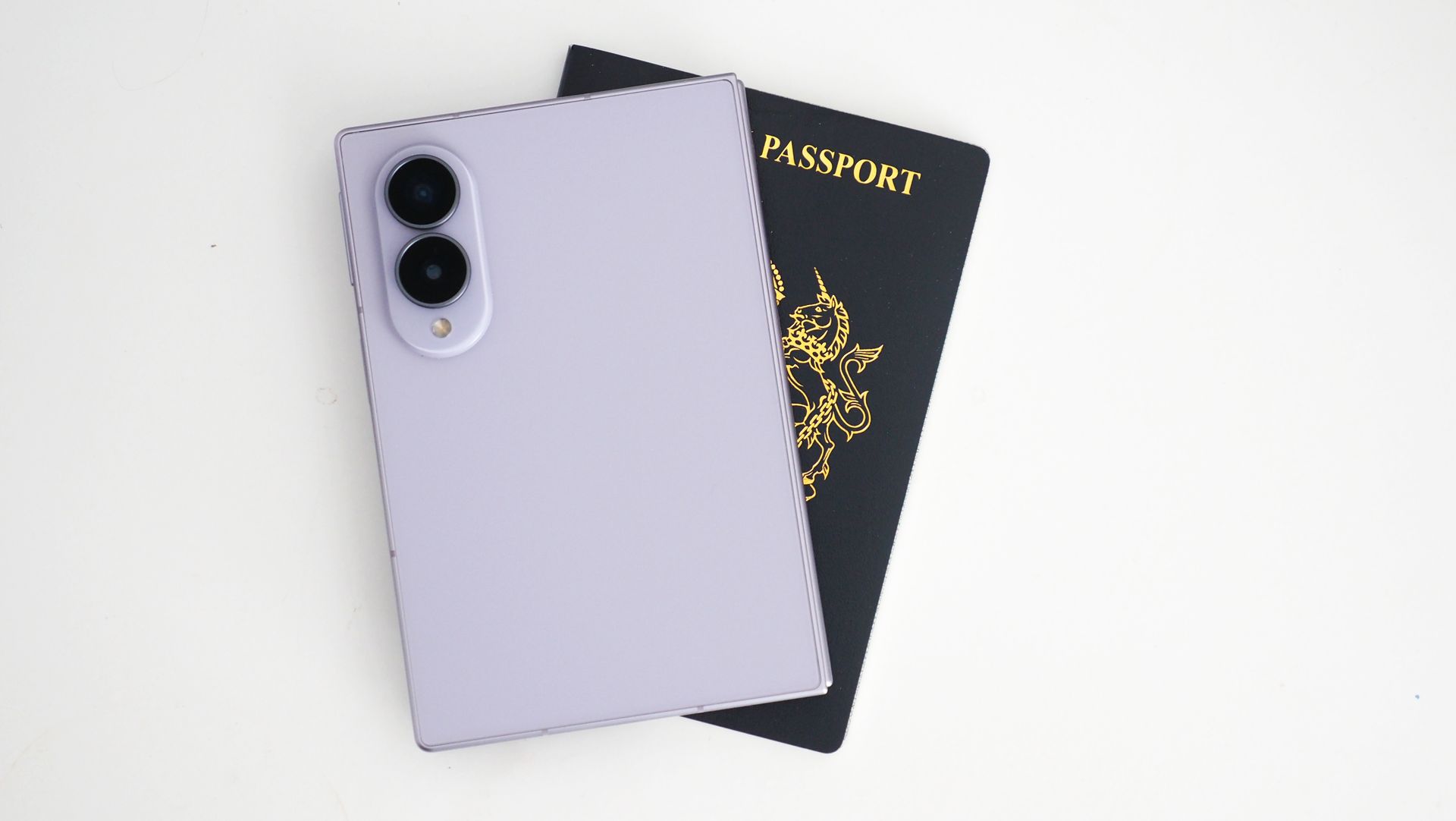
(Image credit: Future / Mike Lowe)
There's been no shortage of excitement around the Galaxy Z Fold 8 with its "passport" sizing, excitement that was amplified with the launch of the iPhone Duo. But it seems that Oppo might launch a non-folding phone with a similar design.
According to a couple of leaks – spotted by Android Headlines – we could be heading towards a future that has wider phones, meaning they are a little shorter for better pocketability, albeit while being a little less comfortable in the hand.
According to Gadgetsdata on X, the Oppo phone will have 6.35-inch display with a 16:9 or 16:10 aspect ratio. It could use the name Reno X, suggesting it's a mid-range phone, although many Reno devices are well equipped.
Just glancing at the suggested specs makes that clear, with a MediaTek Dimensity 9000 chip powering it and a triple camera, comprising two 200-megapixel sensors and a 50-megapixel ultrawide.
Digital Chat Station also discusses the device, saying that the it's a "wide-screen prototype" with a 16:9 display, highlighting narrow bezels.
The width of the screen is given as 81mm which highlights the problem: although 16:9 is a great aspect for watching movies, there are compromises when it comes to comfort and the amount of useful screen space that you get.
The biggest problem with the Samsung Galaxy Z Fold 8 is that when using the keyboard on the cover display, there's not a lot of space for text entry. While conventional phones have plenty of space above the keyboard, that's not the case on these wider phones.
So while this might be an interesting move towards a current trend, it's returning to a problem that we've already encountered in smartphones before.
16:9 screens were common a decade ago
If we look at the history of phones, many used a 16:9 display in the past. But if we look at the 2014 Nexus 6, this typifies the problem. It had a 5.96-inch display and was 83mm wide.
As we said in our review of the Nexus 6: "If you like using your smartphone one handed then – unless you have fingers longer than E.T.'s – you're going to struggle with the Nexus 6."
We have already lived through the phablet era, until phones shifted from 16:9 to 18:9, to 20:9. Phones got taller, because human hands couldn't easily hold something that was getting wider.
So, Oppo might be looking at a wider phone to jump on the trend that folding phones have started, but it might run into all the problems that big smartphones had previously.

-
 C114 Communication Network
 -
 Communication Home
