
 Search

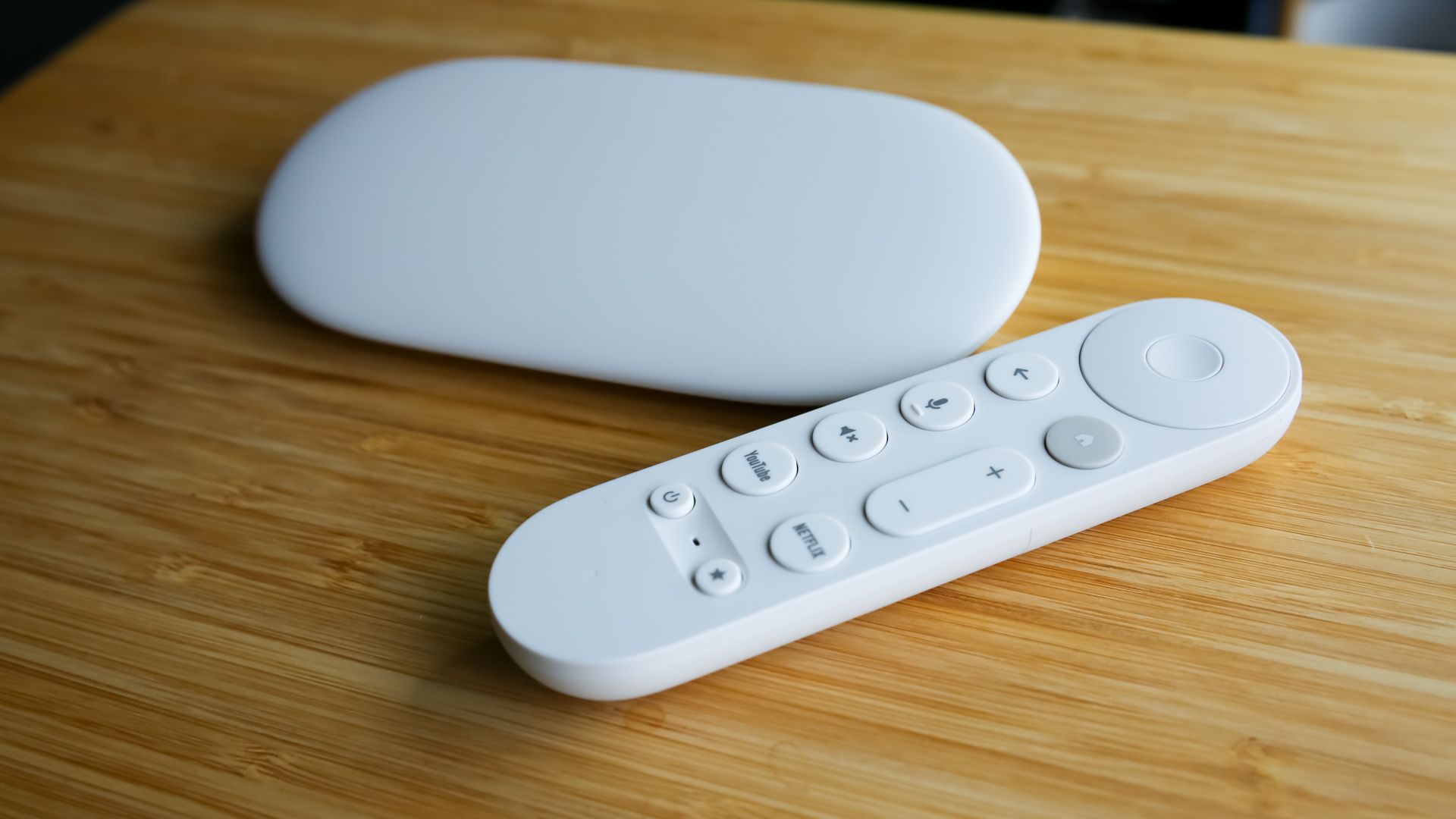
(Image credit: Rik Henderson / Future)
Google is reportedly working on a new version of the Google TV Streamer, looking to reduce any advantage that Apple gains through its own expected update on 13 October.
According to rumours, the Apple TV 4K is in line for a refresh, partly so that it can play its part in Apple's new smart home line-up, but it's also going to incorporate microphones so users can access Siri AI without using the remote.
Now according to details from 9to5Google, the new Google TV Streamer will have microphones for Gemini access directly, again bypassing the button on the remote.
That will bring voice control to the fore for both devices, along with more powerful processors for a snappier experience.
It's said that the Google TV Streamer will have much the same design, but it will be slightly narrower than the existing version, so it's more compact overall.
Both devices also seem to be in line for a new remote, with Apple adding a speaker to help you find it when lost. Google on the other hand is said to be planning more shortcut buttons. Currently, Google's remote offers YouTube and Netflix shortcuts, but with two more buttons, there's potential for Google to license these to other streaming services, like Disney+ or Prime Video.
Improved performance is always welcomed, but while the focus seems to be on adding voice support to make navigation or programme finding easier, we don't know if there will be any technical changes to the devices and the formats they support.
We could see Apple adding hardware support for AV1 and AV9 (used on YouTube) and it might also add support or passthrough for DTS sound formats. Equally, Google could add support for DTS.
Beyond that, the only real evolution visually is Dolby Vision 2, which requires specific hardware that's appearing in some televisions in 2026. We're still in early days for Dolby Vision 2 and whether these streaming devices will be adapted for better Dolby Vision 2 handling (bearing in mind the TV will need to support it too) remains to be seen.
It might simply be that both Apple and Google want to make it easier for their TV devices to respond to voice interaction in this new age of AI-powered chat. As we've seen from devices using Alexa+, that can result in your TV giving you much more detailed results when responding to questions.

-
 C114 Communication Network
 -
 Communication Home
