
 Search

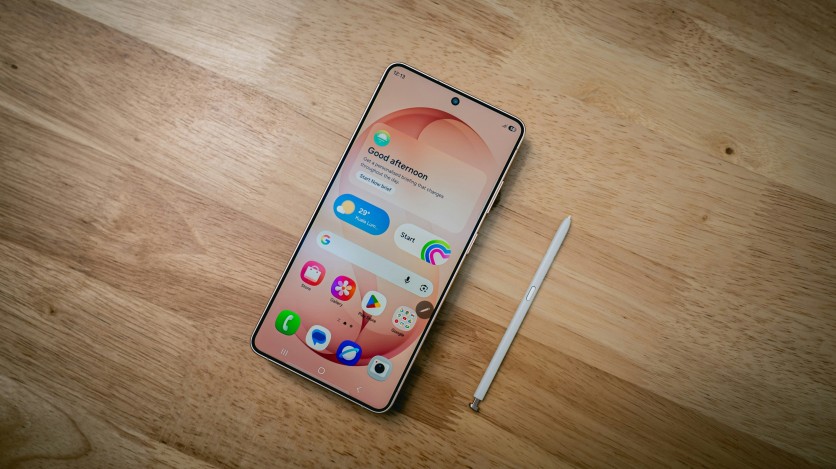
Amanz/unsplash.com
After eight rounds of beta testing and weeks of official silence, Samsung confirmed Tuesday via its Galaxy S26 community forum post that the stable One UI 9.0 update — built on Android 17 — is "coming soon" to the Galaxy S26, S26+, and S26 Ultra. Galaxy S26 owners can expect an over-the-air update notification through the Samsung Members app within days; Samsung's established pattern, confirmed by SamMobile's coverage, is to post announcements of exactly this type only when a stable rollout is one to three days out.
The company released Beta 8 earlier Tuesday morning — the same day as the community post — making it the longest and most thorough beta cycle Samsung has run for a flagship Android update in recent memory. The One UI 9.0 stable update arrived on Samsung's foldable lineup — the Galaxy Z Fold 8, Galaxy Z Fold 8 Ultra, and Galaxy Z Flip 8 — on July 22, 2026, so the Galaxy S26 series has been waiting roughly six weeks for its turn. That wait is now officially ending.
Samsung typically communicates each beta build in advance through the Samsung Members app. That pattern should continue for the stable release: owners enrolled in the beta program — and those on standard One UI 8.5 — should watch the Samsung Members app for an update banner before the notification appears in Settings > Software Update.
Read more: Galaxy S26 One UI 9 Beta 4 Expected June 30: Android 17 Stable Speeds July Release
Eight Betas — and Why That Number Matters
Samsung launched the One UI 9 beta for Galaxy S26 owners on May 12, 2026, enrolling participants in six countries simultaneously: the United States, United Kingdom, Poland, Germany, South Korea, and India. Running a multinational beta in parallel across six markets from day one is not Samsung's historical practice; the expanded pool gave engineers a broader feedback signal from different carrier configurations, regional network conditions, and usage patterns.
Eight builds over roughly sixteen weeks is a longer-than-usual cycle. The One UI 8.5 beta for the Galaxy S25 series completed in fewer builds. The additional round reflects both the scale of what One UI 9 delivers and the depth of Samsung's quality-assurance commitment for this release — particularly around the new cross-platform file-sharing system and the Gemini Intelligence agentic AI layer. Beta 6 changelog records confirm bugs targeted in earlier builds: display errors in the Now Brief widget, a photo-saving failure in Expert RAW at specific focal lengths, and a regression in the Finder icon that had silently reverted to its One UI 8.5 appearance. By the sixth and seventh builds, beta participant feedback was notably positive, with some testers reporting the software was polished enough that the stable release would be largely indistinguishable from what they were already running.
What Galaxy S26 Owners Are Actually Gaining
One UI 9.0 is built on Android 17 (API level 37), and the performance improvements start at the platform foundation. Android 17's generational garbage collector in the Android Runtime separates short-lived objects from long-lived ones, running lightweight sweeps of the "young generation" heap frequently rather than triggering expensive full-heap scans. The result is reduced CPU usage, lower power drain, and a measurable reduction in the UI stutter that appears as missed frames during fast scrolling and app switching.
Android 17 also ships with a lock-free MessageQueue — a structural change to how the system schedules and displays UI updates. The Android Developers Blog explains that the prior implementation serialized thread processing; a slow-running thread blocked the next in line. The lock-free approach eliminates that bottleneck, allowing threads to proceed independently. At the kernel level, AutoFDO optimizes Galaxy CPU scheduling using real device usage data — not theoretical workloads — yielding faster app launches and more responsive background processing.
The feature most visible to owners with both Samsung and Apple devices: Quick Share now operates bidirectionally with AirDrop. PhoneArena's One UI 9 features tracker confirms Samsung Galaxy S26 owners can send files directly to iPhones, iPads, and Macs without a third-party app; iPhone users on iOS 26.6 or later can receive files from Galaxy devices the same way, provided their AirDrop visibility is set to "Everyone." One UI 9 also expands Smart Switch's QR code migration — per Samsung's US Newsroom announcement — to include passwords, passkeys, call history, accessibility settings, and eSIM data transferred wirelessly from a prior iPhone, with no app installation required on the iPhone side.
To be precise about what this interoperability means structurally: Quick Share's AirDrop integration, introduced via firmware AZCF in March 2026 and expanded to full bidirectionality with One UI 9, is built into the Quick Share framework itself rather than layered on as a companion service. It is not a workaround or a third-party bridge. This marks the most significant protocol-level erosion of the Android-iOS file-sharing barrier since the two ecosystems diverged — a change that benefits Galaxy S26 owners regardless of whether they care about the AI features.
Other new additions include the Gemini Notebook workspace — a consolidated environment for notes, research threads, and AI-generated content — and an "Ask AI" feature in Samsung Internet Browser, reportedly powered by Perplexity AI, that surfaces context-aware answers based on whatever the user is reading without navigating away from the page. Now Nudge replaces Now Brief with proactive, context-aware reminder suggestions throughout the day. Samsung Notes gains decorative tape elements and expanded pen line styles. Quick Settings become more customizable. Game Booster receives updated thermal and performance management. And a new Warranty & Care Hub in Settings consolidates device warranty status, support tickets, and Samsung Care+ enrollment in a single dashboard.
Gemini Intelligence — the agentic AI layer that chains multi-step tasks across more than 40 supported apps from a single natural-language prompt — is also part of One UI 9, but carries Gemini Nano v3 hardware requirements limiting it to current flagship-generation hardware with at least 12GB of RAM. Galaxy S26 owners meet that requirement; Galaxy S25 and older devices will receive One UI 9's other features but may not receive full Gemini Intelligence capability. Independent security researchers have flagged prompt injection — where malicious content in a page or app instructs the AI to take an unintended action — as a known open risk for agentic AI systems. The practical guidance: keep sensitive workflows manual until the platform matures.
Where the Galaxy S26 Stands in Samsung's Broader Rollout
The Galaxy S26 series stable update is the next step in a multi-month rollout that began when One UI 9 shipped on the foldable devices in July. Inside Samsung, testing of Android 17-based builds has expanded to Galaxy S25 and older: builds have been spotted for the Galaxy S25, S24, and S23 series, select A-series mid-range devices including the Galaxy A56 and A57, and multiple Tab series tablets.
Historical precedent gives a rough framework for what comes after the S26 update. For both One UI 7 (Android 15) and One UI 8.5 (Android 16), Samsung's gap between the debut on new hardware and the stable rollout to prior-generation flagships was roughly 60 to 75 days. If that cadence holds, owners of Galaxy S25, S24, and S23 series devices can expect their One UI 9 notifications to begin arriving in mid-to-late September.
Galaxy S26 FE: Already Running What S26 Owners Are Waiting For
The timing of Tuesday's announcement is not coincidental. Samsung is simultaneously expanding the One UI 9 ecosystem from the affordable end of the Galaxy S26 family. Unveiled on August 27, the Galaxy S26 FE ships with One UI 9 out of the box — making it the first Galaxy S26 series device to launch with the software already installed — and goes on sale at Samsung.com at select carriers on September 3, with nationwide carriers and retailers following on September 4.
Priced at $699.99 for the 128GB configuration — a $50 increase over the Galaxy S25 FE's launch price — the S26 FE is powered by the Exynos 2500 (3nm) chip, the same silicon found in the standard Galaxy S26, and is available in Blueberry, Graphite, and Pistachio. Camera highlights include a 50MP main sensor with optical image stabilization, a 12MP ultrawide, and 8MP telephoto with three-times optical zoom. The My FanCam subject-tracking mode — which debuted on the Galaxy Z Fold 8 and Z Flip 8 — arrives on the S26 FE as a new addition. The S26 FE battery is a 4,900 mAh cell with 45W wired fast charging and carries a rated cycle life of 1,200 charge cycles. The phone is 7.4mm (0.29 in) thick, weighs approximately 193g (6.8 oz), and carries an IP68 dust and water resistance rating.
Samsung is committing to seven generations of OS upgrades and seven years of security updates from the global launch date for the S26 FE — the same support commitment as the rest of the Galaxy S26 family.
For Galaxy S26, S26+, and S26 Ultra owners: the wait is measured in days. Watch the Samsung Members app for the update banner.
Frequently Asked Questions
When will the stable One UI 9 update arrive for Galaxy S26?
Samsung confirmed on September 1, 2026, via its Community forum that the stable One UI 9.0 update is coming "soon" to the Galaxy S26, S26+, and S26 Ultra. The company typically posts this type of announcement only when the stable rollout is one to three days away. No exact release date has been published. Owners should monitor the Samsung Members app and Settings > Software Update for the notification.
Does One UI 9 bring AirDrop to Samsung Galaxy phones?
Yes — and it works in both directions. One UI 9's Quick Share framework now supports bidirectional file transfers with Apple's AirDrop protocol, meaning Galaxy S26 owners can send files to iPhones, iPads, and Macs, and receive files back from those devices. No third-party app is required on either side. This interoperability is built into the Quick Share system itself and represents a protocol-level change — not a workaround — that makes the Galaxy S26 the most interoperable Android flagship with iOS devices in platform history. iPhone users need AirDrop visibility set to "Everyone" for the connection to work.
Is the Galaxy S26 FE worth buying over the standard Galaxy S26?
The Galaxy S26 FE at $699.99 costs less than the standard Galaxy S26 and ships with One UI 9 (Android 17) already installed, giving buyers a clean start on the software that S26 owners are waiting to receive. The Exynos 2500 chip matches the standard S26's silicon, and the seven-year software update commitment is identical. The trade-offs versus the standard S26: the telephoto system is less capable, the chassis is larger at 6.7 inches, and the FE's Exynos chip — rather than the S26's global Snapdragon variant — has drawn scrutiny in reviews for benchmark consistency. For buyers on a budget looking for flagship-tier Galaxy AI, the S26 FE is a genuinely compelling option. For buyers who prioritize camera versatility or who already own an S26, the stable One UI 9 update arriving this week delivers the same software at no additional cost.
What are the technical differences between One UI 9 and One UI 8.5?
One UI 9 is built on Android 17 (API level 37), while One UI 8.5 used Android 16. The platform upgrade brings three significant under-the-hood changes: a redesigned Android Runtime garbage collector that separates short-lived and long-lived objects and runs lightweight heap sweeps more frequently (reducing UI stutter and power draw); a lock-free MessageQueue that prevents slow threads from blocking UI updates for other threads; and Automatic Feedback Directed Optimization (AutoFDO) in the kernel, which uses real device usage data to optimize CPU scheduling. Android 17 also mandates that apps targeting its API level cannot opt out of large-screen resizability, which matters for foldable display support. At the Samsung layer, the main additions over One UI 8.5 are the Gemini Notebook workspace, bidirectional AirDrop interoperability in Quick Share, Smart Switch QR-code migration from iPhone, Now Nudge proactive suggestions, the Warranty & Care Hub, and expanded Samsung Notes creative tools.

-
 C114 Communication Network
 -
 Communication Home
