
 Search

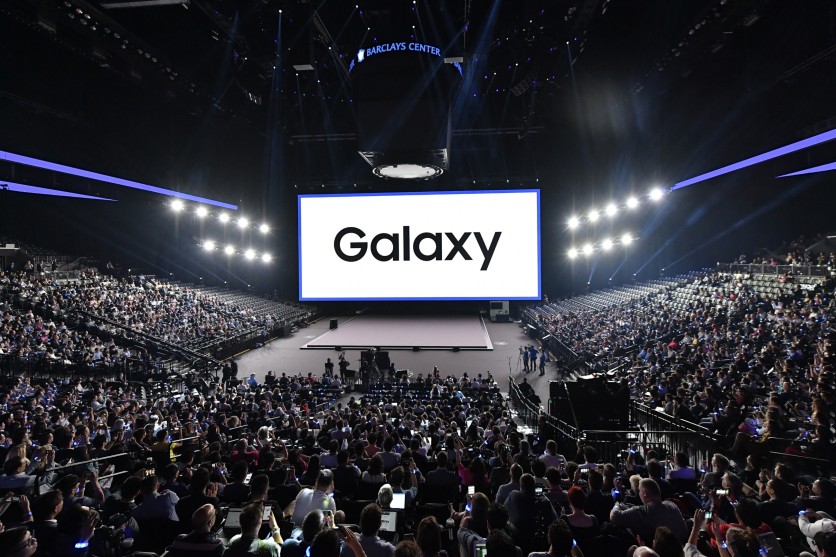
A view of the stage during Samsung Unpacked New York City at Barclays Center on August 9, 2018 in Brooklyn City. Mike Coppola/Getty Images for Samsung
Samsung is launching the most sweeping foldable overhaul in the product line's seven-year history today, July 22, 2026, at a live event inside London's Old Billingsgate — and for the first time, it is doing so with two simultaneously available book-style foldables that disagree, by design, about what a folding phone should be, per Samsung's official Unpacked invitation. Alongside both devices, Samsung is unveiling a new display technology that directly targets the persistent crease at the center of every foldable it has ever shipped, a new agentic AI platform layer, two upgraded smartwatches, and its first entry into the AI smart glasses market. Pre-orders open today at the close of the keynote, which begins at 9:00 AM ET / 2:00 PM BST and streams live on Samsung.com and Samsung's YouTube channel.
Samsung Returns to London for First Time in Fourteen Years
The choice of venue carries deliberate weight. Samsung last staged a major Unpacked event in the United Kingdom in May 2012, when it unveiled the Galaxy S3 at Earls Court — the last London appearance before this week's return. The return arrives as Apple is widely expected to unveil its first foldable iPhone in September 2026 — in the same competitive window that Samsung has spent the past two months of pre-launch engineering announcements building toward. London sits at the geographic center of Europe, Samsung's most competitive premium market for foldables, and the July date positions Samsung eight weeks ahead of Apple's anticipated fall announcement.
Old Billingsgate, a Grade II-listed Victorian market hall designed in the nineteenth century by architect Horace Jones, now serves as a major London events venue. Samsung's Unpacked event uses the building's primary hall space for the keynote and product reveals, with additional zones for press briefings and hands-on device stations.
Flex Titanium: What Samsung Changed Inside the Display Stack
One week before today's launch, Samsung released the full technical account of a display architecture change it calls Flex Titanium — the first structural modification to the foldable display stack in the product line's history, announced via Samsung's Global Newsroom on July 15, 2026.
The crease in foldable displays has a mechanical cause: the polymer film that sits below the OLED panel deforms over time at the fold line, creating a visible groove. Every prior generation of Samsung foldable used the same polymer-film approach — and every generation drew the same consumer complaint. Flex Titanium replaces that polymer layer with two titanium-based components.
The first component is a titanium-alloy film positioned directly below the OLED panel. It is approximately one-third the thickness of a human hair, and Samsung's testing shows it provides 20 times greater mechanical stiffness than the polymer film it replaces. That stiffness is the engineering point: a stiffer backing layer distributes the mechanical stress from repeated folding across a wider area rather than allowing it to concentrate at a single fold line. The second component is a titanium plate beneath the alloy film, incorporating micro-patterned perforations in the folding section that allow the structure to flex thousands of times daily while reducing air gaps between display layers.
The result, Samsung says, is significantly reduced crease visibility compared to any prior Fold generation. What it is not — and this distinction matters for buyers evaluating price against expectation — is a crease-free display. Samsung Display's own July 15 engineering presentation indicated that a fully crease-free foldable is a target for approximately 2028, not a result of the current generation.
Flex Titanium debuts across all three foldables announced today: the Galaxy Z Fold 8, the Galaxy Z Fold 8 Ultra, and the Galaxy Z Flip 8. It is the architectural change most likely to determine whether the 2026 generation converts the buyers who have been skeptical of foldables in everyday use.
Read more: Samsung Galaxy Z Fold 8 Ditches Polymer Film for Titanium in First Display Stack Overhaul
Galaxy Z Fold 8 and Z Fold 8 Ultra: A Form Factor Split
For the first time in seven generations of book-style foldable, Samsung is launching two simultaneously available models with fundamentally different design philosophies.
Galaxy Z Fold 8 — the wider "passport" foldable
The Galaxy Z Fold 8 (model SM-F971) introduces a shorter, wider form factor that Samsung has oriented around a 4:3 inner display aspect ratio — a landscape-mode tablet experience that opens very differently from the tall, narrow design the Fold line has used since 2019. The cover screen is expected to measure 5.4 to 5.5 inches at a 16:10 aspect ratio — wide enough for two-thumb typing without the stretching that made prior Fold cover screens feel like a compromise.
The inner display runs 7.6 inches, and the device is expected to measure just 5.5 millimeters (about 0.22 inches) thick when unfolded and approximately 9.7 millimeters (about 0.38 inches) folded, placing it among the slimmest foldables released to date. The Snapdragon 8 Elite Gen 5 for Galaxy chip and 12GB of RAM power the device. Battery capacity is expected at 4,800mAh — a meaningful improvement over the Z Fold 7's 4,400mAh cell, which drew consistent criticism for falling short on all-day endurance.
The camera system trades telephoto range for compactness: a 50MP main sensor and a 50MP ultrawide, with no telephoto lens. That is a deliberate trade-off for the wider form factor, and it is the one area where the Fold 8 reads as a camera step down from the Ultra. Starting price is expected near $1,899.
On water resistance: the Z Fold 8 (Wide) carries an expected IP48 rating — tested against 5-minute submersion at 1.5 meters (4.9 feet) in non-pressurized water — rather than the stricter IP68 rating anticipated on the Z Fold 8 Ultra. That distinction matters for buyers who use their devices in rain, near water, or in humid environments.
Galaxy Z Fold 8 Ultra — the traditional flagship successor
The Galaxy Z Fold 8 Ultra (SM-F976) is the direct heir to the Galaxy Z Fold 7: refined, thin, and premium in the portrait-oriented book-style form factor the Fold line established. The "Ultra" designation appears on the Fold line for the first time, mirroring the tier that anchors Samsung's Galaxy S series, and it signals Samsung's positioning of the Ultra as its most capable hardware rather than merely its most expensive.
The camera system on the Ultra is where the meaningful photography upgrade lives: an expected 200MP primary camera — the same tier as the Galaxy S Ultra — with a 10MP telephoto lens and a 50MP ultrawide that represents a substantial improvement over the Z Fold 7's 12MP ultrawide. Battery capacity is expected to reach 5,000mAh, the first meaningful battery capacity increase for the tall-style Fold in five years. Wired charging is expected to reach 45W — ending the four-year run of the Fold line's 25W charging ceiling. Starting price is expected near $2,100.
Galaxy Z Flip 8 — refinement, and possibly a final act
The Galaxy Z Flip 8 (SM-F776) brings iterative improvements: a 6.9-inch main AMOLED display at 120Hz, 12GB of RAM, up to 512GB of storage, and a 4,300mAh battery. The Snapdragon 8 Elite Gen 5 powers units sold in the United States, Canada, Australia, Japan, and South Africa; Samsung's own Exynos 2600 chip covers European and South Korean models. Starting price is expected at $1,099, holding steady from the prior generation.
The more consequential change may be on the software side. Samsung is widely expected to expand native third-party app support on the FlexWindow cover screen — a persistent gap the Flip line has maintained against competitors like Motorola's Razr, which has offered more open cover screen experiences for multiple generations.
Two independent sources cited in pre-Unpacked leak coverage claim the Z Flip 8 may be Samsung's final clamshell-form foldable, with supply-chain production data showing it built at lower volumes than either Fold model. Samsung has not confirmed that claim, and it should be treated as unverified speculation until the company addresses it.
All three foldables ship with Android 17 and One UI 9 and are eligible for seven years of OS and security updates through 2033.
What Gemini Intelligence Actually Does — and Where It Falls Short
One UI 9 — built on Android 17 and debuting today in stable form on the three new foldables — is Samsung's most substantial software platform update in several years. The headlining addition is Gemini Intelligence: Google's agentic AI layer, integrated at the system level, which can chain together actions across multiple apps from a single natural-language request.
Unlike earlier Galaxy AI features that operated within individual apps, Gemini Intelligence allows the system to understand context across Samsung's native apps and act on multi-step instructions — booking a reservation, summarizing a document and drafting a reply, reorganizing a calendar — without requiring manual handoffs between applications. That positions it as the clearest example yet of what a genuinely agentic smartphone can do, a category where the Rabbit R1 in 2024 was the most public prior failure.
The capability has a hard hardware floor: Gemini Intelligence requires a current flagship-generation chip, AI Core hardware support, Gemini Nano v3, and at least 12GB of RAM. That means it will arrive first on the new foldables and is unlikely to reach older devices at full capability even after the broader One UI 9 rollout, which Samsung expects to begin for Galaxy S26 users in August and reach older devices in the fall.
There is a meaningful caveat that Samsung's keynote materials are unlikely to feature. Independent security researchers have identified prompt injection — where malicious content in a web page or app instructs the agentic AI to take unintended actions — as a genuine open risk in any agentic AI system. Early real-world experience with the predecessor agentic feature on Galaxy S26 showed performance that was inconsistent outside of controlled demo environments. Gemini Intelligence will ship as a capable platform with documented limitations that hands-on testing after launch will clarify.
One UI 9 also brings Android 17's system-wide floating windows for any app, larger system sliders, a reworked lock screen media player, and a deeper integration with Google that allows Gemini to operate across Samsung's native app suite with greater contextual continuity. One UI 9 Watch, built on Wear OS 7, powers both new smartwatches announced today.
Galaxy Watch 9 and Galaxy Watch Ultra 2
Samsung's wearable line receives a chipset transition today that has been a long time coming.
Galaxy Watch 9
The Galaxy Watch 9 arrives in 40mm and 44mm configurations, with 390mAh and 445mAh batteries respectively, and marks the Galaxy Watch line's first departure from Samsung's Exynos W-series silicon. The new chip is Qualcomm's Snapdragon Wear Elite, which includes a neural processing unit for on-device AI health insights and is expected to deliver meaningfully faster performance and better power efficiency than prior Galaxy Watch generations.
The Watch 9 adds ultra-wideband (UWB) support — enabling directional Find My Phone functionality, digital car key access, and proximity-based device unlocking. Samsung's health dashboard sees significant additions: a Heart Health Score, Daily Cardio Load metric, Fitness Index, and Hearing Health Monitoring. Blood Pressure Trends — which periodically monitors blood pressure to surface patterns and lifestyle recommendations over time — also debuts on the Watch 9 and becomes available in the United States for the first time. Starting price is expected near $349, with Cream, Silver, and Graphite colorways.
Galaxy Watch Ultra 2
The Galaxy Watch Ultra 2 delivers its most significant hardware leap in the line's history. Its 800mAh battery represents a 36% increase over the original Galaxy Watch Ultra's 590mAh cell — a meaningful jump for a device designed to serve as a standalone companion during long outdoor activities. The display reaches 5,000 nits of peak brightness, a 67% improvement over the original's 3,000-nit panel, with a specific goal of improving outdoor visibility during exercise.
The case retains its distinctive squircle shape but is now 12% thinner than the first-generation Ultra. Titanium casing materials and an IP69K water and dust resistance rating — protecting against high-pressure, high-temperature water jets at 80 degrees Celsius (176 degrees Fahrenheit) — mean the Ultra 2 can accompany activities its predecessor could not. New health capabilities exclusive to the Ultra 2 include Advanced Glycation End Products monitoring, an Antioxidant Index, and expanded blood pressure tracking features. The Snapdragon Wear Elite powers the watch, and LTE ships as standard. US pricing is expected to remain near $699.
Samsung Enters AI Smart Glasses With Galaxy Glasses
The Galaxy Glasses — internally codenamed "Jinju" — are Samsung's first entry into the AI smart eyewear category that Meta has defined commercially with its Ray-Ban collaboration, which has sold over two million units across generations of its smart glasses lineup.
The first-generation Galaxy Glasses are a display-free design: no screen, no AR overlay. All output is audio — voice responses, notification readouts, real-time translation, navigation directions. The hardware platform includes a Qualcomm Snapdragon AR1 processor, a 12MP Sony IMX681 camera with autofocus, directional speakers, dual microphones, and a 155mAh battery in a frame weighing approximately 50 grams (1.76 ounces). The glasses run Android XR with Gemini AI built in, enabling voice interaction, real-time translation, photo capture, and notification summaries.
Samsung and Google confirmed at Google I/O 2026 that the Galaxy Glasses pair with both Android and iOS devices. The computing-heavy processing routes through the paired smartphone via Bluetooth and Wi-Fi, which is how Samsung keeps the frame at 50 grams while including an autofocus camera that Meta's Ray-Ban Gen 2 — also approximately 50 grams at 48 grams — does not have.
The key differentiator over Meta Ray-Ban is the AI assistant: Gemini versus Meta AI. Both operate within their respective ecosystems, and the practical advantage will depend on which AI assistant is more capable in daily use — something only sustained independent testing after launch can settle.
Pricing is expected between $379 and $499 — matching Meta's Ray-Ban Gen 2 range directly, rather than undercutting it. Fashion partnerships with Warby Parker cover prescription lens compatibility.
Samsung has confirmed a second-generation model, codenamed "Haean," for a 2027 release. Haean will incorporate a micro-LED display for AR overlays and is targeting the $600 to $900 range.
Whether the Galaxy Glasses ship alongside today's foldables or receive a preview-and-later-launch treatment — similar to how Samsung handled the Galaxy XR headset debut — is one of the remaining unknowns heading into the keynote.
Read more: Samsung's London Unpacked Tomorrow: Passport Fold, Crease-Fix Display, and Possible Flip Swan Song
How to Watch Samsung Galaxy Unpacked 2026
Galaxy Unpacked 2026 is a single-day keynote beginning at 9:00 AM ET / 2:00 PM BST today, July 22, 2026. The full event streams live on Samsung.com, Samsung Newsroom, and Samsung's YouTube channel. Pre-orders for all announced devices open at the close of the keynote, with general retail availability expected in early August 2026.
What Samsung Is Actually Saying to Apple With This Launch
The competitive subtext of today's Unpacked is not subtle. Samsung is introducing a second book-style foldable designed around the same 4:3 aspect ratio that Apple's anticipated first foldable iPhone is reportedly targeting — widely referred to as the "iPhone Fold" or "iPhone Ultra" in supply-chain reporting — with an expected September 2026 announcement date. Samsung is doing this eight weeks before Apple is expected to take the stage. The crease-reduction engineering of Flex Titanium, the first simultaneous dual book-fold launch, the agentic AI platform update, and the entry into smart glasses are all arriving at the same time — and all timed to land before Apple's window.
There is a notable footnote to that competitive framing: Samsung Display is the supplier of OLED panels for Apple's anticipated foldable iPhone under a multi-year exclusive supply agreement. The screens inside the device Samsung is trying to preempt are being made by Samsung. That dynamic has no precedent in the foldable category and underscores how deeply the two companies' supply chains are intertwined despite their headline competition.
For the Android platform broadly, the One UI 9 / Android 17 stable release today sets the baseline expectations for what an Android AI platform should do in the second half of 2026 — and the bar that other Android OEMs will be measured against for the remainder of the year.
Frequently Asked Questions
What devices did Samsung announce at Galaxy Unpacked 2026?
Samsung announced five devices today in London: the Galaxy Z Fold 8 (a wider passport-style foldable), the Galaxy Z Fold 8 Ultra (the traditional book-style successor to the Z Fold 7), the Galaxy Z Flip 8 (clamshell), the Galaxy Watch 9, and the Galaxy Watch Ultra 2. The event also featured the debut of Samsung Galaxy Glasses, the company's first AI smart eyewear product, and the stable launch of One UI 9 built on Android 17 with Gemini Intelligence.
How does Flex Titanium actually fix the foldable crease?
The crease in foldable displays is a mechanical problem: the polymer film beneath the OLED panel deforms at the fold line over time, creating a permanent groove. Flex Titanium replaces that polymer film with a titanium-alloy film — approximately one-third the thickness of a human hair — that is 20 times stiffer than the polymer it replaces. A second titanium plate with micro-patterned holes sits beneath the alloy film to allow flexing while reducing air gaps. Together, these two layers distribute the mechanical stress of folding more evenly, significantly reducing how visible the crease becomes. Flex Titanium does not fully eliminate the crease — Samsung Display has indicated a truly crease-free foldable is a 2028 target.
How does Samsung Galaxy Glasses compare to Meta Ray-Ban in specs and price?
Both products target the same price range: Galaxy Glasses are expected at $379 to $499, directly matching the Meta Ray-Ban Gen 2's price bracket. Both weigh approximately 50 grams. The Galaxy Glasses include a 12MP Sony IMX681 camera with autofocus — a capability Meta Ray-Ban's fixed-focus camera lacks — and run Gemini AI, while Meta Ray-Ban runs Meta AI. Both support prescription lens integration through fashion partners. The Galaxy Glasses are iOS compatible, as confirmed by Google at I/O 2026. The practical distinction will depend on which AI assistant performs better in daily use, which hands-on testing after launch will determine.
Is Gemini Intelligence safe to use, and what are the known risks?
Gemini Intelligence is an agentic AI layer — it can execute multi-step tasks across apps without your direct involvement in each step. That capability is also its risk surface. Independent security researchers have identified prompt injection as the primary concern: malicious content in a web page or app could, in theory, instruct the AI to take actions you did not intend. Early real-world performance on the Galaxy S26's predecessor agentic feature was also inconsistent outside of controlled demos. The practical guidance from researchers: start with low-risk tasks, keep sensitive workflows manual, and treat every agentic action as something that benefits from your oversight until the platform matures.

-
 C114 Communication Network
 -
 Communication Home
