
 Search

Samsung.com
A leaked build of Samsung's Galaxy Wearable companion app, first published by Samsung's Galaxy Wearable app leak and corroborated today by Android Authority, 9to5Google, Android Central, and PhoneArena, gives the clearest picture yet of what Galaxy Watch 9 and Watch Ultra 2 owners will gain when Samsung takes the stage at Galaxy Unpacked in London on July 22. The screenshots reveal a visually rethought companion app, two Galaxy AI features that reduce reliance on the paired phone, and three health monitoring tools that put Samsung squarely in competition with Garmin's training platform — not just Apple Watch. If Samsung ships everything in the build, the Galaxy Wearable app will arrive this summer as something it has never quite been before: a proactive AI health and productivity dashboard, built around the on-device AI silicon that finally makes phone-free Gemini interactions possible.
From Settings Panel to AI Health Dashboard: Why the Redesign Is Bigger Than It Looks
The most visible change is a complete visual overhaul. Samsung replaces the app's long-standing dark monochrome interface with soft blue-purple gradients, floating card elements, and a three-tab layout — Watch Faces, Home, and Settings — that matches the One UI 9 design language already present in recent One UI phone and tablet software. The change brings the companion app into visual alignment with One UI 8.5 and the forthcoming One UI 9, though the functional shift is the more significant story.
The Home tab is rebuilt around a large photo-realistic render of the user's connected Galaxy Watch model — complete with live battery percentage and a time-to-empty estimate — rather than a wall of settings. The four controls users change most often (notifications, quick settings, Tiles, and installed apps) appear as prominent shortcuts at the top, cutting the number of taps required for common tasks. The Watch Faces browser now renders the selected face on a full image of the actual watch body rather than a flat circular thumbnail, making it possible to judge how a design looks in practice before applying it. Settings adopts simplified monochrome icons, and Find My Watch moves to the top of the menu alongside the user guide.
The leaked build still carries placeholder graphics referencing software as old as One UI 4 Watch (released in 2022), indicating Samsung has not finished the final polish ahead of the July 22 announcement. That the app is being distributed at all in this state is consistent with Samsung's standard pre-Unpacked internal testing cadence.
Read more: Samsung Galaxy Watch 9 and Ultra 2 Pass FCC: Classic Missing as July Launch Nears
Read more: Wear OS 7 Goes Live on Pixel Watch: Summer Rollout Exposes the NPU Gap Blocking Gemini AI
What the Snapdragon Wear Elite NPU Makes Possible — and Why the Watch 8 Could Not Do This
The two Galaxy AI features found inside the leaked build only make practical sense when understood against the hardware change coming with the Ultra 2, and expected across the Watch 9 lineup: the switch from Samsung's in-house Exynos W1000 chip to Qualcomm's Snapdragon Wear Elite announced at MWC 2026, announced at MWC 2026 in March.
The Exynos W1000 in the Galaxy Watch 8 is built on the same 3nm manufacturing process as the Snapdragon Wear Elite, but it lacks a dedicated neural processing unit. That single architectural omission has meant every Gemini AI query on current Galaxy Watches must relay to the paired phone for processing — which requires the phone to be nearby, reachable, and willing to wake up to handle the request. The Snapdragon Wear Elite eliminates that constraint. Its Hexagon NPU runs AI models with up to two billion parameters locally, at a measured rate of 10 tokens per second, entirely on the watch. A second, lower-power embedded NPU handles always-on background tasks — keyword detection, activity recognition — without waking the main CPU at all. Qualcomm rates the combined AI compute at 12 TOPS (trillion operations per second).
The chip's CPU architecture follows the same big.LITTLE design used in flagship smartphone chips: one high-performance Cortex-A78 core clocked at 2.1 GHz handles demanding tasks, while four Cortex-A55 efficiency cores at 1.95 GHz manage background workloads. Qualcomm claims 5× single-core CPU performance and 7× GPU performance over the previous Snapdragon W5+ Gen 2 wearable chip, alongside 30% better overall power efficiency and a fast-charge architecture that reaches 50% battery in approximately 10 minutes.
The connectivity picture is similarly forward-looking. The Ultra 2 is expected to use 5G RedCap (Reduced Capability), a narrowband 5G standard engineered for wearables and IoT devices that enables independent data and call handling at lower power draw than full 5G. That would make it the first Galaxy Watch to offer independent 5G connectivity without the battery penalty conventional 5G would impose on a small cell.
AI-Generated Tiles: Galaxy AI Assembles Your Watch Dashboard
The first Galaxy AI feature found in the leaked build lets users describe what information they care about and have Galaxy AI construct a custom Tile — a watch-face widget — around it. The example visible in the SammyGuru screenshots combines live sports scores, stock prices, current weather, and daily step count in a single AI-curated widget, replacing the current process of manually selecting and configuring individual widgets one by one.
Samsung's AI Tiles appear connected to Google's "Create My Widget" capability showcased for Wear OS 7 at Google I/O 2026, suggesting this is partly a platform-level feature that Samsung is integrating into its Galaxy AI layer rather than an exclusive Samsung-originated invention. Whether the final implementation differs meaningfully from the Wear OS 7 version is not clear from the leaked build.
Raise Your Wrist, Start Talking: Gemini Goes Hands-Free
The second AI addition replaces the current long-press button requirement for Gemini with a wrist-raise gesture. Lifting the watch toward the mouth automatically activates Gemini's listening mode — allowing conversational queries without touching the device. A runner checking the time could ask "Will it rain in the next hour?" or "Add oat milk to my shopping list" without breaking stride to press anything.
The Raise-to-Talk feature first appeared on Google's own Pixel Watch 4. Samsung's adoption brings Galaxy Watch into parity with its Wear OS sibling on this specific interaction, and the on-device inference capability of the Snapdragon Wear Elite means the request can resolve without a phone relay — a genuinely different experience from the Pixel Watch 4 implementation, which requires the paired phone for Gemini processing.
One practical concern flagged by Android Central's Nickolas Sims: raising your wrist is also the motion used to check the time, raising the question of how Samsung will distinguish an intentional Raise-to-Talk gesture from an ordinary glance at the screen. The leaked build does not show a disambiguation mechanism; Samsung presumably has one in development, though it is not yet visible in the screenshots.
Daily Cardio Load, Vitals, and Sound Exposure: Samsung Targets Garmin's Athletes
Three health monitoring features in the leaked build correspond to tools that Samsung announced in its major Samsung Health platform update on June 8, 2026 — a rollout timed to land just before Apple's WWDC keynote.
Daily Cardio Load calculates accumulated cardiovascular stress from recent workouts and recommends training intensity and recovery timing, adjusting recommendations based on the user's established fitness baseline. This positions it directly against Garmin's Training Load and Body Battery features, which have been the benchmark for this type of personalized training guidance on wrist-worn devices. According to Wareable's wearables expert Conor Allison, the Samsung Health update collectively means the platform is "catching up with the industry's two gold-standard brands for deep, personalized and actionable insights, Oura and Whoop" — while remaining "loosely on par" with Apple for overnight health monitoring.
Vitals provides continuous overnight monitoring of five signals — heart rate, heart rate variability, respiratory rate, skin temperature, and blood oxygen — and flags deviations from the user's established personal baseline rather than alerting on absolute thresholds. This mirrors the approach Apple introduced with its Vitals app in watchOS 11 in 2024, though Samsung's implementation adds HRV and respiratory rate together in a unified overnight scan rather than surfacing them through separate metrics.
Sound Exposure tracks cumulative noise levels throughout the day from both the watch itself and any paired Galaxy Buds. The feature is designed to surface long-term hearing risk patterns — not just single loud-event alerts — for users who commute in noisy environments, attend concerts, or regularly listen to audio at high volume.
One feature departing with One UI 9 Watch: Vascular Load, a Samsung Health Labs experimental metric that US users have been able to access since its introduction, will be discontinued with the One UI 9 Watch update. Samsung has posted a step-by-step guide for users who want to export their historical Vascular Load data before the cutoff.
Ultra 2 Exclusives: Trail Running, Waypoints, and Automatic Dive Mode
Several features found in the leaked build appear scoped to the Galaxy Watch Ultra 2 based on their outdoor-specialist focus. Trail Run adds real-time elevation tracking during outdoor runs on uneven terrain. Trackback and Waypoints let hikers save geographic markers and retrace a completed route — functionality typically found in dedicated GPS devices and Garmin's trail-running watches.
Dive Mode can be configured to activate automatically at a preset depth, replacing the manual trigger the original Galaxy Watch Ultra used. Samsung has not confirmed in any official communication which features will be Ultra 2 exclusives versus Watch 9 inclusions; the outdoor specialization of this feature set makes a broad rollout to the standard Watch 9 appear unlikely at launch.
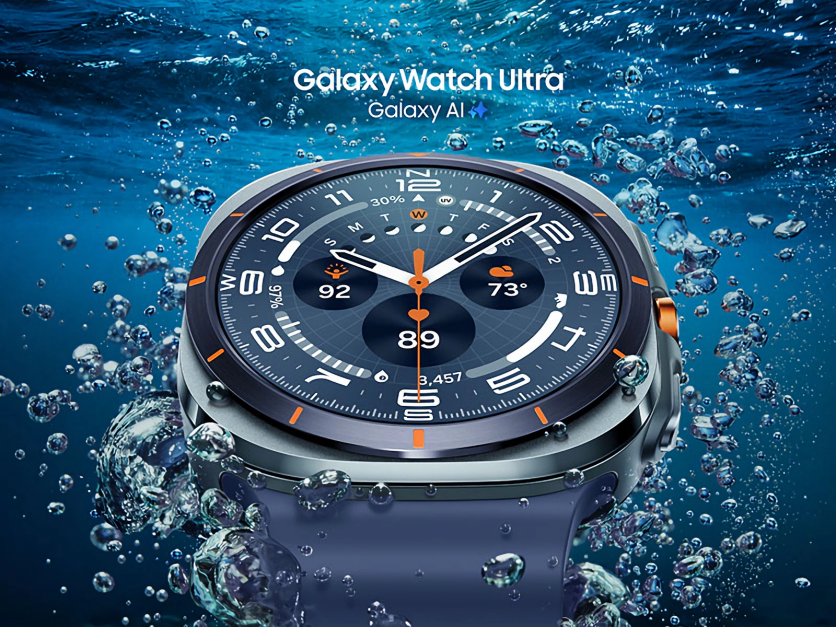
Five new watch faces also surfaced in the leak: Analog Balance, Dual Digit, Radial Dashboard, Ultra Performance, and Dual Clock Info Board. Ultra Performance appears to be an Ultra 2 exclusive based on its complication-rich layout and a Low Light Mode with a red-tinted nighttime interface. Dual Clock Info Board adds simultaneous two-time-zone display — useful for travelers.
What Is Expected on July 22 and What It Will Cost
Samsung's Galaxy Unpacked event in London has been widely reported for July 22 — the first time Samsung has held a major Unpacked event on British soil — with the date confirmed indirectly by Samsung Malaysia promotional vouchers valid from that date and corroborated by FCC certification filings for the Galaxy Watch 9 series and the foldable lineup. Retail availability for the watches is expected to follow roughly two weeks after announcement, pointing to an early-August ship date if the July 22 date holds.
The Galaxy Watch 9 is expected to start at $349 for the Bluetooth 40mm model, matching the Watch 8 launch price, though pre-announcement pricing estimates should be treated as a floor rather than a confirmed figure. The Galaxy Watch Ultra 2, carrying the Snapdragon Wear Elite chip, a 784mAh battery cell (marketed by Samsung as approximately 800mAh, representing roughly a 33% increase over the original Ultra's 590mAh) per earlier TechTimes coverage of the Ultra 2's battery specs, and a titanium build, is projected in the $649–$699 range in pre-launch leaks — also unconfirmed.
One device not expected to appear: the Galaxy Watch Classic. Neither the FCC database nor China's CMIIT certification records contain a Classic model number for 2026, indicating Samsung is likely retiring the rotating-bezel line after the Watch 8 Classic, per earlier TechTimes coverage of the missing Classic.
The full Unpacked slate alongside the watches includes the Galaxy Z Fold 8, Galaxy Z Fold 8 Ultra, Galaxy Z Flip 8, and the Galaxy Glasses — Samsung's Gemini-powered camera-audio wearable running Android XR, targeting the same space Meta's Ray-Ban smart glasses occupy.
Read more: Samsung Unpacked July 22 in London: Foldables, Glasses, and Rising Prices
For anyone currently weighing a Galaxy Watch purchase: Galaxy Watch 8 prices are likely to soften after the Watch 9 announcement. Unless there is an urgent need, waiting 16 days to see confirmed specifications, pricing, and whether the AI features perform as described in the leaked build is the more informed decision.
Frequently Asked Questions
Will Galaxy Watch 9 have Gemini AI built in — and does it need my phone to work?
The Snapdragon Wear Elite chip expected in the Watch 9 and confirmed for the Ultra 2 includes a dedicated Hexagon NPU capable of running AI models with up to two billion parameters directly on the watch, at 10 tokens per second, without a phone relay. This is a genuine architectural change from the Galaxy Watch 8, which relies on the paired phone for all Gemini processing. For the first time, asking Gemini a question mid-workout — or raising your wrist to start a query — would not require the phone to be in range or awake.
How does Galaxy Watch 9's health platform compare to Garmin and Apple Watch?
Samsung's newly added Daily Cardio Load feature enters the same category as Garmin's Training Load and Body Battery — personalized recovery and training intensity recommendations drawn from workout history and fitness baseline. This has historically been Garmin's primary advantage over Samsung in the serious-fitness-user market. The addition of Vitals (overnight multi-signal monitoring comparable to Apple's watchOS Vitals), Sound Exposure, and the Heart Health Score means Galaxy Health is now a genuinely competitive platform rather than a catch-up effort. Independent wearables analysts at Wareable described the June 2026 Samsung Health update as bringing the platform "on par" with Apple and within striking distance of Oura and Whoop — both companies whose health coaching depth has previously been a clear differentiator.
Is Galaxy Watch 9 worth buying if I already own a Galaxy Watch 8?
The core upgrade case rests on the chip change: if you regularly use or intend to use Gemini on your wrist, the Watch 9's Snapdragon Wear Elite delivers phone-independent responses that the Watch 8 cannot match. If your primary use is health tracking and fitness monitoring, the new Daily Cardio Load, Vitals, and Sound Exposure features are also arriving as a Samsung Health app update — meaning Watch 8 owners may receive those health metrics without upgrading, depending on Samsung's rollout scope. The Galaxy Wearable app redesign will likely reach existing compatible devices as well. The clearest reason to upgrade is the on-device AI chip; the Galaxy Classic discontinuation also means Watch 8 Classic owners have no direct successor if the rotating-bezel form factor matters to them.
What happens to my Vascular Load data when One UI 9 Watch rolls out?
Samsung is discontinuing the Vascular Load feature for US users with the One UI 9 Watch update arriving in late July. Vascular Load will no longer be accessible after the update, and Samsung has published a step-by-step guide for exporting historical Vascular Load data before the cutoff. Users who rely on Vascular Load for cardiovascular wellness tracking should export their data before updating; Samsung has replaced the feature with Blood Pressure Trends going forward.

-
 C114 Communication Network
 -
 Communication Home
