
 Search

Credit: John TImmer
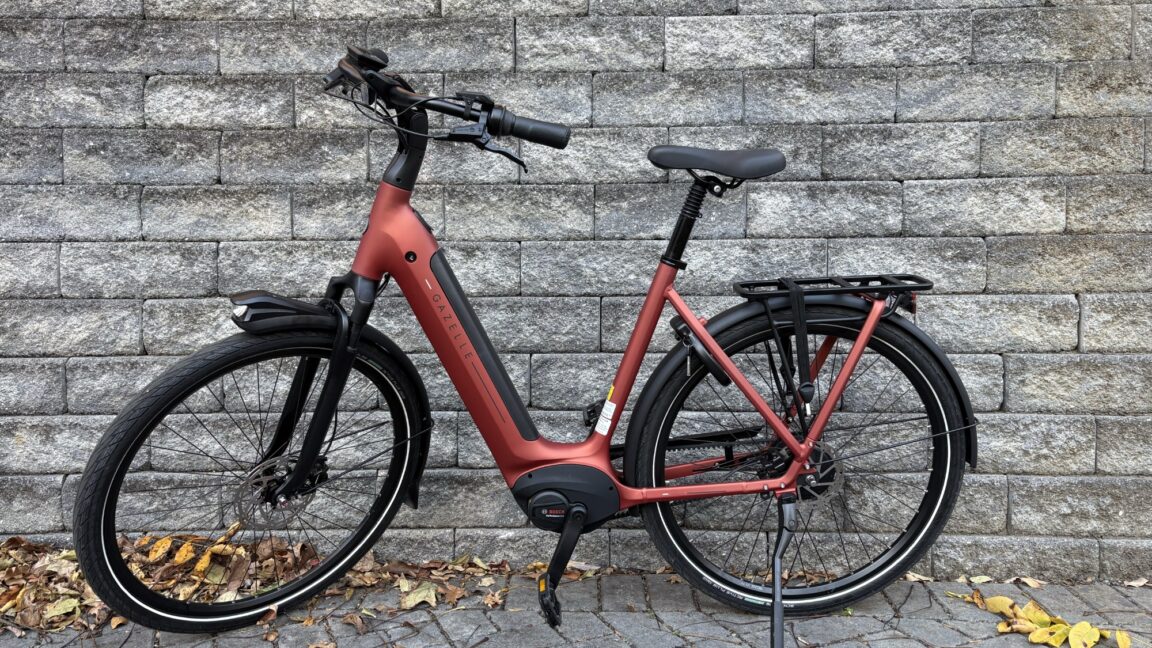
A little while back, we took a look at a large cargo bike from Urban Arrow that had some interesting features: a drive train that sported continuous variable gearing and a belt drive. But it was difficult to get a feel for what using that drivetrain was like when it was being used to shift a large and extremely heavy cargo bike. So, I jumped at the opportunity when Urban Arrow’s sister company, Gazelle, offered a chance to ride one of its new Arroyo models, which feature the same drivetrain, but this time coupled to a fairly standard commuter bike.
Getting rid of all the weight and bulk really allowed the drive system to shine. And, as with its cargo-carrying cousin, the bike is filled with thoughtful touches and design decisions that make riding it a pleasure. But all that comes at a cost: This is a premium bike with little in the way of compromises, and it’s priced accordingly.
High-end hardware
The Arroyo line is meant for commuters and urban/suburban riding. It has a step-through frame, a large rack, fenders, and its riding stance is very upright. In keeping with its Dutch heritage, it’s meant to be ridden as a bicycle, rather than a bike-like scooter. There’s no throttle to let you avoid pedaling, and even when it’s set to its maximum assist rating, you’ll end up putting in a reasonable amount of effort during the ride. If you’re looking for something that lets you handle a commute in hot weather without sweating, you’ll probably want to look elsewhere.
Gazelle offers three versions of the Arroyo, with the low end having a traditional chain drive and a lower-powered electric assist for $3,000. We looked at the top-of-the-range C380 Elite, which tacks an extra $1,500 onto the price but gets you a more powerful Bosch motor (75 Nm of torque), a better display, and the belt drive. The motor itself is a mid-drive with a torque sensor, a configuration that tends to provide the best performance.
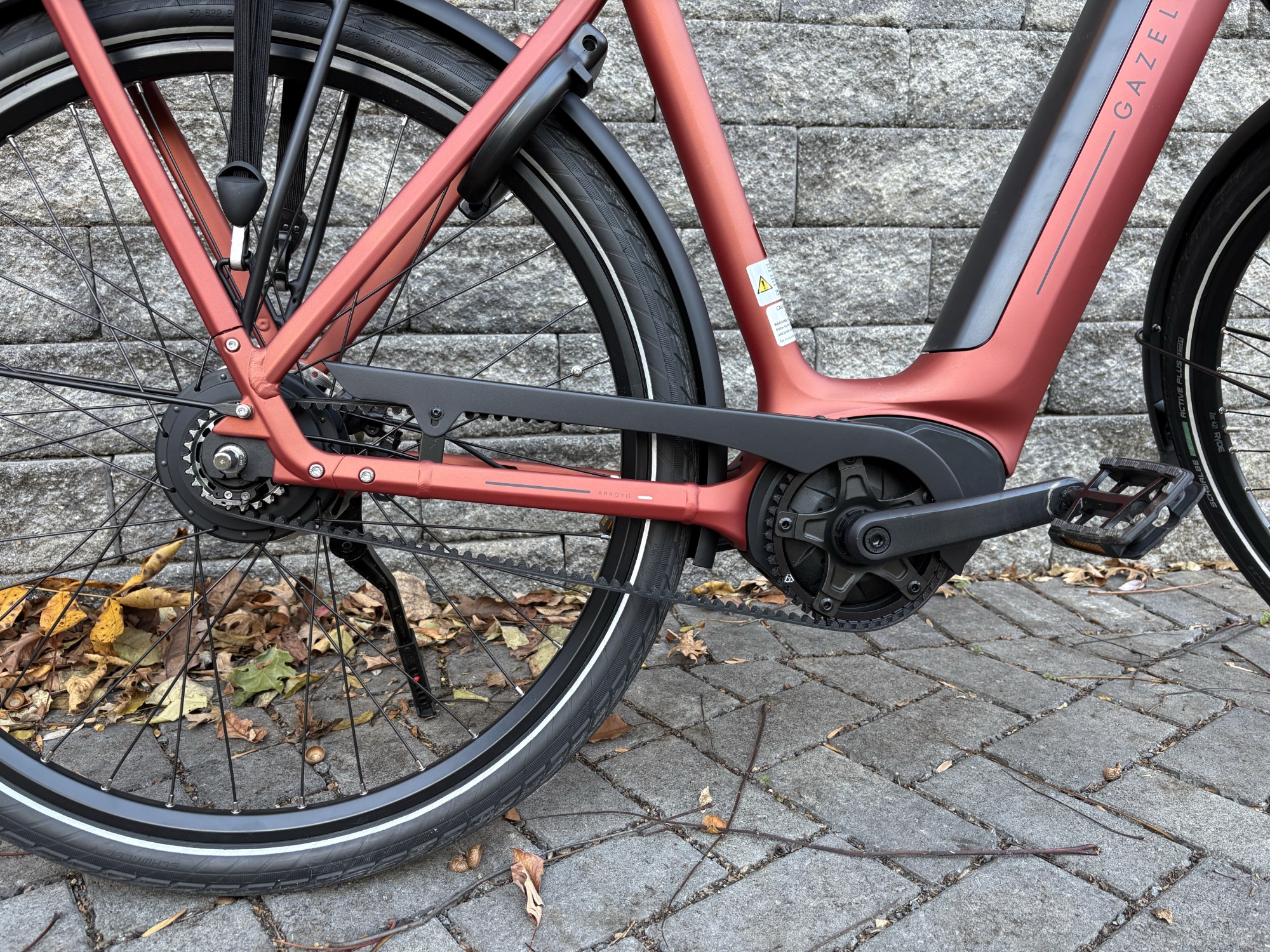
A mid motor, belt drive, and in-hub gearing all feature, as does an integrated bike lock.
Credit: John Timmer
Bosch is one of the leading manufacturers of premium e-bike motors. While its hardware typically costs a bit more, in return you get an excellent warranty, readily available replacement parts, and the reassurance that the company is going to be around to sell you a replacement battery when yours inevitably decays. The motor was also nearly silent, which I’ve come to greatly appreciate.
The Bosch system provides several levels of assist: eco, tour, and boost, which do pretty much what you’d expect. It also has an auto mode that’s supposed to adjust to conditions and your effort to keep things moving steadily. I’ve not found that especially useful, but the other three provide a nice range of help, although they do expect you to be pedaling—this is not one of those bikes that will let you gently spin the pedals while it does all the work for you. If these options aren’t sufficient, Bosch also provides a smartphone app to let you customize any of the assists. The same software will also map out your rides, display stats, and update the firmware.
Even without the app, the system makes it easy to track what’s going on with your bike. The assists are color coded (green for eco, red for boost, etc.), and the controller lights up with the color corresponding to the one you’ve currently selected. It’s a nice touch, given that this information was often difficult to see if you set the info screen to display any of the bewilderingly large number of performance stats.
Thoughtful design
The non-electronic portion of the drivetrain is a belt drive, which simplifies maintenance and has a long life, but makes servicing more challenging. It’s paired with a continuous variable transmission in the rear hub. That means it doesn’t have any pre-defined gearing ratios; instead, even a small change in the shifter produces a correspondingly small change in the gearing. It can also be shifted while the bike is stationary, and the effects will be felt as soon as you try to pedal again. It’s controlled by a circular dial that’s integrated with the handlebar grips: rotate it forward to make pedaling easier, back toward you if you want to push out some Watts.
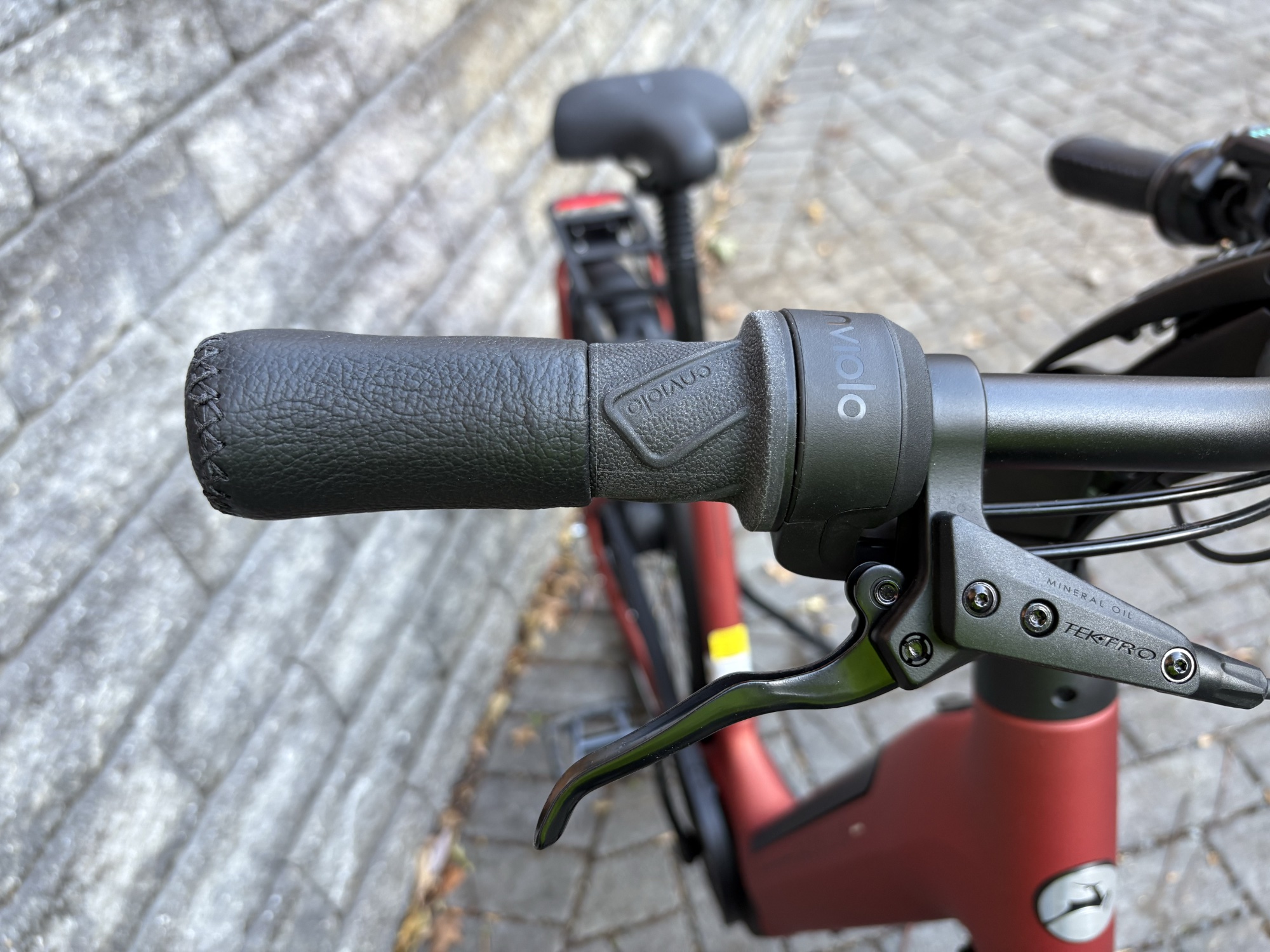
The continuous variable transmission is controlled by turning a ring to the right of the grip in this photo.
Since the gearing is internal to the rear hub, there’s no way to see what sort of ratio your cranks will be pushing against, and no way of telling how much you’ve shifted. (The previous version we tested had a visual indicator that I found difficult to interpret, so its absence on the Arroyo didn’t seem like a loss.) This meant that, at first, shifting was typically followed by a bit of fine-tuning until I got the gearing I was looking for. But, with experience, I developed a better feel for how much to turn the dial to get the effect I wanted.
And, once I had a feel for it, the system really shined. Despite its weight and upright riding stance, I found it easy to get the Arroyo up to where its assist would cut out at 20 mph/32 kmph, letting me make quick work of errand-running.
The ride was also pleasant because the bike smooths its ride with a combination of a front suspension fork and a shock absorber in the seatpost. The former worked well, but the latter didn’t really move much unless you hit a pretty severe bump. Still, between those and the fat tires, the bike cut down on the impact of the road chatter, although you’d still definitely notice any major potholes.
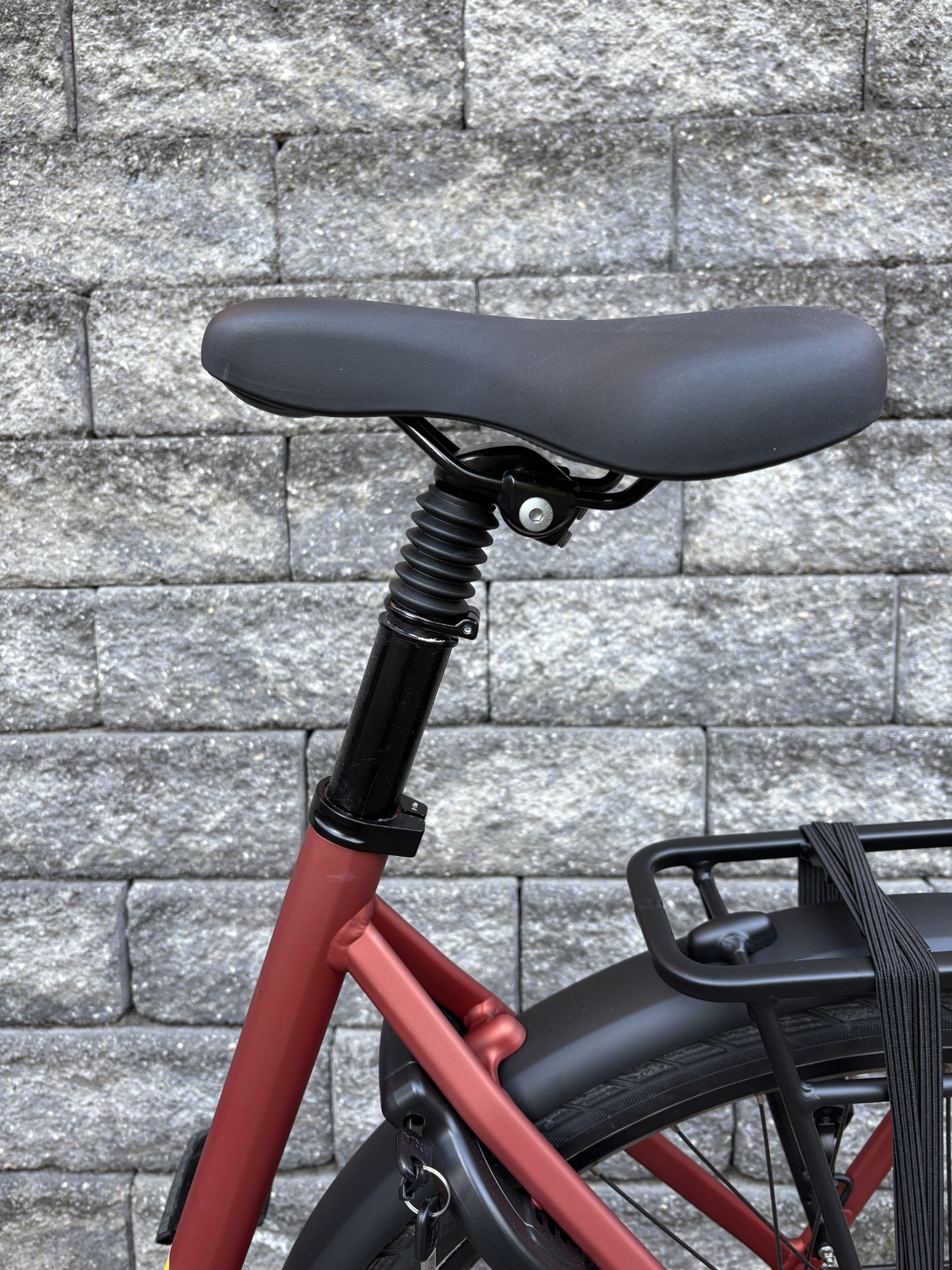
The Arroyo comes with a standard suspension fork and a somewhat more unusual suspension seat post.
Credit: John TImmer
There are a lot of thoughtful features on the bike. It has a quick-release latch that lets you rotate the handlebars to adjust to riders of different heights. There’s a bell that is integrated into the handlebars in the same way as the shifter: a ring that dings as you rotate it around the handlebar next to the grips. It also has a rear wheel lock integrated into the frame, one that only stays open with the key in place, so you can’t leave the house without it. The same key also releases the battery, so you never have to search for that. (While that’s all very convenient, it does pose the risk that if you leave the bike unlocked somewhere, someone can lock it, take the key, and walk away with your battery.)
The rack seems robust and came with some stretchable cords to hold cargo down on it. The only potentially questionable decision was having the front and rear lights integrated into the plastic fenders, which might get banged up over time and need to be replaced. But that was the exception; pretty much everything else about this bike gave me the sense that a designer had thought carefully about how to make using it a good experience. Couple that with high-quality components and good performance, and you’ve got a really nice commuter bike. And its unusual features, like the transmission and belt drive, make it a bit more interesting to ride and ensure that maintenance needs should be minimal.
But it’s firmly committed to being a commuter/errand runner—its upright stance and step-through frame ensure that. And I struggle to understand who the target audience is for a $4,500 bike that commits you to just one type of riding, even if the Arroyo is exceptionally good for that use. For the same price, it’s possible to get a decent gravel bike or hard-tail mountain bike with an electric assist, allowing you to commute, errand run, and do some more technical rides.

-
 C114 Communication Network
 -
 Communication Home
