
 Search

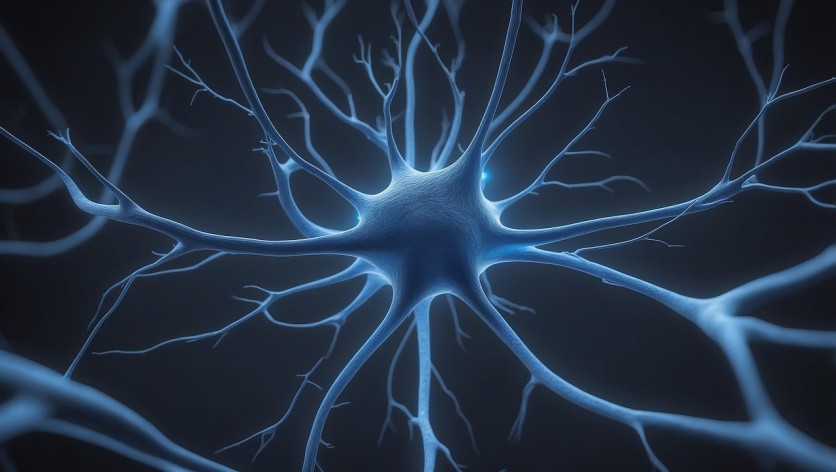
Discover what sets human intelligence apart in this artificial intelligence comparison. Learn why human vs AI reveals critical gaps machines still can't bridge. Pixabay, geralt
The rise of artificial intelligence has sparked countless debates about the future of human cognition. While machines can now beat chess grandmasters, diagnose diseases, and generate realistic images, significant gaps remain between artificial and biological intelligence.
Understanding these differences reveals not just what separates humans from machines, but what makes human thinking uniquely valuable in an increasingly automated world.
The Fundamental Gap in Artificial Intelligence Comparison
Human intelligence emerges from billions of neurons firing in complex patterns, shaped by evolution, experience, and consciousness. AI systems, by contrast, operate through mathematical algorithms that identify patterns in data. This distinction runs deeper than processing speed or memory capacity.
Humans learn through a handful of examples, extrapolating principles that apply across diverse situations. A child who touches a hot stove once understands the concept of heat and danger, applying this knowledge to radiators, irons, and campfires.
AI systems require thousands or millions of labeled examples to recognize patterns, and their learning rarely transfers beyond the specific domain where they were trained.
The biological nature of human intelligence also means people understand through embodied experience. Humans know what it feels like to be tired, hungry, or afraid.
These sensations inform decision-making in ways that pure data processing cannot replicate. When machines make predictions about human behavior, they lack the internal reference points that make human judgment nuanced and contextual.
Where Creativity Meets Its Algorithmic Limits
Creativity represents one of the starkest divides in the human vs AI comparison. Machines excel at recombining existing elements in novel ways, but genuine innovation requires something more.
True creativity involves connecting disparate concepts that have no apparent relationship, drawing from emotional experiences, cultural knowledge, and imaginative speculation.
AI-generated art, music, and writing operate within the boundaries of their training data. These systems recognize patterns in existing creative works and generate variations, but they cannot rebel against conventions or create entirely new genres.
Every AI-generated piece reflects patterns learned from human-created content. The machine has no lived experience to draw from, no frustration to channel into expression, no joy to celebrate through creation.
Human innovation springs from curiosity, dissatisfaction with the status quo, and the ability to imagine worlds that don't yet exist. Scientists develop theories by asking "what if" questions that go beyond available data. Artists create by channeling personal emotions and cultural observations.
Entrepreneurs identify problems by understanding unmet human needs. These creative leaps require understanding context, feeling emotion, and thinking abstractly in ways current artificial intelligence comparison studies show machines cannot match.
Emotional Intelligence Remains Exclusively Human
Emotional intelligence represents perhaps the clearest advantage in any artificial intelligence comparison. While machines can recognize facial expressions and analyze sentiment in text, they don't experience emotions. This distinction matters more than it might initially appear.
Human empathy allows people to imagine others' feelings and respond appropriately. A good therapist doesn't just identify depression from symptoms; they feel compassion that shapes their approach. Parents sense when children need comfort versus discipline. Leaders inspire teams by understanding motivation and morale.
AI systems simulate emotional responses through programmed rules, but without internal emotional states, they lack genuine understanding.
A machine can learn that people appreciate compliments, but it doesn't know the warm feeling of giving encouragement or the satisfaction of making someone smile. These emotional experiences inform human judgment in subtle but crucial ways that affect relationship-building, negotiation, and caregiving.
Moral Reasoning Beyond Programming
Ethical decision-making showcases another area where human vs AI capabilities diverge sharply. Humans don't just follow moral rules; they wrestle with competing values, consider unique circumstances, and evolve their ethical frameworks through reflection and experience.
Consider medical triage decisions or resource allocation during crises. These situations require weighing multiple factors: fairness, outcomes, relationships, and principles.
Humans bring moral intuition shaped by philosophy, religion, culture, and personal values. They can explain their reasoning, debate different approaches, and feel the weight of difficult choices.
Machines operate through programmed guidelines that become problematic in edge cases.
The famous trolley problem illustrates this challenge: should an autonomous vehicle sacrifice its passenger to save five pedestrians? Any answer requires moral judgment that goes beyond calculation. Humans understand that some situations have no good options, only lesser evils, and they accept moral responsibility for their choices.
Read more: How AI Voice Generators Are Unlocking New Online Income Streams
Adapting Without a Playbook
Humans excel at handling completely novel situations by drawing analogies, improvising solutions, and applying principles across unrelated domains. This flexibility represents a major limitation in current artificial intelligence comparison studies.
When faced with unprecedented challenges, people synthesize knowledge from various experiences to create new approaches. A chef might apply painting techniques to food presentation.
An engineer might solve a mechanical problem using insights from biology. A teacher might adapt classroom management strategies based on parenting experience.
AI systems demonstrate remarkable narrow competence but struggle with transfer learning.
A machine trained to identify cats cannot automatically recognize dogs, even though humans instantly see the relationship. Adapting to genuinely new situations requires the kind of flexible reasoning that emerges from general intelligence rather than specialized algorithms.
The Mystery of Consciousness
Perhaps the deepest divide between human and artificial intelligence involves consciousness itself. Humans don't just process information; they experience awareness. There's something it's like to be human, to see red, to feel pain, to wonder about existence.
This subjective experience, what philosophers call qualia, remains entirely absent from machines.
AI systems have no internal mental life. When a computer vision system identifies a sunset, it detects patterns in pixel data without experiencing beauty. When language models generate text about emotions, they manipulate symbols without feeling anything.
Consciousness enables self-reflection, allowing humans to think about their own thinking. People question their assumptions, recognize their biases, and deliberately change their minds. This metacognitive ability supports learning, growth, and wisdom in ways that current machine learning architectures cannot replicate.
Understanding the Limits Shapes the Future
The distinctions between artificial and biological intelligence highlight complementary strengths rather than a competition. Machines excel at processing vast datasets, performing repetitive tasks without fatigue, and maintaining consistency. Humans bring creativity, emotional depth, moral reasoning, and adaptability.
Recognizing what machines still cannot do helps society make better decisions about AI deployment. Some tasks benefit from automation, while others require irreplaceable human qualities.
Healthcare needs both diagnostic algorithms and empathetic doctors. Education can use adaptive software while depending on teachers who inspire curiosity. Creative industries might employ AI tools, but human vision remains essential.
The future likely involves collaboration rather than replacement. Understanding these fundamental differences in any artificial intelligence comparison ensures technology augments human capabilities rather than attempting to replicate what makes human intelligence unique.
As AI continues advancing, appreciating the enduring value of human cognition becomes increasingly important for building a world where both can thrive.
Frequently Asked Questions
1. How long does it take to train an AI model compared to human learning?
AI models can take weeks or months to train on powerful computing clusters, processing millions of examples. Humans learn basic concepts in minutes through just a few experiences. However, AI training can be copied instantly, while each human must learn individually through years of education.
2. Can AI systems feel pain or suffering?
No, AI systems cannot feel pain or suffering. They lack the biological neural structures and consciousness required for subjective experiences. When AI reports errors, these are programmed responses to detect problems, not expressions of discomfort.
3. Do humans and AI make the same types of mistakes?
No, their errors differ fundamentally. Humans make mistakes due to fatigue, distraction, or emotion but rarely fail at mastered tasks. AI systems excel at consistency but can fail spectacularly on simple tasks if they encounter patterns outside their training data.
4. How much energy does human intelligence use compared to AI?
The human brain operates on roughly 20 watts of power, about the same as a dim light bulb. Large AI models can require megawatts during training, equivalent to thousands of homes. Even during operation, AI systems typically consume far more energy per task than the human brain.
Read more: How to Make AI Video Income: Proven AI Content Monetization and Image Selling Methods

-
 C114 Communication Network
 -
 Communication Home
