
 Search


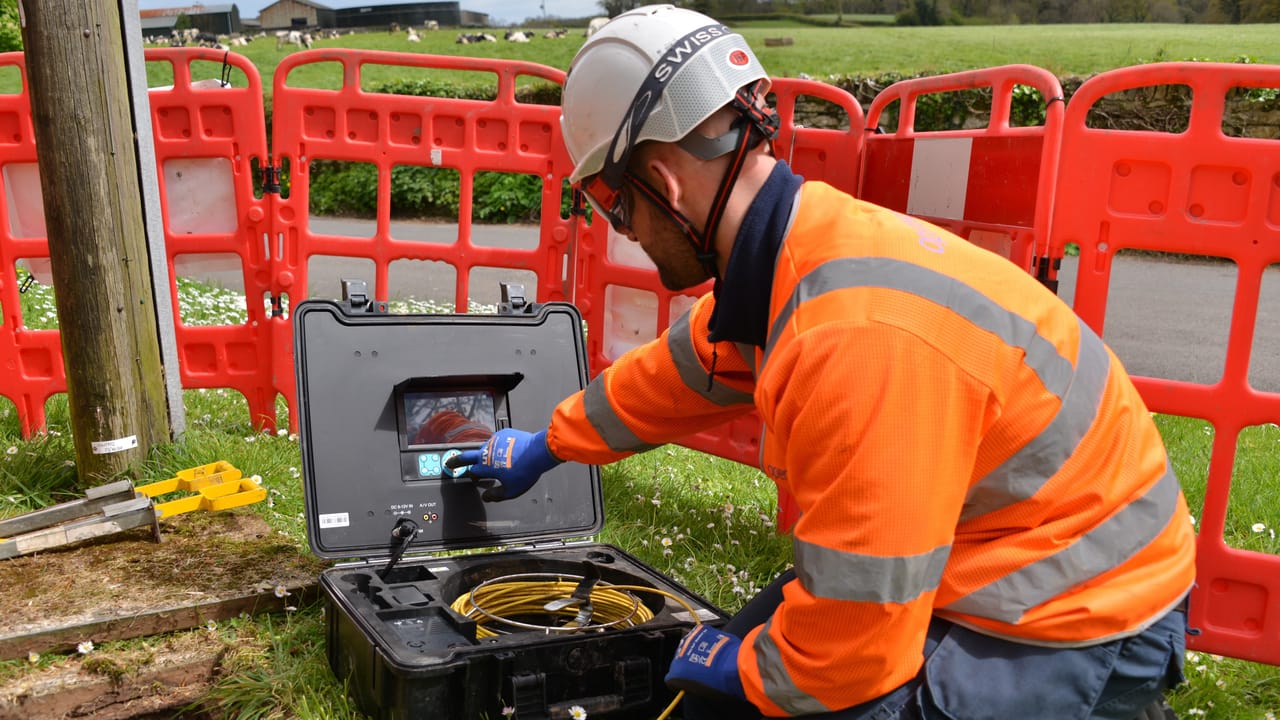
(Source: Openreach)
Openreach, the semi-autonomous network access arm of UK operator BT, has issued a fresh warning to public sector and emergency services users of ISDN phone lines in the UK as January's copper migration deadline gets ever closer. ISDN is a legacy technology that relies on the soon-to-be-extinct PSTN copper network and is used mainly for business switchboards handling lots of calls at once. According to Openreach, there are around 44,000 ISDN "multiline" services remaining in operation across the UK, for which there is no safety net once the PSTN closes on January 31, 2027. Many of these, says Openreach, support vital operational infrastructure in hospitals, prisons and schools, as well as large industrial sites. (See Get off the PSTN! – Openreach set to pull plug on ancient tech and BT's PSTN shutdown palaver could be a leading cause of PTSD.)
Swisscom targets AI big-spenders
How much are consumers willing to spend on AI? According to Swisscom, it could be as much as 70 Swiss francs (US$84) a month, as that's the price it has slapped on its new "myAI Max" offering which is targeting users who rely heavily on the all-conquering/apocalypse-accelerating (delete where applicable) technology. To help allay privacy worries, Swisscom assures potential users that it does not create user profiles from chat data, while prompts are not used to train AI models. Data generated by myAI Max is processed on Swiss and European infrastructure operated by Swisscom and the definitely not Swiss or European AWS (Amazon Web Services), and remains, swears Swisscom, under its control.
Atos taps Microsoft for 'sovereign' assist
There's more counterintuitive collaboration in the "sovereign" sphere taking place in France, where consulting firm Atos has teamed up with Microsoft for sovereign cloud with "defined European boundaries." Atos says it supports customers in navigating (word-salad warning) "the multiple sovereignty dimensions, data, technical, operational and legal, through a layered approach spanning foundations, controls and operational governance aligning with Microsoft technologies." (See Microsoft shows who really controls Europe's 'sovereign clouds'.)
UK kids go bot-crazy
Young Brits have the hots for chatbots, a new survey from UK communications regulator Ofcom has found. The research revealed that 81% of eight- to 17-year-olds in the UK say that they have used an AI chatbot in the last six months, compared to 64% of adults. Around a third of children who use AI chatbots say they use them every day, with more than half using them for homework or hobbies. More worryingly, nearly a tenth of these children say they have turned to AI chatbots for someone to talk to. Sad-face emoji.
Comsol goes with Adtran for DCI boost
Fixed wireless access provider Comsol Networks has gone with Adtran and NEC XON's managed optical fiber network knowhow for the next phase of its 5G expansion in South Africa. To support the growth, Comsol says it is strengthening its data center interconnect infrastructure with technology that makes it easier to run.
Shared Rural Network hits 50
The UK government is celebrating the fiftieth 4G mast upgrade carried out as part of the Shared Rural Network program for rural areas. The Shared Rural Network is a partnership between the government and mobile network operators intended to improve coverage in some of Britain's more remote spots, such as Exmoor, North Yorkshire and the Lake District.
Teletubbies try their luck on Netflix
The BBC is putting some of its CBeebies children's TV content on Netflix for a limited period in the hope of finding new audiences for it. The trial will begin on December 2 and will feature a dedicated hub featuring a selection of CBeebies-branded programs, the very names of which – Teletubbies, Numberblocks – may induce PTSD in many a middle-aged parent. The hub will also be accessible outside the UK thanks to a distribution deal managed by BBC Studios.

-
 C114 Communication Network
-
 Communication Home
