
 Search


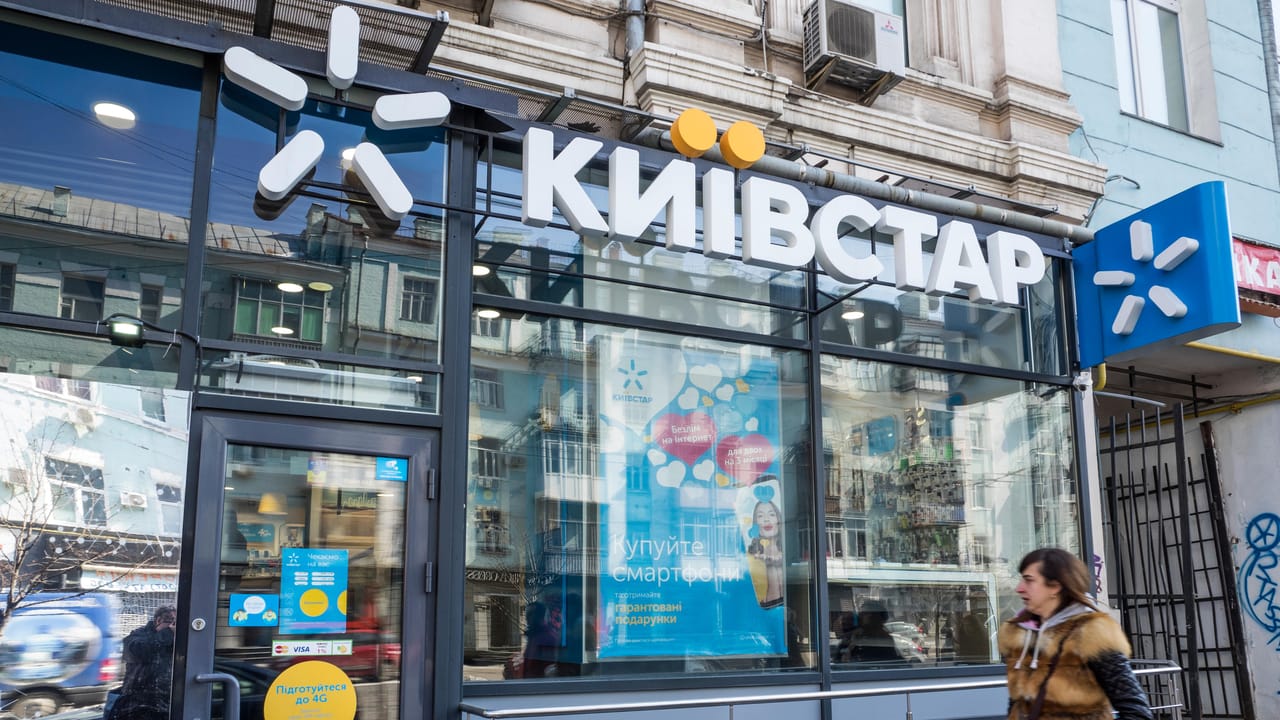
(Source: Igor Golovnov/Alamy Stock Photo)
Kyivstar was the first operator in Europe to launch direct-to-device (D2D) satellite services via Starlink, in November 2025. As it continues to face power outages and strikes on its infrastructure, satellite offers a way to keep customers connected even when the terrestrial network is down.
The company would, however, be open to partnerships with more satellite companies, its COO Volodymyr Lutchenko told Light Reading during an interview. "It's always good to have like two or three partners but tell me who is ready. That's the question," he said. "We are waiting for them, whenever they are ready, we are ready," he also noted.
Not related to its partnership with Kyivstar, Starlink has been in the news in connection with Ukraine for far less flattering reasons lately, with the Ukrainian government saying the services it provides to its military have suffered disruptions this autumn.
The topic came up on Kyivstar's latest earnings call. Responding to an analyst question about whether the company has been affected, CEO Oleksandr Komarov said that it hadn't and that its partnership with Starlink service is separate from the business-to-military division Starshield.
Elsewhere on the call, Komarov said uptake has reached around 8 million users. Lutchenko, meanwhile, said during the recent Network X event in Vienna that Kyivstar's D2D users represent over 30% of SpaceX's global subscribers.
Direct damage
Kyivstar has been affected by attacks on telecom infrastructure, and even its offices. In September, its headquarters was damaged by a strike, which thankfully didn't harm any staff. The attack was one of three carried out against Kyivstar offices and facilities during the same month, according to the Interfax Ukraine news agency.
The operator has also had its infrastructure targeted repeatedly, having to rebuild the same sites multiple times, Lutchenko said: "For some sites, we are rebuilding like more than ten times."
Russia has been intensifying its attacks on Ukraine's telecom and data center infrastructure, according to the US think tank Institute for the Study of War (ISW). These attacks have been part of Russia's long-range strike campaign against Ukraine's economy that has been ongoing since the war started in 2022, it notes.
Multiple operators have faced disruptions following strikes on their data centers, the ISW said, but noted that the impacts of such strikes are always temporary.
Facing blackouts
Another big challenge for the operator is energy. Before the war, Lutchenko noted, Ukraine had "one of the most reliable energy infrastructures," and "the standard configuration of the telecom site was like two hours' battery backup, maximum."
"When the Russians started to target our energy infrastructure, we faced massive blackouts," he said. As a result, Kyivstar invested a lot into increasing its energy resilience with the support of its vendors as well as the government.
The company is executing a multi-layer plan, he explained, which consists of extended battery backup time for every telecom site. It also involves portable diesel generators, as well as stationary generators for core sites. At the same time the company has started to procure solar power.
Kyivstar has deployed nearly 270 batteries and around 10,500 generators across its network, Komarov said during the Q3 earnings call. "Right now, we are facing a kind of regular blackouts across different regions in Ukraine, with a minimum impact on our service level," he said.
Network modernization
Infrastructure damage isn't the only challenge of running telecom networks in wartime. Like all Ukrainian companies, the operator has also been dealing with staff shortages caused by both conscription and emigration. As a result, the company is trying to be a good employer through various HR incentives.
In addition to the challenges of operating networks during wartime, Kyivstar is also dealing with many of the same things as other operators. For example, it recently carried out a shutdown of its 3G network and has introduced 5G in some Ukrainian cities.
While Ukraine has yet to auction any spectrum – and this isn't likely to happen before the war is over – there have been 5G pilots in select cities. According to local media, the government is looking to prepare the country for further scaling-up of the rollout once the martial law that was put in place at the start of the war is lifted.
Lutchenko, meanwhile, said the situation is more akin to a limited rollout, underpinned by a temporary permission to use 5G spectrum. He said, however, he'd prefer not to take this further and instead focus on modernizing and extending the 4G network.

-
 C114 Communication Network
-
 Communication Home
