
 Search


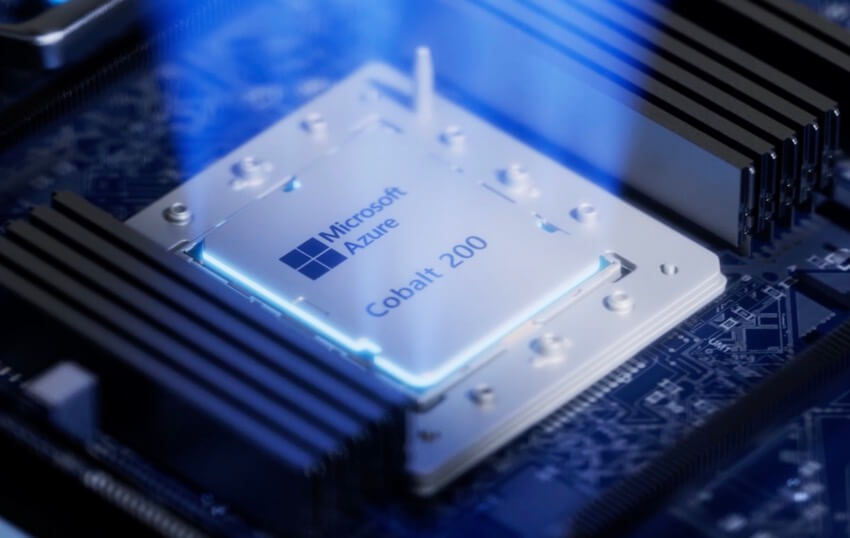
Microsoft made Azure virtual machines based on its second-generation Cobalt 200 Arm processor generally available in 14 regions on November 17 at Ignite 2026. The company plans to expand availability to 23 regions by year-end and expects Cobalt 200 to account for a significant share of new Azure Compute capacity beginning in 2027. Microsoft reports up to 50% higher CPU performance than Cobalt 100, with gains varying by workload.
The chip integrates 132 Arm Neoverse V3 cores in a chiplet design fabricated on TSMC’s N3P process. Azure assigns one physical core to each vCPU and offers VM sizes up to 128 vCPUs. Customers can choose a fixed 3.2 GHz mode for predictable performance or an opportunistic mode that can reach 3.6 GHz when power and thermal conditions permit.
Azure added high-memory M-series and storage-optimized L-series options to its Arm VM lineup, with up to 1,388 GiB of RAM on Mpsv4 and about 23 TB of temporary local NVMe storage on Lpsv5. Azure Boost offloads network and storage processing from the host CPU. Microsoft lists up to 85 Gbps of networking and up to 70 Gbps of remote storage throughput, depending on VM size.
“We saw higher throughput and lower latency on Cobalt 200,” said Vadim Filanovsky, a member of the technical staff at OpenAI, describing tests on the same ChatGPT workloads across both generations.
| Azure Cobalt 200 | Key Specifications | |
| • Silicon | 132 Arm Neoverse V3 cores, Arm Neoverse CSS V3, chiplet architecture, TSMC N3P (3 nm). |
| • VM sizing | Up to 128 vCPUs, with one physical core per vCPU. |
| • Clock modes | 3.2 GHz deterministic or up to 3.6 GHz opportunistic. |
| • Cache and memory | 3 MB private L2 per core, 192 MB system-level L3, and 12 DDR5 channels. Memory encryption is enabled by default. |
| • VM families | General-purpose D-series, memory-optimized E-series, high-memory M-series and storage-optimized L-series. Up to 1,388 GiB RAM on Mpsv4 or about 23 TB of temporary local NVMe storage on Lpsv5. |
| • Networking and storage | Azure Boost offload. Up to 85 Gbps of VM network bandwidth and 70 Gbps of remote storage throughput, depending on size. |
| • Azure Boost gains | Microsoft reports up to 15% more network bandwidth, 20% more remote storage IOPS and 10% more remote storage throughput versus Cobalt 100. |
| • On-chip offload | Dedicated compression and cryptography accelerators. |
| • Rollout | Generally available in 14 Azure regions at launch, with 23 planned by the end of 2026. |
Analysis
Cobalt 200 addresses the CPU work surrounding model inference. An agent can send a request to an accelerator and still spend time retrieving records, calling APIs or running code in a sandbox. Microsoft reported up to 1.5× the speed of Cobalt 100 in its agent tool execution tests and 1.9× in a database benchmark. Amadeus separately reported more than 30% higher flight-search throughput in its lab. These figures measure specific workloads. For a deployment decision, the relevant comparison is cost per completed request at the required tail latency.
The two processor modes give operators a way to tune for different bottlenecks. A distributed query can be held up by its slowest worker, making consistent frequency valuable. A web service handling short bursts can benefit from higher peak clocks. Larger memory and local NVMe options also let operators size the VM around the working set and I/O needs instead of selecting by core count alone.
| Company Profile | Microsoft | |
| Company | Microsoft Corporation · Nasdaq: MSFT |
| Headquarters | Redmond, Washington, United States |
| Leadership | Satya Nadella, chairman and CEO |
| Business | Cloud infrastructure, productivity software, AI and enterprise platforms. |
| Azure silicon | Cobalt Arm CPUs, Maia AI accelerators and Azure Boost offload hardware. |

-
 C114 Communication Network
-
 Communication Home
