
 Search


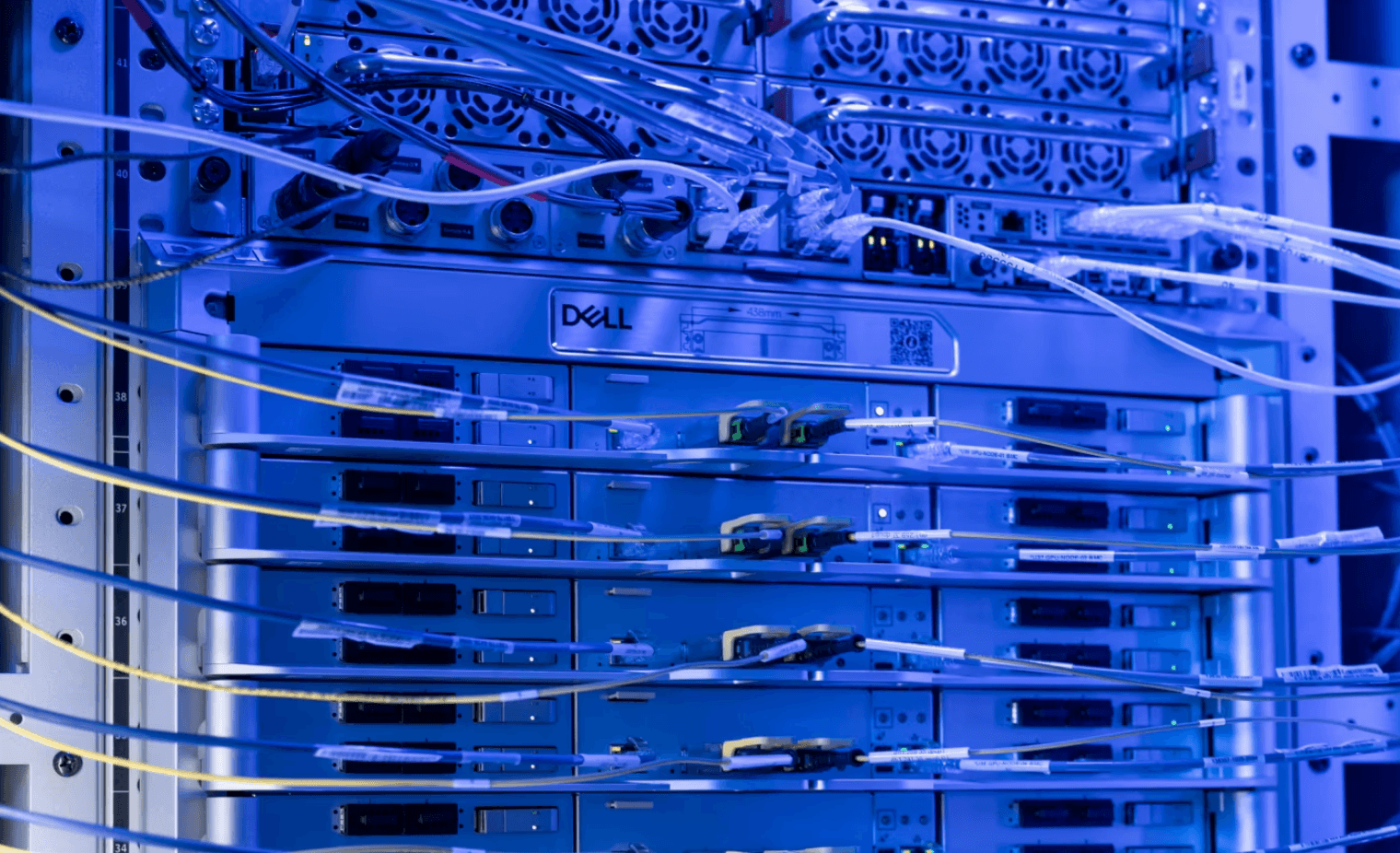
Dell Technologies introduced a broad expansion of its Dell AI Factory with NVIDIA at SC26 in Chicago, extending its enterprise AI infrastructure portfolio into data orchestration, liquid-cooled storage, rack-scale systems management and multi-vendor Ethernet fabric automation. The announcements reflect a shift beyond GPU server deployment toward the software and infrastructure needed to operate production AI environments. Dell said its AI Factory with NVIDIA initiative now encompasses more than 420 offerings across data, compute, networking, solutions and services, with more than 6,500 customers.
A major addition is the Dell Agentic Data Gateway, part of the Dell AI Data Platform, which provides AI agents with governed access to enterprise data, models and tools. The new capabilities include hybrid data pipeline orchestration across on-premises infrastructure and public clouds, data intelligence services for tracking provenance and quality, and integrations with frameworks including LangChain, OpenAI Codex and Unstructured.io. Dell reported that reusing governed context reduced total token consumption by up to 76% while improving answer accuracy from 60% to 94% in internal information-retrieval testing. The company also unveiled two additions to its Exascale storage architecture: a fully direct-liquid-cooled 2-OpenU platform supporting up to 32 NVMe drives and a high-density 1U platform delivering 67% more drive density per rack unit compared with its previous qualified hardware. Both are expected in the first half of 2027.
The infrastructure management announcements are particularly relevant to large-scale AI networking. Dell OpenManage Rack Scale introduces infrastructure automation and observability for as many as 100,000 devices, while the new Dell Fabric Manager provides centralized, intent-based management across network fabrics using different network operating systems and switching silicon. Dell claims Fabric Manager can reduce Day-2 operational effort by up to 80% in internal testing. The company is also expanding Enterprise SONiC Distribution support to include the Dell Z9964F-ON and NVIDIA Spectrum SN4700 switches, extending its open networking software across additional switching platforms. Meanwhile, Dell has validated its PowerEdge XE9785 server with NVIDIA HGX B300 GPUs within the AI Factory modular architecture, alongside expanded AI software, security, observability and professional services offerings.
Arthur Lewis, president of Dell Technologies’ Infrastructure Solutions Group, stated:
“AI outcomes don’t come from models alone. They take data with the right context, infrastructure that scales and solutions validated to work together.”
| Dell AI Factory with NVIDIA | SC26 Highlights | |
| • 420+ portfolio offerings and 6,500+ AI Factory customers • Agentic Data Gateway: up to 76% reduction in total tokens; 60% to 94% answer accuracy in Dell internal testing • Exascale: direct-liquid-cooled 2-OpenU storage, up to 32 NVMe drives; higher-density 1U option, up to 20 drives • OpenManage Rack Scale: supports up to 100,000 managed devices • Fabric Manager: multi-NOS/multi-silicon automation, up to 80% less Day-2 operational effort in vendor testing • Enterprise SONiC: support added for Dell Z9964F-ON and NVIDIA Spectrum SN4700 • Validated architectures: Dell PowerEdge XE9785 with NVIDIA HGX B300; PowerScale on Exascale receives NVIDIA-Certified Storage Foundation validation | |
| Availability | Rack Scale and Fabric Manager: now; data platform updates: December 2026; Enterprise SONiC updates: January 2027; new Exascale hardware: first half 2027 |
Analysis
Dell’s SC26 announcements address three interdependent requirements for enterprise AI deployment: preparing proprietary data for AI applications, operating increasingly dense computing infrastructure and managing the Ethernet fabrics that connect distributed systems. The Agentic Data Gateway moves data retrieval, governance and context preparation into a shared software layer rather than requiring individual AI agents to manage these functions independently. Its reported efficiency gains are based on a September 2026 internal benchmark using a synthetic dataset, 20 questions across six workload types and NVIDIA Nemotron-3-Super-120B-A12B served through NVIDIA NIM. The results demonstrate performance under that particular test configuration and should not be interpreted as a general reduction in token consumption across all agentic workloads.
The networking developments extend Dell’s role from supplying switching hardware and Enterprise SONiC software into centralized fabric lifecycle management. Fabric Manager supports network design, provisioning, upgrades, observability and configuration drift analysis across multiple network operating systems and switching architectures. This is relevant as AI clusters expand into larger scale-out networks, where operators must coordinate the operational state of many switches and maintain consistent configurations. Dell’s 80% reduction in Day-2 effort is an internal laboratory result, not a measured improvement across customer production deployments. OpenManage Rack Scale addresses the adjacent physical-infrastructure layer, incorporating telemetry and management for servers, power, firmware and rack-level operations.
The storage announcements similarly illustrate how liquid cooling is expanding beyond CPUs and GPUs. Dell’s proposed 2-OpenU Exascale platform would bring fully liquid-cooled NVMe storage into AI racks built around shared cooling infrastructure, potentially simplifying thermal design where compute, networking and storage occupy the same rack. The higher-density 1U configuration addresses a different constraint: storage capacity per rack unit. Together with NVIDIA-Certified Storage validation for PowerScale on Exascale, these developments position storage as an integrated component of the AI factory architecture rather than a separate supporting system. The two new Exascale hardware configurations are scheduled for 2027 and are not yet commercially available.
| Company Profile | Dell Technologies | |
| Headquarters | Round Rock, Texas, USA |
| Leadership | Michael Dell, Chairman and CEO; Jeff Clarke, Vice Chairman and COO |
| Listing | NYSE: DELL |
| Portfolio | PowerEdge • Dell AI Factory • PowerScale • PowerStore • Exascale • Enterprise SONiC • OpenManage |
| Technology | AI servers • Ethernet fabrics • Rack-scale management • Data orchestration • Liquid cooling • Storage |
| Website | www.dell.com |

-
 C114 Communication Network
-
 Communication Home
