
 Search


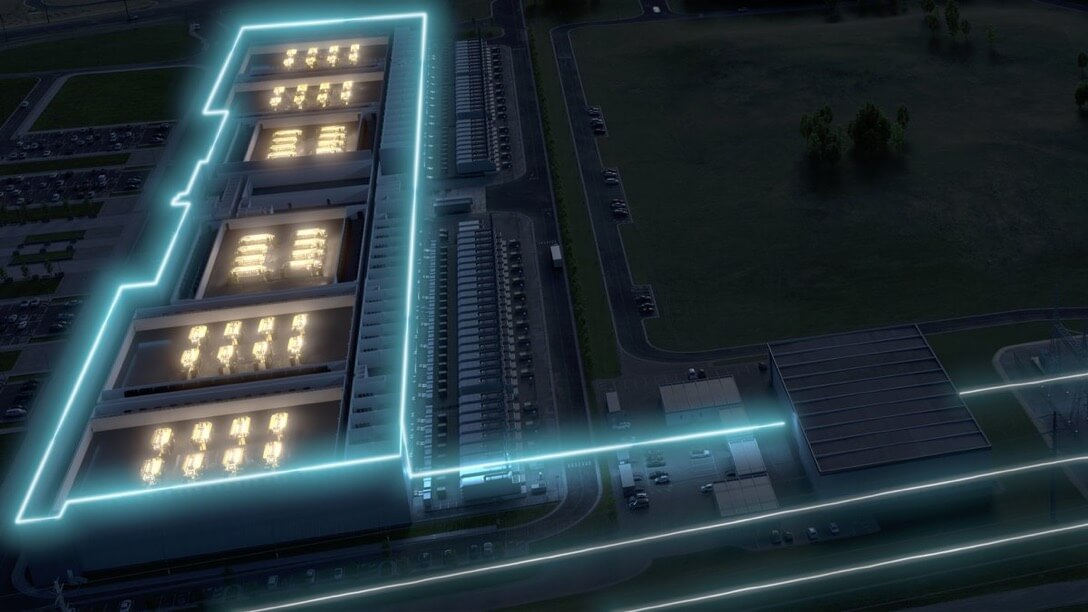
NVIDIA is targeting the power limits of AI data centers with DSX MaxLPS and DSX Flex, pairing dynamic power allocation with grid-responsive workload control. At GTC Berlin on October 21, the company said MaxLPS can deliver the same token output with up to 30% less power. NVIDIA reported that Nscale’s evaluation across four GB300 NVL72 racks in Iceland achieved 49% higher inference throughput and 37% more managed GPU capacity within a 264 kW provisioned budget.
Lambda provided a separate example of how power management can increase productive capacity. In a proof of concept using NVIDIA HGX systems, it operated 19 nodes within the aggregate power budget of a 16-node baseline, reporting approximately 24% higher cluster token throughput and 23% higher performance per watt. MaxLPS combines dynamic power software with chip, system and thermal technologies, including support for 45°C cooling. The approach coordinates available power across compute resources rather than treating each server’s maximum rating as its constant operating requirement.
DSX Flex connects workload decisions to utility signals, electricity prices, renewable generation and storage. Operators can defer flexible jobs, adjust power budgets and prioritize critical inference services through policies integrated with schedulers and DSX Exchange. NVIDIA said an early trial involving Emerald AI, EPRI, Nebius and the U.K. National Grid reduced Blackwell Ultra cluster power draw by up to 40% during simulated grid events while critical workloads continued. These are separate evaluations with different hardware, baselines and objectives; the percentages do not represent a single combined performance gain.
| NVIDIA DSX — Key Developments |
| • MaxLPS: Coordinates power allocation across GPUs, racks and workloads within a fixed power envelope. |
| • Flex: Links grid and facility signals to workload policies, scheduling and power controls. |
| • Cooling: Closed-loop liquid cooling and dry coolers target near-zero facility cooling water consumption; supplemental mechanical cooling depends on local climate. |
| • Operations: DSX OS covers provisioning, network configuration, cluster validation and recovery through modular software. |
| • Evidence: Operator proofs of concept and early trials; results depend on workload, configuration and comparison baseline. |
“Europe’s AI ambitions demand that we make every megawatt count,” said Josh Payne, founder and CEO of Nscale.
Analysis
The architectural distinction is between using an electrical allocation more productively and changing demand when the grid needs flexibility. MaxLPS addresses the first task; Flex addresses the second. For operators, evaluating both requires measuring completed work, latency, power and the effect of deferred jobs. A temporary reduction in cluster demand is a different metric from reducing the electricity needed to complete a workload.
DSX also connects infrastructure operations to facility controls. Its modular software spans networking, GPU orchestration, runtime validation and fault recovery, while Flex incorporates external power signals. Our assessment is that the next useful evidence will be sustained production results showing these controls working together under service-level requirements. The reported trials establish specific operating examples rather than fleet-wide savings.
| NVIDIA | Company Profile | |
| Headquarters | Santa Clara, California |
| Founded / CEO | 1993 / Jensen Huang |
| Status | NASDAQ: NVDA |
| Business | Accelerated computing, AI systems, networking and infrastructure software |
| Infrastructure | DSX MaxLPS, DSX Flex and DSX OS |
| Coverage | AI infrastructure, GPUs, networking, power management and liquid cooling |

-
 C114 Communication Network
-
 Communication Home
