
 Search

(Source: Verizon)
The expectation that AI is going to reverse decades of wireless traffic patterns with devices sending more data back to the network has sparked a rethink on uplink capacity for 6G. As the standards take shape, Verizon hopes new ideas will address what could be a capacity crunch for AI-fueled data uploads.
Mobile networks are designed to deliver faster download speeds by dedicating as much bandwidth as possible to downstream connections to users and far less for upstream data coming from the other direction. Typical downlink-to-uplink ratios are 9:1 or 8:2. But AI could change all that.
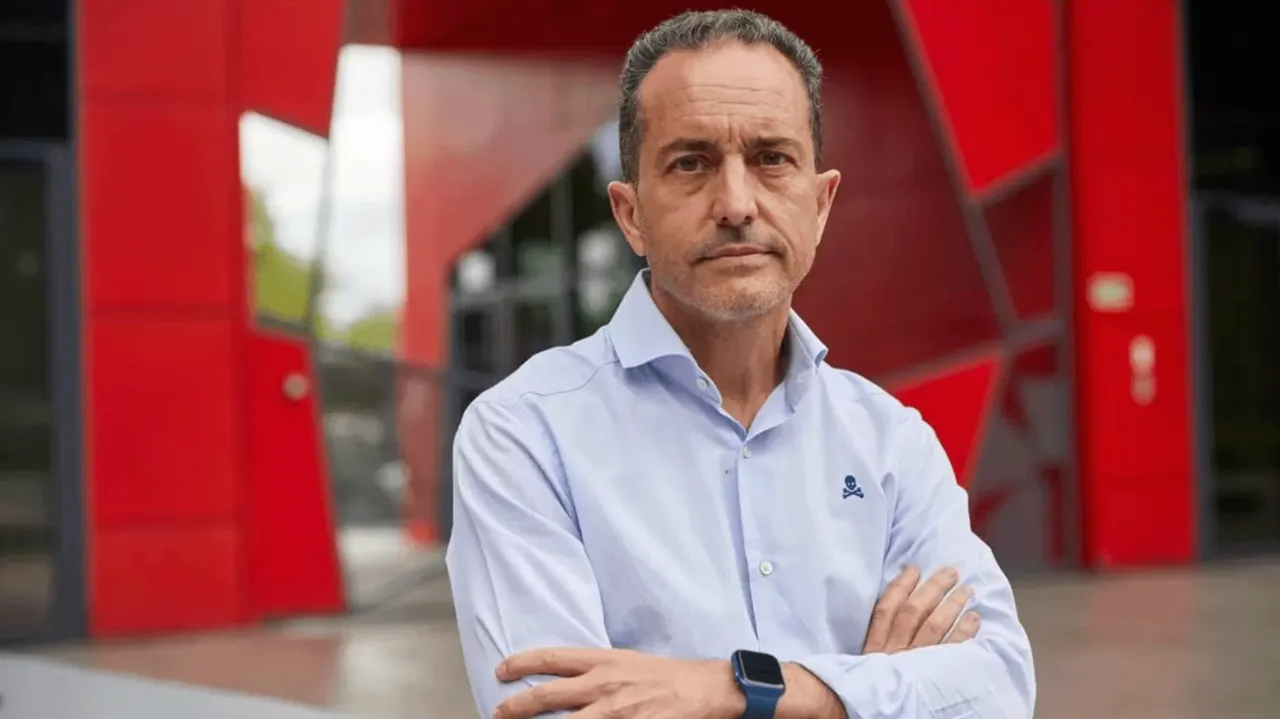
Verizon envisions AI usage shifting from transactional prompts and answers to future applications needing "continuous contextual awareness" that would drive the downlink-uplink ratio to be more like 1:1. Speaking at RCR Wireless' 6G Forum, Verizon chief technology officer Yago Tenorio described the scenario as a device would send information about a user's reality through sensing, video or audio on a real-time, continuous basis to "your AI agent of choice" in the cloud or network edge.
But sometimes those devices will be AI wearables, like smart glasses, that are limited by size, power, heat dissipation and how many antennas can realistically be added.
"Everything puts pressure on the uplink. You need more capacity, but the device is less capable," said Tenorio.
He noted there are some techniques that can help, pointing to "sub-band full duplex" as an example among others. While confident the industry can come up with other ideas, his comments suggest some bigger thinking is needed to avoid an "uplink crisis."
"We're missing a breakthrough that will probably have to go all the way down to the architecture…There is a very real uplink demand that I don't think we can satisfy just with incremental improvement," he said.
Time to think about decoupling?
For one of the concepts being discussed, he posed, "Can we think of a full decoupling of uplink and downlink? And a deployment that is much more pervasive of uplink receivers everywhere that are listening and are close to the customer…reducing and relieving the uplink for the device?"
"It's just an example. Maybe it's not needed. Maybe it's not practical. We'll see about it," he added.
The decoupling idea is that different frequency bands can be used for downlink or uplink, according to a recent Ericsson blog. For example, midband spectrum for downstream and perhaps lowband for upstream.
Rather than assigning portions of the same band to uplink and downlink, decoupling is like giving them each their own "highway," Akhil Gokul, VP, head of technology at Ericsson, told Light Reading earlier this year at Network X Americas.
T-Mobile is looking into uplink/downlink decoupling as an upcoming 6G feature. At Network X in Dallas, Egil Grönstad, senior director of technology development and strategy, said of the concept that "you can have more flexibility on how you're pairing spectrum that I think will be very helpful, where we can select whatever is the best spectrum, downlink versus uplink, so it's not that fixed ratio."
He also said it might be worth examining whether it is possible to use unlicensed spectrum as a way "to get more uplink capacity, especially for fixed applications," such as fixed wireless or use cases like camera monitoring.
In its 5G-Advanced network, T-Mobile has been rolling out features to boost uplink, including uplink carrier aggregation, uplink MIMO and transmit switching.
Verizon is also working on 5G uplink. A test by Signals Research Group of Verizon's 5G standalone network, where it had implemented Ericsson's 32T32R massive MIMO radios, showed marked uplink improvement.
Meanwhile, AT&T indicated that adding upstream capacity was part of the reasoning behind acquiring EchoStar's 600MHz lowband spectrum. The carrier plans to deploy Ericsson's dual-band 600MHz radios that feature "uplink-enhancing 8RX [i.e., eight receiver] technology," which was said to be a first for lowbands.
Building 6G up from the use case
For Verizon's Tenorio, uplink is part of the equation for enabling future services. The carrier is determined that with this generation, unlike 5G, the use cases should come first rather than the technical capabilities.
"We have the opportunity to design 6G with use cases in mind…as opposed to just specify it from speed and latency and performance, and then hoping that the use cases will make use of it," he said.
The carrier expanded its 6G Innovation Forum last month with nine new members and highlighted trials with integrated sensing and communication (ISAC) and AI wearables, aimed at pinning down requirements for use cases.
"What we have in front of us is a lot of questions that we need to ask and we need to find answers for. We have the opportunity to shape 6G so that it hits the ground running, and it enables use cases that are going to be the successful ones and the ones that we can monetize as an industry and the ones that add value…We have precious two years in front of us," he said.

-
 C114 Communication Network
 -
 Communication Home
