
 Search

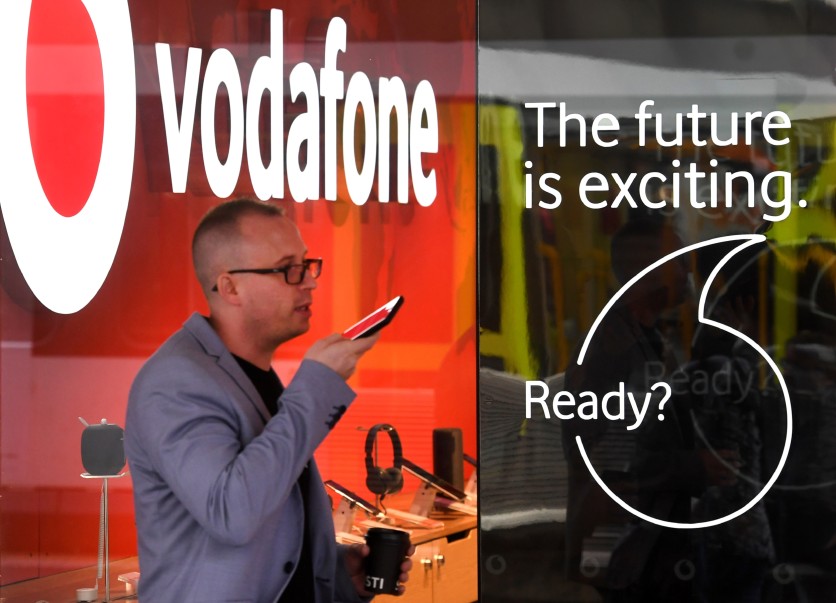
A man speaks into his phone as he walks past a Vodafone store in Melbourne on August 30, 2018. WILLIAM WEST/AFP via Getty Images
A single hub failure in Vodafone Australia's national mobile network silenced calls and data services for roughly 5.7 million customers on Thursday morning, with peak disruption during the busiest part of the working day and service restored only after approximately 3.5 hours. The outage — which began just before 7:30 am AEST on June 18, 2026, and peaked at more than 8,200 simultaneous complaints on crowd-sourced tracker DownDetector — laid bare a structural vulnerability that extends well beyond Vodafone's own subscriber base.
For millions of Australians on budget mobile virtual network operators (MVNOs) — including TPG, iiNet, Internode, and Lebara — the disruption was a live demonstration of an undisclosed structural dependency: every one of those carriers rides Vodafone's underlying infrastructure and has no independent fallback architecture whatsoever. When the host network's hub fails, every MVNO customer on that network fails with it. That risk is not prominently disclosed at the point of sale.
The timing sharpens the scrutiny. New mandatory outage transparency rules from the Australian Communications and Media Authority (ACMA) take effect on June 30 — just 12 days from now — requiring all telecommunications providers to publish registers of resolved outages going back to March 31, 2026. Today's Vodafone hub failure falls squarely within that window.
What Caused the Vodafone Outage on June 18
Vodafone Australia, owned by TPG Telecom, confirmed the disruption in an emailed statement to Reuters. "Most services have now been restored; however, some may continue to experience intermittent issues as devices reconnect," the company said. The cause, it confirmed, was an outage at one of its network hubs at around 8 am AEST.
The outage began just before 7:30 am and complaints peaked at approximately 9 am, reaching over 8,200 on DownDetector before dropping sharply once engineers isolated and resolved the fault. By around 11 am, Vodafone said services were largely restored across the network. The failure also briefly knocked out Vodafone's own online network status checker, which displayed generic error messages during the disruption.
A hub in this context is a central network node through which downstream cell sites route traffic before it reaches the wider internet or voice core. Mobile networks are typically designed in a hub-and-spoke architecture: each hub serves dozens or hundreds of base stations. If the hub fails and no redundant path exists, every connected base station and every customer routed through it loses service simultaneously — not gradually, not partially, but all at once. This structural characteristic is what converted what would otherwise have been a localized equipment problem into a service disruption affecting millions.
Read more: Optus' Free Data Offer Criticized Amid Outage Backlash
What MVNO Customers Were Not Told: A Shared Infrastructure With No Fallback
The reach of the June 18 outage extended beyond Vodafone's direct subscribers. MVNOs are wireless carriers that do not own physical network infrastructure. Instead, they purchase bulk access to a host carrier's network at wholesale rates and resell it under their own brand. In Australia, TPG, iiNet, Internode, and Lebara are all hosted on the same underlying Vodafone/TPG Telecom network, sharing the same cell towers, the same backhaul connections, and the same network hubs.
There is no independent path for MVNO customers when the host network fails. An MVNO cannot reroute its subscribers to a backup carrier mid-outage. Its customers are fully dependent on whatever the host MNO is doing to resolve the problem. That dependency is not typically highlighted in MVNO plan comparisons or pricing pages, where the dominant narrative is affordability.
For budget mobile shoppers, the tradeoff is real: lower monthly cost, inherited infrastructure risk. Thursday's outage made that tradeoff visible in a way that no plan comparison table does. A proposed Telco Disaster Network Sharing Bill tabled in May 2026 would require carriers to share network access with competing carriers during declared emergencies — a measure that would directly address this fallback gap. That legislation has not yet passed.
Triple Zero Access During the Outage: The Assumption That Could Not Be Tested
Vodafone's statement addressed emergency call access directly. Customers unable to reach the Vodafone network "should have been able to access Triple Zero by connecting to other available mobile networks during the outage," the company said — referring to a standard mobile industry protocol under which a handset attempts to connect to any available network for an emergency call when its home carrier is unreachable.
The reassurance matters in context. On September 18, 2025, a firewall upgrade fault at Optus blocked more than 450 Triple Zero calls from connecting to emergency services, and four people died while unable to reach help. The incident, subject to an ACMA investigation still underway, revealed that the alternative-network camping mechanism — the same mechanism Vodafone invoked on Thursday — cannot be assumed to work reliably when a carrier's own infrastructure is experiencing faults. Independent analysis after the Optus incident also found that even when the camping mechanism works correctly, it can take 40 to 60 seconds to connect an emergency call to an alternative network — a significant delay in a life-threatening situation.
ACMA had fined Optus A$12 million in 2024 for the November 2023 outage's impact on Triple Zero, and that fine did not prevent a second, deadlier emergency-call failure from occurring 11 months later.
Australia's Mounting Pressure on Telecoms Infrastructure
Australia's mobile network sector has operated under intensified regulatory and public scrutiny since the November 2023 Optus nationwide outage, which disrupted services for more than 10 million customers and 400,000 businesses, blocked emergency landline calls, and triggered a Senate inquiry, a government-appointed review, and the creation of a new regulatory body.
The Triple Zero Custodian — established within the Department of Infrastructure in March 2025, with legislative powers confirmed by the Telecommunications Legislation Amendment (Triple Zero Custodian and Emergency Calling Powers) Act 2025 — is now responsible for overseeing the end-to-end functioning of Australia's emergency call system. A simulation exercise focused on access and outages is planned for November 2026.
ACMA chair Nerida O'Loughlin has described the new outage register requirements — effective June 30 — as designed to provide "greater transparency about telecommunications outages for a wide range of stakeholders, including the Triple Zero Custodian, emergency service organisations and consumer advocacy groups." The rules require carriers to publish the start and end times of every major outage, the geographic areas affected, the types and estimated number of services impacted, and the high-level cause.
What Affected Customers Can Do Now
Vodafone has not announced compensation or service credits for affected customers as of the time of publication. Customers who suffered specific losses have two options: raise a complaint directly with Vodafone via its formal complaints process, or — if unsatisfied with Vodafone's response — lodge a complaint with the Telecommunications Industry Ombudsman (TIO), a free and independent dispute resolution service. Under ACMA's Customer Communications for Outages Industry Standard 2024, outage-related contacts must be treated as formal complaints with faster resolution timelines.
The TIO can make binding decisions on disputes involving amounts up to A$100,000 and is free for residential consumers and small businesses. Customers should contact their carrier first and obtain a complaint reference number before approaching the TIO.
Frequently Asked Questions
Why did the Vodafone Australia outage happen on June 18?
Vodafone confirmed the disruption was caused by a failure at one of its national network hubs at approximately 8 am AEST. In hub-and-spoke mobile network architecture, a hub serves as the central routing node for a large number of cell sites. When a hub fails without a redundant backup path, every downstream cell site and every customer routed through it loses service simultaneously. The exact technical cause of the hub failure has not been disclosed by Vodafone.
Does choosing an MVNO mean I inherit my host carrier's outage risk?
Yes. Mobile virtual network operators such as TPG, iiNet, Internode, and Lebara do not own physical network infrastructure. They lease bulk access from a host carrier — in this case, Vodafone/TPG Telecom — and have no independent fallback if the host network fails. When Vodafone's hub went down on Thursday morning, every MVNO on that network lost service at the same time and for the same reason. This dependency is rarely disclosed prominently in MVNO plan marketing. The proposed Telco Disaster Network Sharing Bill, tabled in May 2026, would require carriers to share network access during emergencies — but it has not yet become law.
Can I still call Triple Zero during a Vodafone outage?
Vodafone stated that customers unable to connect to its network should have been able to reach Triple Zero by connecting to another available mobile network — a standard protocol called "camping." However, the September 2025 Optus incident demonstrated this assumption is not infallible: a firewall fault blocked more than 450 emergency calls despite the camping mechanism being in place, and four people died. When camping does work correctly, independent analysis found it can take 40 to 60 seconds to connect — a significant delay in a life-threatening emergency. During any carrier outage, if you cannot reach emergency services, move immediately to a location where a different carrier's signal is available or use a landline.
Will Vodafone compensate customers for the June 18 outage?
Vodafone has not announced compensation or service credits as of the time of publication. Customers who suffered specific losses can lodge a complaint directly with Vodafone, and if unsatisfied, escalate to the Telecommunications Industry Ombudsman at tio.com.au, which is free and independent. Following the 2023 Optus outage, ACMA toughened complaints handling rules requiring outage contacts to be treated as formal complaints with faster resolution timelines.

-
 C114 Communication Network
 -
 Communication Home
