
 Search


Solid-state drives (SSDs) are designed to move data quickly, but their actual performance depends on more than the hardware inside the device. The software responsible for managing storage operations can also create delays, preventing drives from reaching their full potential.
Researchers at the Korea Advanced Institute of Science and Technology (KAIST) have identified one such problem involving Zoned Namespace (ZNS) flash storage. Their solution, called GAZE, is a filesystem technology designed to reduce the operating system overhead associated with storage cleanup.
Led by Professor Youjip Won, the research team presented its findings at ACM SOSP 2026 in Prague. Based on their work, GAZE could deliver up to three times the performance of conventional ZNS storage configurations, offering a possible solution to a bottleneck affecting modern high-speed storage systems.
Why Fast SSDs Can Still Experience Performance Delays
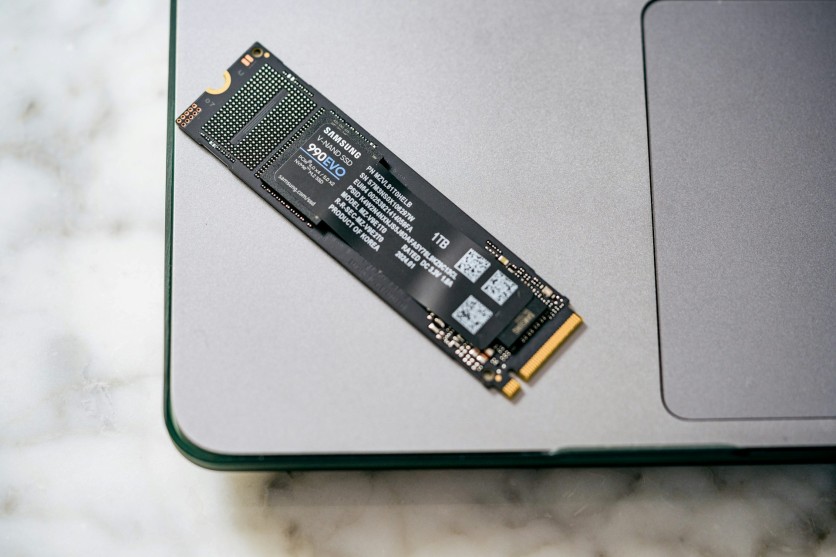
Samsung Memory/Unsplash
An SSD may offer impressive read and write speeds, but maintaining that performance requires continuous management of its available storage space.
Unlike traditional hard drives, flash storage cannot simply overwrite existing data in place. When previously occupied space needs to be reused, the device must first preserve valid information, move it elsewhere, and erase the remaining data.
This process is called garbage collection.
Although garbage collection is necessary for maintaining usable storage capacity, it can temporarily interfere with normal write operations. When the cleanup process takes too long, applications may experience delays even when the storage hardware itself is capable of processing data much faster.
The KAIST researchers found that this problem becomes particularly noticeable with ZNS flash storage, where the operating system must handle larger units of storage during cleanup.
Read more: Archive of Our Own Outage Continues as Unauthorized AI Audiobook Sites Target Fanfiction Writers
What Is ZNS Flash Storage and Why Does It Matter?
Zoned Namespace, commonly known as ZNS, is a type of SSD storage architecture that divides the drive into large sections called zones.
Each zone can contain gigabytes of data, creating a simpler storage management structure. Instead of letting data be written anywhere on the drive, ZNS organizes storage operations around these designated zones.
This approach reduces some of the complexity associated with conventional flash storage. However, it also changes how garbage collection works.
The filesystem largely manages and cleans these zones, which traditionally handles much smaller storage areas.
According to the KAIST team's findings, existing filesystem mechanisms were not sufficiently optimized for the larger cleanup requirements of ZNS devices. As a result, the operating system became a performance bottleneck.
Garbage Collection Takes 283 Times Longer in Larger Storage Zones
The researchers measured how long garbage collection takes across different storage sizes.
Their tests found that cleaning a single 1 GB zone required approximately 1.7 seconds. In comparison, cleaning a much smaller 2 MB section took significantly less time.
The difference was about 283 times longer for the larger zone. More surprisingly, the delay was not primarily caused by the flash storage hardware.
According to Digital Trends, the researchers found that more than 70% of the cleanup overhead came from CPU-related operations. These included identifying valid data, managing memory, and performing the processing required to complete garbage collection.
During this period, incoming write operations could remain blocked while the system waited for cleanup to finish.
Based on these findings, a key limitation in modern SSD performance is that faster storage hardware cannot deliver its full potential when the operating system struggles to manage its workload efficiently.
How GAZE Improves ZNS SSD Performance
To address the problem, the KAIST team developed GAZE, a filesystem technology designed specifically to improve garbage collection in ZNS flash storage.
Rather than treating cleanup as a single operation that must finish before another begins, GAZE divides the process into four overlapping stages.
This allows the system to read the next batch of data while writing the previous batch. By coordinating these operations, the filesystem reduces unnecessary waiting and keeps more of the storage process moving simultaneously.
GAZE also changes how memory is allocated during garbage collection. Instead of requesting memory in small portions whenever cleanup requires it, the technology reserves the necessary memory in advance. This reduces overhead from repeated memory allocation.
Another important adjustment involves write operations that can remain in memory temporarily. These writes no longer need to wait for the entire garbage collection process to finish.
Together, these changes help reduce the time spent on storage maintenance while allowing regular data operations to continue more efficiently.
GAZE Delivers Up to Three Times Better Performance
The performance results were among the research's most significant findings. According to the KAIST team, GAZE achieved up to three times the performance of the standard ZNS configuration and previously developed approaches, including ZNS+ and P-GC.
It also reduced garbage collection time to approximately one-third of the original duration. A key aspect of the technology is that it does not require specialized hardware or changes to how data is physically stored on the drive.
Instead, the improvements come from optimizing how the filesystem coordinates cleanup operations and manages system resources.
This makes GAZE particularly interesting because it addresses a software limitation rather than relying on more expensive or specialized storage components.
Professor Youjip Won emphasized the significance of removing the operating system bottleneck that had prevented fast flash storage devices from being fully utilized.
Frequently Asked Questions
What is GAZE in SSD technology?
GAZE is a filesystem technology developed by KAIST researchers to improve garbage collection in Zoned Namespace flash storage. It reduces cleanup delays by overlapping operations and optimizing memory allocation.
What is ZNS flash storage?
Zoned Namespace (ZNS) is an SSD storage architecture that divides a drive into large sections called zones. It simplifies certain storage operations but requires the filesystem to manage zone-level cleanup.
What is garbage collection in SSDs?
Garbage collection identifies valid data, moves it when needed, and erases storage space so it can be reused. It is essential for maintaining flash storage.
How much faster is GAZE compared with standard ZNS storage?
The KAIST research reported up to three times better performance compared with the standard configuration and earlier approaches such as ZNS+ and P-GC. It also reduced garbage collection time to approximately one-third.
Does GAZE require new SSD hardware?
No. According to the research description, GAZE does not require specialized hardware or changes to the way data is stored on the drive. Its improvements come from filesystem-level optimization.
Why is GAZE important for artificial intelligence?
AI inference workloads depend on timely data delivery. By reducing storage cleanup delays and CPU overhead, GAZE could help data centers minimize processor waiting time and improve the efficiency of existing storage infrastructure.

-
 C114 Communication Network
-
 Communication Home
