
 Search


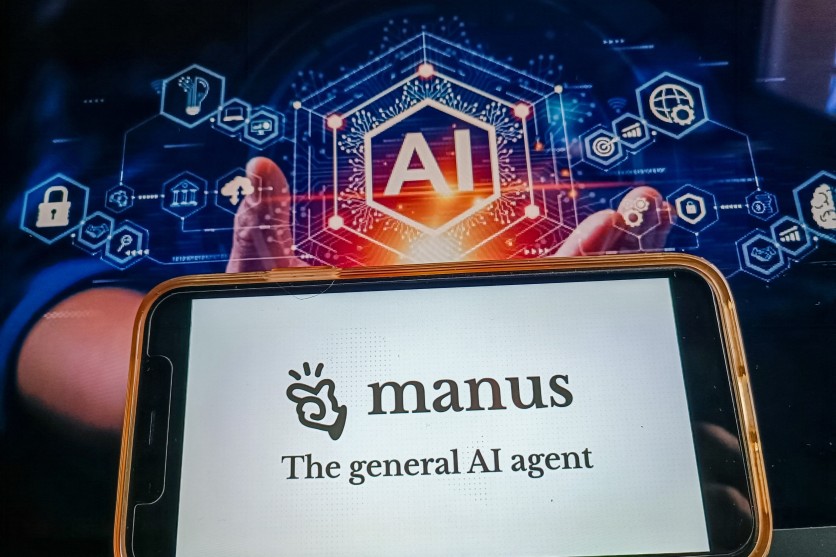
Riccardo Milani / Hans Lucas / AFP via Getty Images
The Chinese autonomous AI agent whose $2 billion acquisition by Meta was blocked by China's own regulators just six months ago is scheduled to explain the future of autonomous AI to 70,000 people tonight at Web Summit 2026, the world's largest technology conference, opening this evening at the MEO Arena in Lisbon, Portugal. The conference runs November 9–12, 2026. The theme is Rebuilding Trust in Tech. The question the conference is implicitly asking is whether trust can be built with technology whose developers are legally required to cooperate with a government that actively prevented that technology from leaving its control.
Web Summit 2026 opens its doors at 4:30 p.m. local time (11:30 a.m. ET) this evening, with Centre Stage programming scheduled to begin at 6:00 p.m. local (1:00 p.m. ET). The main conference runs Tuesday through Thursday, November 10–12, with exhibition halls opening daily from 8:30 a.m. The venue is the MEO Arena and the adjacent Feira Internacional de Lisboa (FIL) exhibition halls in Lisbon's Parque das Nações district. Tickets range from €450 to €4,950 (approximately $491 to $5,396).
What "Rebuilding Trust in Tech" Actually Means This Year
The theme that Web Summit founder and CEO Paddy Cosgrave chose for 2026 would have sounded like abstract brand positioning in almost any prior year. This year it describes a live engineering and policy problem. The conference's most discussed speakers are the co-founders and executives of Chinese AI and robotics companies whose products are commercially compelling, technically sophisticated, and legally subject to China's National Intelligence Law of 2017 — a statute that requires, under Article 7, that any organization or citizen shall support, assist, and cooperate with the state intelligence work in accordance with the law. The U.S. National Counterintelligence and Security Center has stated that PRC laws give Beijing expanded grounds for accessing and controlling data held by companies operating within China's jurisdiction, including through their overseas operations.
That legal condition does not go away because a company moves its headquarters to Singapore, as Manus AI relocated before 2026. It does not go away because a company's product uses local-first data processing, as UBTECH claims for its U1 robot. And it does not go away because Paddy Cosgrave has described this year's Chinese technology presence as the visible leading edge of a global power shift. It is a fixed legal condition of operating within China's jurisdiction — not a risk to weigh against performance benchmarks, but a structural feature of the product.
What China Brings, and What Beijing Keeps
The 2026 edition features an unusually prominent Chinese technology presence on stage. On opening night, Tao Zhang, co-founder and CPO of Manus AI, is scheduled to appear on Web Summit's opening night alongside co-host Casey Lau to discuss what it means for software agents to operate independently of constant human direction.
What the description does not mention: Manus AI is a general-purpose autonomous agent — a software system that accepts a plain-language goal, internally plans the steps, executes them in a cloud-based virtual machine using web browsing, code execution, and file management tools, and returns a finished output without requiring step-by-step human instruction. As Tao Zhang explained at Web Summit Lisbon 2025, Manus operates without predefined workflows; the AI model predicts and executes actions using fundamental tools including file editing, command execution, and web browsing. The enabling technology is the ReAct (Reasoning and Acting) paradigm developed in recent AI research, where a large language model plans each step, executes it via a tool, observes the result, and plans the next — a genuine architectural shift from chatbots (single-turn) and robotic-process automation tools (scripted sequences).
Manus crossed $100 million in annual recurring revenue by December 2025, drawing a reported $2 billion Meta offer. In January 2026, China's Ministry of Commerce opened a technology-transfer investigation into whether the transaction complied with export-control rules. On April 27, 2026, China's NDRC blocked the Manus acquisition and ordered both parties to unwind the deal — the first publicly confirmed use of China's Foreign Investment review authority to unwind an already-completed transaction.
The same government whose regulator blocked Manus AI from being sold to Meta will also be represented on stage at Web Summit 2026: Xiaoxia Qi, Director General of the Bureau of International Cooperation at the Cyberspace Administration of China, is a confirmed speaker.
Also scheduled on stage is Deli Zhao, founder and president of Xpeng Aridge, alongside a planned live demonstration by UBTECH's U1 Pro humanoid robot — one of the first appearances of UBTECH's consumer humanoid line outside China since the company unveiled the U1 in Shenzhen on June 30, 2026. The U1 series, sold under UBTECH's UWORLD consumer brand, is priced from 119,800 to 990,000 yuan (approximately $17,600 to $145,700). The robots stand between 1.60 meters (5.2 ft) and 1.85 meters (6.1 ft). They carry eye cameras, chest sensors, and listening microphones, with emotional AI running locally on a Rockchip RK3588 processor. UBTECH says user data is encrypted locally, with no mandatory cloud uploads.
UBTECH's privacy architecture — local processing, user-controlled data export — is a genuine design choice. It does not remove the structural condition: UBTECH is a Shenzhen-based company subject to China's 2017 National Intelligence Law, 2017 Cybersecurity Law, and 2021 Data Security Law, which collectively require Chinese companies to make data accessible to intelligence services and prohibit refusal. Morgan Stanley projects China's humanoid robot shipments to reach 50,000 units in 2026, up from approximately 13,000 globally in 2025, with the market potentially reaching $15 billion by 2030. Scale makes the question of legal jurisdiction more consequential, not less.
Other Chinese companies confirmed at the 2026 edition include Li Chen (co-founder, Unitree), Dahai Li (CEO, ModelBest), Fei Xu (CMO, Xiaomi Group), Leo Haojun Wang (co-founder and CFO, Pony.ai), Alan Shen (MiniMax), Ling Ge (Chief Investment and Strategy Officer EMEA, Tencent), and William Shi (President, AgiBot Europe). AgiBot A3 and Galbot G1 are listed as speakers — the robots themselves, treated by the conference as principals rather than product demonstrations. Cosgrave described China as a major opening-night theme at a preview press conference on November 5 and confirmed that discussions about a potential Web Summit event in China are underway, though no city, date, or formal announcement has been confirmed.
Has Europe's Tech Moment Arrived? The Most Important Session of the Week
Among the most anticipated sessions of the full conference is "Has Europe's Tech Moment Arrived?" scheduled for Tuesday, November 10, at 11:05 a.m. local time (6:05 a.m. ET) on Centre Stage, where Henna Virkkunen — the European Commission's Executive Vice-President for Technological Sovereignty, Security and Democracy — will appear in conversation with POLITICO's Laura Greenhalgh.
Virkkunen is not a symbolic figure in this conversation. She oversees implementation of the EU's AI Act and the European Commission's Apply AI Strategy, and in June 2026, she unveiled the European Technological Sovereignty Package: a legislative bundle that includes a sequel to the EU's 2023 Chips Act and a new Cloud and AI Development Act. The package aims to triple Europe's data center capacity over the next five to seven years, reduce dependence on US and Asian chip architectures, and establish an EU-wide sovereignty assessment framework for cloud and AI services.
Her position on AI agents is specific: Virkkunen has stated that the EU AI Act already covers agents through its existing provisions on generative AI and risk mitigation, without requiring an update. Her position on AI safety is also specific: in August 2026, she told Finnish broadcaster Yle that the EU considers the possibility of humans losing control of AI to be one of the most serious security risks.
Virkkunen visited Lisbon for Web Summit specifically and to mark the 40th anniversary of Portugal's accession to the European Union (Portugal joined January 1, 1986). She appeared at Web Summit Rio in June 2026, where she announced Brazil as Europe's fifth digital partner — an indicator of the EU's strategy to build a coalition of technology partners aligned with open markets, secure technologies, and rules-based digital governance.
Fusion's Fork in the Road: Which Machines Will Reach a Grid
On Tuesday morning, November 10, Stage 10 hosts what may be the most technically substantive session of the week: three executives from distinct approaches to commercial fusion — Brian Berzin of Thea Energy, Joe Paluska of Commonwealth Fusion Systems, and Zabrina Johal of Zap Energy — will discuss which engineering milestones meaningfully separate a promising machine from one that can supply electricity to a grid.
The timing is not incidental. The global private fusion sector has attracted over $13 billion in investment, with significant rounds closing as recently as June 2026. Commonwealth Fusion Systems has said its SPARC tokamak targets net-energy operation in 2027 — a scientific milestone that would still fall short of commercial power generation. The company's planned commercial reactor, ARC, is not expected to deliver electricity until the early 2030s, with Google committed to purchasing half its output.
Thea Energy, which raised a $100 million Series B in May 2026 and received U.S. Department of Energy certification of its Helios pilot plant design, is pursuing a stellarator architecture the company describes as more tolerant of real-world conditions than conventional tokamaks. Its target: begin construction of a first commercial stellarator power plant before 2030.
Zap Energy, which has raised $327 million and was named to TIME's list of Top GreenTech Companies for 2026, takes the most capital-efficient approach: a sheared-flow stabilized Z-pinch that uses an electric current to create its own magnetic field, compressing plasma without the superconducting magnets that drive costs for other approaches.
The three companies represent genuinely distinct physics bets. What they share is an absence of commercial-scale net energy gain — the fundamental engineering threshold that every fusion company is still working toward.
The Agent Economy: How Software Begins Acting Without Being Told To
The "Age of Agents" session on opening night, and the "Bet on the Foundation, Not the Framework" session on Tuesday featuring Samar Abbas of workflow-orchestration company Temporal, address a shift in what software is architecturally expected to do.
The shift is real and specific. A chatbot responds to a single prompt. An AI agent — Manus AI being the most prominent current example — accepts a goal ("find properties in this area that meet these criteria and compile a comparison document"), then independently plans the intermediate steps (web browsing, data extraction, comparison logic, document generation), executes them in sequence, recovers from failures mid-task, and delivers a finished result. The enabling technical mechanism is the agent loop architecture: a large language model is called repeatedly, each time presented with the current state of the task and a list of available tools (browser, code executor, file manager, API caller), asked to choose the next action, and shown the result before choosing the next one.
This is not automation in the sense of scripted sequences. The agent dynamically reorders its plan when intermediate steps fail. That adaptability is what makes it useful; it is also what makes accountability ambiguous. When an agent operating inside a user's authenticated sessions makes a consequential decision — filing a document, sending an email, spending money through a connected account — the question of who is responsible for that decision (the user who set the goal, the company that built the agent, the developer who deployed it) is entirely unsettled.
Matthew Prince, co-founder and CEO of Cloudflare, is scheduled to discuss where the AI industry goes next in a Tuesday session alongside Anton Osika, co-founder and CEO of Lovable's vibe-coding platform, whose product allows non-engineers to build working applications from text prompts and which the company describes as among the fastest-growing software products in history. Prince has been vocal about the security implications of AI-generated code proliferating across the web — a concern that becomes structurally more urgent as the agent paradigm scales. The Wednesday session "The Future of Enterprise Software Has No Middleman," again featuring Osika, confronts the downstream question directly: when enterprise teams use AI to build internal tools, who is responsible for maintaining, securing, and governing the software when the person who prompted it goes on leave?
HaDEA Workshop: European Funding for Sovereignty Projects
The European Health and Digital Executive Agency (HaDEA) will host a digital sovereignty workshop on Wednesday, November 11, at 3:30 p.m. local time (10:30 a.m. ET) in Pavilion 4, led by HaDEA Head of Department Hervé Dupuy and Head of Unit Silke Obst.
Four EU-funded projects will present: Anton Koval will describe PERSEPHONE, which develops autonomous robotic systems to make critical raw material extraction safer and more sustainable. Manolis Marazakis will present RISER, an open-source RISC-V-based European cloud infrastructure initiative designed to reduce European dependence on US and Asian chip architectures — one of the more concrete infrastructure implementations of the sovereignty agenda Virkkunen will discuss on Tuesday. Susana Otero Belmar will present AI-TranspWood, which applies AI to develop transparent wood materials for construction and electronics applications. Jorge Fernandes will describe GreenChips-EDU, a program building the next generation of European microelectronics experts with a focus on sustainable semiconductor design.
HaDEA representatives and project teams are also expected to be available throughout the week at stand E418 in Pavilion 4.
PITCH: What Startups Have to Clear to Compete
PITCH is Web Summit's flagship startup competition. In 2026, 105 startups — selected from thousands of applicants — are expected to compete across group rounds on Day 1, with the field narrowing to semi-finals and a final on the closing day, Thursday, November 12.
Eligibility requirements are strict: competing startups must have raised less than €5 million (approximately $5.45 million) in total funding and must not have made a discernible change to their business model in the previous three years. Each pitch is three minutes, followed by a three-minute Q&A from independent investor judges.
The 2026 field is expected to include companies spanning health technology (BloodFlow, Carevision), aquatic robotics (AquaX Robotics), and renewable energy infrastructure (River Energy Generator B.V.). Past PITCH winners include Wayve (2018, now a prominent autonomous vehicle company), Theneo (2022), Intuitivo (2024, Portuguese), and Granter (2025, Portuguese).
Investor Infrastructure: Why 2,000+ VCs Come to Lisbon Every November
The 2026 edition claims more than 2,000 registered investors, including partners from tier-1 global funds, attending under a dedicated investor pass that includes structured 15-minute pre-scheduled meetings with exhibiting startups. Confirmed investor speakers include Philippe Botteri of Accel Partners, Albert Wenger of Union Square Ventures, and Eric Acher, founder of Brazilian venture firm Monashees.
The Night Summit extends deal-making opportunities beyond the formal matchmaking infrastructure, encompassing DJ sets, networking gardens, speed-networking sessions, karaoke events, and private dinners across Lisbon venues through the week.
Logistics and Practical Guide
Venue: MEO Arena (opening night and main conference stage) and FIL — Feira Internacional de Lisboa, Rossio dos Olivais, Parque das Nações, Lisbon.
Schedule: Monday, November 9 (Opening Night, 6:00–8:00 p.m. local / 1:00–3:00 p.m. ET, with Night Summit afterward); Tuesday–Thursday, November 10–12 (main conference, 8:30 a.m.–5:00 p.m. local / 3:30 a.m.–midnight ET, plus Night Summit events).
Official programme: official Web Summit schedule
HaDEA at Web Summit: Stand E418, Pavilion 4; workshop on November 11 at 3:30 p.m. local time (10:30 a.m. ET).
On-site parking: Available for approximately 1,200 vehicles at €12 per day (approximately $13).
Frequently Asked Questions
What is happening at Web Summit 2026 that is different from prior years?
The 2026 edition features the most visible Chinese technology presence in the conference's history — executives from UBTECH, Manus AI, AgiBot, Galbot, Unitree, Pony.ai, Tencent, Xiaomi, and MiniMax are all confirmed speakers, alongside a director-general from China's Cyberspace Administration. What makes this edition different is not just who is on stage, but what it reveals: Manus AI, the autonomous AI agent whose $2 billion acquisition by Meta was blocked by China's NDRC in April 2026, will be discussing the future of autonomous AI at the world's largest Western tech conference. The conference theme — Rebuilding Trust in Tech — is in direct dialogue with that reality.
What is an AI agent, and why does the "Age of Agents" session matter?
An AI agent is software that accepts a goal — not just a question — and independently plans and executes the steps needed to achieve it, dynamically adapting when intermediate steps fail. This is architecturally distinct from chatbots (which respond to a single prompt) and from scripted robotic-process automation (which follows fixed sequences). Manus AI is the highest-profile example: it runs in a cloud virtual machine, browses the web, writes and executes code, manages files, and returns a finished document or action — without per-step human approval. The governance question the session raises, and does not resolve, is who bears legal accountability when an agent operating inside authenticated user accounts makes a consequential decision.
What is the status of European tech sovereignty, and what can Virkkunen actually do about it?
As of November 2026, Virkkunen has unveiled the European Technological Sovereignty Package — including a Chips Act 2.0 and a Cloud and AI Development Act that aims to triple Europe's data center capacity over five to seven years — but these proposals still require approval from the European Parliament and the Council of the EU. The EU AI Act is in force and covers AI agents under Virkkunen's reading, but enforcement of key provisions has been delayed following industry complaints. The gap between Europe's regulatory ambition and its industrial capacity is the precise question Tuesday's session will address.
Does China's National Intelligence Law apply to the Chinese technology companies speaking at Web Summit?
Yes. China's National Intelligence Law of 2017, specifically Article 7, requires any organization or citizen to support, assist, and cooperate with national intelligence work in accordance with the law. The U.S. National Counterintelligence and Security Center has stated this obligation extends to Chinese companies and their overseas operations. This legal condition applies to UBTECH (Shenzhen), AgiBot, Galbot, Unitree (Hangzhou), Manus AI (Chinese-founded, Singapore-registered), Tencent, Xiaomi, MiniMax, ModelBest, and Pony.ai. UBTECH's claim that its U1 robot processes data locally does not alter the company's legal obligations under Chinese law; it reduces the data available to be requested, which is not the same as removing the obligation.

-
 C114 Communication Network
-
 Communication Home
