
 Search

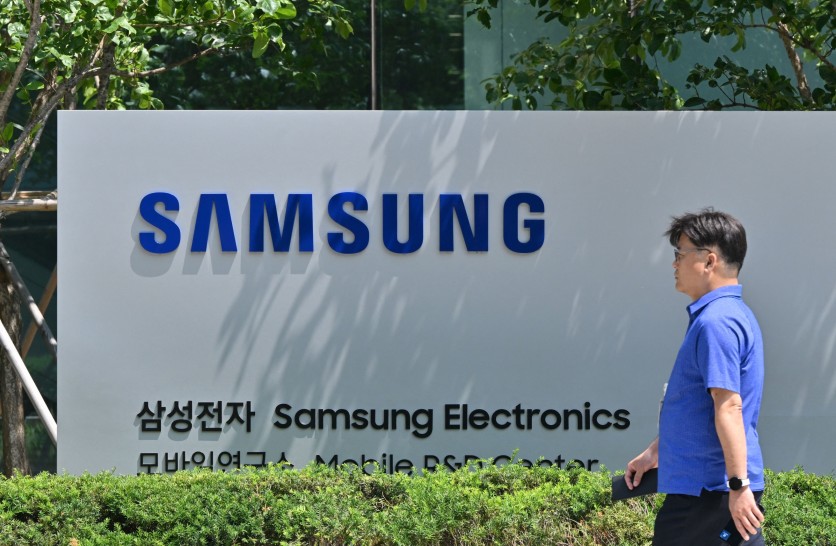
A man walks past the logo of Samsung Electronics at the company's headquarters in Suwon on June 13, 2023. JUNG YEON-JE/AFP via Getty Images
Samsung Electronics' full second-quarter 2026 results — released Wednesday night KST — landed with a detail that its July 7 preliminary guidance had quietly concealed: while the semiconductor division delivered the most profitable quarter in the company's history, the Galaxy mobile division posted an operating loss. The divergence reframes what looked like a triumphant earnings story into a more complicated picture of a company whose core consumer business is being squeezed by the same memory market dynamics that are making its chip division rich.
The timing matters. Samsung released its full results as South Korea's KOSPI index closed out two brutal sessions — down 10.84% on July 28 and 5.98% on July 29 — that together erased approximately ₩396 trillion (approximately $271 billion) in combined Samsung Electronics and SK Hynix market value. For investors already asking whether the AI memory supercycle can last, the knowledge that Samsung's consumer electronics business is running at a loss while memory profits are at record highs should focus attention on a question the preliminary guidance papered over: how much of Samsung's record quarter is structural, and how much is cyclical?
The arithmetic at the heart of Samsung's Q2 is stark. The DS Division generated ₩89.2 trillion in operating profit while the rest of the company — mobile, display, consumer electronics, and networks combined — generated roughly zero. That concentration is both the story of the quarter and the central risk for the second half.
Read more: KOSPI Triggers Historic Back-to-Back Circuit Breakers as AI Memory Rally Faces Structural Reckoning
What Samsung's Full Results Actually Reveal
The Device Solutions (DS) Division — Samsung's semiconductor arm — set all-time quarterly records in both revenue and operating profit. DS Division revenue reached ₩127.5 trillion (approximately $87.3 billion), a 56% increase from the prior quarter, with operating profit of ₩89.2 trillion (approximately $61.1 billion). Those figures represent the entire history of Samsung's chip business compressed into a single three-month period.
The MX and Networks businesses — which include Samsung's Galaxy smartphones, tablets, and network equipment — posted consolidated revenue of ₩33.2 trillion (approximately $22.7 billion) and recorded an operating loss of ₩0.7 trillion (approximately $480 million). Revenue grew year-over-year, driven by Galaxy S26 and Galaxy A series sales, but elevated component costs across the industry consumed more than it earned. Samsung Display Corporation (SDC) contributed ₩7.5 trillion (approximately $5.1 billion) in revenue and ₩0.7 trillion (approximately $480 million) in operating profit — essentially flat. Consumer Electronics (VD and DA) posted ₩14.5 trillion (approximately $9.9 billion) in revenue and a slight operating loss.
At the consolidated level, Samsung reported quarterly revenue of ₩171.5 trillion (approximately $117.5 billion) — another all-time high — and operating profit of ₩89.5 trillion (approximately $61.3 billion), its strongest ever. Earnings per share rose 52% to KRW 10,849. The company's July 30 press release described the Memory Business as having "achieved another record-breaking quarter by proactively addressing AI demand despite limited capacity with a primary focus on server products."
Why Memory Is Making Money While Mobile Loses It
The explanation for the divergence is structural and tied directly to the same AI semiconductor cycle driving the KOSPI's collapse.
Samsung and SK Hynix have been redirecting wafer production capacity toward high-bandwidth memory (HBM), the specialized AI chip architecture that commands margins far exceeding commodity DRAM. Every wafer redirected to HBM production removes the manufacturing equivalent of three to four conventional DRAM units from market supply, as Samsung's own July 30 results noted. The effect is deliberate and profitable for the semiconductor division: commodity DRAM prices have remained elevated through the first half of 2026 precisely because supply is tight.
For the Galaxy division, however, commodity DRAM and NAND flash are inputs, not outputs — and those inputs are priced at rates elevated by Samsung's own capacity decisions. The MX division's operating loss reflects component costs rising faster than Samsung can pass them through to Galaxy buyers competing against Apple, Xiaomi, and other premium handset manufacturers. Samsung's press release acknowledged that MX earnings "declined due to elevated component cost pressures across the industry" and that the company will "pursue efficiency initiatives to mitigate the impact of rising costs" in the second half.
HBM is the mechanism. In a standard commodity DRAM chip, memory sits flat on a circuit board and moves data along electrical pathways at approximately 51 gigabytes per second. In an HBM stack, multiple DRAM dies — up to 12 in current HBM3E and HBM4 configurations — are thinned, bonded vertically, and connected through tens of thousands of through-silicon vias (TSVs), microscopic copper channels punched precisely through each silicon layer. The resulting package is placed directly beside an AI accelerator on a shared silicon interposer, delivering bandwidth of approximately 1.2 terabytes per second — roughly 23 times faster than DDR5.
That bandwidth is what Nvidia's H100 and B200 AI accelerators require to function at full capacity. It is also what cannot be substituted with cheaper alternatives. The premium is enormous: SK Hynix reported a 76% operating margin in its Q2 HBM-weighted business, a figure that surpasses Nvidia's own margins in the same period. Samsung's equivalent DS margin in Q2 2026 was approximately 70%. Nothing else in either company's product portfolio operates near those levels.
The tradeoff is that every dollar of capacity committed to HBM is a dollar not producing the commodity DRAM that Samsung's mobile division buys.
SK Hynix's Record Quarter That Still Missed
The context for Samsung's results is Wednesday's session in Seoul, where SK Hynix's own record results triggered the KOSPI's second consecutive circuit breaker — the first time in the exchange's history that back-to-back daily circuit breakers have fired.
SK Hynix reported Q2 2026 operating profit of ₩60.54 trillion (approximately $41.5 billion), a 557% increase year-over-year, on revenue of ₩79.32 trillion (approximately $54.3 billion), a 257% increase. The operating margin reached 76% — an all-time record for any memory chipmaker. None of it was enough: analyst consensus had expected approximately ₩64 trillion (approximately $43.8 billion) in operating profit and ₩84 trillion (approximately $57.5 billion) in revenue. SK Hynix missed both by more than 5%.
The miss was technical rather than structural. Next-generation HBM4 mass production shipments began in Q2, but ramped more slowly than analyst models assumed, pushing some revenue recognition into the second half of 2026. Management said on the earnings call that demand from major customers continues to exceed supply, that approximately ten long-term supply agreements have been completed with volume commitments, price-stabilization mechanisms, and financial deposits, and that AI infrastructure spending is broadening toward agentic AI use cases rather than plateauing.
"Our major customers are still requesting more memory supply," said Song Hyeon-jong, SK Hynix's President of Corporate Center, on the earnings call.
For investors, however, the mechanism that produced the selling is well-documented: a stock priced for a result beyond perfect will fall even on a result that is merely historic. Han Ji-young, a researcher at Kiwoom Securities, offered a blunter explanation of Wednesday's crash: "The essence of today's plunge is that, as expectations for a rebound following the 10% drop the previous day retreated, most shareholders are locking in losses and triggering panic selling," Han told the Seoul Economic Daily.
How Leverage Turned a Correction Into a Crisis
The depth of the two-day selloff cannot be understood without the role of single-stock leveraged exchange-traded funds, financial products introduced to the Korean market on May 27, 2026, that deliver twice the daily return of individual stocks including Samsung Electronics and SK Hynix.
South Korean retail investors poured a net ₩14 trillion (approximately $9.6 billion) into these products, compared with roughly ₩2 trillion (approximately $1.4 billion) from foreign institutional investors, according to KB Financial Group data. As of July 13, Goldman Sachs estimated that more than 1.2 million retail leveraged credit accounts in South Korea — approximately one in every 30 South Korean adults — had received margin calls, with between 320,000 and 360,000 accounts forcibly liquidated by brokerages. Those figures predate the further declines on July 28 and 29.
The KODEX SK Hynix Single Stock Leverage ETF fell more than 80% from its June 23 peak. SK Hynix stock itself fell approximately 40-50% from its peak over the same period — the leveraged product's daily-compounding mechanism amplified both the decline and the recovery hurdle. Wee Khoon Chong, Asia-Pacific macro strategist at BNY in Hong Kong, assessed the situation directly: "Today's price action suggests that the leverage within Korean equities remains high and a further unwind could be expected. If you look at what is falling in the market, it has been the stocks in which you have the most leverage," Wee told Bloomberg.
Government Scrambles to Contain the Damage
The human toll has been visible. Retail investors placed funeral wreaths outside South Korea's National Assembly. Finance Minister Koo Yun-cheol appeared before a parliamentary inquiry on July 29 and apologized for the government's decision to allow single-stock leveraged ETFs to come to market, acknowledging that officials had not fully considered how the products would perform after launch.
Following an emergency meeting with the heads of all major financial authorities — including the Bank of Korea governor and the Financial Services Commission — the government announced it would impose additional curbs on these products, including a potential cap limiting any individual's investment in single-stock leveraged ETFs to 20% of their total investment portfolio. Legal grounds for government intervention in extreme volatility conditions would also be established. The Bank of Korea had already raised its benchmark interest rate from 2.50% to 2.75% in July — its first rate hike since early 2023 — as a response to elevated market conditions.
South Korea had announced plans for a nationwide debt counseling hotline as part of an Economic Crisis Family Suicide Prevention Plan before the latest market turmoil.
China's Role in the Commodity DRAM Equation
While the immediate triggers for the two-day crash were SK Hynix's earnings miss and the structural shocks that preceded it, the longer-term threat to Samsung's bifurcated profit model runs through China's semiconductor ambitions.
ChangXin Memory Technologies (CXMT) debuted on Shanghai's STAR Market on July 27 after raising ¥57.92 billion yuan (approximately $8.6 billion) in Asia's largest IPO of 2026. Shares surged approximately 466% on the first day, briefly making CXMT the most valuable company listed on a mainland Chinese exchange at approximately ¥3.3 trillion yuan (approximately $488 billion). The capital is earmarked primarily for commodity DRAM capacity expansion.
Simultaneously, a state-backed Shanghai manufacturer began delivering China's first domestically produced immersion deep ultraviolet (DUV) lithography machines — using a 193-nanometer laser and a water-film medium to achieve circuit patterns at the 28-nanometer to 7-nanometer class through multipatterning. ASML, the Dutch monopoly supplier, produces approximately 130 such systems per year; China's initial output is five units in 2026, scaling toward 20 in 2027. Independent analysts including TrendForce confirmed the domestic systems currently lag ASML's on yield, throughput, and reliability.
Neither development immediately threatens SK Hynix's position in high-bandwidth memory, where CXMT holds essentially no commercial production. But CXMT's commodity DRAM capacity expansion — at a moment when Samsung and SK Hynix have redirected their own capacity toward premium HBM — could eventually suppress the commodity DRAM pricing environment that has been supporting Samsung's DS margin and inflating MX division costs simultaneously.
The internal contradiction in Samsung's business model is therefore time-bound: if CXMT's expansion brings commodity DRAM prices down, the DS margin compresses while the MX margin improves. The question is whether that repricing happens before or after the HBM cycle matures to a point where Samsung can sustain DS margin even with commodity prices lower.
Read more: Samsung, SK Hynix Plunge as China's DUV Lithography Machines Enter Service
What Investors Still Don't Know
Samsung will hold its Q2 2026 earnings call at 10 a.m. KST on July 30, which will provide the first opportunity for management to comment publicly on the mobile division's operating loss and the company's strategy for the second half. The preliminary guidance released July 7 showed only consolidated figures; Wednesday's full results are the first disclosure of the fracture between divisions.
For the KOSPI, the immediate outlook turns on whether Samsung's full results — confirming DS records while revealing MX losses — provide a cleaner picture for institutional investors than the preliminary guidance did, or whether the mobile operating loss adds a new layer of concern to what was already a market in the middle of a forced deleveraging cycle.
Wee at BNY warned that further unwinds remain possible as long as leverage remains elevated. On the fundamental side, Samsung's DS guidance for the second half projects continued demand growth centered on AI server products, HBM4 scaling, and DRAM supply that remains tight relative to demand. The company expects the market to remain undersupplied despite partial demand moderation in mobile and PCs — a forecast that, if accurate, would keep DS margins strong even as MX faces continued cost pressure.
What Samsung's Q2 full results confirm is that the AI memory cycle is not merely driving South Korea's stock market — it is now structurally sustaining one of the world's largest companies while leaving that company's consumer electronics businesses in the red.
Exchange rates as of July 29-30, 2026; conversions are approximate. Korean won figures use a rate of approximately ₩1,460 per $1 USD. The yuan/USD figure uses approximately ¥6.76 per $1 USD as of July 29, 2026.
Frequently Asked Questions
Why did Samsung's mobile (Galaxy) division post an operating loss in its most profitable quarter ever?
Samsung's Device Solutions (DS) semiconductor division and its MX mobile division face opposite sides of the same memory market dynamics. The DS division benefits when memory prices rise, because it sells DRAM, NAND, and HBM chips at those elevated prices. The MX division is harmed by rising memory prices, because it buys DRAM and NAND as inputs for Galaxy smartphones and tablets. Samsung and SK Hynix have deliberately redirected wafer capacity toward high-bandwidth memory (HBM) for AI applications, reducing commodity DRAM supply and keeping prices elevated. That capacity decision makes DS extremely profitable — and makes MX's component costs too high to earn a profit at current smartphone prices. Samsung's own press release acknowledged that MX earnings "declined due to elevated component cost pressures across the industry." In a fully integrated company, one division's pricing power is another division's cost problem.
Does Samsung's mobile operating loss signal a broader consumer tech slowdown?
The mobile operating loss is primarily a cost structure problem rather than a demand problem. Samsung's MX revenue grew year-over-year, driven by Galaxy S26 series sales and strong Galaxy A series momentum — consumers are still buying Samsung phones. The issue is margins: elevated DRAM and NAND prices, driven by the same AI memory cycle that is enriching the DS division, are compressing what MX can earn on each device sold. Samsung's H2 2026 guidance for MX includes "efficiency initiatives to mitigate the impact of rising costs" and a focus on flagship products, which carry higher margins. If commodity memory prices moderate — either through CXMT's capacity expansion or through Samsung and SK Hynix reallocating capacity back to commodity — MX margins should recover.
How does Samsung's DS division's record profit relate to South Korea's KOSPI crash?
Samsung and SK Hynix together account for roughly half of the KOSPI's total market capitalization — making the Korean benchmark, in structural terms, a leveraged bet on two companies. When those two stocks decline sharply, as they did on July 28 (-13%+) and July 29 (-5-10%), the index falls nearly as far. The crash is not primarily a reflection of Samsung's business fundamentals — the DS results are genuinely extraordinary — but of what those results mean relative to what the market had priced in. A 76% operating margin for SK Hynix that still missed analyst consensus by 6.6% is a structural paradox specific to "priced for perfection" valuations. Samsung's full Q2 results, which confirm that the company's profitability is even more concentrated in semiconductor chips than the preliminary guidance suggested, reinforce rather than resolve that concentration risk.
What is high-bandwidth memory, and why can South Korea's competitors not simply copy it?
High-bandwidth memory (HBM) is a fundamentally different architecture from conventional DRAM. Rather than flat chips arrayed on a circuit board, HBM stacks multiple DRAM dies vertically — up to 12 layers in current configurations — and connects them through tens of thousands of through-silicon vias (TSVs), microscopic copper channels etched precisely through each silicon layer. The stack is placed directly beside the AI processor on a shared silicon interposer, delivering memory bandwidth of approximately 1.2 terabytes per second versus approximately 51 gigabytes per second for DDR5 — a roughly 23-fold advantage. The manufacturing complexity — stacking 12 thinned dies with sub-micron precision, achieving yield across the full stack — is what makes HBM a durable competitive moat. China's CXMT holds less than 2% of its wafer capacity in HBM production as of mid-2026 and is targeting mass production of HBM3E (one to two generations behind the current HBM4) at the earliest in 2027. The barrier is not simply equipment access — it is the accumulated yield, tooling, process chemistry, and engineering ecosystem that SK Hynix and Samsung have built over a decade of HBM development.

-
 C114 Communication Network
 -
 Communication Home
