
 Search

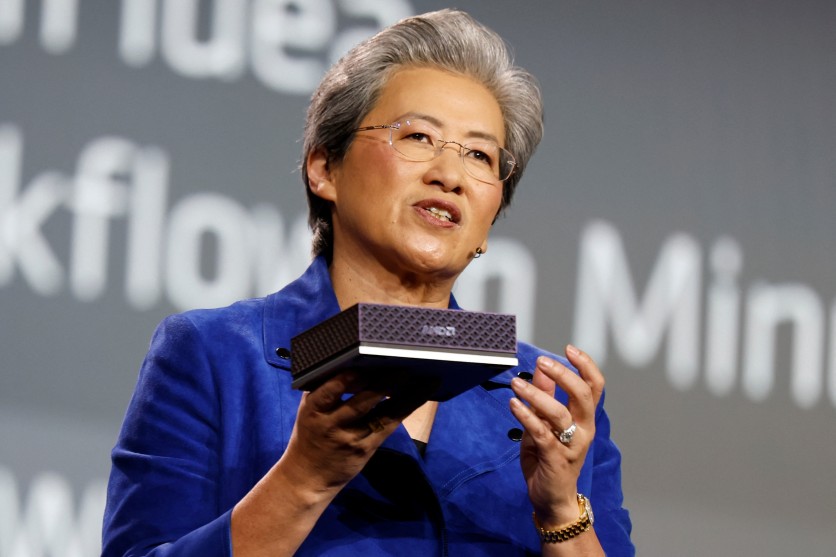
Lisa Su, chair and chief executive officer of Advanced Micro Devices Inc. (AMD), holds up the AMD Ryzen AI Halo, an AI developer platform, during an AMD news conference ahead of the annual Consumer Electronics Show in Las Vegas, Nevada, on January 5, 2026. Caroline Brehman/AFP via Getty Images
AMD's Ryzen 7 7700X3D went on sale globally today at $329 — bringing the same 96MB stacked L3 cache that made the Ryzen 7 7800X3D the dominant gaming processor of recent years to PC builders who have been priced out of the flagship bracket. Buyers who need to act now have a same-day decision: a chip that surrenders clock speed but not cache capacity versus an ecosystem where DDR5 memory prices have climbed to four times their 2025 floor and show no sign of retreating before 2028.
AMD Ryzen 7 7700X3D Hits Retail at $329 Worldwide
AMD formally announced the Ryzen 7 7700X3D at Computex 2026 in June, and today's global launch makes it available at every major retailer. The price is $329 — $120 below the Ryzen 7 7800X3D's $449 original launch price, and well above the current market floor of roughly $370 for the 7800X3D itself, which has rarely dipped below $350 in its retail life.
At its core, the 7700X3D is a lower-binned sibling of the 7800X3D: an eight-core, 16-thread Zen 4 chip on Socket AM5 with a 120W TDP, sharing the same 96MB of stacked L3 cache (104MB total including all L2) while running slower clocks. AMD's David McAfee, CVP and GM of the company's client channel, presented the chip at Computex as a direct response to the ongoing cost pressures on PC gaming.
The launch arrives alongside an acknowledgment from AMD's own leadership that DDR5 memory — the only type AM5 accepts — is in the grip of a structural shortage AMD expects to last until approximately 2028, driven by AI data center demand pulling production capacity away from consumer DRAM. A 32GB DDR5-6000 kit that sold for under $100 in early 2025 now costs $390 to $440 at US retailers. That context makes the 7700X3D's unusual insulation from memory speed — explained below — more than a spec footnote.
Read more: Ryzen 7 5800X3D Returns June 25 at $349: AMD's DDR4 Lifeline vs $329 7700X3D Buying Guide
How 3D V-Cache Stacking Actually Works
Understanding what the 7700X3D costs and what it keeps requires understanding the specific manufacturing method AMD uses — because the mechanism explains both the performance advantage and the tradeoff buyers are accepting.
Standard Zen 4 desktop chips carry 32MB of L3 cache integrated into each compute chiplet (CCD). AMD's 3D V-Cache technology bonds a separate 64MB SRAM die directly on top of that chiplet using TSMC's SoIC (System on Integrated Chips) process: a copper-to-copper hybrid bonding technique that eliminates traditional solder microbumps, connects the two dies at a 9-micrometer pitch, and achieves an inter-die data transfer rate of roughly 2 TB/s. The two cache pools are logically unified — the CPU's cores see a single 96MB L3 cache and require no software changes to use it.
The reason this matters for gaming is numerical: on-die L3 cache operates at roughly 49 CPU cycles of latency, while DDR5 system memory sits at roughly 354 cycles — five to seven times slower. Modern games hammer the CPU with scattered, latency-sensitive requests: physics simulations, NPC pathfinding, draw call generation, world-state data for large open environments. When that working set fits in 96MB of on-die cache, the cores avoid slow round-trips to system memory. The result is why X3D chips with modest clocks routinely outperform higher-clocked non-X3D parts in frame-rate tests — cache hit rate, not frequency, is the dominant variable.
Third-party benchmarking has consistently placed AMD X3D chips 15 to 25% ahead of comparable Intel parts in gaming frame rates, with the advantage reaching 30% in simulation and strategy titles where large world-state data must be held in fast cache.
What the 7700X3D Gives Up — and Why It Cannot Be Changed
Here is the tradeoff buyers must understand before purchasing: the 7700X3D's boost clock tops out at 4.5 GHz, against the 7800X3D's 5.0 GHz — a 500 MHz deficit that analysts estimate will translate to a nominal 5% gaming performance gap on average. On a spec sheet this appears tunable. It is not.
The reason is architectural. The first-generation V-Cache design — used by the 5800X3D, 7700X3D, and 7800X3D — places the stacked SRAM die on top of the compute chiplet. The thermal path runs: cooler → IHS → SRAM die → compute cores. The cache die acts as an insulating layer between the cooler and the cores it is supposed to cool. This limits how much voltage the cores can sustain and caps their thermal headroom. To protect the stacked die, AMD also locks the clock multiplier on all first-generation X3D chips — no manual overclocking is possible.
The clock deficit between the 7700X3D and 7800X3D exists because AMD's silicon binning process selected compute dies that didn't pass frequency validation at 5.0 GHz for the 7800X3D. Those same dies, paired with the identical 96MB cache stack, become the 7700X3D. The cache is the same; the silicon underneath cleared a lower frequency bar. AMD used this identical strategy with the Ryzen 7 5700X3D on AM4 — a lower-binned Zen 3 die plus the same full V-Cache stack at a friendlier price.
AMD's second-generation V-Cache design, introduced with the Ryzen 7 9800X3D, solved the thermal problem by inverting the stack: the SRAM die now sits beneath the compute chiplet, giving the IHS direct access to the cores. The 9800X3D boosts to 5.2 GHz and supports overclocking. The 7700X3D's 4.5 GHz ceiling is a permanent characteristic of its first-generation architecture, not a setting that can be changed in BIOS.
How Much Does the Clock Gap Cost in Practice?
The ~5% expected gaming deficit is an estimate derived from the clock differential, not yet confirmed by independent benchmark data — AMD has not published gaming performance figures for the 7700X3D, and independent reviews were under embargo ahead of today's launch. Hardware analysts at TechPowerUp expect the chip to land "a few percentage points slower than the 7800X3D, which in turn was about 5% slower than the 9800X3D," and commentary from multiple reviewers described clock speed reductions as "likely to matter far less in practice than the spec sheet suggests" because the 96MB cache carries the performance workload regardless of which die underneath it.
The counterargument comes from Tom's Hardware, which notes that Intel's Core Ultra 7 270K Plus is available at the same $329 price point and delivers more than twice the application performance of X3D parts — at the cost of trailing X3D chips by roughly 10% in gaming frame rates. For a builder who games and also renders video, codes, or runs productivity workloads, the Intel alternative at the same price warrants serious consideration.
Memory Sensitivity: Where X3D Chips Have an Unusual Advantage
One factor that makes the 7700X3D specifically well-suited to the 2026 market is its reduced sensitivity to DDR5 memory speed. AMD has confirmed that Ryzen X3D chips show "virtually no performance variation across common memory configurations", because the 96MB on-die cache shields the cores from most of the latency difference between a cheap DDR5-6000 kit and an expensive high-frequency alternative. Historical benchmarking showed only approximately seven average FPS difference between standard and premium DDR5 on a 7800X3D system in a demanding game at 1080p.
For context: 32GB of DDR5-6000 with AMD EXPO support is the current recommended configuration for an AM5 gaming build. At the July 2026 market rate of $390 to $440 for a 32GB kit, buyers do not need to chase expensive high-frequency memory to extract this chip's gaming ceiling — a meaningful practical saving.
Read more: Steam Hardware Survey June 2026: Windows 11 Tops 70%, AMD Closes In on Intel
Who Is This CPU For?
Three buyer profiles emerge from the specifications and market context.
Gamers building a first AM5 system on a mid-range budget find the 7700X3D compelling: it is the cheapest globally available entry point into eight-core X3D gaming on AM5, carries the same cache that drives gaming performance, and slots into any B650, B850, X670, or X870 motherboard with a BIOS update.
Existing AM5 users on non-X3D Ryzen 7000 chips get a direct drop-in upgrade that delivers the full first-generation V-Cache experience without replacing the motherboard or buying new memory — the combination of eight cores and 96MB L3 is documented to outperform higher-clocked chips that lack the cache stack.
Gamers on older platforms evaluating a platform switch will need to factor in the cost of a new AM5 motherboard plus DDR5 memory, which at current pricing makes the total platform investment significantly higher than the CPU price suggests. The recently released Ryzen 7 5800X3D 10th Anniversary Edition at $349 — which works in existing AM4 motherboards with DDR4 memory already installed — may represent a more cost-effective path if the goal is gaming performance without a full platform rebuild.
AM5 Platform Commitment Through 2029 Extends the Investment Case
Alongside the 7700X3D launch, AMD's extended platform commitment adds long-term value to any AM5 purchase made today. At Computex 2026, AMD confirmed that Socket AM5 will receive new Ryzen processors through at least 2029 — an extension from the prior "2027 and beyond" pledge, and notably without the hedging "+" suffix that qualified earlier commitments.
AMD VP David McAfee indicated the company will not move to a new socket until DDR6 and PCIe 6.0 support justify the cost. The practical implication for a buyer purchasing an AM5 motherboard today: the board will support at least Zen 6 and potentially Zen 7 before any socket transition, meaning the 7700X3D can serve as a starting point for a platform that has multiple CPU generations of upgrade life remaining.
This mirrors AMD's approach with AM4, which supported processors spanning from the original Zen architecture through the Zen 3-based Ryzen 5000 series — a roughly five-year window across multiple CPU generations on a single socket. The AM5 timeline through 2029 projects a similar span from the platform's 2022 introduction.
Frequently Asked Questions
Is the Ryzen 7 7700X3D worth buying today, or should I wait for independent benchmarks?
No independent review benchmarks are confirmed at time of writing — AMD's embargo was expected to lift on launch day. The chip's architecture is well-understood (it is a lower-binned 7800X3D die with the same 96MB cache stack), and pre-launch analysis from multiple hardware outlets projects a gaming performance deficit of roughly 5% versus the 7800X3D. Whether that gap is worth a $120 saving depends on your use case: pure gamers will likely find the 7700X3D delivers the X3D experience at a real-world discount; buyers with significant productivity workloads should compare it against the Intel Core Ultra 7 270K Plus at the same price, which offers more than twice the application performance.
Does the Ryzen 7 7700X3D support overclocking?
No. The 7700X3D uses AMD's first-generation 3D V-Cache design, which places the stacked SRAM die on top of the compute chiplet. This creates a thermal barrier between the cooler and the processor cores, limiting voltage and thermal headroom. AMD locks the clock multiplier on all first-generation X3D chips as a result — the 4.5 GHz boost ceiling is a permanent characteristic of the chip's architecture, not a configurable setting. Buyers seeking an overclockable X3D processor should consider the Ryzen 7 9800X3D, which uses a second-generation design with the cache die placed beneath the cores, enabling both higher clocks and overclock support.
What motherboard and memory do I need for the Ryzen 7 7700X3D?
Any AM5 motherboard — B650, B850, X670, or X870 — supports the 7700X3D, typically after a BIOS update. The platform requires DDR5 memory; AMD recommends DDR5-6000 with EXPO support as the performance sweet spot, and because X3D chips are highly insulated from memory speed variation (the 96MB on-die cache absorbs most latency differences), buyers do not need expensive high-frequency kits to reach this chip's gaming ceiling. At July 2026 pricing, a 32GB DDR5-6000 EXPO kit costs $390 to $440 at US retailers.
How does the Ryzen 7 7700X3D compare to the Ryzen 7 9800X3D?
The 9800X3D is architecturally different and significantly faster. It uses AMD's second-generation V-Cache design (cache under the die), carries Zen 5 cores with higher per-clock performance, boosts to 5.2 GHz, and supports overclocking. Independent benchmarking has placed the 9800X3D roughly 5% ahead of the 7800X3D on average, and 9–10% ahead in titles with the largest cache benefits. The 7700X3D will trail the 9800X3D by a larger margin than it trails the 7800X3D. For builders whose budget allows it, the 9800X3D is the stronger long-term choice; the 7700X3D is the value entry point into the V-Cache ecosystem, not a competitor to the current-generation flagship.

-
 C114 Communication Network
 -
 Communication Home
