
 Search


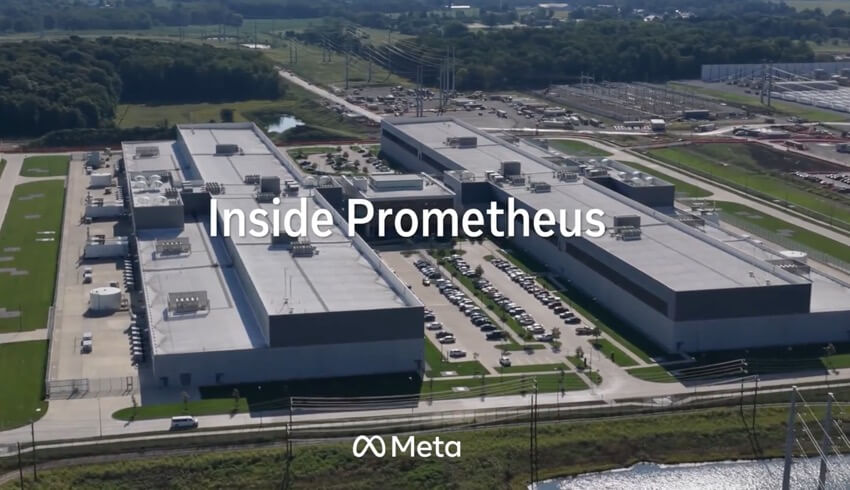
Meta Platforms is raising new equity to help pay for its AI infrastructure buildout. The plan starts with approximately $35 billion in concurrent underwritten public offerings: approximately $22.5 billion of Class A common stock sold under forward sale agreements, and approximately $12.5 billion in depositary shares (250 million shares, each a 1/20th interest in newly issued Series A Mandatory Convertible Preferred Stock). Underwriters have 30-day options on up to an additional 37.5 million depositary shares and up to an additional $3.375 billion of Class A common stock. Meta also plans an approximately $60 billion at-the-market (ATM) program for its previously announced Class C common stock. It does not expect that program to start until the first quarter of 2027, after Class C trading begins. Meta cautions that it “has not entered into any agreement with respect to any such program, and the timing, size and terms of any such program, if established, have not been determined.” Meta’s 2026 capital expenditure guidance is $135 to $145 billion. The company reported $97 billion of operating cash flow in the first three quarters of 2026 and approximately $82 billion of cash, cash equivalents and marketable securities at the end of the third quarter. It describes the equity as complementary to operating cash flow, investment-grade debt and strategic partnerships.
Three of Meta’s silicon suppliers are named as cornerstone investors. NVIDIA, AMD and Broadcom “have, severally and not jointly, indicated an interest in purchasing up to an aggregate of $5.0 billion of shares of Class A Common Stock” at the same price and terms as other buyers. Meta notes that these indications “are not binding agreements or commitments to purchase.” On Oct. 27, NVIDIA and AMD put figures on their participation. NVIDIA said it “will invest $3 billion in Meta’s equity offering,” and AMD said it “will invest $1 billion.” Broadcom’s role appears only in Meta’s release, which lists it among the cornerstone investors but does not give an individual amount. The preferred stock is expected to carry a $1,000-per-share liquidation preference and to convert automatically on or about Aug. 15, 2029. Dividend and conversion terms will be set at pricing. Morgan Stanley and Goldman Sachs are lead joint bookrunners and the forward purchasers.
The NVIDIA agreement is aimed at Meta’s Muse agents and models. Meta intends to expand its deployment of NVIDIA Vera Rubin and Vera CPUs for next-generation AI agents. It will also deploy NVIDIA Spectrum-X Ethernet networking and BlueField-4 to improve network efficiency and throughput. The two companies plan joint optimizations across workflows aimed at performance and total cost of ownership. They will also consider work on NVIDIA’s OpenShell Reference Architecture, including OpenShell for safe agent deployment and NVIDIA Sentry for monitoring agent behavior. “NVIDIA and Meta are expanding our partnership to optimize the computing infrastructure end to end for capable, efficient and secure AI agents,” said NVIDIA founder and CEO Jensen Huang.
AMD’s update covers CPUs, GPUs, networking, systems and software. Initial AMD Helios rackscale systems are installed and being tested by Meta “on the path to a broader deployment in the near future.” Meta has deployed millions of EPYC processors across multiple generations. EPYC supports the dedicated computing environments behind the Muse personal agent, Meta is a lead customer for 6th Gen EPYC, and the two companies are working on future generations, including “Verano.” AMD Instinct GPUs already run in production at Meta for training, ranking and recommendation. Meta was an early definition customer for the Instinct MI450 architecture and will deploy a custom Instinct GPU optimized for its workloads. The work is also shaping the Instinct MI500 series and next-generation rack-scale systems. AMD also cites Pensando networking, ROCm and PyTorch work, recommendation-model training optimization on Instinct MI350X, and Day-0 support for Muse Spark Open and Muse Glimmer. “Together, we are building and deploying infrastructure at gigawatt scale,” said AMD Chair and CEO Lisa Su.
| Key Takeaways | |
|---|---|
| Financing | Approximately $35 billion in underwritten offerings now (about $22.5 billion in Class A common stock through forward sales plus about $12.5 billion in mandatory convertible preferred depositary shares), followed by a planned, not-yet-agreed ATM program of approximately $60 billion expected from Q1 2027 |
| Cornerstone investors | NVIDIA, AMD and Broadcom indicated non-binding interest in up to $5.0 billion combined. NVIDIA says it will invest $3 billion and AMD $1 billion. Broadcom gave no individual figure |
| NVIDIA | Meta will widen its use of Vera Rubin and Vera CPUs and add Spectrum-X Ethernet and BlueField-4 |
| AMD | Initial AMD Helios racks are installed and in test at Meta, and a custom Instinct GPU is planned |
| Scale | Meta guides 2026 CapEx to $135 to $145 billion, is building four superclusters of more than one gigawatt each, and owns data centers in 23 U.S. states |
“AMD has been a key partner in building out the compute that’s running our frontier models,” said Mark Zuckerberg, founder and CEO, Meta. “We’re making big investments in the computing power that will enable us to bring personal superintelligence to everyone, and AMD plays an important role in that.” (AMD release)
Analysis
The financing makes Meta’s two-vendor AI factory strategy plain. NVIDIA and AMD each published Meta deployment news on the same day they disclosed checks into the same offering. Those checks total $4 billion, a small share of a $135 to $145 billion annual CapEx plan. Even so, chip suppliers taking equity in their largest customer’s buildout ties supplier balance sheets more closely to hyperscaler demand. Meta’s release keeps the hedging clear: the cornerstone interest is non-binding, and the $60 billion ATM program has no agreement, size or terms.
On networking, the NVIDIA release names Spectrum-X Ethernet and BlueField-4, which reinforces Ethernet as the Scale Out fabric for Meta’s Vera Rubin clusters. AMD’s Helios is a rack-scale Scale Up design, and AMD lists Pensando among the technologies in its Meta collaboration. Running both rack architectures at once means Meta’s data center teams must plan power, liquid cooling and optical interconnect for two different system designs. That matters for a company building four superclusters of more than one gigawatt each, where Scale Across links between sites become a design factor.

-
 C114 Communication Network
-
 Communication Home
