
 Search


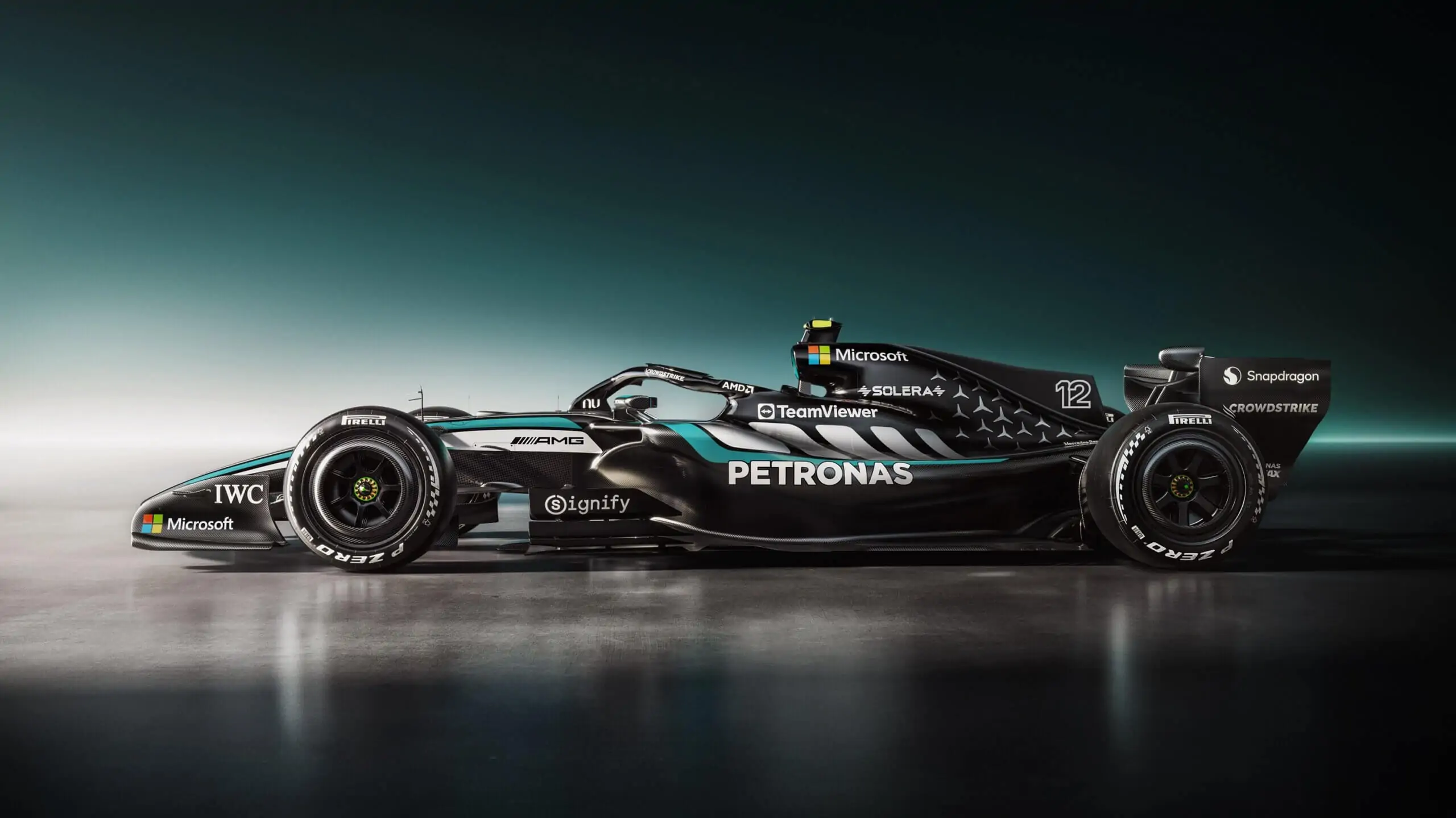
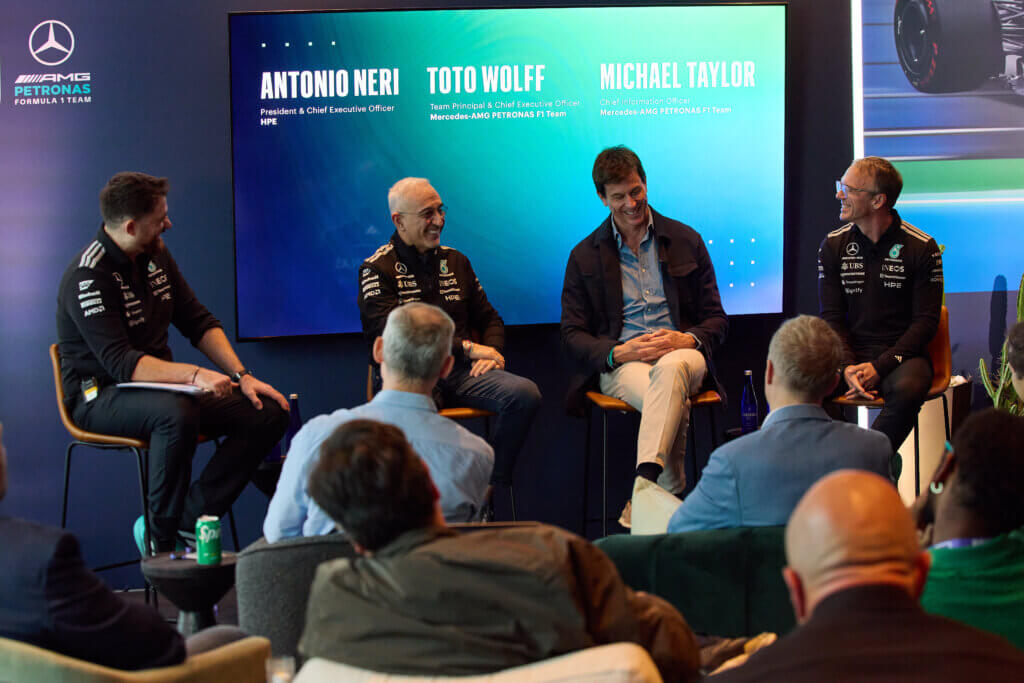
AUSTIN — Formula One’s sweeping 2026 rule changes have turned the Mercedes-AMG PETRONAS F1 Team’s development program into a test of how quickly computing infrastructure, networks and people can turn new engineering ideas into a faster car. At an HPE press event on October 22, HPE President and CEO Antonio Neri, Mercedes Team Principal and CEO Toto Wolff, and CIO Michael Taylor described an operation where simulation turnaround, dependable data delivery and emerging AI tools all contribute to finding the next fraction of a second.
The scale of this year’s changes explains the engineering workload. Revised power-unit rules place greater emphasis on electrical energy recovery and deployment, while changes to the chassis and aerodynamics require a rethink of how the car generates downforce and behaves on track. Developing the new package means solving interconnected problems: an aerodynamic improvement must work with the car’s mechanical behavior, energy strategy and the driver’s ability to extract performance. High-performance computing supports that design process, while AI-assisted development and analysis are emerging as additional tools.
That work takes place within Formula One’s governing-body financial and technical limits, including a cost cap and restrictions on aerodynamic testing. Teams cannot simply buy unlimited computing capacity or test every promising idea on a real car. They must prioritize the work most likely to improve performance and extract more value from the resources they are permitted to use. The development cycle starts with computational fluid dynamics (CFD), runs through successive virtual iterations and advances selected designs to testing with a 60%-scale wind-tunnel model before parts reach the race car.
Shortening that cycle creates more room for engineering judgment. HPE reports that the team’s combined infrastructure environment has reduced pre-event simulation time from three days to one. The benefit extends beyond completing a calculation sooner: engineers gain time to examine results, compare alternatives and decide what to pursue before the next race. AMD-based HPE ProLiant servers, GreenLake, storage and networking support that environment, with HPE Aruba Central providing network management. Trackside systems also connect with engineers at the team’s Brackley headquarters, making reliable data delivery part of the development and race-operation process.
Yet a car filled with sensors still depends on its most expensive sensor: the human driver. Measured aerodynamic load can match the simulation while the car feels unpredictable under braking or through a corner. One upgrade discussed at the event delivered the expected load but failed to give the driver the confidence needed to use it. A description as informal as a car feeling like a three-legged chair can contain an important engineering clue, provided the team translates that sensation into the physical behavior behind it. More downforce on a chart does not automatically produce a faster lap.
The relationship between people and simulation is also changing with the generation entering the sport. Kimi Antonelli’s frequent simulator practice was offered as an example of a young driver for whom the virtual environment is a familiar part of preparation. A similar shift is happening among university placement students and graduate engineers, who arrive accustomed to AI tools. AI-assisted coding creates opportunities to build specialized internal applications, address accumulated development work and potentially reduce dependence on some commercial software. Core vehicle engineering still requires physical understanding and validation; AI has not reached the point of prescribing a perfect car setup.
Financial discipline and control of intellectual property shape those AI choices. The team is bringing separate AI projects into a more coordinated strategy, with HPE helping make open models available to developers. A clarified support-function goal is to make people 30% more efficient, rather than a reported achievement. GreenLake and HPE Financial Services provide options for structuring technology investment within the team’s financial constraints.
The discussion also revealed the easy familiarity of a working relationship that Neri and Wolff described as stretching back roughly a decade. Friendly exchanges about technology and competitiveness included Neri’s observation that the cars looked too slow on the straights. Behind the humor was the same problem facing the engineering team: identifying whether an apparent weakness reflects drag, setup, track conditions or another factor, and deciding which evidence to trust. The partnership’s practical value rests in making that investigation faster, while freeing engineers from routine infrastructure work.
| From the Press Conference: Seven Infrastructure Takeaways | |
| • Simulation turnaround | Taylor’s priority is reducing the interval between an engineering question and an actionable result. Faster CFD iterations support the development process within regulated resource limits. |
| • Reliable data first | Trackside and factory engineers depend on data arriving consistently and being available when needed. Taylor put reliability and data quality ahead of raw performance in describing that requirement. |
| • Automation frees engineers | Taylor framed self-driving networking as a way to reduce routine operational work and release staff for engineering improvements. No team-specific autonomous-remediation rate was disclosed. |
| • AI coding gains traction | AI-assisted development can help create tailored internal tools and address work engineers previously lacked time to tackle. Taylor also identified potential to reduce spending on some off-the-shelf tools. |
| • Private AI and cost control | The team emphasized control of its intellectual property and predictable costs. Neri described GreenLake and HPE Financial Services as providing investment flexibility within the team’s constraints. |
| • Human validation remains essential | Wolff described an upgrade whose measured aerodynamic load matched expectations but whose handling reduced driver confidence. Sensor readings, simulation and driver feedback must be reconciled. |
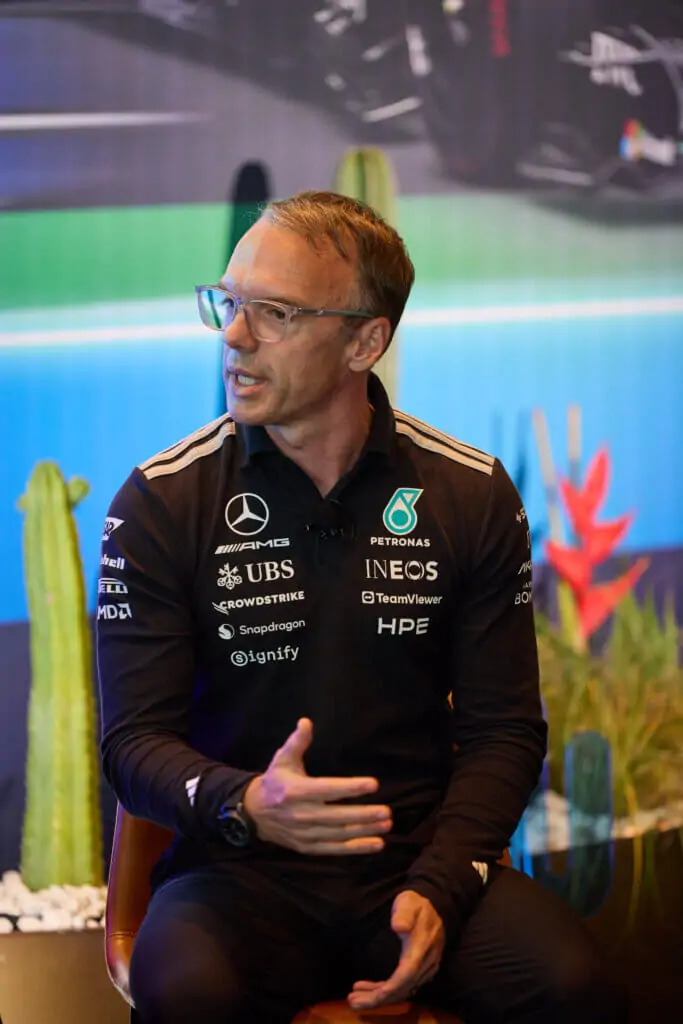
“You need to be able to trust the data,” said Michael Taylor, CIO, Mercedes-AMG PETRONAS F1 Team.
Analysis
The infrastructure lesson is the importance of the complete engineering cycle: simulation, data movement, analysis, validation and implementation. A faster compute job delivers value only when engineers can obtain the results, trust them and act before the next development deadline. For enterprise networking teams, Mercedes provides a concrete example of why availability, application delivery and reduced operational effort belong alongside bandwidth and latency when evaluating infrastructure.
The AI discussion also separates several workloads with different requirements. AI-assisted coding and support-function workflows can be evaluated for productivity gains, while aerodynamic simulation and race engineering require validation against physical behavior. The team’s efficiency ambitions remain targets rather than demonstrated results.
| Company Profiles: HPE and Mercedes-AMG PETRONAS F1 Team | |
| HPE | Enterprise infrastructure supplier spanning compute, storage, networking, hybrid cloud and AI systems. |
| Headquarters | Spring, Texas, USA |
| Leadership | Antonio Neri, President and CEO |
| Founded / Listing | 2015 • NYSE: HPE |
| Relevant platforms | HPE ProLiant • GreenLake • HPE Networking • HPE Aruba Central |
| Mercedes F1 | Formula One team using HPC, simulation and distributed data analysis for development and race operations. |
| Headquarters | Brackley, England, United Kingdom |
| Leadership | Toto Wolff, Team Principal and CEO; Michael Taylor, CIO |
| Infrastructure focus | Simulation turnaround • Trackside-to-factory connectivity • Data reliability • AI-assisted development |

-
 C114 Communication Network
-
 Communication Home
