
 Search

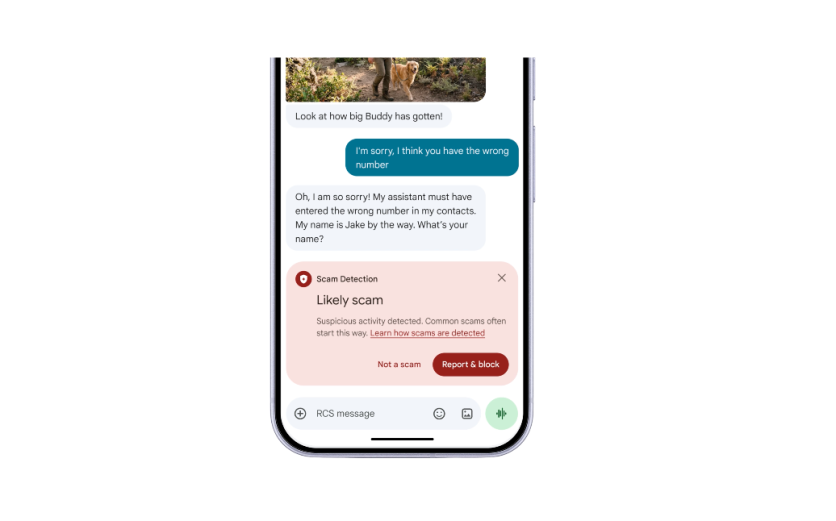
Google has now stepped up its defenses in a meaningful way, rolling out a wave of new protections across Android devices, including Gemini's scam detection feature, designed to stop fraud before it reaches users.
Mobile scams have grown far more sophisticated than the obvious phishing texts of years past, and millions of smartphone users are feeling the pressure.
Google Rolls Out Gemini Scam Detection to Messages App
Google has announced a new opt-in enhanced protection mode coming to the Google Messages app that uses its most capable Gemini models to evaluate whether an incoming message is a scam attempt. The setting allows Scam Detection in Google Messages to analyze the full context of a conversation with an unknown sender, going beyond simple keyword detection to understand the intent behind what a potential scammer is saying.
When the enhanced protection mode is turned on, messages are analyzed through Google's Private AI Compute system, which encrypts the data and processes it in a secure dedicated space that is inaccessible to anyone else, including Google itself. This cloud-based analysis works alongside existing on-device detection to identify novel and sophisticated attacks that standard filters may not catch.
Gemini Nano, the on-device version of Google's AI model, will also be used to evaluate links sent in Messages before a user taps on them. Scammers frequently register brand new websites that have not yet been cataloged as malicious, and this on-device analysis is designed to catch those unfamiliar links by integrating real-time web signals to assess whether a link can be trusted.
As part of the same rollout, Google has also redesigned its scam warnings inside Messages to give users more context and additional time before tapping any link sent by a number not saved in their contacts. The new enhanced protection mode is set to roll out in the coming weeks, and it is available on devices including Google Pixel 6 and newer, the Samsung Galaxy S24 series, Galaxy Z Flip and Fold 6, and other Android AICore-compatible devices.
Messages' Scam Detection Coming to More Android Devices
A separate but related scam protection that Google previously launched exclusively on Pixel devices is now heading to a much broader audience. Scam Detection in chat notifications, which warns users about suspicious messages directly from the notification shade before they even open a messaging app, is being expanded to hundreds of millions of additional devices later this year, as per Engadget's report.
Google confirmed it is working with a wide range of device manufacturers to bring this feature to their hardware, including Honor, Infinix, iQOO, itel, JOVI, Motorola, OPPO, OnePlus, realme, TECNO, vivo, and Xiaomi. Device availability will vary by manufacturer, but the partnership signals a significant shift away from limiting these AI-powered protections to a narrow set of flagship hardware.
According to a Google-commissioned survey of 4,500 smartphone users conducted with YouGov across the United States, Canada, and Australia, 40 percent of respondents said they are now "very" or "extremely" concerned about mobile fraud. The same survey found that iPhone users were significantly more likely than Google Pixel users to report having fallen victim to a scam and to say their device was "not effective at all" at protecting them from such threats.
Google Expands Defenses Against Messaging Scams
Beyond the Messages app Gemini scam detection rollout, Google is rolling out additional protections that address how scammers operate across calls and screen-sharing sessions. All Android 15 and newer devices will receive automatic screen-sharing privacy protection this month, which blanks out login fields, passwords, and payment screens, including credit card security numbers whenever Chrome or Android WebView is open during a live screen-share session.
Starting in early December, Pixel and other select Android devices will be protected against a common scam tactic in which fraudsters attempt to secretly redirect a victim's incoming calls to another number, allowing them to intercept one-time passcodes and take over accounts. Android will now block apps from quietly enabling call forwarding in the background and will alert users before any manually entered forwarding code can take effect.
"As scams get harder to detect, staying safe should not be up to you," Google wrote in its official announcement. "Through built-in, intelligent defenses and partnerships across the ecosystem, we are focused on making every call and message safer."
Frequently Asked Questions
What Is Gemini's Scam Detection?
Gemini's scam detection is a feature within the Google Messages app that uses Google's AI models to analyze incoming messages from unknown senders and determine whether they may be part of a scam. The existing version of Scam Detection in Google Messages already flags traditional phishing attempts and conversational scam patterns, but the new enhanced protection mode takes this further by tapping into Google's most capable cloud-based Gemini models to understand a scammer's intent across the full arc of a conversation, not just a single message.
When enhanced protection is enabled, messages are processed in a secure environment called Private AI Compute, ensuring that the content is not accessible to Google or any third party. The system is designed to catch sophisticated and evolving scam tactics that simpler filter-based systems would miss, and it works alongside on-device Gemini Nano analysis, which evaluates links before a user taps them.
Why Was It Exclusive to Pixel Before?
The Pixel-exclusive nature of earlier Scam Detection features came down to hardware requirements. On-device AI processing of the kind that powers Gemini Nano-based analysis requires a capable neural processing unit and sufficient memory to run a compact AI model locally without sending data off the device. Pixel phones were the first Android devices to meet those requirements as Google introduced them alongside its own Tensor chips.
Over time, as AI-capable hardware has become more common across a wider range of Android devices from manufacturers like Samsung, Motorola, and others, Google has been able to expand the pool of eligible hardware. The partnership Google announced with multiple device manufacturers to bring scam detection in chat notifications to their devices reflects that expanded compatibility, enabling far more Android users to benefit from protections that were previously limited to the Pixel lineup.
Is the Scam Detection Feature Effective?
According to an independent evaluation commissioned by Google and carried out by Leviathan Security Group in October 2026, Android devices currently provide the highest level of built-in scam and fraud protection among the major smartphone platforms tested. The evaluation compared the Google Pixel 11 Pro, Apple iPhone 18 Pro, Samsung Galaxy S26, and Motorola Razr 2026, focusing specifically on built-in, no-cost features enabled by default on each device.
Android outperformed iOS across several core built-in protection categories, including proactive call screening, fake call detection, and real-time threat warnings. Google also reported that its AI-powered Scam Detection across Phone by Google and Google Messages already flags more than five million suspected scam calls and texts every month, pointing to the scale at which the system is operating in real-world conditions.

-
 C114 Communication Network
 -
 Communication Home
