
 Search

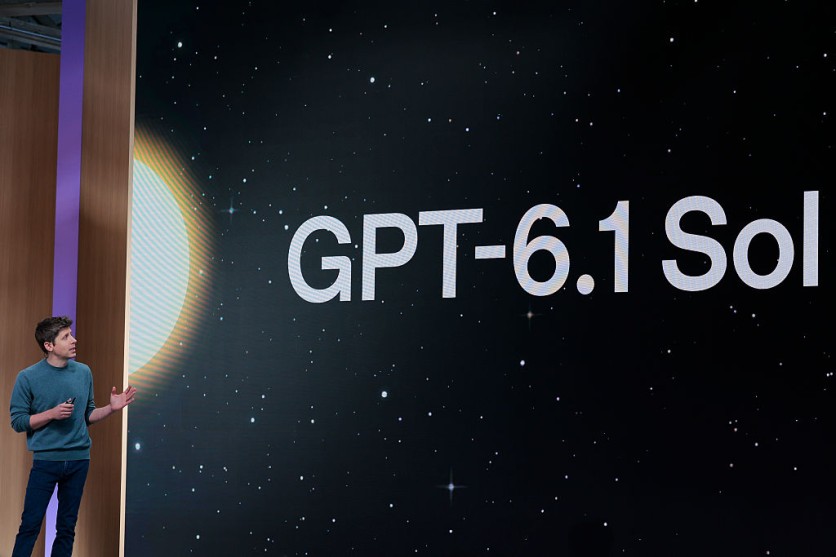
SAN FRANCISCO, CALIFORNIA - SEPTEMBER 29: OpenAI CEO Sam Altman delivers the keynote address and announces the release of GPT-6.1 Sol during the OpenAI developers conference at Fort Mason on September 29, 2026 in San Francisco, California. Altman announced new artificial intelligence personal assistant agents named "dots" to rival Meta's Muse. Photo by Heather Diehl/Getty Images
Amazon Web Services has extended global cross-region inference for all three GPT-6 models to five Asia-Pacific source regions on Amazon Bedrock — but before development teams in four of those markets can make a single API call, they face an activation step that catches many AWS users off guard: manually enabling their AWS accounts for opt-in regions.
GPT-6 Sol and GPT-6 Luna are now callable from Singapore, Jakarta (Indonesia), Kuala Lumpur (Malaysia), Bangkok (Thailand), and Taipei (Taiwan). GPT-6 Astra, OpenAI's flagship, is limited to Singapore as a source region. The rollout, announced October 12 on the AWS Machine Learning Blog, marks the most significant geographic expansion of frontier OpenAI model access in the APAC region to date.
Of the five markets, only Singapore (ap-southeast-1) is active by default in new and existing AWS accounts. Jakarta (ap-southeast-3), Malaysia (ap-southeast-5), Thailand (ap-southeast-7), and Taipei (ap-east-2) are opt-in regions — a standard AWS designation for newer or smaller markets that requires explicit account-level activation before any regional service, including Bedrock, responds to calls originating from them. Teams that skip this step and attempt to invoke a global.openai.gpt-6-sol inference profile from Bangkok or Taipei will encounter an OptInRequired error, not a capacity or permissions error.
Three Tiers, One Infrastructure
The GPT-6 family spans three models tuned to different cost and capability points. Understanding the tier structure clarifies which profile to reach for and what the tradeoff is.
GPT-6 Astra is OpenAI's flagship, released September 3, 2026, targeting complex reasoning, long-document analysis, computer use, and software engineering at scale. Benchmarks at release included a 97.6% score on FrontierMath Tier 4 — a graduate-level mathematics evaluation — and a 99.9% result on ARC-AGI-3. Pricing is $10 per million input tokens and $50 per million output tokens. On Bedrock, Astra is available from Singapore as a source region; destination regions span all supported commercial AWS regions globally where the model is deployed.
GPT-6 Sol is the mid-tier option, oriented toward complex coding, agentic workflows, and demanding multi-step reasoning tasks. OpenAI benchmarked Sol as outperforming Claude Opus 5 on multi-app automation workflows at substantially lower per-task cost. Sol is priced at $2 per million input tokens and $10 per million output tokens. Developers looking for GPT-6.1 Sol — a follow-on release that reached Bedrock September 29 — should note that the October 12 APAC announcement covers the original global.openai.gpt-6-sol profile; a separate profile for GPT-6.1 Sol may follow.
GPT-6 Luna is the high-volume, low-cost model, designed for focused, repeatable tasks running at scale. At $0.10 per million input tokens and $0.50 per million output tokens, Luna is 99 percent cheaper than Astra on both input and output dimensions — representing the widest affordability gap within any OpenAI model family to date. Luna's entry into the APAC Bedrock stack gives teams running high-frequency classification, extraction, or synthesis pipelines a frontier-generation model at a cost point that makes per-call economics practical.
All three models accept text and image inputs, support client-side tool use, and enable prompt caching. Reasoning effort is configurable across six levels — none, low, medium, high, xhigh, and max — for Sol and Luna; Astra supports the same range except the "none" setting.
How Cross-Region Inference Routes Requests
Cross-region inference in Amazon Bedrock works through inference profiles — identifiers that encode both the model and the set of AWS regions eligible to handle a given request. When a developer submits an API call using a global inference profile such as global.openai.gpt-6-sol, Bedrock's control plane evaluates available compute capacity across all supported commercial AWS regions where that model is deployed, then routes the request to whichever region has headroom. The routing decision is transparent to the caller: the response returns through the source region, and all observability data — CloudTrail events (including the additionalEventData.inferenceRegion field that reveals the actual destination), CloudWatch metrics, and invocation logs — remains anchored to source region regardless of where the computation actually ran.
This architecture solves a real operational problem for teams running production workloads. Single-region inference throttles under bursty demand because it draws from one region's fixed compute pool. Global CRIS expands the effective pool to all supported regions, reducing the chance of hitting capacity limits during high-demand periods without requiring developers to manually shard requests across endpoints.
The tradeoff is geographic: because global profiles can route to any supported commercial AWS region, flagged traffic retained for automated abuse detection may temporarily reside in a destination region outside the source market. Enterprise teams in regulated industries — banking, healthcare, government — will want to evaluate whether this routing behavior is compatible with local data sovereignty requirements. AWS recommends geographic inference profiles (e.g., us.openai.gpt-6-sol for US-only routing) or single-region inference for workloads where data residency must be guaranteed, and notes that eligible customers may explore zero data retention options through their account team.
Activating Opt-In Regions Before the First Call
For development teams in Jakarta, Malaysia, Thailand, or Taipei, the setup sequence differs from a standard Bedrock integration. Opt-in region activation is an account-level step performed once in the AWS Management Console or via the AWS CLI, separate from IAM permissions and separate from Bedrock model access requests. After activation, regional services typically take a few minutes to become responsive. A team that provisions IAM roles, requests Bedrock model access, and configures inference profile IDs without first activating the region will see OptInRequired errors that may initially appear to be permissions problems.
The activation step also has IAM implications: activating an opt-in region extends IAM principal permissions into that region. AWS recommends reviewing IAM policies and service control policies (SCPs) before activating new regions, particularly in enterprise accounts with fine-grained permission boundaries.
Once a region is active, calls to global.openai.gpt-6-sol, global.openai.gpt-6-luna, or global.openai.gpt-6-astra (Singapore only) follow the standard Bedrock runtime path, with billing, quota, and logging anchored to the source region where the call originated.
Read more: OpenAI ChatGPT Gets GPT-6 Model Alongside Intelligent UI, Interactive Features
Three API Paths, One Endpoint
One of the more developer-friendly aspects of the Bedrock implementation is the range of access interfaces, all served from the same bedrock-runtime endpoint.
Amazon Bedrock Converse API is AWS's unified conversation interface, compatible with all Bedrock foundation models and accessible through standard AWS SDKs. Teams already building multi-model applications on Bedrock can add GPT-6 models without leaving the Converse abstraction.
OpenAI Responses API and OpenAI Chat Completions API are both served at /openai/v1 paths on the Bedrock runtime endpoint. For teams with existing OpenAI SDK integrations, migration to the Bedrock endpoint often reduces to a base URL change and authentication swap — replacing an OpenAI API key with an AWS SigV4 signature or a Bedrock API key generated via the aws-bedrock-token-generator package. The OpenAI SDK's Python and Node.js libraries work against the Bedrock endpoint without code-level changes to the ChatCompletion call structure.
The ChatGPT desktop app and Codex CLI can also be configured to route through Bedrock's APAC regions by updating a single configuration file. Codex CLI requires version 0.148 or later.
What Does Cross-Region Inference Cost to Use?
Quota on the bedrock-runtime endpoint is measured in tokens per minute (TPM), and the accounting is asymmetric in a way that catches many teams migrating from direct OpenAI APIs: each output token consumes ten units of TPM quota, while each input token consumes one. This reflects the engineering reality that autoregressive generation — producing tokens one at a time — is computationally far more expensive than prefill, which processes the entire input in parallel via attention.
The practical consequence for production teams: a request that produces 2,000 input tokens and 1,000 output tokens depletes 12,000 TPM, not 3,000. A team that calibrates quota expectations from total token count will exhaust its allocation at roughly four times the rate it expects, generating throttling errors that appear as capacity problems rather than quota problems.
The amplification compounds with how Bedrock reserves quota. Amazon Bedrock holds the full max_tokens value at the start of each request, before any output is generated. A max_tokens ceiling of 4,096 on a request that typically generates 300 tokens will reserve 40,960 TPM — more than 130 times the TPM that the actual output will consume. Teams are advised to set max_tokens close to the actual expected completion length rather than to a generous ceiling, and to request quota increases through the AWS Service Quotas console before moving workloads to production. AWS recommends configuring a CloudWatch alarm on EstimatedTPMQuotaUsage metric at 70–80 percent of the account's allocation as an early-warning signal.
Prompt caching further complicates the cost calculus. For workloads with large, repeated system prompts or few-shot examples, cached prompt prefixes are excluded from TPM accounting entirely — cached-read tokens do not count against the quota. Independent testing of GPT-6 Sol with a 22,500-token repeated input showed cost reduction on cached prefix of approximately 92 percent between a cold and a warm call, from roughly $0.28 to roughly $0.02 per request. At Luna's pricing of $0.10 per million input tokens, caching can make high-frequency pipelines with large fixed prompts economically negligible.
Quota and cost hold at source region even when compute runs in another
Billing, quota, and CloudTrail logging all remain anchored to the source region. Teams with cost allocation tags, budget alerts, or compliance logging configured for a specific source region will see GPT-6 calls appear there regardless of where the inference actually runs. The additionalEventData.inferenceRegion field in CloudTrail records the actual destination region, enabling post-hoc audit of where computation occurred without disrupting the source-region accounting model.
Partnership Context
The October 12 expansion continues a partnership between OpenAI and AWS that has moved quickly through the second half of 2026. GPT-5.6 Sol, Terra, and Luna became generally available on Bedrock in US regions in July 2026, and cross-region inference for the GPT-5.6 family was subsequently extended to Australian source regions. GPT-6 Astra reached general availability on Bedrock in September, with Sol and Luna on September 22 — the same day OpenAI announced those models publicly.
The APAC CRIS expansion moves the partnership beyond US-anchored and Australian source regions into Southeast and East Asia, markets where AWS has made significant infrastructure investments and where developer demand for frontier model access has been building. OpenAI established a Singapore office in 2025, signaling a direct regional commitment that the Bedrock distribution extends into the cloud infrastructure layer.
The AWS ML Blog post announcing the APAC expansion was co-authored by AWS Senior AI/ML Specialist Technical Account Managers Traci Lim and Karan Jhaveri, both based in Singapore, alongside Senior Generative AI Specialist Solutions Architect Melanie Li, Senior Security Solutions Architect Zohreh Norouzi, Senior Product Manager Saurabh Trikande, and Chris Dickens, a Member of Product Staff at OpenAI focused on the OpenAI APIs.
Does Amazon Bedrock Support Multiple Quota Pools for GPT-6 Profiles?
Yes. Global inference profiles (global.openai.gpt-6-sol) and geographic inference profiles (us.openai.gpt-6-sol) maintain separate TPM quota pools. A team that uses both a global profile and a US-region profile draws from two distinct quota allocations, effectively doubling available throughput for traffic that can be routed through either. Teams with strict data residency requirements should use geographic profiles and accept the narrower compute pool in exchange for geographic predictability.
Frequently Asked Questions
What is the difference between a global inference profile and a geographic inference profile for GPT-6 on Bedrock?
A global inference profile (e.g., global.openai.gpt-6-sol) can route compute to any supported commercial AWS region globally where GPT-6 Sol is deployed, giving access to the largest available compute pool and minimizing the chance of throttling under bursty demand. A geographic profile (e.g., us.openai.gpt-6-sol) restricts routing to a specific region group — in this case, US regions — providing more predictable data placement at the cost of narrower capacity headroom. For APAC teams in regulated industries with data sovereignty requirements, geographic profiles or single-region inference are the appropriate choice; for teams optimizing for throughput and resilience, global profiles are preferred. The two profile types also maintain separate TPM quota pools, so using both effectively multiplies available quota.
Why does setting a high max_tokens ceiling hurt my Bedrock throughput?
Amazon Bedrock reserves full max_tokens upfront per request, before any output is generated, to guarantee quota availability for worst-case output length. Combined with the 10x TPM weight on output tokens, a max_tokens of 4,096 on a request that actually generates 300 tokens reserves 40,960 TPM — more than 130 times the quota the real output will consume. Across concurrent requests, this inflated reservation can exhaust an account's TPM quota even when actual output volume is well within limits. The practical fix is to set max_tokens to a value close to the expected completion length rather than a generous ceiling, and to request a quota increase from the AWS Service Quotas console before moving production workloads.
Can teams in Jakarta, Malaysia, Thailand, or Taipei use their existing OpenAI SDK code to call GPT-6 on Bedrock?
In many cases, yes — with two configuration changes. First, the AWS account must have the relevant opt-in region activated (a one-time step in the AWS Management Console or via CLI). Second, the OpenAI SDK's base URL must be pointed at the Bedrock runtime endpoint, and authentication must switch from an OpenAI API key to AWS SigV4 signing or a Bedrock API key. The ChatCompletion call structure, model parameter names, and response format remain compatible; no changes to prompt logic, tool definitions, or parsing code are typically required. Teams using the Responses API path follow the same pattern.
Is GPT-6 Astra available in all five APAC source regions?
No. GPT-6 Astra is limited to Singapore (ap-southeast-1) as a source region for the initial APAC expansion. GPT-6 Sol and GPT-6 Luna are available from all five source regions — Singapore, Jakarta (ap-southeast-3), Malaysia (ap-southeast-5), Thailand (ap-southeast-7), and Taipei (ap-east-2). Teams in the other four markets that need Astra-class capability can still call global.openai.gpt-6-astra if they have a Singapore-based Bedrock setup, or through US-region source endpoints.
Read more: OpenAI Retires GPT-5.2 and Moves Everyone to GPT-5.5 and the GPT-5.6 leak

-
 C114 Communication Network
 -
 Communication Home
