
 Search

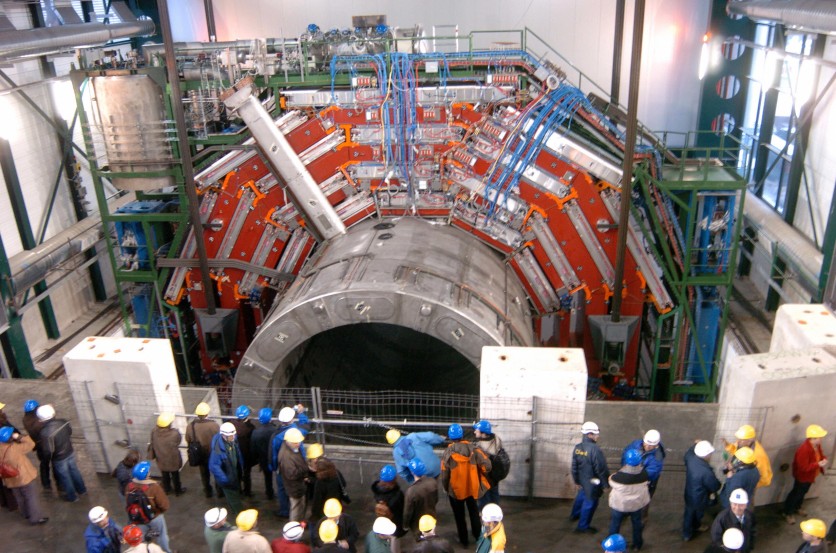
Photo shows a giant magnet weighing 1920 tonnes 28 February, 2007 at the European Organization for Nuclear Research (CERN) in Geneva. JEAN-PIERRE CLATOT/AFP via Getty Images
On the morning of August 31, 2026, roughly 25 physicists filed into CERN's Theory Conference Room — a compact, whiteboard-lined space inside Building 4 on the Geneva campus — and began what the organizers are calling a pivotal two-week conversation for the future of particle physics. The Quantum Sensing for Fundamental Physics Institute, running August 31 through September 11, is not a standard conference. There are no back-to-back plenary marathons, no poster sessions, no trade booths. Instead, the format is deliberately sparse: a maximum of two formal talks per day, with the remaining hours reserved for unscripted discussion, collaborative whiteboard work, and the kind of extended coffee-room conversations that often produce the most lasting scientific alignments.
The subtext of that format is a question CERN's community is answering in real time: is it possible to build a coherent, coordinated detection roadmap for dark matter and gravitational waves using quantum sensors rather than particle colliders — and if so, what does CERN's role in that roadmap look like? The answer matters, because the two flagship CERN-connected quantum sensing experiments at the center of this gathering — the proposed Atom Interferometer CERN Experiment (AICE) and the Axion Detector Demonstrator (QTI_ADD) — are at critical infrastructure decision points. AICE site preparation during LS3 could proceed, which began June 29, 2026, and runs through approximately 2030; whether CERN management greenlights that preparation will shape whether the institute's roadmap has hardware to run on.
AICE: Why an LHC Access Shaft Is the Right Hole for a Quantum Telescope
The centerpiece of CERN's emerging quantum sensing program is a proposed 100-metre (328 ft) vertical atom interferometer — AICE — to be installed against the wall of the PX46 access shaft at LHC Point 4, a deep underground site whose use is fully compatible with ongoing High-Luminosity LHC operations. PX46 is an existing infrastructure asset: a 143-metre-deep (469 ft) shaft with a 10.1-metre (33 ft) internal diameter, normally used for raising and lowering LHC radio-frequency equipment, whose environmental conditions — seismic stability, electromagnetic interference, and vibration — have been characterized through two dedicated CERN studies.
AICE's primary scientific goal is to probe bosonic ultralight dark matter (ULDM) — particularly axions and axion-like particles (ALPs) — in a mass range that is fundamentally inaccessible to any existing experiment. To understand why, consider how dark matter detection works for these candidates: axions and ALPs, if they exist, would behave not as discrete particles but as coherent oscillating fields permeating the galaxy, inducing tiny, periodic shifts in atomic transition frequencies and electromagnetic properties at a frequency set by their mass. An atom interferometer is exquisitely sensitive to exactly this kind of signal.
The way AICE will work is technically precise. Strontium-87 atoms are laser-cooled to near absolute zero and released inside the shaft. Laser pulses serve as beam-splitters and mirrors — the atoms' wave-like quantum nature is exploited to split each atom into a superposition state traveling two distinct paths through the shaft, which are then recombined. The resulting interference pattern encodes the accumulated phase difference between the two paths. If an axion field exists, it introduces a tiny periodic perturbation to the strontium atoms' energy levels; this perturbation shows up as a phase shift in the interference pattern that grows with the square of the interrogation time — the longer the atoms are in free fall, the more signal accumulates. A 100-metre shaft, crucially, allows interrogation times far exceeding what is possible in a tabletop laboratory. The instrument's multi-source gradiometer geometry — three atom sources along the shaft, all referenced to the same laser — cancels laser phase noise while preserving the dark matter signal, because noise from the laser affects all sources simultaneously while a dark matter field modulates them differently based on their position.
AICE is endorsed by the TVLBAI proto-collaboration — the Terrestrial Very Long Baseline Atom Interferometry group, comprising 57 institutions across 22 countries — and draws on pathfinder experiments already running or near completion: AION in the United Kingdom, MAGIS-100 at Fermilab in Illinois, VLBAI in Germany, MIGA in France, and ZAIGA in China. The 2025–2026 period has seen the launch of a full Technical Proposal (arXiv:2608.18743), published approximately two weeks before this institute opened, detailing a phased science program that begins with scalar ULDM searches using strontium-87, then expands to vector ULDM and axion-like particles using strontium-88, and later incorporates ytterbium-171 for improved sensitivity to baryon-number coupling violations.
A secondary but scientifically significant goal of AICE is to pioneer gravitational-wave detection in the mid-frequency band of approximately 0.03–3 Hz — a regime that is currently invisible to both LIGO/Virgo/KAGRA (sensitive above roughly 10 Hz) and the planned space-based LISA detector (sensitive below roughly 0.1 Hz). Sources in this mid-band include intermediate-mass black hole mergers and heavy stellar binary inspirals that produce signals no existing instrument can see. AICE is the first proposed dedicated instrument for this band at a major physics laboratory.
What the Institute Opened With: Broadband Axions and Nuclear Clocks
The first scientific talk of the institute, delivered on August 31 by Angelo Esposito of Sapienza Università di Roma and INFN, introduced an idea so technically novel it has not yet reached the broader physics press: an ultra-broadband axion detection strategy based on operating a dc SQUID at its flux "sweet spot."
A conventional SQUID (Superconducting Quantum Interference Device) measures magnetic flux with a response that is linear in flux near its working point — the voltage output rises or falls as the flux increases or decreases. The problem for axion detection is that axion fields oscillate in sign: they are positive half the time and negative half the time. A detector sensitive to the field itself averages to zero over many oscillations. Esposito's group proposes instead to operate the SQUID at the flux sweet spot — the point on the SQUID's response curve where the sensitivity to the field itself vanishes and the response becomes quadratic in the flux. At this point, the device is sensitive to the axion field squared rather than to the field. Crucially, the square of an oscillating quantity is always positive; it does not average to zero. Combined with lock-in modulation to suppress low-frequency noise, the resulting experiment is ultra-broadband, capable of probing axion masses across 15 orders of magnitude — from the lightest conceivable axions to those near the QCD axion mass — with a projected sensitivity to the axion-photon coupling of |g_aγγ| ≳ 10⁻¹⁶ GeV⁻¹, orders of magnitude beyond current experimental limits and with sensitivity that does not depend strongly on which specific axion mass is targeted.
The afternoon of August 31 brought a lecture from Elina Fuchs of DESY and Leibniz University Hannover on a second, radically different sensor platform: the thorium-229 nuclear clock. The Th-229 isomeric transition — an unusual nuclear energy level at approximately 8.4 electron volts (in the vacuum ultraviolet) — is uniquely sensitive to variations of fundamental constants, particularly QCD parameters like the nuclear strong force coupling and quark masses. Dark matter, if it exists as an ultralight oscillating field, would modulate these constants at a frequency set by its mass; a sufficiently precise clock would register those modulations as tiny shifts in the tick rate.
The 2024 breakthrough of the first laser excitation of the thorium-229 nucleus — a decade-long experimental challenge that required precise VUV laser technology — opened the door to actually building such a clock. In February 2026, Fuchs and collaborators published a paper showing that the thorium clock probes QCD dark matter couplings at energy scales reaching 10⁶ times the Planck scale — the so-called Mega-Planck scale. This makes the nuclear clock, by that metric, the most sensitive probe of dark matter interactions with the nuclear sector ever proposed. In the Phys. Rev. D paper published in July 2026 by Banks, Fuchs, and McCullough, the same nuclear transition is proposed as the basis for a "nuclear interferometer" for dark matter — a single-photon interferometry experiment that could complement AICE in probing ultralight dark matter with scalar couplings to photons.
Quantum Error Correction Comes to Dark Matter Detection
On the morning of September 1, Hajime Fukuda of the University of Tokyo opened the second day of the institute with a presentation whose implications reach well beyond fundamental physics laboratories. In a paper published in Physical Review Letters, Fukuda's group introduced a quantum-error-correction-inspired noise mitigation protocol for dark matter sensors.
The idea draws directly from quantum computing. In a quantum computer, individual qubits are fragile — any interaction with the environment causes errors. Quantum error correction addresses this by encoding logical information redundantly across multiple physical qubits, so that the error on any one qubit can be detected and corrected without destroying the quantum state. Fukuda's protocol applies an analogous logic to dark matter sensor arrays: noise affecting individual sensors independently can be collectively suppressed by running multiple sensors in concert, while a coherent dark matter signal — which correlates across all sensors because the dark matter field has a spatial coherence length much larger than any laboratory — is preserved. The result is a sensitivity improvement scaling as √N, where N is the number of sensors in the array. For sufficiently large arrays, the protocol asymptotically approaches the standard quantum limit — the fundamental floor set by quantum mechanics on how precisely a single sensor can measure without back-action effects overwhelming the signal. The key technical distinction from quantum computing QEC is that here no pre-knowledge of the dark matter field's phase is assumed; the protocol is designed for the unknown-phase regime that characterizes an actual dark matter search.
This is, in effect, a technology transfer from the quantum computing industry to the dark matter detection community. The same mathematical machinery that allows Google and IBM to maintain qubit coherence across multi-qubit processors is now being adapted to make dark matter sensors more sensitive. The protocol can be applied broadly to resonant cavities, superconducting qubits, and atom interferometers alike — covering every major sensor architecture featured at the institute.
Read more: Canada's Quantum Sensing Hub Targets GPS Spoofing With Atom Interferometry
QTI_ADD: CERN's Superconducting Axion Demonstrator
Alongside AICE, the second pillar of CERN's quantum sensing program is the Axion Detector Demonstrator (QTI_ADD), developed under the CERN Quantum Technology Initiative. Where AICE is an atom interferometer, QTI_ADD is a cavity-based axion haloscope — but one using a technical approach that sidesteps some of the fundamental limitations of conventional haloscopes.
The QTI_ADD is based on the heterodyne detection principle. A superconducting radio-frequency (SRF) cavity is designed to support two quasi-degenerate, overlapping electromagnetic modes — a "pump mode" driven by an external microwave source, and a "signal mode" at a slightly different frequency. If a dark matter axion exists with a mass corresponding to the frequency difference between the two modes, the axion-photon coupling drives a conversion: pump-mode photons are transferred to signal-mode photons. The signal mode is then monitored by a quantum-limited detector. This heterodyne geometry produces several advantages over conventional SQUID-readout haloscopes: the signal occupies a different frequency from the pump, allowing it to be separated cleanly without driving the readout into saturation; and the SRF cavity's extraordinarily high quality factor (the ratio of energy stored to energy lost per cycle) reduces thermal noise backgrounds.
The 2025–2027 development phase is dedicated to the design, construction, and integration of the first bespoke QTI_ADD demonstrator, with existing CERN cryogenic infrastructure repurposed to host the experiment. In parallel, the RADES program — also at CERN — has been developing 3D transmon qubit-based detection systems since 2024, and the DarkQuantum ERC Synergy project is integrating quantum sensing into haloscope searches across two frequency regimes: a low-frequency branch targeting axion masses around 1–2 μeV (microelectronvolts), and a high-frequency branch exploring new parameter space beyond it.
Levitated Particles, Exotic Sensors, and the Quantum Limit
Later on September 1, Andreu Riera Campeny of ICFO in Barcelona presented an experimental proposal for a different class of quantum sensor entirely: levitated massive particles in quantum superposition.
The scheme cools a nanoparticle's center-of-mass motion near the quantum ground state, releases it into a static double-well potential, and analyzes the resulting dynamics. What makes it scientifically interesting is the certification method: rather than relying on interference visibility as proof of quantum behavior — which requires careful interferometric alignment — the proposal uses a hypothesis-testing framework based on the full position-measurement probability distribution, applying a likelihood-ratio test to exponentially reduce the data required to falsify classical explanations. This approach could allow verification of macroscopic quantum superpositions — particles behaving quantum-mechanically at scales visible to the naked eye — with far fewer experimental runs than conventional methods demand. As a dark matter sensor, a levitated particle in superposition is sensitive to new forces that would decohere or deflect the quantum state; these sensors complement atomic approaches at mass scales where the two probe different couplings.
On September 2, CERN's Theory Department Colloquium — the institute's most publicly advertised event — was to be delivered by Morgan Mitchell of ICFO on the theoretical limits of quantum-limited field sensing. Mitchell's planned talk addresses exotic sensor technologies — particularly Bose-Einstein condensate (BEC) magnetometers — that break a geometric sensitivity limit that governs conventional field sensors. Conventional magnetometers and color-center ensembles are bounded by a sensitivity that depends on the sensor volume or flux area. Mitchell's work shows that BEC magnetometers, which exploit collective quantum effects across a condensate, can in principle exceed this geometric scaling — and he will present a planned experiment to deploy such sensors in direct searches for new physics.
What the Research Is Actually Looking For
To understand what all these sensors are hunting, it helps to step back. Dark matter makes up 27% of the universe's total mass-energy content, yet its fundamental nature remains unknown after decades of increasingly sensitive experiments. The Standard Model of particle physics — which describes every particle and force that laboratories have directly detected — does not contain a viable dark matter candidate.
The axion was proposed by Peccei and Quinn in 1977 — and independently named the following year by Frank Wilczek and Steven Weinberg — to resolve the strong CP problem: the observation that the strong nuclear force conserves the combined symmetry of charge-conjugation and parity far more precisely than the laws of quantum chromodynamics would naturally predict. The mechanism involves a new global symmetry, whose spontaneous breaking produces a pseudo-Nambu-Goldstone boson — the axion — that dynamically relaxes the CP-violating angle to zero. As a bonus, the axion is produced in the early universe through a mechanism called misalignment, generating a population of non-thermal particles with the right density to account for dark matter. This double-duty elegance — solving an independent problem in nuclear physics while also providing a dark matter candidate — makes the axion uniquely compelling among all beyond-Standard-Model candidates.
The axion-like particles (ALPs) targeted by AICE and QTI_ADD are a generalization: pseudoscalar bosons with the same coupling structure as the QCD axion but without the specific mass-coupling relationship it requires. They can have masses anywhere from 10⁻²² eV (roughly 100 billion times lighter than the electron) to several electronvolts, and they interact with ordinary matter only through extremely weak couplings to photons, electrons, and nuclear constituents. At ULDM masses in the range of 10⁻¹⁸ to 10⁻¹² eV, the corresponding Compton oscillation frequency — the rate at which the dark matter field cycles through positive and negative values — falls squarely in the sensitivity window of 100-metre atom interferometers operating at the quantum limit.
This is precisely the mass range the LHC cannot probe. The LHC searches for new particles by producing them in high-energy collisions; its sensitivity rises with particle mass, not falls. An axion with mass 10⁻¹² eV has an energy roughly 12 orders of magnitude below the LHC's energy scale — it is not something a collider can produce or detect. AICE's atom interferometer, by contrast, is sensitive to the cumulative effect of the axion field on atomic coherence over long interrogation times, with no requirement that the axion interact at collider-accessible energies.
What Comes Out of Week 2
The second week of the institute, running September 7 through 11, will feature a program even more varied than the first. Marios Galanis of Stanford University is scheduled to present work on superradiant interactions of cosmic relics — specifically, the collective scattering of weakly interacting particles off large ensembles of quantum systems prepared in equal superpositions, where the excitation and de-excitation rates scale as N² (the number of particles squared) in direct analogy with Dicke superradiance. For N large enough, this process becomes non-perturbative, potentially offering an entirely new way to detect dark matter candidates that couple too weakly for any conventional sensor to see individually.
Asher Berlin of Fermilab will describe a striking tabletop proposal: using an electrified shell — specifically a Van de Graaff generator — as a trap for millicharged particles, a class of dark matter subcomponents carrying a tiny fraction of the electron's charge. If such particles exist, the generator's electric field would attract them, accumulating a local overdensity orders of magnitude larger than the galactic background density. A classic Cavendish test of Coulomb's law — an 18th-century experimental tradition — could then detect the anomalous electric field produced by this overdensity, potentially outperforming future accelerator searches for sub-GeV millicharged particles using equipment that already exists.
Yacine Haddad of Universität Bern will introduce chromatic calorimetry using quantum dots — semiconductor nanocrystals whose optical emission wavelength is tunable by size and composition. Embedding quantum dots of different sizes in adjacent detector layers would allow reconstruction not just of a particle's total deposited energy but of its energy-deposition profile as a function of depth, using a spectrally sensitive photon detector. The concept, first outlined in a 2025 preprint, has applications in both quantum sensing and conventional high-energy detector development.
The institute will close September 11 with a two-hour open discussion synthesizing two weeks of conversation into concrete roadmap recommendations: which quantum sensing targets justify CERN investment? What theoretical work is most urgently needed? How should the community coordinate across AICE, QTI_ADD, and international partner programs — AION, MAGIS-100, DarkQuantum — to maximize the probability of discovery-class results in the next decade?
Does CERN's Strategic Calculus Actually Add Up?
The institute arrives at a moment when European particle physics is at an explicit strategic inflection point. The 2026 update of the European Strategy for Particle Physics — whose Physics Briefing Book was finalized earlier this year — explicitly identifies quantum sensing as one of the most promising routes to beyond-Standard-Model discovery at the precision frontier, alongside the energy-frontier ambitions of the proposed FCC-ee. Atom interferometry, nuclear clocks, superconducting qubit arrays, and other quantum technologies are cited as strategic priorities alongside more traditional experimental approaches.
For CERN, the quantum sensing pivot carries a specific institutional logic. If AICE receives the green light and site preparation proceeds during LS3, it would represent the first major new fundamental-physics experiment built at CERN's LHC site in decades — one that requires no high-energy beams, operates in a dark matter mass range completely inaccessible to the LHC, and can run in parallel with HL-LHC operations without interference. The TVLBAI proto-collaboration, whose 57 member institutions have already endorsed AICE through two formal feasibility studies, represents a ready-made international collaboration that CERN could host at the same level of institutional commitment it has historically extended to LHCb or ALICE.
Meanwhile, the QTI_ADD axion demonstrator, if the 2025–2027 development phase succeeds, could evolve into a discovery-class instrument within the decade. The heterodyne SRF approach it uses was designed specifically to overcome the noise limitations that have prevented conventional haloscopes from reaching the sensitivity levels theoretically required to confirm or rule out QCD axion dark matter in the most motivated mass window.
None of this replaces the LHC or the physics case for the FCC-ee. What it does is extend CERN's scientific reach into a regime where the LHC is structurally blind — the ultra-low mass, ultra-high coherence frontier where dark matter may actually live. That is the roadmap this institute is being convened to build.
The Quantum Sensing for Fundamental Physics Institute runs August 31 – September 11, 2026, at the CERN Theory Conference Room (4/3-006), Geneva. Full schedule and contribution slides are available at the official CERN Indico page.
Currency conversion: One figure in the associated PhD school (CHF 150, approximately $186 USD at September 1, 2026 mid-market rate of 1 CHF ≈ $1.24 USD) was converted using the live mid-market exchange rate sourced from Xe.com on September 1, 2026; conversions are approximate. No currency figures appear in the body of this article about the main institute.
Frequently Asked Questions
How does an atom interferometer detect dark matter, and why does it need to be 100 metres (328 ft) tall?
An atom interferometer exploits the wave-like quantum nature of atoms. Laser pulses split each atom into a superposition — it simultaneously takes two paths through the apparatus — and then recombine the two paths, producing an interference pattern. The phase of that pattern is exquisitely sensitive to any force or field that acts differently along the two paths. If an axion or ultralight dark matter field exists, it introduces periodic shifts in the atoms' internal energy levels; those shifts accumulate in the interference phase over the duration the atoms spend in free fall. Crucially, the accumulated signal grows with the square of the interrogation time — the longer the atoms fall freely before being recombined, the larger the dark matter signal relative to noise. A 100-metre vertical shaft at CERN's LHC site provides free-fall times far longer than any tabletop apparatus, pushing sensitivity into dark matter mass ranges — roughly 10⁻¹⁸ to 10⁻¹² eV — that no other current experiment can reach.
Why can't the LHC find the kind of dark matter CERN's quantum sensors are looking for?
The LHC detects new particles by producing them in high-energy proton-proton collisions. Its sensitivity to new particles rises with the particles' mass — it excels at finding heavy new particles in the GeV-to-TeV range. Axions and ultralight dark matter candidates are enormously lighter, with masses that can be as low as 10⁻²² eV — a factor of roughly 10³⁴ lighter than the particles the LHC is designed to find. These particles do not interact through mechanisms that produce detectable collision products; instead, they manifest as coherent oscillating fields that slowly shift atomic energy levels, magnetic properties, and nuclear transition frequencies by tiny but measurable amounts. Detecting those shifts requires precision sensors — atomic clocks, interferometers, superconducting cavities — not high-energy colliders. AICE and QTI_ADD are probing physics that is, in a fundamental sense, orthogonal to what the LHC does.
What is the axion, and why is it such a compelling dark matter candidate?
The axion was proposed in 1977 by Roberto Peccei and Helen Quinn to resolve a puzzle called the strong CP problem: quantum chromodynamics predicts that the strong nuclear force should violate the combined symmetry of charge-conjugation and parity, yet measurements show this violation is extraordinarily small — at least 10 billion times smaller than theory naively predicts. Peccei and Quinn's solution introduces a new symmetry that is spontaneously broken, and the axion is the pseudo-Nambu-Goldstone boson that results. Frank Wilczek and Steven Weinberg independently gave it that name in 1978. As a bonus, the axion is produced non-thermally in the early universe through a mechanism called misalignment, generating a population of extremely light, extremely cold particles with the right total density to account for the dark matter that gravitational observations confirm must exist. That double-duty elegance — solving an unrelated nuclear physics problem while providing a natural dark matter candidate — makes the axion one of the most theoretically motivated targets in the field.
What does the thorium-229 nuclear clock have to do with dark matter?
The thorium-229 isomeric nuclear transition is uniquely sensitive to variations of fundamental constants — especially the parameters governing the strong nuclear force. If dark matter exists as an oscillating field, it would modulate these constants at a rate set by its mass, producing tiny periodic shifts in the energy of the thorium nuclear transition. A precise enough clock built around this transition would register those shifts as a variation in tick rate. In February 2026, a team including DESY physicist Elina Fuchs showed that a thorium clock probes dark matter couplings to the nuclear sector at energy scales reaching 10⁶ times the Planck scale — making it, by that metric, the most sensitive probe of dark matter-nuclear interactions ever proposed. The first laser excitation of the Th-229 nucleus, achieved in 2024, transformed this from a theoretical proposal into an experimental program.

-
 C114 Communication Network
 -
 Communication Home
