
 Search

Innovationisrael.org.il
On Monday, the Israel Innovation Authority opened a NIS 100 million hub call to build a second-generation national quantum computing hub — one that will require its operator to integrate at least three distinct and competing hardware architectures simultaneously. Israel's first national quantum center, which opened at Tel Aviv University in June 2024, was built around foreign processors because Israeli-made quantum hardware did not yet exist. That constraint is now lifting, and the new call's architecture reflects it, as the Times of Israel reported.
Israel accounts for roughly nine percent of total global private quantum investment despite a population of 10 million people, according to the IIA. That outsized position has been built on software, control electronics, and algorithm tools. What it has not had until recently is domestic quantum hardware. The new call signals that the IIA believes the domestic hardware gap is closing fast enough to mandate a center built around it.
Why Israel Won't Bet on One Architecture
The defining feature of the IIA's call is what it refuses to do: pick a winner.
Because no single qubit architecture — superconducting circuits, trapped ions, neutral atoms, or photonic systems — has yet demonstrated clear superiority over the others for practical workloads, the IIA's program documentation explicitly requires the infrastructure operator to provide access to at least three distinct quantum processing technologies simultaneously. Proposals that commit to a single platform will not qualify.
The rationale cuts to the core technical problem facing every organization trying to use quantum computing today: circuit compilation is architecture-specific. An algorithm optimized for IBM's superconducting heavy-hex lattice — where each qubit can only interact with its nearest physical neighbors — must be completely recompiled and rebenchmarked before it can run on a trapped-ion machine, where any two ions can interact via their shared electromagnetic trapping potential. The compiled circuits look different, have different error characteristics, and require different error mitigation strategies. A multi-platform facility lets Israeli researchers and companies determine which architecture gives their specific algorithm the best performance before committing development resources to one vendor's ecosystem, as the IIA explained.
"Different quantum computing approaches have different advantages, limitations and levels of maturity, while compatibility between systems remains limited," the IIA stated. "An algorithm developed for one platform may not necessarily work on another."
The requirement to support multiple technologies is, in that sense, not a hedge against picking the wrong winner. It is a precise engineering response to a real architectural constraint.
Read more: Fault-Tolerant Quantum Computer by 2028: DOE Quantum Genesis Sets Hard Deadline
What Each Architecture Brings — and What It Can't Do
Understanding why Israel's mandate requires three platforms requires understanding what each offers that the others cannot.
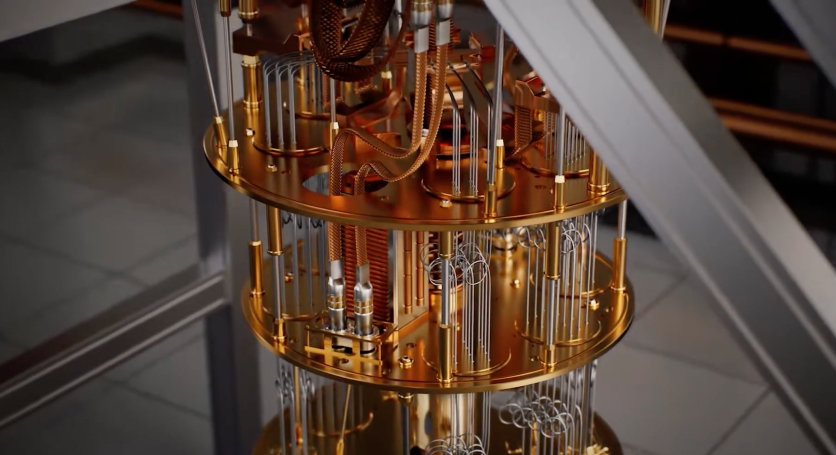
Superconducting qubits — used by IBM, Google, and Rigetti — operate at roughly 15 millikelvin, colder than interstellar space, inside dilution refrigerators, as described in technical literature on superconducting qubits. Microwave pulses at around five gigahertz drive transitions between qubit states. Gate operations are the fastest of any architecture, completing in tens to hundreds of nanoseconds. The tradeoff is qubit connectivity: a superconducting processor's physical layout means each qubit can directly interact only with its nearest physical neighbors. Routing quantum information between non-adjacent qubits requires SWAP operations that add circuit depth and accumulate errors. Coherence times are short — microseconds to milliseconds — before environmental noise collapses the quantum state.
IBM's Nighthawk processor with 120 physical qubits passed independent validation in physics simulation and network optimization tasks in June 2026. Google's Willow chip, with 105 qubits, demonstrated in late 2024 that logical error rates decrease exponentially as code distance increases — the first hardware-scale proof of a threshold that theorists had predicted for two decades.
Trapped-ion qubits — the technology pursued by Quantinuum, IonQ, and Israel's own Quantum Art — suspend charged atoms in electromagnetic fields inside ultra-high vacuum chambers, then use laser pulses tuned to specific wavelengths to perform quantum gate operations, as the technical literature explains. Every ion shares a common trapping potential, which means any two can interact directly — no connectivity constraints, no SWAP overhead. Individual gate operations take microseconds rather than nanoseconds, making trapped-ion systems an order of magnitude or more slower per gate. But coherence times run into seconds or even minutes, giving algorithms more time to execute before decoherence corrupts the computation. Quantinuum demonstrated 94 logical qubits on its H-series processor in March 2026.
Neutral atom qubits — used by QuEra, Pasqal, and Atom Computing — trap individual neutral atoms with focused laser beams called optical tweezers, then arrange them in programmable two-dimensional arrays, as described in neutral-atom quantum computing literature. The key capability is reconfigurability: atoms can be physically moved between computation steps, enabling dynamic connectivity patterns that neither superconducting nor trapped-ion systems can replicate. QuEra demonstrated 96 logical qubits in the 2025–2026 milestone wave, the largest logical qubit count of any platform. Atom Computing's Phoenix system has demonstrated the first sustained multi-round quantum error correction on neutral-atom hardware.
Photonic systems operate at room temperature using photons — particles of light — as qubits, making them potentially the only architecture compatible with fiber-optic quantum networking infrastructure, as photonic computing literature describes. Gate operations are probabilistic rather than deterministic, requiring measurement and classical feed-forward to compensate. This limits their use for general gate-based computation, but makes them well-suited for specific tasks like boson sampling and for interfacing quantum processors with communications networks. The first Israeli quantum center included an eight-qumode ORCA photonic system alongside its superconducting processor — evidence that even the first generation recognized the value of architectural diversity.
Read more: Neutral-Atom Quantum Manufacturing Launches in Europe: Pasqal Leads €50M Pilot Line
From Foreign Hardware to Israeli Technology: What Changed
The context that makes the 2026 call strategically distinct from Israel's 2022 quantum investment is what Israeli quantum hardware companies have built in the intervening years.
The first Israeli Quantum Computing Center — established at Tel Aviv University in June 2024, operated by Tel Aviv-based Quantum Machines — was built around hardware that Israeli companies did not make. Its centerpiece was a 25-qubit Quantware superconducting processor, a Dutch company, alongside the ORCA photonic system. Quantum Machines provided the control electronics and orchestration layer — the pulse processors and classical computing infrastructure that manage a quantum computer's operation — which is itself a significant technology, but the qubits themselves came from abroad.
The IIA acknowledged this directly in its explanation of the new call. The first center, it said, "was launched at a time when Israeli quantum processors were not yet available and therefore relied on foreign processors." The current call, it continued, "is intended to establish an Israeli quantum computing technology and, on that basis, provide R&D services to Israeli academia and industry."
What changed is Quantum Art. Founded in 2022 as a spin-off from Prof. Roee Ozeri's laboratory at the Weizmann Institute of Science, the company is building the 1,000-qubit Perspective system, a multi-core trapped-ion design that uses optical interconnects to link modular ion-trap processors at a scale no single trap can reach. In April 2026, Quantum Art extended its Series A to $140 million, bringing total funding to approximately $200 million. It is reportedly in discussions about a SPAC merger that could value the company at up to $5 billion.
The new infrastructure call is structured precisely to give companies like Quantum Art a place to demonstrate their hardware — and to give Israeli developers a place to test it alongside superconducting and photonic alternatives they cannot yet build domestically.
What the Hub Will Actually Do
The infrastructure the IIA is soliciting covers the entire quantum computing stack from physical qubits through commercial applications.
On the hardware side, the operator must provide simultaneous access to at least three quantum processing technologies, maintain and upgrade those systems as the global market develops, and integrate them with classical high-performance computing. Access can combine hardware physically located in Israel with cloud-based connections to systems operated elsewhere — giving Israeli users reach beyond what a domestic installation alone could provide.
On the software and services side, the center must offer cross-platform benchmarking that allows users to compare algorithm performance on different quantum backends; proof-of-concept experiments across hardware types before companies commit to a development pathway; error correction and control methodology development; and application adaptation work that tailors emerging quantum techniques to industry-specific needs in optimization, simulation, machine learning, and cryptography.
IIA CEO Dror Bin described the program's purpose in terms of converting research into competitive advantage. Bin said: "Through this new call for proposals, we aim to provide Israeli industry and academia with a state-of-the-art R&D infrastructure that will enable them to evaluate, integrate, and adopt quantum computing technologies. Transforming scientific and technological knowledge into a competitive advantage for Israeli high-tech."
The operator will also be required to run professional training programs, workshops, and multidisciplinary skill-building initiatives — a workforce development mandate that reflects a recognition that access to hardware alone does not create a quantum-capable industry. Physicists who understand qubits and engineers who understand systems need to work alongside domain experts who understand the actual problems quantum might solve.
The timeline is specific: R&D services must begin within 12 months of program approval, and the full infrastructure must be operational within 18 months.
How Does Israel's Bet Compare to Other National Approaches?
Most national quantum programs have converged around one of two strategies: back a single dominant technology, or fund general research and let the field decide. Israel's approach represents a distinct third option.
The United Kingdom's ProQure program, announced in March 2026, commits £2 billion to quantum technologies. The cornerstone of that program is a procurement initiative to build large-scale quantum computers on UK soil by the early 2030s — a vendor-selection process that will ultimately pick specific systems and fund them at scale. That is a bet on eventual winners.
The US Department of Energy's Quantum Genesis initiative, announced via executive order in June 2026, aims to deploy the world's first fault-tolerant quantum computer capable of genuine scientific work by the end of 2028. That too is a program that will have to select specific hardware approaches and optimize for them.
What Israel is doing instead is building the infrastructure that makes comparative judgment possible before those selection decisions must be made. The mandate is not agnosticism as a final state — it is agnosticism as a method. The platform-agnostic hub generates the benchmarking data, the algorithm test results, and the real-world performance comparisons that will inform Israel's future bets, not commit to them prematurely.
"Israel must think one generation ahead," Innovation Minister Gila Gamliel said at the announcement. "Our responsibility is to invest today in the technologies that will reshape the world in the decades to come."
Is Israeli Quantum Commerce Real Yet?
The honest answer the IIA's call implicitly accepts is: not yet, but sooner than the first hub anticipated.
Quantum computing's commercial future remains contested. Current systems require extreme isolation from environmental noise, elaborate cryogenic infrastructure for superconducting approaches, complex vacuum systems for trapped-ion hardware, and error rates that, while improving rapidly, still limit the depth and reliability of algorithms that can run without error correction. A 2023 Nature analysis concluded that quantum computers are currently "good for absolutely nothing" practically — not as a dismissal of the technology's future, but as an accurate assessment of its present commercial utility relative to classical alternatives.
That assessment was accurate in 2023. The 2025–2026 period saw the first logical qubit milestones demonstrating hardware operating below the error correction threshold — Google Willow's exponential error suppression, Quantinuum's 94 logical qubits, QuEra's 96 logical qubits on neutral-atom hardware. These are not commercial deployments. They are engineering milestones that demonstrate fault-tolerant quantum computing will work in the way theorists predicted — and that the infrastructure investments national governments are making now will have something to run on within this decade.
Israel's NIS 1.25 billion National Quantum Initiative, launched in 2018, has already attracted more than $650 million in private venture capital to Israeli quantum companies. The new hub is what that ecosystem has been missing: a national facility where Israeli companies can benchmark their own technology against global alternatives, develop the workforce that knows how to use it, and demonstrate to international partners that Israel's quantum output is real and testable.
The question the IIA is trying to answer is not which quantum architecture will win. It is how to ensure that when a winner does emerge, Israel's companies already know how to build it, run it, and sell applications on it.
Frequently Asked Questions
Why does Israel require three different quantum hardware platforms in one hub rather than choosing the most advanced one?
Because no single quantum hardware architecture has proven superior for all problem types, and algorithms written for one platform cannot simply be transferred to another. Superconducting qubits are fast but have fixed connectivity; trapped-ion qubits have all-to-all connectivity but run slower; neutral atoms can be physically rearranged between operations; photonic systems work at room temperature but have probabilistic gates. The same computational problem may run most efficiently on a different architecture depending on its structure. A multi-platform facility lets Israeli researchers benchmark competing systems head-to-head on real workloads before committing to a single development pathway.
How is this different from Israel's 2024 national quantum center?
The 2024 Israeli Quantum Computing Center at Tel Aviv University, led by Quantum Machines, was built around foreign-made processors — specifically a Dutch-built superconducting system and a British photonic system — because Israeli quantum hardware did not yet exist. The 2026 call explicitly aims to establish infrastructure around Israeli quantum computing technology. Companies like Quantum Art, which is building a 1,000-qubit trapped-ion system and recently raised $140 million, now give Israel a domestic hardware option. The new hub is designed to incorporate and benchmark that domestic technology alongside international alternatives, not simply provide access to foreign systems.
When will the new Israeli quantum hub open?
The call for proposals runs through October 8, 2026. After the IIA selects an operator, the infrastructure must begin providing R&D services within 12 months and reach full operation within 18 months of program approval. That puts the earliest expected launch of R&D services in late 2027, with full infrastructure operational sometime in 2028 if the selection process concludes promptly.
What kinds of problems will Israeli companies actually be able to work on at this center?
The center will support quantum algorithm development and optimization, proof-of-concept testing across multiple hardware types, cross-platform benchmarking, error correction and control methodology research, and adaptation of quantum techniques to industry-specific workloads. Target application domains include combinatorial optimization, molecular simulation for drug discovery and materials science, financial modeling, machine learning acceleration, and post-quantum cryptography. Most of these remain in the research phase, but the infrastructure is intended to shorten the time Israeli companies need to determine whether a quantum approach can deliver advantage in their specific domain — before committing to the cost of full development.
The IIA's call for proposals for the national quantum computing R&D infrastructure is open through October 8, 2026.

-
 C114 Communication Network
 -
 Communication Home
