
 Search

Nissan-global.com
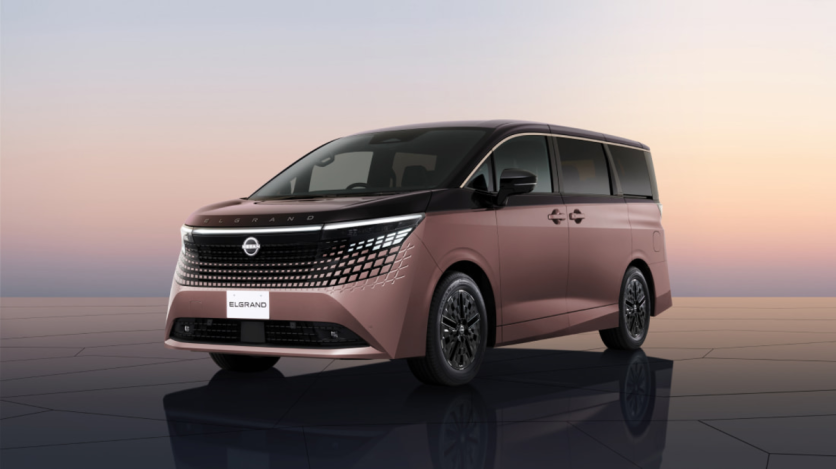
A shared mapping infrastructure quietly built by a consortium of Japan's major automakers has now extended hands-free highway driving to Nissan's flagship family minivan — the all-new Elgrand — marking the first time the company's most advanced driver-assistance mode has reached a vehicle designed primarily for families rather than performance or commuter use. Nissan launched the all-new Elgrand in Japan on July 16, 2026.
Dynamic Map Platform (DMP), the Tokyo-based HD mapping company that supplies centimeter-accurate 3D road geometry data to Nissan and five other automakers, announced on September 15, 2026 that the new Elgrand is part of a fleet of vehicles now totaling 39 models across six manufacturers that rely on its data layer for hands-free driving features. The figure matters not because of the round number but because of what it represents: a shared-cost infrastructure model that is making expensive ADAS capability commercially viable in segments — such as premium family minivans — where no single manufacturer could afford to build and maintain its own mapping stack.
What ProPilot 2.0 Actually Does
ProPilot 2.0 is Nissan's highest tier of navigated highway driving assistance. It sits above the base ProPilot (which maintains lane position and following distance with the driver's hands on the wheel) and above the intermediate ProPilot with Traffic Jam Hands-Off Mode, which permits brief hands-off periods at speeds below 50 km/h (31 mph) in congestion. Nissan's ProPilot Hands-Off technology archive explains the system's technical lineage in detail.
ProPilot 2.0 does something qualitatively different: it enables hands-free driving at full speeds for extended stretches, from a highway on-ramp to the exit ramp, following the route a driver has entered into the car's navigation system. The system manages speed, lane-centering, and following distance autonomously in a single lane. When the route requires a lane change or the driver needs to pass a slower vehicle, the system generates audio and visual prompts to place both hands on the wheel, then executes the maneuver after the driver confirms with a turn-signal input.
Critically, hands-off is not eyes-off. A driver-monitoring system (DMS) camera watches continuously to confirm the driver's attention remains forward. If the driver's attention lapses, the system issues escalating warnings. In the SAE Level 2 automation framework, ProPilot 2.0 remains firmly at Level 2+ — the vehicle controls steering and speed, but the human retains the legal and operational responsibility for monitoring the road. This distinguishes it from Mercedes-Benz's Drive Pilot, which received conditionally automated driving approval in Germany at speeds up to 95 km/h (59 mph) on the Autobahn — a higher standard that requires the vehicle, not the driver, to bear the monitoring obligation while the system is engaged.
ProPilot 2.0 does not function in tunnels, on two-way roads, on winding routes, at toll plazas, or at merging sections — conditions where GPS lock is compromised or where the HD map coverage ends.
Why Shared Infrastructure Made This Possible
The hands-off capability depends on one thing that cameras and radar alone cannot reliably provide: a centimeter-level "ground truth" model of the road surface, lane boundaries, curvature, and elevation gradients, stored in a 3D point cloud and delivered to the vehicle as a spatial reference layer. Without that pre-surveyed reference, the vehicle cannot localize itself to lane-level precision — standard GNSS satellite positioning has an accuracy of roughly 10–15 meters (33–49 feet), far too coarse for a system to hold a car in the center of a lane at highway speeds. An overview of high-definition maps for autonomous driving explains the technical requirements in detail.
DMP builds that reference through Mobile Mapping System (MMS) vehicles — specialized survey trucks equipped with rotating LiDAR sensors, high-resolution cameras, and precision GNSS receivers — that drive every covered road and capture a dense 3D point cloud of the environment. DMP's engineers extract from that point cloud the lane boundaries, crossings, road edges, traffic signs, and geometries that make up the HD map, and supplement them with virtual elements such as lane centerlines and turn trajectories that no painted road marking explicitly provides. DMP's North American HD map coverage now spans more than 950,000 miles.
In the vehicle, DMP's data fuses with Mitsubishi Electric's High-Definition Locator Module (HDLM), which combines the map reference with real-time sensor readings to produce a position estimate accurate to within centimeters. That position estimate is what allows ProPilot 2.0 to hold the car in the lane center with the driver's hands resting in their lap — and to recognize a curve ahead and modulate speed before the car's forward cameras can even see the bend. DMP's HD map data enabled the same capability when ProPilot Assist 2.0 debuted in North America on the Ariya electric crossover.
The strategic significance of DMP's model is in who pays for all of this. Building, surveying, and continuously maintaining HD maps of a country's entire expressway network — and keeping them current as roads are reconfigured, repainted, and expanded — costs hundreds of millions of dollars and requires an ongoing data pipeline to detect and update changes. A single automaker offering this capability in one vehicle line cannot economically justify that investment alone. DMP's answer, from its founding in 2016 with backing from Japan's government and equity from ten domestic automakers including Toyota, Nissan, and Honda, was to create a shared data infrastructure where the mapping cost is amortized across the entire industry. The company's JPX investor presentation outlines the shared-cost architecture in detail. Every new OEM that licenses DMP's data further spreads that fixed cost — which is why the vehicle tally keeps growing.
DMP's coverage has expanded far beyond Japan. The company has mapped more than 270,000 km (167,770 miles) of motorways and trunk roads across 16 European countries to an absolute accuracy of 15 cm (5.9 inches) for key map features, and its North American operations (conducted through a US subsidiary headquartered in Livonia, Michigan) now cover more than 950,000 miles (1.5 million km) across the top four road classes in the US and Canada. The European HD map expansion reached 16 countries in September 2024. The Elgrand's ProPilot 2.0, however, operates specifically on Japan's national expressways and designated motorways — international driving is outside its current operational scope.
DMP delivers map updates over the air, meaning the Elgrand's highway coverage stays current without a dealer visit, a practical necessity as Japan's expressway network continues to evolve.
About the Elgrand
The 2026 Elgrand is the fourth generation of a vehicle that first appeared in Japan in 1997, credited with establishing the premium minivan segment that Toyota's Alphard and Vellfire later came to dominate. The new model, coded E53 internally, is the first complete redesign in 16 years — the previous third-generation (E52) ran from 2010 to 2026 with only incremental facelifts. Nissan describes the design concept as "The Private MAGLEV," a reference to magnetic levitation rail travel and the sense of effortless, frictionless movement the cabin aims to replicate.
The powertrain is exclusively Nissan's third-generation e-POWER hybrid system. In e-POWER's series-hybrid architecture, there is no mechanical connection between the engine and the driven wheels. A newly designed 1.5-liter turbocharged three-cylinder engine (designated ZR15DDTe) runs purely as a generator, producing power at its optimal efficiency operating point regardless of vehicle speed. The electrical energy charges a compact battery that feeds two AC synchronous electric motors — one at the front axle, one at the rear — in what Nissan brands as e-4ORCE. Because the wheels are driven entirely electrically, the Elgrand delivers instant torque, no perceptible gear changes, and near-silent cabin conditions; the quoted outputs are 138 horsepower from the generator engine and 337 horsepower combined from the electric motors. The autoevolution Elgrand launch report confirms all powertrain specifications.
Nissan claims a world-first with the Elgrand's Advanced Active Noise Control, which simultaneously cancels both engine noise and road noise rather than targeting only one of the two sources. The Elgrand is also the first Nissan vehicle to feature the latest iteration of the e-4ORCE hardware, which actively uses the rear motor's torque during cornering to add driving engagement, and manages pitch suppression during acceleration and braking to reduce passenger discomfort on long journeys.
The cabin is oriented around what Nissan calls a "Private Lounge" philosophy: every seat is a Zero Gravity design, the front-passenger and both second-row seats have extendable ottomans that can operate simultaneously, and the second-row captain chairs feature a dual-reclining mechanism that moves the upper seatback independently so passengers can rest their head upright while watching the dedicated second-row display. A Bose 22-speaker premium sound system and 64-color ambient lighting complete the cabin specification.
ProPilot 2.0 as a Grade Option
Not every Elgrand buyer receives ProPilot 2.0. The new model comes in two grade variants:
The X e-4ORCE (priced at ¥6,897,000, approximately $44,800 USD) includes standard ProPilot — steering, acceleration, and braking support in a single lane at highway speeds, hands-on at all times.
The G e-4ORCE (¥7,579,000, approximately $49,300 USD) is standard-fitted with the intermediate ProPilot with Navi-link, Traffic Jam Hands-Off Mode, and Lane Change Support, which permits hands-off operation in stop-and-go traffic at speeds below 50 km/h (31 mph). Full ProPilot 2.0 — the ramp-to-ramp hands-off system powered by DMP's HD maps — is available as a factory option on the G e-4ORCE only.
This tiered structure follows the same approach Nissan used when ProPilot 2.0 debuted on the Japanese-market Skyline sedan in late 2019, and when it subsequently appeared on the Ariya electric crossover. Motor Authority's ProPilot 2.0 Skyline debut coverage details the system's original announcement. Bringing it to the Elgrand extends a capability previously associated with sedans and crossovers into a large family people carrier — the vehicle category where long-distance highway comfort has always been the dominant purchase criterion.
Hands-Free ADAS: A Competitive Field
The Elgrand's ProPilot 2.0 integration arrives as hands-free highway hands-free ADAS has become a mainstream competitive feature in premium vehicles globally. General Motors' Super Cruise system, available across multiple Cadillac and GMC models, operates on a pre-mapped network of divided highways and uses driver attention monitoring through an infrared camera. Ford's BlueCruise works on similar principles on mapped stretches of US and Canadian motorways.
All of these systems, along with ProPilot 2.0, operate at SAE Level 2+: the car controls steering and speed; the human retains the responsibility to monitor the road and intervene if needed. The key competitive distinction in this space is not whether a system is hands-free — that bar has been cleared by several manufacturers — but whether it is also eyes-free. Only Mercedes Drive Pilot, currently certified in Germany at speeds up to 95 km/h (59 mph) on the Autobahn, has achieved regulatory recognition for Level 3 operation where the driver may turn attention away from the road entirely.
What distinguishes Japan's approach — and what DMP's 39-vehicle count reflects — is the shared infrastructure layer. Rather than each manufacturer building and maintaining its own proprietary HD map coverage, DMP's consortium provides a single data standard used across competing brands. The 2026 Subaru Outback, for example, also uses DMP data for its newly added Highway Hands-Free Assist feature within the Advanced EyeSight system, announced in January 2026. Subaru's Advanced EyeSight DMP partnership was confirmed in a BusinessWire announcement. The Elgrand adds a family-minivan context to that growing list.
What ProPilot 2.0 Cannot Do
Readers comparing ProPilot 2.0 to the marketing claims surrounding "self-driving" should understand where the system's capability ends. Hands-off operation is supported only on Japan's national expressways and designated motorways covered by DMP's HD map — not on general surface roads, urban streets, or highways in other countries. The system requires the driver's eyes to remain on the road at all times and a DMS camera enforces that requirement. Any indication that the driver has looked away triggers a warning sequence. Lane changes, overtaking, and exit maneuvers all require the driver to place hands back on the wheel and confirm the action.
The system will not function when satellite positioning is unavailable (tunnels), on roads too narrow or curved for safe lane-centering at speed, or at toll plazas where lane geometry becomes unpredictable. Nissan's notation of asterisks on the system's availability reflects the real-world coverage constraints of DMP's current HD map scope.
(Exchange rate as of September 15, 2026; conversions are approximate.)
Frequently Asked Questions
What is the difference between ProPilot, ProPilot with Traffic Jam Hands-Off, and ProPilot 2.0 on the Elgrand?
Standard ProPilot manages lane-centering, speed, and following distance at highway speeds but always requires the driver to keep both hands on the wheel. The intermediate version adds a hands-off mode in stop-and-go traffic below 50 km/h (31 mph) and autonomous lane-change assistance above 60 km/h (37 mph) when the driver signals. ProPilot 2.0 goes further: using centimeter-accurate HD map data from Dynamic Map Platform, it enables fully hands-off highway driving at normal cruising speeds for the full length of an expressway segment — from on-ramp to off-ramp — as long as a navigation route is active, the road is covered by DMP's maps, and the driver keeps their eyes on the road.
Does the Nissan Elgrand's hands-free system count as "self-driving" or Level 3 autonomy?
No. ProPilot 2.0 is a Level 2+ system under the SAE J3016 automation framework. It controls steering and speed without the driver's hands on the wheel, but the driver must continuously monitor the road and is legally and operationally responsible for the vehicle at all times. A driver-monitoring camera enforces this attention requirement. Level 3 autonomy — where the system, not the driver, bears the monitoring obligation — has been certified only for Mercedes Drive Pilot in Germany, and only at speeds up to 95 km/h (59 mph) on the Autobahn. ProPilot 2.0 does not permit the driver to look away from the road, watch a video, or engage in other non-driving activities.
Why is HD map data necessary for hands-free highway driving when modern cars already have cameras and radar?
Cameras and radar perceive the immediate environment in real time, but they cannot reliably place a vehicle within a lane to centimeter accuracy — particularly on curves, crests, or at the point where two lanes merge. Standard GPS satellite positioning is accurate only to approximately 10–15 meters (33–49 feet). DMP's HD maps provide a pre-surveyed 3D reference layer accurate to within centimeters, against which the vehicle continuously checks its real-time sensor data to determine its exact lane position. The map also contains road geometry data — curves, gradients, exit geometry — that allows the system to anticipate and prepare for maneuvers ahead rather than reacting to them as they appear in the camera's field of view.
Is the Nissan Elgrand available in the United States?
No. The fourth-generation Elgrand is sold exclusively in Japan and selected Asian markets. As confirmed in autoevolution's Elgrand launch coverage, Nissan discontinued its only US-market minivan, the Quest, in 2017, and has no announced plans to return to that segment in North America.

-
 C114 Communication Network
 -
 Communication Home
