
 Search

Pressroom.lexus.com
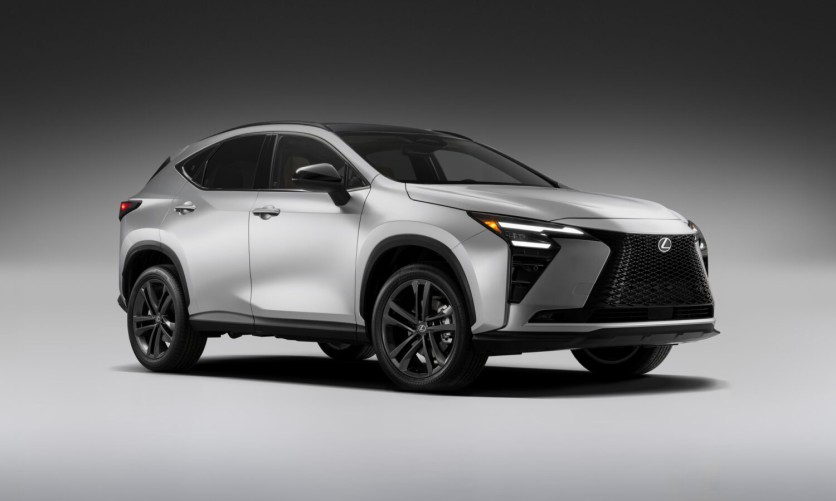
Lexus has unveiled the facelifted 2027 NX, and for the first time in the model's twelve-year history the plug-in hybrid variant can rapid-charge at DC fast chargers — a capability gap that previously kept the NX 450h+ a step behind a growing field of electrified rivals. The reveal, announced simultaneously from the Lexus Europe Newsroom and Lexus North America headquarters in Plano, Texas, also delivers a structural shift that will redefine the NX lineup: starting with the 2027 model year, every NX will be electrified, with buyers choosing between a self-charging hybrid and a plug-in hybrid. The gas-only NX 350 disappears entirely.
For compact luxury SUV shoppers actively comparing options, the timing matters. With an EPA-estimated electric range of more than 40 miles (64 km) and a standard 30-minute DC fast-charge capability, the 2027 NX 450h+ closes a long-standing usability gap. The compact luxury PHEV segment has grown substantially more competitive in 2026, with the Mercedes-Benz GLC 350e now offering approximately 54 EPA miles and DC fast charging of its own, the Volvo XC60 T8 Recharge rated at approximately 35 EPA miles, and the new-generation Audi Q5 PHEV arriving in Europe with approximately 62 miles of WLTP range. The NX 450h+ becomes the first Lexus PHEV able to top up its battery at a public DC fast charger during a road trip.
Why DC Fast Charging Changes the NX 450h+ Calculus
For the previous six model years of the second-generation NX 450h+, the answer to "can it fast-charge?" was no. The 18 kWh battery could be replenished from an AC Level 1 or Level 2 charger — at home overnight or at a public station — but not from the DC fast-charger networks that increasingly line US and European highways. That single limitation drew a hard line between the NX 450h+ and a battery electric vehicle for daily drivers: plug-in hybrid owners could drive electrically for short trips, but they could not meaningfully extend their electric budget mid-route.
The 2027 model erases that line. A 10% to 80% charge takes approximately 30 minutes at a compatible DC fast charger, and the new 23 kWh battery — a 30% increase over the outgoing 18 kWh unit — means drivers can arrive at a fast charger with a meaningfully larger buffer than before. For anyone whose daily driving falls within electric range, the NX 450h+ can now function as a battery-electric vehicle from Monday through Friday while keeping a gasoline engine for weekend road trips or emergency backup.
One significant detail is still unconfirmed as of this writing: Lexus has not specified which DC fast-charging connector standard the 2027 NX 450h+ will use in North America. CCS1 (Combined Charging System) is the dominant US standard and is compatible with the vast majority of public fast-charger networks. Whether Lexus will adopt CCS1, CCS2, or a different standard for specific markets is a detail shoppers will need confirmed before purchasing. Lexus North America has indicated that full US lineup and specification details are forthcoming.
Silicon Carbide: The Semiconductor Behind the Upgrade
The DC fast-charging capability does not arrive in isolation. Enabling it — along with the battery's improved efficiency and the 30% capacity increase — is Lexus's sixth-generation hybrid system, which adopts a redesigned eAxle architecture with silicon-carbide power semiconductors in the inverter. Understanding why SiC matters explains why the 2027 NX achieves improvements across range, power output, and charging speed simultaneously.
Standard silicon semiconductors, which previous-generation NX hybrid systems used, have well-known thermal and efficiency limits in high-current applications. Silicon-carbide devices have a wider bandgap — the energy gap electrons must cross to conduct — which enables them to operate at higher temperatures, handle higher voltages, and switch faster. DENSO's SiC inverter research confirms these devices reduce inverter power loss by more than half compared to conventional silicon equivalents, contributing to a measurable range improvement under real-world test cycles.
Applied to the NX 450h+ PHEV, the same technology reduces the heat generated by the power control unit — one prerequisite for supporting DC fast charging without thermal management becoming a limiting factor. The new eAxle integrates the transaxle, motor, and power control unit into a single compact assembly. The integration saves 10 kg and 10 cm compared to the previous system, both of which lower the center of gravity and contribute to the handling changes Lexus says were benchmarked at the Nürburgring circuit in Germany.
Battery and Range: What the Numbers Mean for US Buyers
The 2027 NX 450h+ carries a 23 kWh lithium-ion battery, up from 18 kWh — a 30% capacity increase. Lexus's official EV range figure for European buyers is more than 100 km (62 miles) on the WLTP test cycle, representing approximately a 40% improvement over the outgoing model.
US buyers should plan around the EPA estimate rather than the WLTP figure. Lexus confirms the EPA-estimated range will exceed 40 miles (64 km), compared to 37 miles on the outgoing NX 450h+. That 3-plus-mile improvement may sound modest, but the EPA methodology matters: unlike the WLTP test, which for PHEVs evaluates electric range only at city and medium speeds, the EPA's full-cycle testing applies a real-world correction factor across a complete driving cycle including highway segments. The result is a number that more accurately reflects what most US drivers will see on a charged commute. European buyers quoting WLTP figures should be aware that real-world PHEV electric range can fall 20–30% below official WLTP claims, particularly on mixed or highway routes.
The battery cell layout has also changed in a way that improves more than range figures. The 2027 NX moves to a transverse battery cell layout, positioning cells perpendicular to the vehicle's long axis. According to Lexus's engineering team, this increases lateral body rigidity and lowers the battery's mounting height, contributing to a lower center of gravity — which in turn supports the handling improvements and the expanded all-wheel-drive operation parameters that chief engineer Kunihiko Endo described in the reveal materials.
The combined system output of the NX 450h+ rises 8% to 307 DIN hp (226 kW) in SAE/North American measurement — approximately 303 hp — from the previous 292 DIN hp. The 0–62 mph (0–100 km/h) time drops to 6.1 seconds (provisional). Towing capacity for both the NX 450h+ and NX 350h grows to 3,307 lbs (1,500 kg).
NX 350h: Lighter Battery, More Agile Hybrid
While the PHEV's battery grew, the NX 350h self-charging hybrid's battery pack did the opposite. Lexus reduced hybrid battery weight from 32.7 kg (72.1 lbs) to 23.5 kg (51.8 lbs) by reducing the number of cells while maintaining the same maximum output of 199 DIN hp (146 kW). The savings in mass — nearly 9 kg (approximately 20 lbs) — translate into improved 0–62 mph acceleration and the same new 3,307 lb (1,500 kg) towing capacity, now available across the full NX range. The NX 350h will be offered in both front-wheel-drive and all-wheel-drive configurations.
Both powertrains now carry the same underlying sixth-generation architecture, with the eAxle combining the power control unit and transaxle into a single assembly. Silicon-carbide semiconductors appear in both variants' inverters, reducing energy losses in every drive cycle regardless of whether the car is plugging in at a fast charger or self-charging regeneratively. Lexus states both powertrains meet Euro 7 standards and are expected to deliver best-in-class CO₂ emissions figures within their respective segments.
LSS+ 4.0: Expanded Detection, New Intersection Support
The 2027 NX debuts Lexus Safety System+ 4.0 across every grade. The fourth-generation ADAS suite makes substantial improvements to the sensor field that governs all downstream safety functions: the horizontal viewing angle increased by 115% and the detection distance by 170% compared to the previous specification.
New and expanded functions include Intersection Collision Avoidance Support (the previous system did not evaluate intersections proactively), Emergency Steering Assist with active support, and a Map Connected Radar Cruise Control that reads ahead for junctions, roundabouts, and bends to execute smoother speed transitions without driver input. The Lane Departure Alert can now detect roadside structures such as utility poles and barriers — useful in road conditions where painted lane markings are absent or faded. Lane Tracing Assist and the Driver Emergency Response System now remain active during towing, a scenario that previously fell outside those systems' operating conditions.
The Driver Monitor Camera — which tracks the driver's alertness and condition — feeds into the Emergency Driving Stop System. If the driver becomes unresponsive, the system decelerates the vehicle to a stop within its traffic lane and activates hazard lights. The Driving Assist Display in the combination meter can now show up to six vehicles simultaneously: the NX itself plus two vehicles ahead in its lane, and up to two vehicles each to the left and right in adjacent lanes.
The competitive benchmark for ADAS sophistication in this segment has been set by BMW's driving assistance systems and Mercedes-Benz's active safety suite. Lexus's LSS+ 4.0 addresses specific gaps that existed in the outgoing system — particularly around intersections and high-speed detection range — while remaining a Level 2 automation system that requires the driver's sustained attention.
Interior and Infotainment: Built Around the LexusConnect Platform
Lexus has redesigned the NX dashboard from the instrument panel outward, taking direct cues from the all-new ES sedan and the recently announced Lexus TZ three-row SUV. A new-generation LexusConnect multimedia platform powers the 14-inch infotainment touchscreen, now standard across all grades, with four times faster processing speed and 256 GB of memory (eight times greater storage capacity than the outgoing system). The screen sits on the same horizontal axis as the 12.3-inch fully digital instrument cluster, so drivers can scan both screens without turning their head.
One of the more interesting human-machine interface decisions is what Lexus calls Responsive Hidden Switches: physical controls that flush into the dashboard when inactive, illuminating and presenting themselves with physical haptic feedback when the driver's hand approaches. The approach attempts to resolve the ongoing tension in premium automotive design between tactile button convenience and visual cleanliness — a balance BMW addressed with its curved display and Mercedes-Benz with its MBUX multimodal system. Lexus's solution retains the physical feedback that touchscreen-only interfaces eliminate, while achieving the uncluttered surface-plane aesthetic that premium interiors currently favor.
Over-the-air software updates will be delivered wirelessly over the vehicle's life. The LexusConnect Voice Agent has been updated to distinguish between driver and front-passenger speech, respond to more naturalistic language, and occupy a smaller portion of the screen when activated. A new Smart Digital Key+ integrates with Apple iPhone and Android wallets — functional even when the phone's battery is depleted — and allows the owner to share access with up to six additional users.
Sensory Concierge, New Materials, and F Sport
High-specification grades gain the Lexus Sensory Concierge — a multi-sensory ambient system that coordinates cabin illumination (50 color tones, plus dynamic patterns on the multimedia display), climate settings, seat heating, and in-car fragrances across three preset modes: Inspire, Radiance, and Revitalize. The fragrances are developed with Givaudan, a Swiss flavor and fragrance company.
Interior color choices for 2027 include a new Clay Red upholstery option alongside Solis White, Hazel, and Black. Dark Brown Oak wood trim joins the Luxury grade, while F Sport models receive a micro-geometric technical finish. A Forged Bamboo trim — containing 55% bio-based resin and fiber — appears on Business and Executive grades and carries through to the key fob; Lexus notes that bamboo is fast-growing and absorbs CO₂ during cultivation. No two Forged Bamboo trim pieces produce the same pattern.
The exterior F Sport package adds piano black roof rails, a rear spoiler, lower bumper and sill accents, 20-inch slim twin-spoke alloy wheels in a new aerodynamic design, and red-painted brake calipers. Three new body colors join the palette: Sonic Platinum, Sonic Tellus (a khaki green), and Titanium Carbide Grey, the last of which is exclusive to F Sport.
How Does the 2027 NX Stand Against Its Rivals?
The 2027 NX 450h+'s EPA-estimated range of more than 40 miles arrives into a segment that has moved substantially since the outgoing NX 450h+ launched. The Volvo XC60 T8 Recharge carries approximately 35 EPA miles of electric range and supports Level 2 AC charging only. The Mercedes-Benz GLC 350e now offers approximately 54 EPA miles of electric range and DC fast charging at up to 60 kW, establishing a new benchmark in the segment. The new-generation Audi Q5 PHEV (e-hybrid) claims approximately 62 miles of WLTP range in European specification, with US availability and EPA figures not yet confirmed. The BMW X3 30e PHEV — rated at up to 56 miles WLTP — is currently available in European markets but is not sold in the United States.
For US buyers comparing options available at their local dealers, the 2027 NX 450h+'s DC fast-charging capability and more-than-40-mile EPA range place it competitively against the XC60 T8 on range. Against the Mercedes-Benz GLC 350e, the NX 450h+ carries a lower EPA range but sits in a similar price position, and buyers will need to weigh the complete specifications packages when both models are available. The question for US buyers is whether the unannounced pricing will maintain the current model's positioning — approximately $60,000 and up for the NX 450h+ — against rivals in a segment where transaction prices are competitive.
European buyers benefit from the timing: PHEVs held a 10% share of new car registrations across Europe in the first half of 2026, according to the International Council on Clean Transportation, and the 50 km (31-mile) WLTP electric range threshold that governs low-emission zone access and tax incentives in many EU markets is comfortably exceeded by the 2027 NX 450h+'s projected figures.
Availability and What Comes Next
European pre-sales are expected to begin in autumn 2026, with customer deliveries targeted for spring 2027. US pricing and on-sale timing have not yet been announced; Lexus North America has indicated details will follow in the coming weeks. The 2027 NX will arrive in a global market that sold 30,763 NX units in the United States alone in the first half of 2026, according to Toyota Motor North America data.
The larger context for Lexus is a deliberate accelerated shift toward electrification: the NX becoming hybrid-only follows the same direction Toyota has taken with the RAV4, which discontinued its gas-only variant for the US market. Whether the removal of the NX 350 gas engine option costs Lexus incremental buyers — or whether the hybrid variant's efficiency and the PHEV's newly competitive charging story prove sufficient to retain them — will be the telling commercial question when 2027 NX sales data arrives.
Frequently Asked Questions
Does the 2027 Lexus NX 450h+ support DC fast charging?
Yes — the 2027 NX 450h+ is the first Lexus plug-in hybrid to support DC fast charging as standard equipment on all grades. Lexus states a 10% to 80% charge takes approximately 30 minutes at a compatible DC fast charger. The specific connector standard for North America (CCS1, CCS2, or another format) has not yet been confirmed as of this writing; Lexus North America is expected to announce full US specifications in the coming weeks. The Lexus USA pressroom confirmed DC fast charging is standard on all PHEV grades.
What is the electric range of the 2027 Lexus NX 450h+?
The 2027 NX 450h+ is rated at more than 100 km (62 miles) of electric range under the European WLTP test cycle — a provisional figure pending final homologation. For US buyers, Lexus estimates the EPA range will exceed 40 miles (64 km), up from 37 miles on the outgoing model. Note that WLTP figures for PHEVs are typically more optimistic than EPA ratings, as the WLTP test evaluates PHEV electric range only at city and medium speeds rather than a full mixed-speed cycle.
When is the 2027 Lexus NX available in the US, and how much will it cost?
Lexus North America has not announced US pricing or an on-sale date as of the September 1, 2026 reveal. European pre-sales are expected to begin in autumn 2026, with deliveries starting in spring 2027. US shoppers should expect pricing to be confirmed within the coming weeks; the current NX 450h+ pricing starts at approximately $60,000 and above, depending on trim level.
What is Lexus Safety System+ 4.0?
LSS+ 4.0 is the fourth generation of Lexus's driver assistance and active safety suite, standard across all 2027 NX grades. Compared to the previous generation, LSS+ 4.0 expanded detection capabilities include a 115% wider horizontal viewing angle and 170% greater detection distance. New capabilities include Intersection Collision Avoidance Support, Emergency Steering Assist with active intervention, Map Connected Dynamic Radar Cruise Control, and Lane Departure Alert that can detect roadside structures — all of which extend the system's coverage into scenarios the prior generation did not address.

-
 C114 Communication Network
 -
 Communication Home
