
 Search

Geelyauto.com.hk
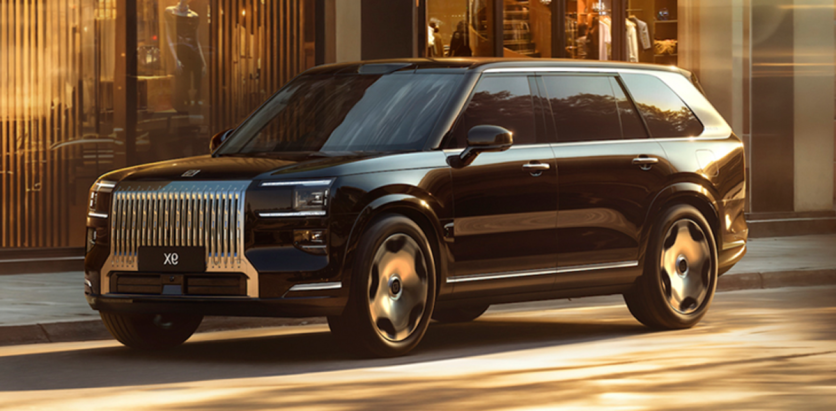
Geely's Zeekr brand unveiled its 9X full-size luxury SUV for European markets on July 29, 2026, via a livestream reveal that introduced the vehicle's most striking proposition: specs that rival the BMW X7 and Range Rover, at a price that has not yet been officially announced — and a legal framework that has nothing to do with what Zeekr's European product page says.
What European buyers weighing the 9X need to understand before configuring one is that China's National Intelligence Law (2017), Article 7, legally obligates all Chinese organizations to "support, assist, and cooperate with national intelligence efforts" — a requirement that binds Geely regardless of where a vehicle is registered, where Zeekr's Amsterdam headquarters is located, or what the car's European privacy settings say. Exchange rate as of July 29, 2026; all currency conversions in this article are approximate.
The vehicle itself is genuinely impressive. Designed at Zeekr's Global Design Center in Gothenburg, Sweden — under VP of Design Stefan Sielaff, a former Bentley Design Director — the 9X is the first Chinese luxury SUV built with real European creative DNA from the ground up. What it cannot escape is the legal structure of the company that makes it.
Tariff Architecture: Why the 9X Arrives as a Range Extender, Not an EV
Zeekr is not launching the Chinese-market version of the 9X in Europe. The European variant is classified by Zeekr's own product page as an EREV — an Extended-Range Electric Vehicle — rather than a conventional plug-in hybrid (PHEV) or a battery-electric vehicle (BEV).
This distinction is strategic, not incidental. The European Commission imposed definitive countervailing duties on Chinese-made battery electric vehicles in October 2024. Geely Group's rate is 18.8%, stacked on top of the standard 10% EU import tariff, for an effective 28.8% levy above factory price on any BEV it imports from China. Those duties apply to BEVs. PHEVs and EREVs are exempt — subject only to the base 10% import tariff. On a vehicle expected to carry a price north of €80,000 (approximately $91,000 at current exchange rates), the 18.8% duty differential could represent more than €15,000 in potential cost — a structural pricing advantage built directly into the powertrain choice.
An EREV is architecturally different from a parallel PHEV. In the 9X's configuration, the 2.0-liter turbocharged four-cylinder petrol engine does not directly power the wheels. It acts as an onboard generator — running at a fixed, optimally efficient operating point to produce electricity for the battery and motors. The vehicle always drives on electricity. The combustion engine's job is to replenish the battery when it depletes, extending range without range anxiety. This is the same basic architecture as the original Chevrolet Volt, but executed at a far higher voltage and power level.
How the 900V Architecture Makes the 9.5-Minute Charge Possible
The 9X's most technically significant specification is its 900V electrical architecture, built on Geely's SEA-S (Sustainable Experience Architecture, Hybrid Variant) platform — a dedicated high-voltage hybrid platform derived from the same SEA foundation used across Geely brands including Volvo and Polestar.
Most conventional PHEVs operate on 400V systems. Leading pure EVs — the Porsche Taycan, Hyundai Ioniq 6, Kia EV6 — use 800V systems. At 900V, the 9X pushes beyond even those benchmarks. The higher the voltage, the higher the power a given current can deliver (P = V × I), which means the same charging cable can push more kilowatts into the battery without the thermal losses that constrain lower-voltage systems.
The practical result is 6C charging capability — meaning the battery can accept charge at a rate six times its capacity per hour. For the European-specification 55 kWh battery pack (a CATL Freevoy NMC cell optimized for high C-rate charging), 6C yields an effective peak charging rate of approximately 330 kW. Zeekr's EU product page confirms a DC fast charge speed sufficient to go from 10% to 80% in 9.5 minutes. The silicon carbide (SiC) power electronics in the drivetrain make this possible at production-vehicle scale — SiC semiconductors handle high voltage and switching frequencies with lower thermal losses than conventional silicon, which is why the same technology appears in the Porsche Taycan and Mercedes EQS.
The European-spec 9X uses dual permanent-magnet synchronous motors (front and rear) producing a combined 660 kW, or 897 horsepower. That is down from the Chinese tri-motor variant's 1,030 kW (1,381 hp), which also uses the larger 70 kWh battery. The EU version's 55 kWh pack reflects both the more conservative WLTP test environment and the realities of European homologation. It delivers a pure electric range of 179 km (111 miles) on the WLTP cycle — the official European standard, which runs at higher average speeds than China's CLTC test and produces lower range figures as a result. Combined range (electric plus petrol extension) is 737 km (458 miles) WLTP, making it genuinely suited for European long-distance driving.
Zero to 100 km/h (0–62 mph) takes 4.1 seconds. Top speed is 240 km/h (149 mph). The platform's torsional rigidity of 41,600 Nm per degree surpasses most production luxury SUVs and exceeds what Zeekr claims even for the Rolls-Royce Cullinan. The 9X can also tow up to 2,000 kg (4,410 lbs). Body dimensions: 5,239 mm long (17.2 ft), 2,029 mm wide (6.7 ft), 1,819 mm tall (6.0 ft), on a 3,169 mm (124.8 in) wheelbase. Curb weight for the EU spec is 2,900 kg (6,394 lbs).
Private Aviation Standards Applied to the Second Row
The interior sets a benchmark that established luxury marques will need to respond to. Standard equipment includes 32 Naim Audio speakers drawing 3,868 watts — a figure that exceeds the audio systems in most six-figure limousines. A 17-inch 3K OLED entertainment screen descends from a micro-suede ceiling pod and slides forward up to 88 cm (approximately 35 inches) toward second-row passengers, deploying privacy blinds and syncing ambient lighting with on-screen content. The main cockpit combines two 16-inch 3.5K OLED displays for driver and front passenger functions, plus a 47-inch augmented-reality head-up display.
Interior materials include full-grain Nappa leather in Charcoal Black or Caramel Brown with Moonglade Blue, hand-polished Nordic wood trim, and a hand-cut crystal rotary controller on the center console. First and second row seats include heating, ventilation, massage, and 4D-motion functions. The second row also has a 9-liter temperature-controlled refrigerator and individual climate zones. The second row rotates 180 degrees into a conference-style layout — a feature Sielaff noted is "pretty rare in Europe" in a Wallpaper* interview.
LiDAR-powered advanced driver assistance — combining a roof-mounted long-range LiDAR with Nvidia Drive Thor compute — has been validated specifically for European road conditions, including narrow cobblestone streets and heavy fog.
Read more: China Embraces Homegrown Electric Cars Over Foreign Gas Guzzlers
Lothar Schupet, CEO of Zeekr Europe, framed the launch directly in a Wallpaper* interview: "The Zeekr 9X is not luxury borrowed from another era. Instead, this is a new era of luxury, beyond convention."
What Beijing Can Still Claim From Inside Your Car
The Zeekr 9X sold in Europe "complies with European data protection regulation" — Zeekr Europe's own language on its product page. That means the vehicle complies with GDPR. It does not mean the vehicle is outside the reach of Chinese national security law.
China's National Intelligence Law (2017), Article 7, requires that "all organizations and citizens shall support, assist, and cooperate with national intelligence efforts." The China Cybersecurity Law (2017) requires network operators to store data in China, allow government spot-checks on network operations, and provide technical support to state security agencies — language cited directly in a U.S. Department of Homeland Security business advisory. China's Data Security Law (2021) and the Automotive Data Management Regulations (2021) — the latter specifically covering vehicle manufacturers — extend these obligations to data collected by connected vehicles.
These laws bind Geely as a Chinese company. They apply regardless of whether the Zeekr 9X is registered in Norway, Germany, or France. They apply regardless of where Zeekr's European headquarters are located. They apply regardless of what Zeekr's privacy policy says. This is not a contested interpretation — Zeekr's own International VP Mars Chen confirmed in May 2026 that the company complies with "all the local laws" and is "more than happy to support" authorities with data regulation requests, according to CarExpert.
The categories of data a connected vehicle like the 9X collects — and which could be subject to these obligations — include: GPS location and movement history, video and LiDAR point-cloud mapping data, microphone and voice command recordings, driver behavioral patterns, biometric data if facial recognition is used, and connected smartphone data.
No independent security audit of the Zeekr 9X's data transmission practices has been published as of this writing. That is itself a gap European buyers should weigh.
The European Union does not currently have a framework equivalent to the U.S. rules that, effective March 2025, restrict Chinese-origin vehicle connectivity hardware and autonomous driving software. The German Council on Foreign Relations (DGAP) published an explicit November 2025 memo calling on the EU to close this regulatory gap, noting that the EU's approach "falls short of making non-technical risk factors a core security principle." For European Zeekr buyers, that regulatory gap currently applies to them.
Practical steps a buyer can consider: configuring the vehicle on a dedicated home network segment isolated from other devices; reviewing and restricting connected services permissions in the vehicle settings; and auditing what data is shared with Zeekr's cloud services. No technical step fully addresses the legal framework — the obligation is on Geely as an institution, not only on what the vehicle transmits in any given moment.
Zeekr's European Network and What It Still Needs to Build
The 9X arrives as Zeekr meaningfully accelerates its continental presence. The brand entered Europe in late 2023 in Sweden and the Netherlands; Norway followed in 2024; and 2025 brought entries into Switzerland, Belgium, Denmark, Germany, Greece, Romania, Slovenia, Croatia, and Bulgaria. Italy and Spain launched in early 2026, with France and the United Kingdom expected later this year.
Zeekr Europe's dealer network is on track to triple from approximately 30 to about 100 locations by the end of 2026, according to CEO Schupet. The brand operates a direct-to-consumer model: buyers configure at zeekr.eu and take delivery or arrange collection rather than negotiating at a traditional dealership. Service is handled via a combination of Zeekr-operated centers and authorized third-party workshops.
The 9X arrives in three exterior colors — Crystal White, Lava Grey, and Onyx Black — in a single trim level (Ultra AWD) for launch, with deliveries expected to begin in selected European markets at the end of July 2026. Official pricing from Zeekr Europe has not been announced as of the time of publication; independent importer estimates have suggested a starting point in excess of €80,000 (approximately $91,000 at current exchange rates), but no confirmed figure is yet available.
In China, where the vehicle has been on sale since September 2025, the six-seat variant starts at ¥465,900 (approximately $68,800 USD at the July 29, 2026 exchange rate of 1 CNY = $0.1477 USD). The five-seat version, which launched in China a day before the European reveal on July 28, carries a limited-time starting price of ¥451,900 (approximately $66,700 USD).
Does Spec-Sheet Supremacy Translate to European Trust?
The 9X's competitive target — BMW X7, Mercedes-Benz GLS, and Range Rover — represents categories where buyers have historically paid a premium for heritage, resale value stability, and dealer-network depth. Zeekr, founded in 2021, carries none of that heritage. What it does carry is a specification that would cost considerably more from any of those established marques.
The pricing equation, however compelling, is not the only equation. Buyers should weigh the spec sheet alongside what the 9X's legal and regulatory context means in practice: an extraordinarily capable vehicle from a brand with no European resale history, backed by an expanding but still-developing service network, manufactured by a company subject to Chinese intelligence law obligations that no European regulation currently limits.
The question is not whether the Zeekr 9X is impressive — it is. The question is whether the decision to buy one should look the same as the decision to buy a Range Rover, and on that question, the answer is no.
Frequently Asked Questions
Is the Zeekr 9X a plug-in hybrid or an electric vehicle?
In its European specification, the Zeekr 9X is classified by Zeekr as an EREV — Extended-Range Electric Vehicle. This means it always drives on electricity: its dual motors (897 hp combined) power the wheels at all times. The 2.0-liter petrol engine does not power the wheels directly — it acts as an onboard generator that recharges the battery when the 179 km (111 miles) of WLTP pure-electric range is depleted, extending the total combined range to 737 km (458 miles) WLTP. Drivers unfamiliar with EREVs will find the driving experience similar to a pure EV — smooth and direct — but can refuel at any petrol station when needed.
How does the 9X charge from 10% to 80% in 9.5 minutes?
The 9X's 900V electrical architecture enables 6C charging capability — meaning the 55 kWh CATL Freevoy battery can accept energy at a rate six times its capacity per hour, corresponding to approximately 330 kW of peak charge power. This is made possible by silicon carbide (SiC) power electronics that operate efficiently at high voltages. Most conventional PHEVs charge at 22 kW AC or 50 kW DC; the 9X's DC charging infrastructure represents a generational step beyond that. Zeekr confirms 500 kW DC charging capability in the vehicle's specifications. The equivalent of 60 miles (approximately 100 km) of added range in under 10 minutes is a meaningful reduction in the one practical limitation EV owners currently manage.
Can the Chinese government access data from a Zeekr vehicle I buy in Europe?
The legal answer is more nuanced than Zeekr's privacy policy suggests. Zeekr complies with GDPR as a European data protection matter. But Geely, as a Chinese company, is also subject to China's National Intelligence Law (Article 7), which legally requires all Chinese organizations to assist with national intelligence requests, and to the Cybersecurity Law (2017) and Automotive Data Management Regulations (2021), which mandate data localization and government access provisions. These laws bind Geely at the corporate level regardless of where a vehicle is registered or where Zeekr's European headquarters is located. No independent security audit of the Zeekr 9X's data transmission practices has been published. European regulation does not yet impose restrictions on Chinese connected vehicle components equivalent to U.S. rules effective since March 2025. Buyers who regard this as a significant concern should review Zeekr's data collection settings and consider network isolation measures, while recognizing that no technical setting fully addresses a corporate legal obligation.
How does the Zeekr 9X compare to the BMW X7?
The 9X's specification is comparable or superior to the BMW X7 on most measurable metrics: the 9X produces 897 hp versus the X7 xDrive60e PHEV's 483 hp; its 9.5-minute fast-charge is far faster than the X7's 7.4 kW AC PHEV charging; the 900V architecture has no equivalent in any current BMW product; and the 179 km WLTP pure electric range compares favorably with the X7 PHEV's approximately 88 km (55 miles) on the WLTP cycle. Interior technology — the 32-speaker Naim system, the 47-inch AR HUD, the deploying 17-inch OLED rear screen — exceeds BMW's current standard equipment. Where the BMW X7 leads: five-plus years of European service infrastructure, established resale values, an independent warranty network not subject to a single brand's continuity, and no legal framework requiring the manufacturer to cooperate with government intelligence requests. Which of those factors matters more is a decision for individual buyers.

-
 C114 Communication Network
 -
 Communication Home
